This content is for educational purposes only and is not a substitute for professional medical advice, diagnosis, or treatment.
What is a Diet for Autoimmune Conditions in Canada?
If you’re living with an autoimmune condition in Canada, you’ve likely been flooded with advice about what you "should" and "shouldn’t" eat. The online world is full of rigid protocols and long lists of forbidden foods, which can feel overwhelming and stressful. But what does the evidence actually say?
In clinical practice, a diet for autoimmune conditions is not a strict set of rules. Instead, it’s a supportive framework for eating that aims to help manage symptoms and improve your quality of life. The goal is to use nutrition as one of many tools to help modulate the immune response and reduce chronic inflammation. This approach can be beneficial for many conditions, including Rheumatoid Arthritis, Celiac Disease, Lupus, and Hashimoto’s Thyroiditis.
Our approach in Canada often starts with the flexible principles of the Canada Food Guide, personalizing it to meet your unique needs, especially during a flare-up. It’s about building a sustainable pattern of eating, not starting a cycle of restriction.
The Role of Inflammation in Autoimmunity
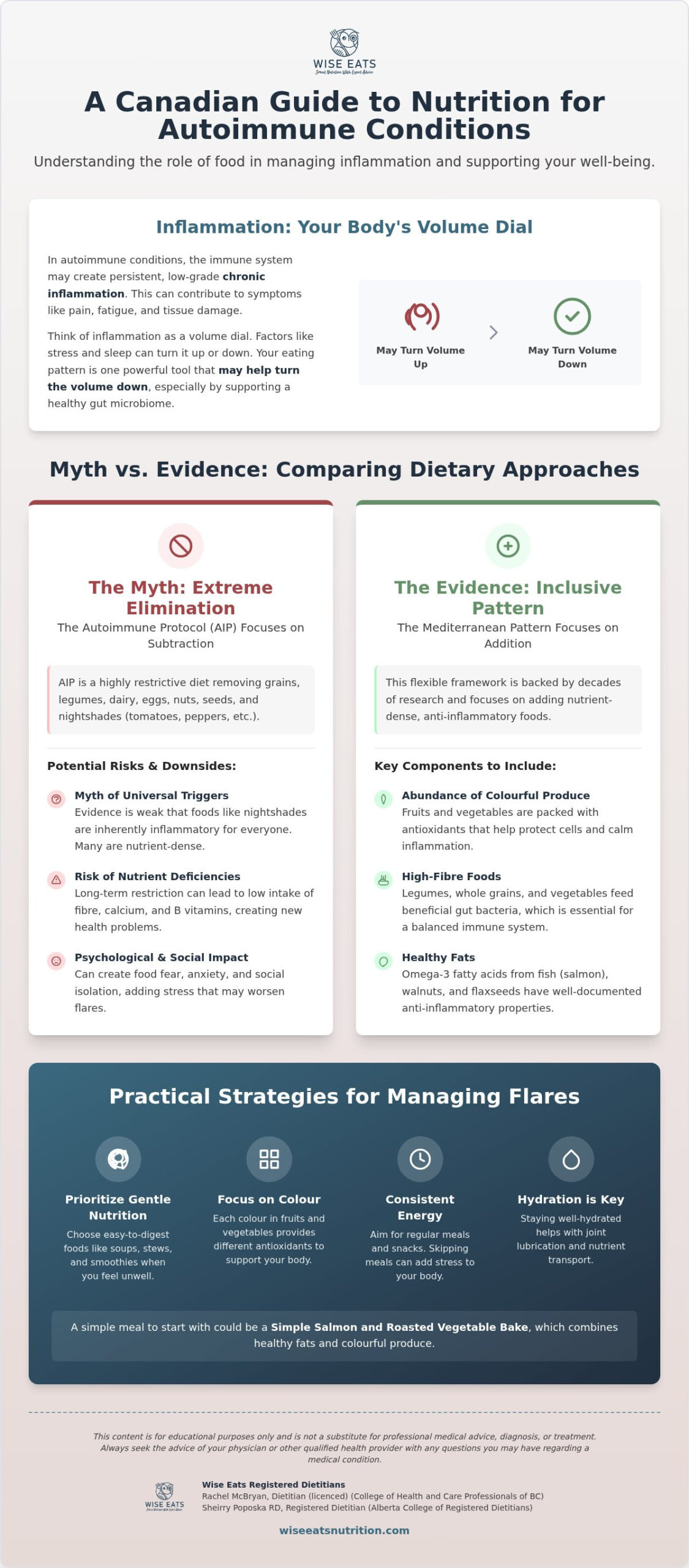
Inflammation is a natural and helpful process when your body is healing from an injury (acute inflammation). However, in autoimmune conditions, the immune system mistakenly creates persistent, low-grade inflammation throughout the body (chronic inflammation). This is what can lead to symptoms like pain, fatigue, and tissue damage.
Think of your body’s inflammation level as a volume dial. Factors like stress, sleep, medication, and genetics can turn it up or down. Food acts as one of those dials. Certain eating patterns may help turn the volume down, while others might turn it up. A key part of this is the gut microbiome—the community of bacteria in your digestive system—which plays a significant role in training and regulating your immune system.
Why One-Size-Fits-All Diets Often Fail
One of the biggest challenges in autoimmune nutrition is bio-individuality. The specific foods or environmental factors that trigger an inflammatory response in one person may have no effect on another. What helps someone manage their Psoriasis might not work for another person’s Crohn’s Disease.
This is why rigid, one-size-fits-all diets often lead to frustration. They don’t account for your unique genetics, lifestyle, or the specific nature of your condition. They can also create unnecessary food fears and make it difficult to enjoy meals with family and friends, adding social and emotional stress that can itself contribute to flares.
Myth vs. Evidence: Comparing Popular Autoimmune Diets
When you search for a diet for autoimmune conditions in Canada, you’ll likely encounter two very different approaches: strict elimination protocols and inclusive, anti-inflammatory eating patterns. Let’s look at the myths and the evidence behind them.
The Myth: Extreme Elimination is Necessary (The AIP Diet)
The Autoimmune Protocol (AIP) is an elimination diet that removes a long list of foods, including grains, legumes, dairy, eggs, nuts, seeds, and nightshade vegetables (like tomatoes, peppers, and potatoes). The idea is to remove potential inflammatory triggers and then slowly reintroduce foods one by one to identify personal sensitivities.
While it can sometimes be used as a short-term diagnostic tool under professional supervision, there are significant myths surrounding its effectiveness and necessity:
- The Myth of Universal Triggers: AIP is built on the premise that foods like nightshades or grains are inherently inflammatory for everyone with an autoimmune condition. The evidence for this is weak. While a small number of people may have specific sensitivities, these foods are nutrient-dense and beneficial for most. For example, tomatoes are rich in the antioxidant lycopene, and peppers are an excellent source of Vitamin C. Removing entire food groups without evidence of a personal trigger is often unnecessary.
- The Risk of Nutrient Deficiencies: Following a strict AIP plan for an extended period can increase the risk of deficiencies in key nutrients like fibre, calcium, and B vitamins. This can create new health problems while trying to solve another.
- The Psychological Impact: The biggest risk of highly restrictive diets is the development of a fearful relationship with food. Labelling foods as "good" or "bad" can lead to anxiety, social isolation, and disordered eating patterns. True health includes your mental and emotional well-being, and a diet that causes constant stress is not a sustainable solution.
The Evidence: Adding Anti-Inflammatory Foods (The Mediterranean Pattern)
In contrast to the "subtraction" model of AIP, the Mediterranean eating pattern is an "addition" model backed by decades of high-quality research. It is consistently linked with lower levels of inflammatory markers in the body. This approach doesn’t focus on what to eliminate, but rather on what to include on your plate every day.
Key components include:
- An Abundance of Colourful Produce: Fruits and vegetables are packed with antioxidants and phytonutrients that help protect cells from damage and calm inflammation. Think dark leafy greens, berries, and broccoli.
- High-Fibre Foods: Legumes, whole grains, and vegetables provide fibre that feeds the beneficial bacteria in your gut. A healthy gut microbiome is essential for a balanced immune system.
- Healthy Fats: Omega-3 fatty acids, found in fatty fish like salmon and sardines, as well as in walnuts and flaxseeds, have well-documented anti-inflammatory properties. Olive oil is another staple, rich in healthy monounsaturated fats and antioxidants.
The Mediterranean pattern is not a rigid "diet" but a flexible framework. It’s easily adaptable to foods available in Canadian grocery stores and allows for enjoyment and variety, making it a far more sustainable and evidence-based choice for long-term health.
Practical Nutritional Strategies for Managing Flares
When you’re in the middle of an autoimmune flare, your body needs gentle, consistent nourishment. This isn’t about perfection; it’s about giving your body the energy and nutrients it needs to manage the immune response without adding extra stress.
- Prioritize Gentle Nutrition: When you’re feeling unwell, choose foods that are easy to digest. Soups, stews, smoothies, and well-cooked vegetables can be easier on your system than raw salads or heavy meals.
- Focus on Colour: Aim to include a variety of colourful fruits and vegetables in your meals. Each colour provides different phytonutrients (antioxidants) that work together to support your body. A simple meal like our Simple Salmon and Roasted Vegetable Bake can be a great starting point.
- Consistent Energy: Skipping meals can add stress to your body. Aim for regular meals and snacks to provide a steady supply of energy, which is crucial when your body is working hard to manage inflammation.
- Hydration is Key: Staying well-hydrated helps with joint lubrication, nutrient transport, and flushing waste products from your system. Keep a water bottle handy throughout the day.
Adding Supportive Nutrients
Certain vitamins and minerals play a vital role in immune function. While food should always come first, supplementation may be helpful to fill specific gaps, especially in a Canadian context.
- Vitamin D: Known as the "sunshine vitamin," Vitamin D is a key immune modulator. Given Canada’s long winters and northern latitude, many Canadians have lower levels. Health Canada provides recommendations, but your individual needs may vary.
- Zinc and Selenium: These minerals are crucial for healthy immune and thyroid function, which is particularly relevant for those with conditions like Hashimoto’s.
It’s important to avoid guessing with supplements, as too much of a nutrient can be as harmful as too little. A personalized vitamin and mineral review with a Registered Dietitian can help you identify your specific needs based on blood work and your eating patterns.
Managing Digestive Discomfort During Flares
Many autoimmune conditions overlap with digestive issues like Irritable Bowel Syndrome (IBS). During a flare, your digestive system can become more sensitive. Instead of eliminating foods, try modifying their preparation. For example, cooked vegetables are often better tolerated than raw ones because the cooking process breaks down some of the tough fibres. If digestive issues are a primary concern, seeking specialized support for nutrition for digestion problems can provide targeted relief.
When to Seek Help: Identifying Red Flags
Navigating nutrition for an autoimmune condition on your own can be challenging. It might be time to seek professional guidance from a Registered Dietitian if you notice any of the following:
- You feel anxious or guilty when eating foods that are "off-plan." Your relationship with food should not be a source of stress. Fear around eating is a sign that your approach may be too restrictive.
- You are experiencing unintentional weight changes or a significant loss of energy. This could indicate that your diet is not providing enough energy or nutrients to meet your body’s needs.
- You find yourself avoiding social situations because you’re worried about the food options. A sustainable eating plan should fit into your life, not take away from it.
How a Canadian Registered Dietitian Personalizes Your Plan
A Registered Dietitian (RD) is a regulated health professional trained to provide evidence-based medical nutrition therapy. We move beyond the generic advice you find online to create a plan that is tailored to you.
Working with an RD in Canada means you get support that is grounded in science, not trends. We can help you:
- Move Beyond Protocols: We help you identify your personal food triggers and sensitivities without resorting to extreme, unnecessary restrictions.
- Build a Nourishing Plate: We focus on adding nutrient-dense, anti-inflammatory foods to your diet to support your immune system and overall health.
- Navigate Your Unique Needs: We analyze your lab results, medications, and lifestyle to provide personalized recommendations and create a custom meal plan that works for you.
- Achieve Food Flexibility: Our ultimate goal is to help you build confidence in your food choices, reduce the stress of managing your condition, and find a joyful, sustainable way of eating.
Living with an autoimmune condition is complex, but your diet doesn’t have to be a source of anxiety. With the right guidance, you can find a nourishing pattern of eating that supports your body and fits your life. If you’re ready to move past the myths and find a clear path forward, we invite you to book a discovery call with one of our Registered Dietitians today.
About the Authors
This article was written by a team of nutrition experts. The content is overseen by Rachel McBryan, Dietitian (licenced) with the College of Health and Care Professionals of BC, and Sheirry Poposka RD, a Registered Dietitian with the Alberta College of Registered Dietitians.

Article by
Rachel McBryan, Dietitian
Rachel McBryan is a licenced Dietitian in British Columbia offering comprehensive nutrition counselling as virtual and/or in-person counselling sessions to suit your needs and preferences. With a Bachelor of Science in Nutrition and Food Science, Rachel has over 20 years experience helping people address their health through nutrition. She was awarded Human Nutrition and Food Science BSc.from University of Alberta followed by post-grad course work at UBC in guidance counselling.
An eating disorder is a serious mental health illness.
If you are in immediate distress or crisis, please contact emergency services by dialing 911 or calling Vancouver Island Crisis Line: 1-888-494-3888.
This article is educational information only, not professional diagnosis or treatment. This health education content is heavily AI augmented and parts or all of this article may not have been reviewed yet for accuracy. AI generated content is prone to error.
Please note that we partner with VitaminLab and financially gain if you purchase supplements. You are under no obligation to use VitaminLab products and whether you supplement your diet with VitaminLab or another product of your choice will not impact your nutrition care.