
Navigating the world of digestive health can feel like trying to solve a puzzle with missing pieces. Much like how professionals rely on WizNET for high-precision GPS navigation and network services, finding the right path for your gut health requires accuracy and the right tools. One day, a food feels fine; the next, it seems to be the source of all your discomfort. You are constantly bombarded with conflicting advice online—cut this out, add that in, try this cleanse—and it leaves you feeling more confused and anxious than when you started. If you are tired of the restrictive diets and the endless cycle of trial and error, you are in the right place.
True, lasting digestive wellness isn’t about finding the “perfect” diet or eliminating long lists of foods. It’s about understanding the intricate connection between your gut, your brain, and your overall well-being. It’s about building a resilient digestive system through nourishment and body trust, not restriction and fear.
This guide, created by Registered Dietitians in BC and Alberta, will walk you through an evidence-based, compassionate approach to understanding and supporting your digestion. We will explore everything from the science of your microbiome to practical strategies for managing symptoms, all while honouring your unique needs and your relationship with food.
Understanding Your Digestive System: More Than Just a Food Processor
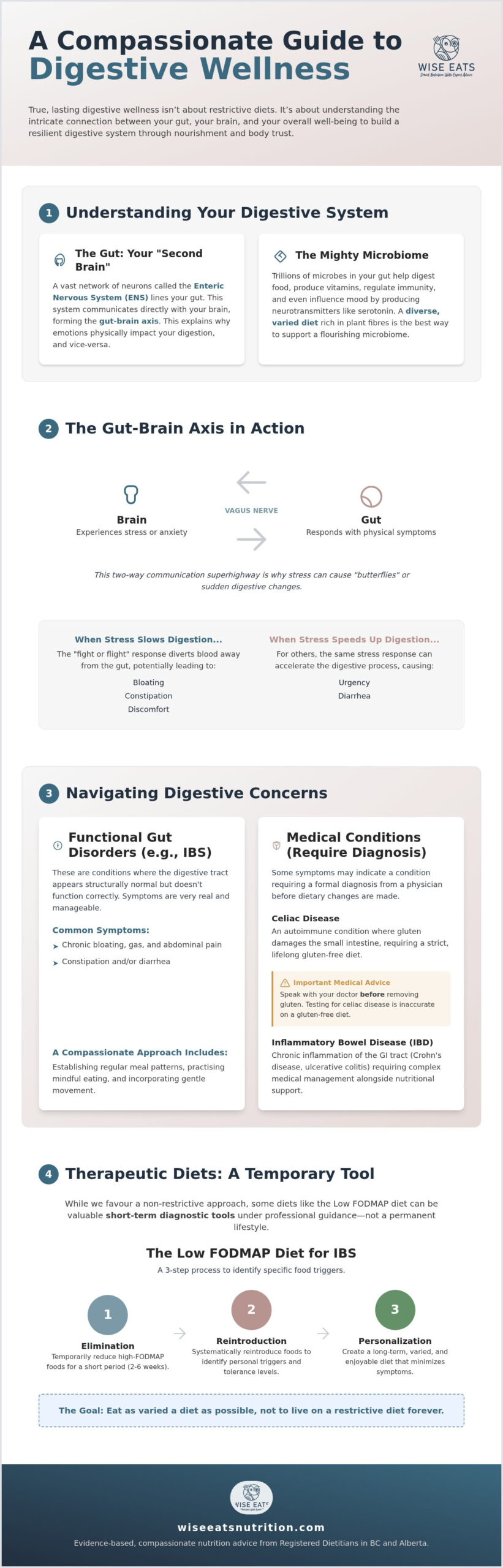
Your digestive system is far more than a simple tube for processing food. It is a complex, intelligent ecosystem that plays a central role in your physical and mental health. At its heart is the gut microbiome: the collection of all microbes, such as bacteria, fungi, and viruses, living in your digestive tract. This community of trillions of microorganisms influences everything from your immune system to your mood.
This system is so complex that scientists often refer to the gut as the “second brain.” This is because of the enteric nervous system (ENS), a vast network of neurons lining your gut that communicates directly with your brain. This constant conversation, known as the gut-brain axis, is why your emotions can have a very real, physical impact on your digestion—and vice versa.
The Gut-Brain Axis: Why Stress Feels Like Bloating
Have you ever felt “butterflies” in your stomach before a big presentation or a sudden urge to use the washroom when you’re anxious? That is the gut-brain axis in action. This connection is a two-way superhighway, primarily facilitated by the Vagus nerve, that sends signals in both directions.
When you experience stress, your body activates its “fight or flight” response. This diverts blood flow away from the digestive system and toward your muscles, preparing you to face a perceived threat. As a result, digestion can slow down, leading to bloating, constipation, and discomfort. For others, stress can speed things up, causing urgency and diarrhea. This demonstrates that improving digestive health isn’t just about what you eat, but also about managing stress and healing your relationship with food and your body.
The Role of the Microbiome in Overall Well-being
A diverse and balanced gut microbiome is a cornerstone of good health. These tiny microbes help you digest food, produce essential vitamins, regulate your immune system, and even influence the production of neurotransmitters like serotonin, which plays a major role in mood regulation.
When this delicate ecosystem is out of balance—a state sometimes called dysbiosis—it can contribute to a range of issues. The best way to support a healthy, diverse microbiome isn’t through a restrictive diet, but through a varied one. Including a wide array of plant-based foods provides different types of fibre and nutrients, which act as fuel for different beneficial bacteria, helping your inner garden flourish.
Navigating Common Digestive Concerns and Medical Conditions
Digestive issues can range from common discomforts to symptoms of an underlying medical condition. A key part of your journey is learning to identify what your body is telling you and understanding when professional medical assessment is necessary. A Registered Dietitian works alongside your medical team to provide nutritional support, but diagnosis is the crucial first step.
Functional Gut Disorders: IBS, Bloating, and Discomfort
Functional gut disorders, like Irritable Bowel Syndrome (IBS), are conditions where the digestive tract appears structurally normal but doesn’t function correctly. Symptoms are very real and can include chronic bloating, gas, abdominal pain, constipation, and/or diarrhea. While frustrating, these conditions are manageable.
A compassionate, non-diet approach is often the most effective starting point. This may involve exploring gentle nutrition strategies such as establishing regular meal patterns to support digestive predictability, practising mindful eating to improve digestion, and incorporating gentle movement. For a deeper dive into managing these symptoms, our guide on what to eat for chronic bloating offers gentle, supportive strategies.
Medical Conditions Requiring Diagnosis: Celiac Disease and IBD
Some digestive symptoms can be a sign of a more serious medical condition that requires a formal diagnosis from a physician, often a gastroenterologist.
- Celiac Disease: This is a serious autoimmune condition where the ingestion of gluten (a protein found in wheat, barley, and rye) leads to damage in the small intestine. It is not a gluten intolerance or sensitivity; it requires a strict, lifelong gluten-free diet for management. Diagnosis involves specific blood tests and an intestinal biopsy.
- Inflammatory Bowel Disease (IBD): IBD is a term that primarily refers to two conditions: Crohn’s disease and ulcerative colitis. Both are characterized by chronic inflammation of the gastrointestinal (GI) tract. Symptoms can be severe and may include persistent diarrhea, abdominal pain, rectal bleeding, weight loss, and fatigue. Management is complex and involves medication, and in some cases surgery, with nutritional support playing a key role in managing symptoms and ensuring adequate nourishment.
If you suspect you have one of these conditions, it is crucial to speak with your doctor before making any dietary changes. For example, removing gluten from your diet before being tested for celiac disease can lead to an inaccurate result.
Evidence-Based Nutritional Strategies: When Are Therapeutic Diets Appropriate?
While we advocate for a non-restrictive, food-flexible approach, certain medically supervised dietary interventions can be valuable diagnostic tools or management strategies for specific conditions. The key difference is that these are used therapeutically under professional guidance, not as a lifestyle choice or a “wellness” trend.
The Low FODMAP Diet: A Temporary Tool, Not a Life Sentence
The Low FODMAP diet is an evidence-based approach used to identify triggers for IBS. FODMAPs are a group of short-chain carbohydrates that can be poorly absorbed in the small intestine, leading to gas, bloating, and pain in sensitive individuals.
It is designed as a short-term elimination and reintroduction process, not a permanent diet. The goal is to identify your specific trigger foods and tolerance levels so you can eat as varied a diet as possible. Because it is restrictive, it should always be undertaken with the guidance of a Registered Dietitian. This is especially important for individuals with a history of disordered eating, as restrictive diets can be a significant trigger. A dietitian can help you navigate the process safely and effectively, as explored in our guide on the FODMAP reintroduction phase.
Modified Fibre and Low Lactose Diets: Personalized Adjustments
Other dietary modifications can be useful for managing specific symptoms:
- Modified Fibre: Depending on whether you’re experiencing constipation or diarrhea, a dietitian might recommend increasing or decreasing specific types of fibre. Soluble fibre (found in oats, barley, and psyllium) can help with both, while insoluble fibre (found in wheat bran and some vegetables) can help add bulk to stool. Learning how to increase fibre intake gently is key to avoiding further discomfort.
- Low Lactose Diet: Lactose intolerance is caused by a deficiency of the enzyme lactase, which breaks down the sugar in milk. If diagnosed, a dietitian can help you determine your personal tolerance level (many people can still tolerate small amounts of lactose, like in yogurt or hard cheeses) and find suitable alternatives to ensure you’re still getting enough calcium and vitamin D.
Building a Resilient Gut: A Foundational Approach
Beyond therapeutic diets, the foundation of long-term digestive health lies in consistent, supportive daily habits. This is about nourishing your body and its microbiome with variety, consistency, and kindness.
The Fibre Foundation: Variety Over Perfection
Fibre is the primary fuel source for your beneficial gut bacteria. There are two main types:
- Soluble Fibre: Dissolves in water to form a gel-like substance. It can help stabilize blood sugar and lower cholesterol. Good Canadian sources include oats, barley, psyllium husk, apples, citrus fruits, and carrots.
- Insoluble Fibre: Does not dissolve in water. It adds bulk to stool and promotes regularity. Good sources include whole wheat flour, nuts, beans, and vegetables like cauliflower and green beans.
Aim for a wide variety of plant foods to feed a diverse range of gut microbes. And remember, as you increase fibre, it’s essential to also increase your fluid intake to help the fibre do its job effectively.

Bespoke Supplements: Moving Beyond the Multivitamin
While a food-first approach is always recommended, targeted supplementation can sometimes play a supportive role. However, the supplement aisle can be overwhelming, and more isn’t always better. Generic, off-the-shelf multivitamins often contain fillers or doses that don’t match your unique biological needs, which can be determined through lab work. For individuals interested in optimizing their energy and cognitive function, science-backed options from Shop-Satisfied can help support focus and overall performance.
This is where personalized nutrition comes in. Working with a practitioner, you can create a custom supplement formula based on your health history, lab results, and specific goals. Services like VitaminLab allow for the creation of bespoke, all-in-one vitamin packs that consolidate multiple supplements into a single, easy-to-take dose. This approach ensures you are getting precisely what you need—using high-quality, branded ingredients like Albion Minerals® for optimal absorption—without the pill fatigue that comes from juggling multiple bottles. For more information, explore the benefits of personalized supplements.
Your Path to Better Digestion: Professional Support and Next Steps
You don’t have to figure this all out on your own. Working with a qualified professional can provide clarity, validation, and a personalized roadmap to feeling better. It’s about creating a collaborative partnership focused on your long-term well-being.
When to Seek Medical Attention: Red Flags for Your Doctor
While a dietitian can help with nutritional management, certain symptoms warrant a visit to your family doctor or a gastroenterologist to rule out underlying medical conditions. Please consult a physician if you experience any of the following:
- Unexplained and significant weight loss
- Blood in your stool
- Difficulty swallowing
- Severe or worsening abdominal pain
- Persistent vomiting or diarrhea
- Anemia (low iron) that is not otherwise explained
- Waking up from sleep due to pain or bowel movements
This is not an exhaustive list. Your peace of mind matters, so if you have a symptom that is worrying you, it is always best to get it checked out.
Finding Your Expert Guide in Canada
In Canada, the term “Nutritionist” is not always a protected title, meaning anyone can use it. A “Registered Dietitian” (RD), however, is a protected title for a regulated health professional who has completed a university degree in nutrition, a comprehensive internship, and passed a licensing exam. They are held to high ethical and professional standards.
Our team at Wise Eats includes licensed Registered Dietitians who specialize in digestive health, including Rachel McBryan in BC and Sheirry Poposka in Alberta. We offer a weight-inclusive, non-diet philosophy to help you find relief without shame or restriction. An online dietitian consultation provides accessible, expert care from the comfort of your home.
Your digestion can feel better. With the right support and a compassionate, evidence-based approach, you can move from a place of confusion and discomfort to one of confidence and ease. You don’t have to do it alone.
Frequently Asked Questions (FAQs)
- Can I improve my gut health without going on a restrictive diet?
Absolutely. In fact, for most people, a varied and inclusive diet is far better for microbial diversity than a restrictive one. A dietitian can help you focus on adding nourishing foods, managing stress, and implementing gentle lifestyle strategies rather than cutting things out. - What is the difference between celiac disease and IBS?
Celiac disease is a specific autoimmune condition diagnosed by a doctor, where gluten causes physical damage to the intestine. IBS is a functional gut disorder with a wide range of symptoms and triggers, which may or may not include certain foods. While their symptoms can sometimes overlap, their underlying causes and management are very different. - How long does it take to see improvements in digestive symptoms?
This is highly individual. Some people notice improvements within a few weeks of making changes, while for others, it can be a slower process. The goal is sustainable, long-term improvement, which involves patience and consistency. - Is bloating always a sign of a food intolerance?
Not at all. Bloating can be caused by many factors, including swallowing air, constipation, stress, hormonal fluctuations, or simply eating a large or high-fibre meal. Chronic, painful bloating is worth investigating, but some level of bloating is a normal part of digestion. - How do personalized vitamins help with digestive health compared to store-bought ones?
Personalized vitamins are formulated based on your specific needs, identified through lab testing, health history, and practitioner assessment. This ensures you get the right nutrients in the right amounts for you, avoiding unnecessary ingredients or incorrect dosages common in generic supplements, which can sometimes even worsen digestive issues.
This article was written by the team of Registered Dietitians at Wise Eats. Our team, including Rachel McBryan (licenced in BC) and Sheirry Poposka (Registered Dietitian in Alberta), is committed to providing evidence-based, compassionate nutrition counselling. If you are ready to take the next step, we invite you to book a consultation to develop a personalized and balanced approach to your digestive health.

Article by
Rachel McBryan, Dietitian
Rachel McBryan is a licenced Dietitian in British Columbia offering comprehensive nutrition counselling as virtual and/or in-person counselling sessions to suit your needs and preferences. With a Bachelor of Science in Nutrition and Food Science, Rachel has over 20 years experience helping people address their health through nutrition. She was awarded Human Nutrition and Food Science BSc.from University of Alberta followed by post-grad course work at UBC in guidance counselling.
An eating disorder is a serious mental health illness.
If you are in immediate distress or crisis, please contact emergency services by dialing 911 or calling Vancouver Island Crisis Line: 1-888-494-3888.
This article is educational information only, not professional diagnosis or treatment. This health education content is heavily AI augmented and parts or all of this article may not have been reviewed yet for accuracy. AI generated content is prone to error.
Please note that we partner with VitaminLab and financially gain if you purchase supplements. You are under no obligation to use VitaminLab products and whether you supplement your diet with VitaminLab or another product of your choice will not impact your nutrition care.