Did you know 10.4% of Canadian women between 15 and 49 live with anemia? It feels exhausting to eat all the right foods and still feel tired. You spend time picking fresh produce at the market in BC or Alberta, yet your energy levels stay low. It is easy to feel confused by the endless stream of nutrition advice online. Focusing on food intake is only one element of health. Learning how to improve nutrient absorption through better habits is the next step.
We understand the frustration of trying to find clarity among complex information. This guide provides evidence-based strategies to help your body use vitamins and minerals through food pairing and digestive support. You will find practical food pairing ideas, tips on how cooking changes nutrition, and ways to feel confident in your supplement choices. Our team works with residents across British Columbia and Alberta to build personalized plans. These steps replace confusion with a sense of clarity and hope for your health journey.
Key Takeaways
- Combine iron-rich plant foods with citrus or peppers to help your body use iron more effectively.
- Identify cooking methods releasing antioxidants like lycopene and those reducing heat-sensitive vitamins.
- Understand how to improve nutrient absorption by chewing food thoroughly to support the digestive process.
- Replace multiple supplement bottles with a single personalized formula from VitaminLab designed for your specific needs.
- Connect with a registered dietitian in BC or Alberta for a meal plan tailored to your unique health requirements.
Understanding Nutrient Bioavailability and the Digestive Process
You eat a meal full of iron-rich lentils or calcium-packed greens, and you assume your body takes it all in. That’s not quite how it works. Nutrient Bioavailability refers to the proportion of a nutrient that actually enters your bloodstream and produces an effect in your body. The rest passes through unused. Understanding this process is the real starting point for learning how to improve nutrient absorption in a practical, grounded way.
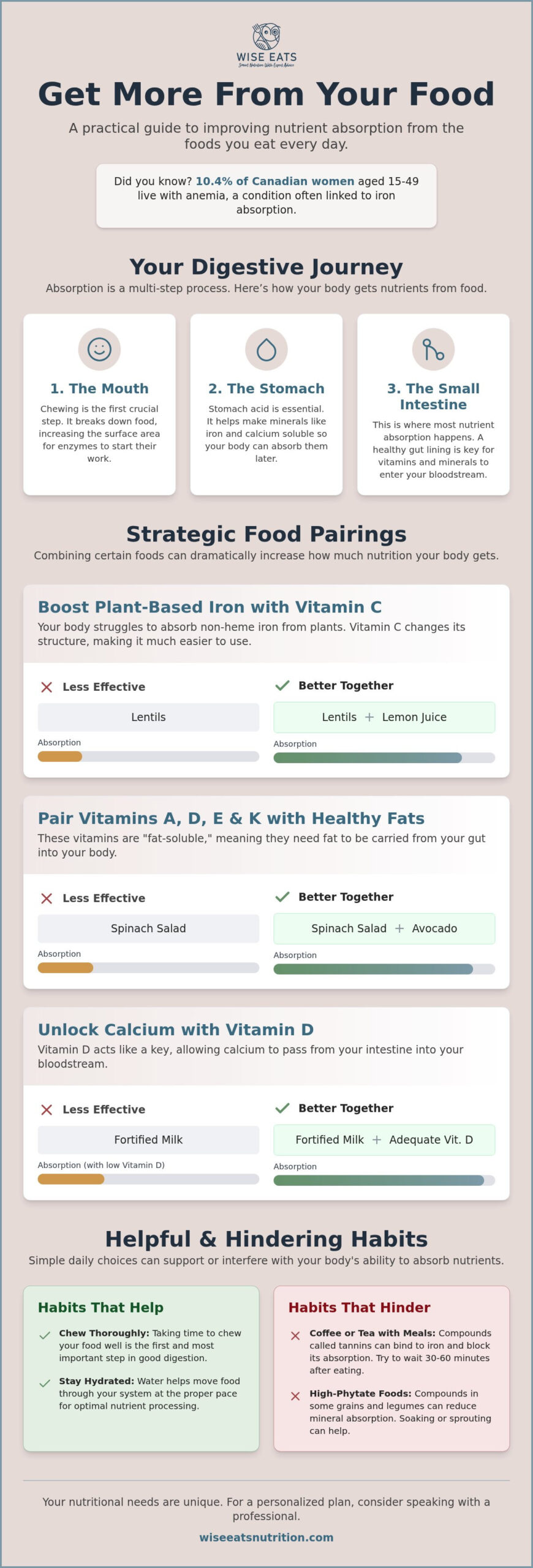
Digestion starts in your mouth. Chewing breaks food into smaller pieces, and salivary enzymes begin splitting carbohydrates before food even reaches your stomach. Once food arrives there, stomach acid lowers the pH to create the right chemical environment for minerals like iron and calcium to become soluble. Without adequate acid, these minerals stay bound in forms your body struggles to use.
The Role of the Small Intestine in Nutrition
The small intestine is where most absorption happens. Its inner walls are lined with tiny finger-like projections called villi, and each villus is covered in even smaller microvilli. Together, these structures create an enormous surface area, which gives nutrients the best possible chance of crossing into your bloodstream. Proteins, fats, and fat-soluble vitamins like A, D, E, and K all rely on this surface to enter circulation.
When these structures are damaged, whether from chronic inflammation, certain medical conditions, or other factors, absorption drops significantly. Food moves through, but far less of its nutritional value reaches your cells. Gut motility also matters here. Food needs to stay in contact with the intestinal wall long enough for absorption to occur, but not so long that it ferments and causes discomfort.
Factors Influencing Digestive Efficiency
Several everyday factors shape how well your digestive system functions:
- Hydration: Water helps move food through your digestive tract at the right pace. Low fluid intake slows transit and affects how nutrients are processed.
- Enzyme production: Your pancreas and small intestine release enzymes that break down proteins, fats, and carbohydrates into absorbable units. Reduced enzyme output, which is more common with age or certain health conditions, limits how much your body extracts from food.
- Age and health status: Stomach acid production often decreases as people get older, which affects mineral absorption in particular. Conditions affecting the gut lining or pancreatic function have a direct impact on efficiency.
If you’ve been eating well and still feel like something is off, these underlying digestive factors are worth exploring with a registered dietitian. A nutrition plan for digestive health looks at the full picture, not just what’s on your plate.
Strategic Food Pairings for Improved Vitamin and Mineral Uptake
What you eat matters. What you eat together matters just as much. Certain nutrients depend on other compounds to move from your digestive tract into your bloodstream. Getting these combinations right is one of the most practical ways to improve how to improve nutrient absorption without changing your entire diet.
Maximizing Fat-Soluble Vitamins
Vitamins A, D, E, and K are fat-soluble, meaning your body transports them using dietary fat. Without fat present in the same meal, a meaningful portion of these vitamins passes through unused. This doesn’t require a large amount. A drizzle of olive oil over roasted carrots or half an avocado alongside a spinach salad gives your body what it needs to move these nutrients into circulation. The fat acts as a carrier, not a flavour addition.
This pairing is especially relevant for Canadians eating plant-heavy diets. Leafy greens like kale and Swiss chard are rich in vitamins A and K, but eating them plain or with a fat-free dressing limits how much your body actually uses.
Improving Iron and Calcium Absorption
Plant-based iron, called non-heme iron, is harder for the body to absorb than iron from meat. Pairing it with vitamin C changes that. Vitamin C converts non-heme iron into a form your intestinal cells take up more readily. A bowl of lentil soup with a squeeze of lemon, or black bean tacos with diced red pepper, puts this principle into action at an everyday meal level.
Calcium absorption follows a different path. Your body relies on vitamin D to pull calcium from food into the bloodstream. Without enough vitamin D, even calcium-rich foods like fortified plant milks or yoghurt offer limited benefit. Given that many Canadians have lower vitamin D levels through the fall and winter months, this pairing deserves attention year-round.
A few habits that work against mineral absorption are worth knowing:
- Tea and coffee near meals: Tannins in these drinks bind to iron and reduce how much your body absorbs. Waiting 30 to 60 minutes after an iron-rich meal before having your cup makes a practical difference.
- High-phytate foods alongside mineral-rich meals: Phytates, found in raw bran and some seeds, bind to minerals like zinc, iron, and calcium in the digestive tract. Soaking, sprouting, or fermenting these foods beforehand reduces phytate content significantly.
Research on Gut Health and Nutrient Absorption from the International Probiotics Association also highlights how the gut microbiome plays a direct role in breaking down food compounds that affect mineral availability. Food pairing works best when your gut environment is healthy enough to support the process.
If you’re unsure which pairings fit your current eating patterns, a personalized meal plan from a registered dietitian takes the guesswork out of the equation and builds these combinations into meals you’ll actually enjoy.
Preparation Methods and Gut Health Factors
How you prepare your meals changes their chemical structure before the first bite. Some nutrients become more available with heat. Others break down. Finding a balance helps your body get what it needs. This is a practical way to understand how to improve nutrient absorption through daily habits in your kitchen.
Cooking tomatoes increases the availability of lycopene. This antioxidant is bound tightly within the plant’s cell walls. Heat breaks these walls down. Conversely, Vitamin C is sensitive to temperature. Long cooking times or high heat often reduce the Vitamin C content in vegetables like broccoli or bell peppers. Choosing the right method for each food ensures you get the most value from your groceries.
Raw vs Cooked: Choosing the Best Method
Steaming vegetables often preserves more nutrients than boiling. When you boil greens, water-soluble vitamins like B and C often leach into the cooking water. Unless you drink the liquid, those nutrients are lost. Steaming keeps the food out of the water and maintains its nutritional profile. It is a simple shift for residents in BC and Alberta to make during evening meal prep.
Lightly cooking spinach is another helpful strategy. Raw spinach contains oxalates. These compounds bind to minerals like calcium and prevent their uptake. Heating the spinach reduces oxalate levels. This makes the calcium more accessible. A mix of raw and cooked foods throughout the day provides a balance of different nutrient profiles. You get the heat-stable antioxidants from cooked items and the sensitive vitamins from raw ones.
The Gut Microbiome and Nutrient Synthesis
Your digestive tract is home to trillions of bacteria. These microbes do more than just break down food. Beneficial bacteria in the gut synthesize Vitamin K and several B vitamins, including B12 and folate. A healthy gut environment is essential for this internal production. When the microbiome is out of balance, this natural synthesis often slows down.
Fermented foods like kefir, sauerkraut, or kimchi support this environment. They introduce helpful microbes into your system. These probiotics work alongside prebiotics, which are fiber-rich foods like garlic, onions, and bananas. Fiber acts as fuel for the bacteria already living in your gut. Together, they help maintain the integrity of your intestinal lining. A strong lining prevents inflammation and ensures the gateways for nutrients remain open. If you want to learn more about your specific needs, talking with a Registered Dietitian in BC or Alberta provides a clear path forward.
Try Fermenting food yoursellf with this recipe!
Habits and Personalized Supplementation Strategies
Food quality and pairing strategies only go so far if your body isn’t in the right state to process them. The habits surrounding how you eat shape how to improve nutrient absorption just as much as what ends up on your plate.
Mindful Eating and Digestive Support
Chewing is the first mechanical step in digestion, and most people rush it. Chewing food until it reaches a near-liquid consistency increases the surface area available for digestive enzymes to work on. Smaller particles mean more contact, and more contact means more of each nutrient gets extracted before food even reaches your small intestine.
Eating in a relaxed state also makes a real difference. Your parasympathetic nervous system, the one responsible for rest and digestion, works best when you’re not stressed or distracted. A meal eaten quickly at a desk activates a different physiological state than one eaten sitting down without a screen nearby. Digestion slows when your body perceives urgency.
Spacing meals appropriately gives your digestive tract time to complete what’s called the migrating motor complex, a cleaning wave that sweeps through between meals and clears residue from your intestines. Constant snacking interrupts this process. Sleep matters here too. Poor or shortened sleep affects the hormones that regulate gut motility and appetite, which creates a ripple effect on how efficiently your body processes nutrients the next day.
Precision Nutrition with Custom Formulas
Generic supplements are designed for a general population, not for you specifically. A custom formula changes that. Through Wise Eats, residents in BC and Alberta have access to personalized supplement formulas through VitaminLab, which are Health Canada licensed and third-party tested.
These formulas use high-bioavailability ingredients that your body absorbs more readily. For example, methylcobalamin is a form of B12 that doesn’t require conversion before your cells use it. Pyridoxal-5-phosphate (P5P) is the active form of B6, ready for immediate use. Precision dosing means you receive the specific amounts of minerals like magnesium or zinc that your individual situation calls for, rather than a one-size-fits-all quantity.
Replacing a shelf full of separate bottles with one consolidated formula also reduces what’s sometimes called pill fatigue. Fewer decisions, fewer missed doses, and a clearer picture of what you’re actually taking.
Financial disclosure: Purchasing a VitaminLab formula is not required to access Wise Eats nutrition services. A registered dietitian assesses your needs first and recommends supplementation only when it fits your health picture.
If you’re ready to find out which nutrients your body actually needs, a dietitian consultation is the right starting point.
Professional Guidance and Nutritional Support
Reading about how to improve nutrient absorption is a useful starting point. Putting it into practice for your specific body, health history, and food preferences is where a registered dietitian becomes genuinely helpful. Generic advice is written for everyone, which often means it fits no one particularly well.
Wise Eats works with residents across British Columbia and Alberta through two registered dietitians who bring both clinical training and practical nutrition knowledge to every consultation. Rachel McBryan, RD, is registered with the College of Health and Care Professionals of BC. Sheirry Poposka, RD, is registered with the Alberta College of Registered Dietitians. Both bring evidence-based approaches to meal planning that account for your actual life, not an idealized version of it.
When to Seek Help
Some signs suggest it’s time to speak with a registered dietitian rather than continuing to adjust things on your own. These aren’t reasons for alarm, just signals worth taking seriously:
- Unexpected weight changes: Losing weight quickly without a clear explanation deserves professional attention, as this sometimes reflects an absorption issue rather than a dietary one.
- Persistent physical symptoms: Extreme fatigue, brittle nails, or hair thinning that doesn’t improve with dietary changes often points to a specific nutrient gap that needs assessment.
- Anxiety or isolation around food: Feeling stressed about eating, avoiding social meals, or spending significant mental energy on food choices are signs that support from a registered dietitian, and possibly other care providers, could help.
You don’t need to be in crisis to reach out. Many people connect with a dietitian simply because they want a clearer picture of what their body actually needs.
Personalized Meal Planning Services
Through EatLove, Wise Eats dietitians build meal plans that include grocery lists and recipe ideas matched to your preferences. Plans account for cultural food traditions, time available for cooking, and realistic weeknight constraints. This is the difference between a plan you follow for three days and one that fits into your actual routine.
A dietitian-designed meal plan structures food pairings and preparation methods around your specific nutrient needs, removing the guesswork entirely.
Recipe Idea: Roasted Beet and Orange Salad with Toasted Walnuts. This combination pairs plant-based iron from beets with vitamin C from oranges, and healthy fats from walnuts to support fat-soluble vitamin uptake. It’s a practical example of absorption principles built into an everyday meal.
If you’re ready to move from information to action, working with a registered dietitian gives you a clear, personalized path forward.
Take Proactive Steps for Your Nutritional Health
Your journey toward better health starts with understanding how to improve nutrient absorption through daily choices. Small shifts in your kitchen make a significant difference. Pairing vitamin C with plant-based iron or adding healthy fats to your leafy greens helps your body use the vitamins you consume. Chewing thoroughly and eating in a relaxed state also provides the digestive support your system needs to function at its best.
Rachel McBryan, RD, and our team in British Columbia and Alberta provide the expert guidance needed to move past confusion. We offer evidence-based meal plans and personalized supplement audits to ensure your approach is built on your unique data. You don’t have to navigate complex nutrition information alone. Our goal is to provide clarity and replace anxiety with a practical path forward. We are here to act as a steady hand as you integrate these habits into your lifestyle.
Book a consultation with a Wise Eats registered dietitian
Focusing on these strategies brings a sense of relief and peace of mind. Every meal is an opportunity to support your well-being with confidence. You are taking proactive steps toward a more vibrant future, and we feel honoured to support you along the way.
Frequently Asked Questions About Nutrient Absorption
How do I know if I am not absorbing nutrients properly?
Your body sends signals worth paying attention to. Persistent fatigue that doesn’t improve with rest, hair thinning, brittle nails, slow wound healing, or frequent infections are all signs that something in your nutritional picture deserves a closer look. These symptoms don’t confirm an absorption problem on their own, but they’re reasonable reasons to speak with a registered dietitian rather than continuing to adjust your diet independently.
Which foods should I avoid to improve my nutrient uptake?
No single food needs to be permanently removed. The timing and combination matters more than avoidance. Drinking tea or coffee within 30 to 60 minutes of an iron-rich meal reduces how much iron your body takes in, because tannins bind to it in your digestive tract. Raw bran eaten alongside mineral-rich foods has a similar effect. Soaking legumes before cooking and spacing out coffee from meals are practical adjustments that make a real difference without cutting anything out entirely.
Does drinking water during meals affect my digestion?
Drinking moderate amounts of water during a meal is generally fine for most people. The idea that it significantly dilutes stomach acid or digestive enzymes isn’t well supported by current evidence. Staying hydrated throughout the day supports gut motility and helps nutrients move through your digestive tract at the right pace. If you notice consistent bloating or discomfort after meals regardless of water intake, that’s worth discussing with a dietitian.
Are raw vegetables better for nutrition than cooked ones?
Neither is universally better. The answer depends on the vegetable. Cooking tomatoes increases lycopene availability. Lightly heating spinach reduces oxalates, which makes its calcium more accessible. At the same time, heat breaks down vitamin C in broccoli and peppers. A practical approach is eating a mix of raw and cooked vegetables throughout the day, which gives your body access to a broader range of nutrients from both preparation methods.
How long does it take for the body to absorb vitamins from food?
Water-soluble vitamins like vitamin C and the B vitamins begin absorbing in the small intestine within a few hours of eating. Fat-soluble vitamins, including A, D, E, and K, take longer because they depend on dietary fat and bile for transport. The full process from eating to absorption into your bloodstream typically spans two to six hours, though this varies based on the food, your digestive health, and what else you ate at the same meal.
Do I need a blood test to check my nutrient levels?
A blood test ordered by your doctor is the most direct way to identify specific deficiencies. A registered dietitian doesn’t order lab work, but they do work with your existing test results to build a nutrition plan around your actual numbers. If you’ve never had nutrient levels checked and you’re experiencing ongoing symptoms, asking your doctor for relevant bloodwork is a reasonable first step before making significant changes to your diet or supplements.
Can certain medications interfere with how I absorb minerals?
Yes, some medications affect how to improve nutrient absorption by interfering with specific minerals or vitamins. Proton pump inhibitors, which reduce stomach acid, are associated with lower magnesium and B12 absorption over time. Some blood pressure medications and antibiotics interact with certain minerals. If you take regular medication, mentioning this to your registered dietitian allows them to account for potential interactions when building your meal plan or reviewing your supplement needs.
What is the best time of day to take supplements for absorption?
Timing depends on the supplement. Fat-soluble vitamins like D and K absorb better when taken with a meal that contains dietary fat. Iron is often better absorbed on an empty stomach, though this causes discomfort for some people. B vitamins taken earlier in the day tend to work better with your natural energy rhythms. A registered dietitian reviews your specific formula and daily routine to give you a timing plan that fits your life rather than a generic schedule.

Article by
Rachel McBryan, Dietitian
Rachel McBryan is a licenced Dietitian in British Columbia offering comprehensive nutrition counselling as virtual and/or in-person counselling sessions to suit your needs and preferences. With a Bachelor of Science in Nutrition and Food Science, Rachel has over 20 years experience helping people address their health through nutrition. She was awarded Human Nutrition and Food Science BSc.from University of Alberta followed by post-grad course work at UBC in guidance counselling.
An eating disorder is a serious mental health illness.
If you are in immediate distress or crisis, please contact emergency services by dialing 911 or calling Vancouver Island Crisis Line: 1-888-494-3888.
This article is educational information only, not professional diagnosis or treatment. This health education content is heavily AI augmented and parts or all of this article may not have been reviewed yet for accuracy. AI generated content is prone to error.
Please note that we partner with VitaminLab and financially gain if you purchase supplements. You are under no obligation to use VitaminLab products and whether you supplement your diet with VitaminLab or another product of your choice will not impact your nutrition care.