Have you ever stood in the grocery aisle staring at a tiny bag of “miracle” seeds and wondered if they’re actually worth the price of a full meal? It’s completely normal to feel overwhelmed by the constant stream of new Superfood Trends that promise to change your life overnight. You want to make the best choices for your health, but the marketing noise and rising grocery costs can make every trip to the store feel like a test you’re failing. At Wise Eats Registered Dietitians, we understand that frustration, and we’re here to help you filter out the noise so you can shop with confidence.
You deserve to know which 2026 food trends are actually supported by science and how to integrate these nutrient-dense options into your life without the marketing hype or a massive grocery bill. Our goal is to provide you with clarity and practical, evidence-based advice that fits your real life in British Columbia or Alberta. In this article, we will explore which staples are truly worth your time, how to shop smart as food prices rise, and how to build a nourishing relationship with food that feels sustainable and stress-free. Let’s look at the facts together and find a path that works for you.
Key Takeaways
- Learn why the “superfood” label is primarily a marketing tool and how focusing on nutrient density can help you make clearer choices at the grocery store.
- Explore the research behind 2026 Superfood Trends to see how ingredients like sea vegetables and functional mushrooms might fit into your life.
- Discover how local Canadian staples like blueberries and lentils compare to expensive, trendy imports in terms of both nutrition and cost.
- Get practical tips for adding nutrient-dense options to your routine, including how to use pulses in simple recipes like Lemony Lentil Soup.
- Understand how a Registered Dietitian can help you filter out the noise and develop a personalized nutrition plan that supports your unique needs.
What Defines a Superfood? Separating Marketing from Science
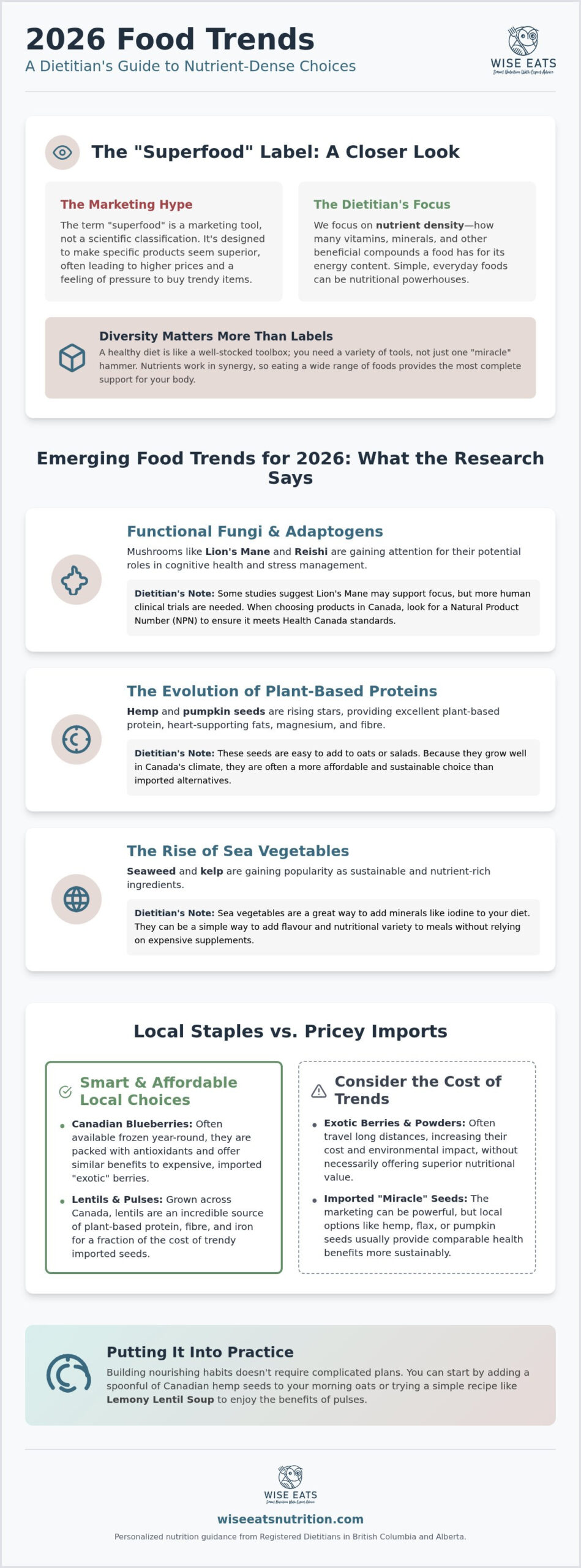
Have you noticed how certain foods suddenly appear everywhere, from smoothie bowls to cereal boxes? While the term is popular, it is helpful to understand What Defines a Superfood? from a scientific perspective. In reality, “superfood” is a marketing label rather than a clinical or medical classification. It was created to help sell specific products by making them seem vastly superior to everyday staples. This label often drives up prices, leading many people in British Columbia and Alberta to feel they must spend more to be healthy. You don’t need a “miracle” ingredient to nourish your body well.
The food industry uses these Superfood Trends to influence your spending habits. By highlighting one specific berry or seed, they create a sense of urgency. However, an expensive price tag or a trendy label does not determine a food’s actual nutritional value. Simple, local options often provide the same, if not better, benefits for your body. We believe in looking past the hype to find what truly supports your unique needs without the extra cost.
The Dietitian’s View on Nutrient Density
Instead of looking for “super” labels, dietitians focus on nutrient density. This is a simple ratio that looks at how many vitamins, minerals, and phytonutrients a food contains compared to its energy content. Think of your diet like a balanced toolbox. A hammer is great, but you can’t build a house with only one tool. You need a variety of tools, like screwdrivers and saws, to get the job done right. Relying on one “miracle” ingredient is like trying to fix everything with just a hammer. True health comes from the collective strength of many different foods working together. Nutrient-dense foods can be as simple as a bag of frozen spinach or a tin of lentils.
Why Diversity Matters More Than Labels
Our bodies thrive on synergy. Nutrients don’t work in isolation; they help each other. For example, some vitamins need fats to be absorbed, while others work better when paired with specific minerals. When we fixate on a single “superfood,” we might accidentally ignore other important food groups. This can lead to a narrow eating pattern that feels repetitive. We encourage a neutral perspective where all foods have a place. By embracing a wide range of ingredients, you ensure your body gets the diverse support it needs to function at its best. If you’re feeling stuck, working with a dietitian can help you move past labels and find a balance that feels right for you.
Emerging Superfood Trends for 2026: What the Research Says
As we look toward 2026, the conversation around nutrition is shifting. You might be hearing more about “functional” ingredients that do more than just provide calories. These Superfood Trends often focus on supporting specific body systems, but it is vital to keep Separating Marketing from Science as you explore new options. While some of these foods show promise, we always look for clinical evidence to see how they might truly benefit your health. In Canada, our regulations help ensure that what you see on the label is what you get in the package.
Functional mushrooms and sea vegetables are two areas seeing significant growth. Many people are looking for ways to support their focus or digestive health without relying on restrictive patterns. We believe that adding variety to your plate is a more sustainable way to nourish your body. This approach helps you avoid the stress of making the “wrong” choice while keeping your meals interesting. Let’s look at what the current research says about these emerging options.
Functional Fungi and Adaptogens
Functional mushrooms like Lion’s Mane and Reishi are gaining attention for their potential role in cognitive health and stress management. Some studies suggest Lion’s Mane may support focus, while Reishi is often linked to helping the body manage stress. However, many of these findings come from laboratory settings. We still need more human clinical trials to be certain of the long-term effects. In Canada, new Natural Health Product (NHP) regulations as of March 2026 require stricter stability testing and quality systems. This is good news for you. It means the mushroom products on our shelves must meet higher quality standards. When choosing a product, look for a Natural Product Number (NPN) to ensure it has been reviewed by Health Canada.
The Evolution of Plant-Based Proteins
Hemp and pumpkin seeds are becoming staples in the Canadian kitchen. These seeds are rising stars because they provide excellent plant-based protein alongside heart-supporting fats. Hemp seeds are a great source of omega-3 fatty acids, while pumpkin seeds provide magnesium and fibre. These nutrients can help with digestion and keep you feeling satisfied. You can easily add them to a morning bowl of oats or a salad without needing to follow a rigid plan. Because these crops grow well in our climate, they are often more affordable and sustainable than imported alternatives. If you want to see how these ingredients might fit into your life, you can book a consultation with us to talk about your goals.
Sea vegetables like seaweed and kelp are also gaining popularity as sustainable sources of iodine and minerals. These can be a simple way to add flavour and nutrition to soups or snacks. For those focused on digestive health, fermented foods remain a reliable choice. Health Canada recently held consultations on a new prebiotic monograph in early 2026. This move toward better standardization helps us understand how these foods can support our gut environment. By focusing on these evidence-based options, you can navigate the latest trends with confidence and peace of mind.
Beyond the Hype: Comparing Trendy Superfoods to Canadian Staples
It is easy to feel like you need to buy exotic, expensive ingredients to stay healthy. With food prices forecasted to rise by 4% to 6% in 2026, many families in Western Canada are feeling the pinch at the checkout. The average Canadian family of four is expected to spend over $17,500 on groceries this year. This makes it even more important to look past the marketing of certain Superfood Trends and find value in our own backyards. You don’t have to choose between your budget and your well-being.
Many of the most popular “superfoods” have local counterparts that are just as nutrient-dense. For example, while acai and goji berries are often praised for their antioxidants, our local BC blueberries and Saskatoon berries offer similar benefits at a fraction of the cost. Similarly, while quinoa is a wonderful grain, Canadian-grown pulses like lentils and chickpeas provide excellent protein and fibre. By choosing local, you are supporting Canadian farmers while keeping your grocery bill manageable. We can help you find this balance through custom meal planning that focuses on what is available in your local store.
Local Heroes of British Columbia and Alberta
In British Columbia, we are lucky to have access to dark, flavorful berries that grow across Vancouver Island and the Fraser Valley. These berries are packed with phytonutrients that support your body. In Alberta, the vast prairies produce some of the best pulses in the world. Lentils and beans are not just budget-friendly; they are powerhouses of nutrition that can be added to almost any meal. You can often find these items at local farmers’ markets or in the bulk section of your grocery store. Choosing these staples helps you stay informed about Emerging Superfood Trends without feeling pressured to buy into every new fad.
Cost-Effective Nutrition Strategies
Eating well does not have to be complicated or expensive. You can build a very nourishing diet using versatile Canadian ingredients that stay fresh in your pantry for months. Here are a few ways to focus on value:
- Choose Frozen: Frozen fruits and vegetables are picked at their peak and are just as nutritious as fresh ones. They are often much cheaper, especially in the winter months.
- Embrace Oats and Flax: These are Canadian staples that provide excellent fibre for digestive health. They are far more affordable than trendy imported seeds.
- Buy in Bulk: Purchasing dried lentils, chickpeas, and beans in larger quantities can significantly lower your cost per meal.
Organizing your kitchen around these reliable items creates a sense of peace. You won’t have to worry about whether you’ve bought the “right” trendy ingredient because you’ll have a foundation of solid, evidence-based nutrition right in your cupboard. It’s about making choices that feel good for your body and your bank account.
Practical Ways to Integrate Nutrient-Dense Foods into Your Routine
Integrating new habits shouldn’t feel like a chore or a source of stress. While Superfood Trends often make it seem like you need a total kitchen makeover, the most sustainable changes are often the smallest ones. You can improve the nutrient density of your meals by simply adding to what you already enjoy. This “add-in” approach helps you avoid a mindset of lack and keeps your relationship with food positive and flexible. It’s about building on your current foundation rather than tearing it down.
Think about your favourite family meals and how they might welcome a little extra boost. A handful of frozen spinach can be stirred into a pasta sauce or a smoothie without changing the flavour much. Hemp or pumpkin seeds can be sprinkled onto morning oats or yogurt for extra protein and healthy fats. Another practical way to use nutrient-dense pulses is by making a batch of Lemony Lentil Soup, which is both filling and budget-friendly. These gradual habit changes allow your palate and your routine to adjust naturally over time.
Small Steps for Long-Term Success
We believe in the power of “adding” rather than “subtracting.” When you focus on what you can include, you naturally create a more diverse and satisfying plate. This might mean adding a side of roasted root vegetables to your dinner or mixing some ground flaxseed into your muffin batter. These small actions help you realize your nutritional goals without the pressure of a total diet overhaul. Over time, these small additions become second nature, leading to a more varied and resilient eating pattern that supports your body’s needs.
When to Seek Professional Help
Sometimes, the pressure of trying to eat “perfectly” can become heavy. If you find that your focus on health is causing more anxiety than relief, it might be time to chat with a professional. We are here to act as a steady hand when you feel uncertain or overwhelmed by conflicting information. Seeking support is a proactive step toward finding peace with your food choices. You may want to reach out if you notice any of these red flags:
- Feeling persistent anxiety, guilt, or fear when making daily food choices.
- Experiencing an obsessive focus on only eating “healthy” foods that interferes with your social life or mental well-being.
- Dealing with ongoing digestive upset or physical discomfort that makes eating feel like a challenge.
If you are struggling with these feelings, our team offers support through eating disorder recovery and specialized care for digestive health. We can help you navigate these challenges in a way that prioritizes your peace of mind and long-term health.
Personalized Nutrition: How a Registered Dietitian Can Help You Navigate Trends
Navigating the latest Superfood Trends can feel like trying to find your way through a thick coastal fog without a map. While general advice is a helpful starting point, your body has its own unique set of needs based on your health history, activity levels, and even the specific climate of British Columbia or Alberta. At Wise Eats Registered Dietitians, we act as your filter, helping you separate helpful evidence from passing fads so you can focus on what truly supports your well-being. You don’t have to guess which labels are worth your time when you have a knowledgeable partner by your side.
Working with a professional allows you to move beyond the “one-size-fits-all” approach found in many magazines. We help you create a custom meal plan that integrates nutrient-dense foods in a way that respects your preferences and your budget. This process isn’t about restriction or categorizing foods as “good” or “bad.” Instead, it’s about finding a sustainable balance that nourishes your body and fits into your real, daily life. We provide the reassurance and clarity you need to shop and eat with confidence, knowing your choices are backed by clinical standards.
Precision Nutrition and Custom Supplementation
Many people in Western Canada find themselves taking a wide variety of vitamins and minerals without a clear understanding of their specific needs. We offer professional supplement audits to help you determine which products are actually providing a benefit and which might be unnecessary. For those who require a more tailored approach, we use personalized vitamin strategies through VitaminLab. This service allows us to create bespoke formulas based on your individual data, such as blood work or specific health goals. This can help you consolidate multiple supplements into one daily dose, making your routine much simpler and more organized.
Please note that while we offer these personalized options, a purchase of VitaminLab products is not required to receive expert nutrition advice or to work with our team. Our primary focus is always on providing you with the knowledge and tools to manage your health effectively through food and balanced habits. We believe in a transparent approach that prioritizes your peace of mind above all else.
Your Journey with Wise Eats Registered Dietitians
Your path toward a more peaceful relationship with food starts with a simple conversation. Rachel McBryan and Sheirry Poposka bring years of clinical experience and a deep understanding of the challenges you might face, from digestive concerns to managing chronic conditions. We believe in a “we are in this together” approach. By booking a session, you can centre your health goals around solid evidence rather than the shifting winds of social media. We take the time to listen to your story and understand your lifestyle before offering any suggestions.
Starting a professional nutrition assessment is a straightforward and supportive process. We will look at your current eating patterns, discuss any health concerns you have, and help you build a plan that feels manageable and hopeful. You deserve to have a steady hand to help you filter through the noise of the modern food landscape. To get started, you can book a consultation to develop a balanced approach with our team today. We look forward to helping you find a way of eating that feels right for you.
Finding Your Path to Balanced Nutrition
You now have a clearer perspective on how to balance evidence-based nutrition with your daily life. By focusing on nutrient density and choosing reliable local staples like BC berries or Alberta pulses, you can embrace the benefits of Superfood Trends without unnecessary stress or expense. You deserve to feel confident in your choices, knowing they’re rooted in science rather than marketing hype. Our team is here to act as your steady guide, helping you build a sustainable relationship with food that fits your routine.
Our Registered Dietitians in British Columbia and Alberta provide expert, evidence-based care through custom meal plans tailored to your unique health history. We can help you navigate complex information and find a path that feels manageable for you. If you choose to explore personalized vitamins, please keep in mind that a purchase of VitaminLab products is not required to receive our professional support. We’re in this together, and we’re ready to help you move forward with clarity and hope.
Frequently Asked Questions
What are the top superfood trends for 2026 in Canada?
The top Superfood Trends for 2026 in Canada include functional mushrooms like Lion’s Mane, sea vegetables such as kelp, and a continued focus on fermented foods. These trends are supported by updated Health Canada regulations for Natural Health Products that went into effect in March 2026. These rules ensure better quality and stability testing for ingredients like L-Theanine and Quercetin, giving you more confidence in the products you find on store shelves.
Are expensive superfoods really better for my health than regular vegetables?
No, expensive “superfoods” are not inherently better for your health than regular vegetables. While exotic berries or seeds are nutrient-dense, local staples like BC blueberries or Alberta-grown spinach provide similar vitamins and minerals for a much lower cost. Health is built on the variety of foods you eat every day rather than one specific, high-priced ingredient found in a marketing campaign.
How can I tell if a food trend is backed by real scientific evidence?
You can identify evidence-based trends by looking for information from trusted sources like Canadian universities, Diabetes Canada, or Health Canada. Real scientific evidence usually uses cautious language like “may” or “can” rather than making bold promises to fix your health instantly. If a claim sounds like a marketing pitch or uses words like “detox,” it likely lacks the clinical backing needed to be a reliable choice for your routine.
Can superfoods help manage chronic conditions like diabetes or IBS?
Nutrient-dense foods can support the management of conditions like diabetes or IBS by providing fibre and essential minerals. For instance, pulses like lentils are excellent for blood sugar stability and digestive health. However, these foods work best when they’re part of a balanced, personalized plan developed with your healthcare team. They are one helpful tool in a larger toolbox for managing your long-term health.
Is it safe to take superfood supplements without a professional review?
It’s generally safer to have any supplement reviewed by a professional to check for potential interactions with medications or other nutrients. A dietitian can perform a supplement audit to ensure what you’re taking is appropriate for your specific needs. If you consider personalized options through VitaminLab, please remember that a purchase is not required to receive professional guidance and expert nutrition advice from our team.
How do I add more nutrient-dense foods to my diet on a budget?
You can add nutrient-dense foods on a budget by choosing frozen fruits and vegetables, which are picked at their peak and are often very affordable. Buying Canadian staples like oats, flaxseed, and dried lentils in bulk also lowers your cost per meal. These local options are often more accessible and just as nutritious as many trendy, imported Superfood Trends.
What is the difference between a dietitian and a nutritionist when discussing trends?
In British Columbia and Alberta, “Registered Dietitian” is a protected title that requires specific university education and supervised clinical training. Dietitians are regulated by provincial colleges to ensure they provide safe, evidence-informed care. The term “nutritionist” is not always regulated in the same way in every province, which means the level of training and expertise can vary significantly between individuals using that title.

Article by
Rachel McBryan, Dietitian
Rachel McBryan is a licenced Dietitian in British Columbia offering comprehensive nutrition counselling as virtual and/or in-person counselling sessions to suit your needs and preferences. With a Bachelor of Science in Nutrition and Food Science, Rachel has over 20 years experience helping people address their health through nutrition. She was awarded Human Nutrition and Food Science BSc.from University of Alberta followed by post-grad course work at UBC in guidance counselling.
An eating disorder is a serious mental health illness.
If you are in immediate distress or crisis, please contact emergency services by dialing 911 or calling Vancouver Island Crisis Line: 1-888-494-3888.
This article is educational information only, not professional diagnosis or treatment. This health education content is heavily AI augmented and parts or all of this article may not have been reviewed yet for accuracy. AI generated content is prone to error.
Please note that we partner with VitaminLab and financially gain if you purchase supplements. You are under no obligation to use VitaminLab products and whether you supplement your diet with VitaminLab or another product of your choice will not impact your nutrition care.