That persistent, uncomfortable feeling of fullness in your abdomen can be more than just a physical nuisance—it can disrupt your day, create social anxiety, and leave you feeling frustrated. If you’ve found yourself standing in the supplement aisle, overwhelmed by countless bottles all promising relief, you are not alone. Many Canadians are searching for evidence-based strategies to manage bloating and support their digestive health, but worry that the advice they find will lead them down a path of restrictive dieting.
This guide is different. As Registered Dietitians in Canada, we focus on a weight-inclusive, non-diet approach. We’re here to help you understand the science behind gut health supplements, discover what makes for the best probiotics for bloating in Canada, and learn how to build a personalized strategy that brings you relief without restriction. Discover evidence-based supplement strategies to manage bloating and support your digestive health through a professional, supportive lens.
Understanding Bloating and the Role of Gut Health Supplements
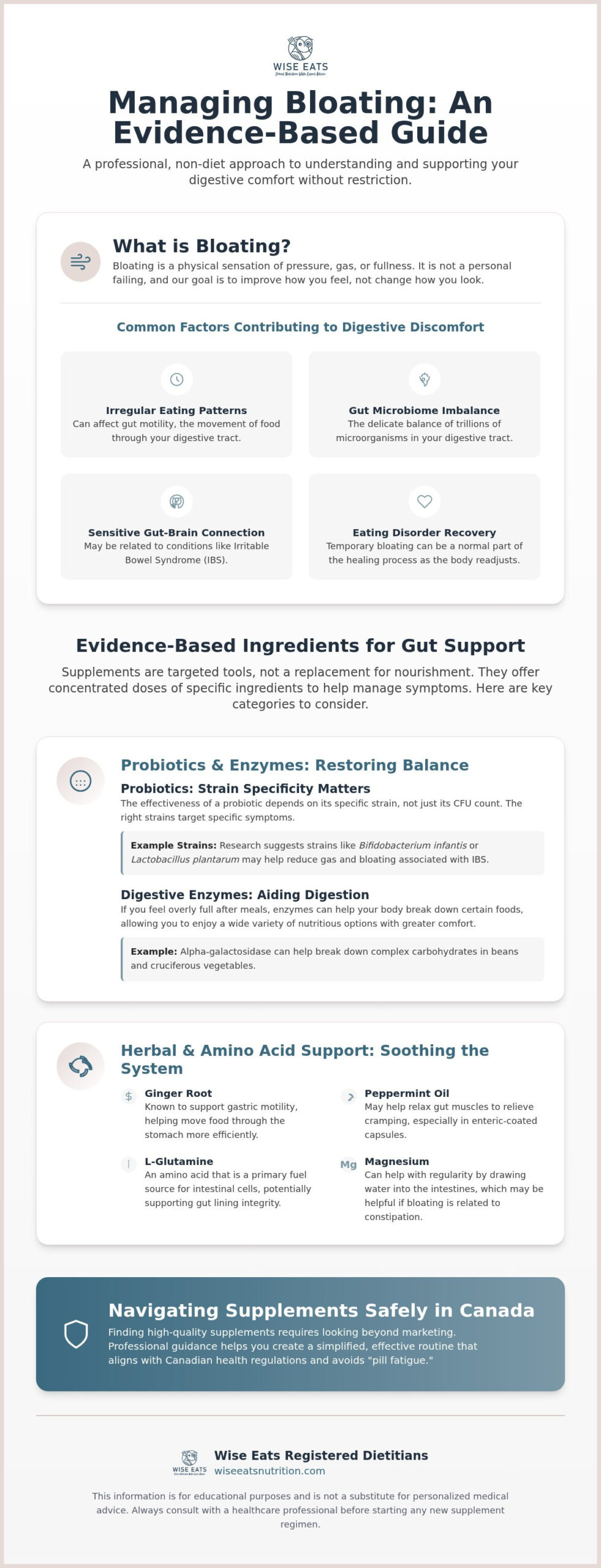
First, let’s be clear: bloating is a physical sensation, not a personal failing. It’s the feeling of pressure, gas, or fullness in your gut, and it’s an experience many people have from time to time. While occasional bloating is common, chronic or painful discomfort is a signal from your body that your digestive system could use some support. It doesn’t mean you need to shrink your body or cut out entire food groups.
From a weight-inclusive perspective, our goal is to improve how you feel, not change how you look. Bloating can sometimes be a result of irregular eating patterns, which can affect gut motility (the movement of food through your digestive tract). When motility slows, gas can build up, leading to that familiar pressure. Our focus is on creating sustainable habits that support your body’s natural rhythm.
Common Causes of Digestive Discomfort in Canada
The reasons for bloating are unique to each individual. For some, it may be related to an underlying condition like Irritable Bowel Syndrome (IBS) or functional dyspepsia, where the gut-brain connection is particularly sensitive. For others, it’s about the delicate balance of the gut microbiome—the trillions of microorganisms living in your digestive tract.
It’s also important to recognize how digestive shifts can occur during recovery from an eating disorder. As the body adjusts to more regular and adequate nourishment, temporary bloating can be a normal, albeit uncomfortable, part of the healing process. This is a physiological response, not a sign that you’re doing something wrong. Supporting your body with gentle nutrition strategies during this time is key. For more information on this, our dietitians provide specialized eating disorder recovery support in BC & Alberta.
When Supplements Can Support Your Digestive Journey
Are supplements the magic bullet for bloating? Not exactly. Think of them as targeted tools, not replacements for nourishment. A flexible, varied diet provides the foundation for gut health, but supplements can offer concentrated doses of specific ingredients to help manage symptoms like gas, pressure, or slow motility.
The “best” supplement isn’t a one-size-fits-all bottle you grab off the shelf. It’s a carefully selected ingredient or combination of ingredients tailored to your body’s specific signals and needs. This is where professional guidance can make all the difference, helping you move from guessing to knowing.
Evidence-Based Ingredients for Digestive Support and Comfort
When you’re looking for relief, it’s easy to feel pressured into trying a restrictive diet like the Low FODMAP diet. While it can be a useful diagnostic tool under professional supervision, it’s not the only way—and for many, it’s not a sustainable long-term solution. Many evidence-based ingredients can provide significant relief without requiring you to cut out your favourite foods. Let’s explore the “Big Three” categories for gut support: Probiotics, Digestive Enzymes, and Soothing Botanicals.
The key is precision. By identifying the right ingredients for your symptoms, you can get exactly what you need and nothing you don’t, simplifying your routine and making it more effective.
Probiotics and Enzymes: Restoring Balance
If you’ve searched for the “best probiotics for bloating in Canada,” you know how many options are out there. Probiotics are live microorganisms that, when taken in adequate amounts, provide a health benefit. But not all probiotics are created equal, especially when it comes to bloating.
- Strain Specificity Matters: The effectiveness of a probiotic depends on its specific strain. For example, research suggests that certain strains like Bifidobacterium infantis or Lactobacillus plantarum may be particularly helpful for reducing gas and bloating associated with IBS. Simply buying a bottle with a high CFU (Colony Forming Unit) count isn’t enough; the right strains for your symptoms are what count.
- Digestive Enzymes: Do you often feel heavy or overly full after meals? Digestive enzymes can help. Your body produces its own enzymes, but sometimes it needs a little help breaking down certain foods. For instance, an enzyme called alpha-galactosidase can help break down the complex carbohydrates found in beans and cruciferous vegetables, potentially reducing gas production. This allows you to enjoy a wide variety of nutritious foods with greater comfort.
Herbal and Amino Acid Support
Beyond probiotics and enzymes, other compounds have been studied for their role in digestive comfort. These ingredients often work by supporting gut motility and soothing the digestive tract.
- Ginger Root and Peppermint Oil: Both of these botanicals have a long history of use for digestive upset. Ginger is known to support gastric motility, helping to move food through the stomach more efficiently. Peppermint oil, particularly in enteric-coated capsules that dissolve in the intestine, may help relax the muscles of the gut, which can relieve cramping and bloating.
- L-Glutamine: This amino acid is a primary fuel source for the cells that line your intestines. In some cases, L-Glutamine may help support the integrity of the intestinal lining, which is crucial for a healthy gut barrier.
- Magnesium: Known for its role in muscle relaxation, magnesium can also help with regularity by drawing water into the intestines. This can be particularly helpful if your bloating is related to constipation. There are many forms of magnesium, each with different effects, making professional guidance on supplement strategies essential.
Navigating the Supplement Aisle: Safety and Quality in Canada
Finding a safe, high-quality supplement in Canada requires looking beyond flashy marketing claims. Generic advice to “buy a highly-rated multivitamin online” often misses the crucial context of Canadian regulations, which are in place to protect your health.
A major challenge many people face is “pill fatigue.” Trying to manage five or more separate bottles for bloating, sleep, and general health is not only expensive but also overwhelming. This is where a consolidated, personalized approach can be a game-changer. Companies like VitaminLab offer custom-crafted, data-driven formulas that combine your specific needs into a single capsule or powder. Because each formula is hand-crafted after you order, it ensures maximum freshness and potency.
The Importance of Third-Party Testing and GMP
When choosing any supplement, safety should be your top priority. Here’s what to look for:
- Natural Product Number (NPN): In Canada, all licensed natural health products must have an NPN on the label. This 8-digit number means that Health Canada has assessed the product for safety, quality, and efficacy. When working with custom formulas, the base ingredients used are typically NPN-licensed.
- Good Manufacturing Practices (GMP): GMP certification ensures that a product is produced and controlled according to strict quality standards. It’s a marker of a reliable and safe manufacturing process.
- Third-Party Certifications: Seals from organizations like NSF International provide an extra layer of assurance that a product contains what it says it contains and is free from contaminants. Reputable companies also use high-quality, branded ingredients (like Albion Minerals®) known for better absorption and bioavailability.
Personalized All-in-One Formulas
Imagine simplifying your entire supplement routine into one daily dose, designed by a health professional specifically for your digestive needs. That’s the benefit of an all-in-one personalized formula. Instead of guessing which probiotic strain or how much magnesium you need, a Registered Dietitian can help you build a formula based on your symptoms, lifestyle, and health history.
This approach not only reduces pill fatigue but also ensures that each ingredient is working in harmony. Self-prescribing can be tempting, but there are hidden risks of self-prescribing supplements. Working with a professional ensures your plan is built on evidence, not guesswork.
Financial Disclosure: While we partner with VitaminLab to provide personalized formulas, purchasing a supplement is never a requirement for working with our dietitians. Our primary goal is to provide you with expert, evidence-based nutrition counselling.
Building Your Personalised Gut Health Strategy with a Dietitian
If you’re looking for a dietitian for bloating in Canada, you need more than just a list of supplements. You need an expert guide who can help you navigate your symptoms without resorting to diet culture. A Registered Dietitian takes a holistic approach, looking at the interconnectedness of your stress levels, sleep patterns, and relationship with food.
We operate from the belief that no food is inherently “good” or “bad.” Our goal is to help you build a flexible, trusting, and enjoyable relationship with eating. With virtual care options available across British Columbia and Alberta, expert support is accessible from the comfort of your home.
What to Expect in a Digestive Health Consultation
Your first visit with a dietitian is a collaborative conversation. We start by listening to your story and understanding your experiences with bloating. From there, we work together to identify potential triggers while maintaining food neutrality—meaning we focus on patterns and physical responses, not on labelling foods.
We may use tools like symptom logs to gather data, which helps us refine your nutrition plan and, if appropriate, your custom VitaminLab formula. Our approach is built on creating sustainable habits that fit your life. You won’t find any “30-day gut cleanses” here. Instead, we focus on long-term comfort and confidence, which might include incorporating gentle recipes like our “Soothing Papaya Ginger Smoothie.” You can learn more about what a nutrition assessment involves on our blog.
When to Seek Help: Red Flags
While we can help with many aspects of digestive discomfort, certain symptoms warrant a discussion with your doctor. We encourage you to seek medical advice if you experience any of the following:
- Persistent or severe pain that disrupts your daily life.
- Unintentional weight shifts (either loss or gain).
- Obsessive thoughts about food, “clean” eating, or your body that cause you significant distress.
If food and your body have become a source of anxiety, please know that support is available. We invite you to connect with one of our dietitians for professional, supportive guidance.
Frequently Asked Questions (FAQs)
- What are the best probiotics for bloating in Canada?
- The “best” probiotic is one that contains strains scientifically studied for bloating, such as Bifidobacterium infantis 35624 or Lactobacillus plantarum 299v. More importantly, it should be chosen based on your unique symptoms under the guidance of a healthcare professional. Always look for a product with an NPN to ensure it’s been approved by Health Canada.
- Can I take gut health supplements if I have a history of disordered eating?
- Yes, but it should be done with professional support. A dietitian specializing in eating disorder recovery can help you integrate supplements in a way that supports your physical health without triggering restrictive thoughts or behaviours.
- How long does it take for bloating supplements to start working?
- This varies widely depending on the person and the supplement. Some people may notice a difference with digestive enzymes right away, while probiotics can take several weeks to have a noticeable effect. Consistency is key.
- Is it better to get nutrients from food or supplements for gut health?
- Food is always the foundation. A diet rich in fibre, variety, and colour provides the prebiotics (food for your good gut bacteria) and nutrients your digestive system needs. Supplements are best used as a targeted addition to support specific symptoms that don’t resolve with dietary adjustments alone.
- Are personalized vitamins worth the cost compared to drugstore brands?
- For many, yes. While the upfront cost may be higher, personalized vitamins can be more cost-effective in the long run by eliminating the need to buy multiple different bottles. They provide targeted, precise dosages, which reduces waste and can lead to better outcomes than a generic, one-size-fits-all approach.
- What is the difference between a probiotic and a digestive enzyme?
- A probiotic introduces beneficial live bacteria into your gut to support the microbiome’s balance. A digestive enzyme is a non-living protein that helps you break down specific components of food (like fats, carbs, or proteins) into smaller, more absorbable molecules.
Your Next Step Toward Digestive Comfort
You deserve to feel comfortable in your body and confident in your food choices. If you’re tired of the bloating and the guesswork, let us be your guide. We’re here to provide the evidence-based, supportive care you need to build a personalized gut health plan.
Book a consultation with a Registered Dietitian to create your custom gut health plan.
- Access to Health Canada Licensed custom formulas
- Supportive, weight-inclusive care
- Licensed experts in BC, Alberta, and Ontario
The information provided in this article is for educational purposes only and is not a substitute for professional medical advice, diagnosis, or treatment. Always seek the advice of your physician or another qualified health provider with any questions you may have regarding a medical condition.

Article by
Rachel McBryan, Dietitian
Rachel McBryan is a licenced Dietitian in British Columbia offering comprehensive nutrition counselling as virtual and/or in-person counselling sessions to suit your needs and preferences. With a Bachelor of Science in Nutrition and Food Science, Rachel has over 20 years experience helping people address their health through nutrition. She was awarded Human Nutrition and Food Science BSc.from University of Alberta followed by post-grad course work at UBC in guidance counselling.
An eating disorder is a serious mental health illness.
If you are in immediate distress or crisis, please contact emergency services by dialing 911 or calling Vancouver Island Crisis Line: 1-888-494-3888.
This article is educational information only, not professional diagnosis or treatment. This health education content is heavily AI augmented and parts or all of this article may not have been reviewed yet for accuracy. AI generated content is prone to error.
Please note that we partner with VitaminLab and financially gain if you purchase supplements. You are under no obligation to use VitaminLab products and whether you supplement your diet with VitaminLab or another product of your choice will not impact your nutrition care.