
Have you ever felt tired and foggy despite drinking water all day? Many people believe that staying hydrated is just about the amount of water you drink. The full picture, however, involves a careful balance of minerals known as electrolytes. These essential minerals are crucial for turning the water you drink into effective hydration that your body can use.
Understanding electrolytes for hydration goes beyond simply grabbing a colourful sports drink after a workout. Your hydration needs are unique, shaped by your health, your lifestyle, and even the Canadian climate you live in. This guide, created for residents of BC and Alberta, explains the science of mineral balance in simple terms. It offers practical, evidence-based advice to help you build a personalized hydration strategy that works for you.
The Essential Role of Electrolytes in Your Body
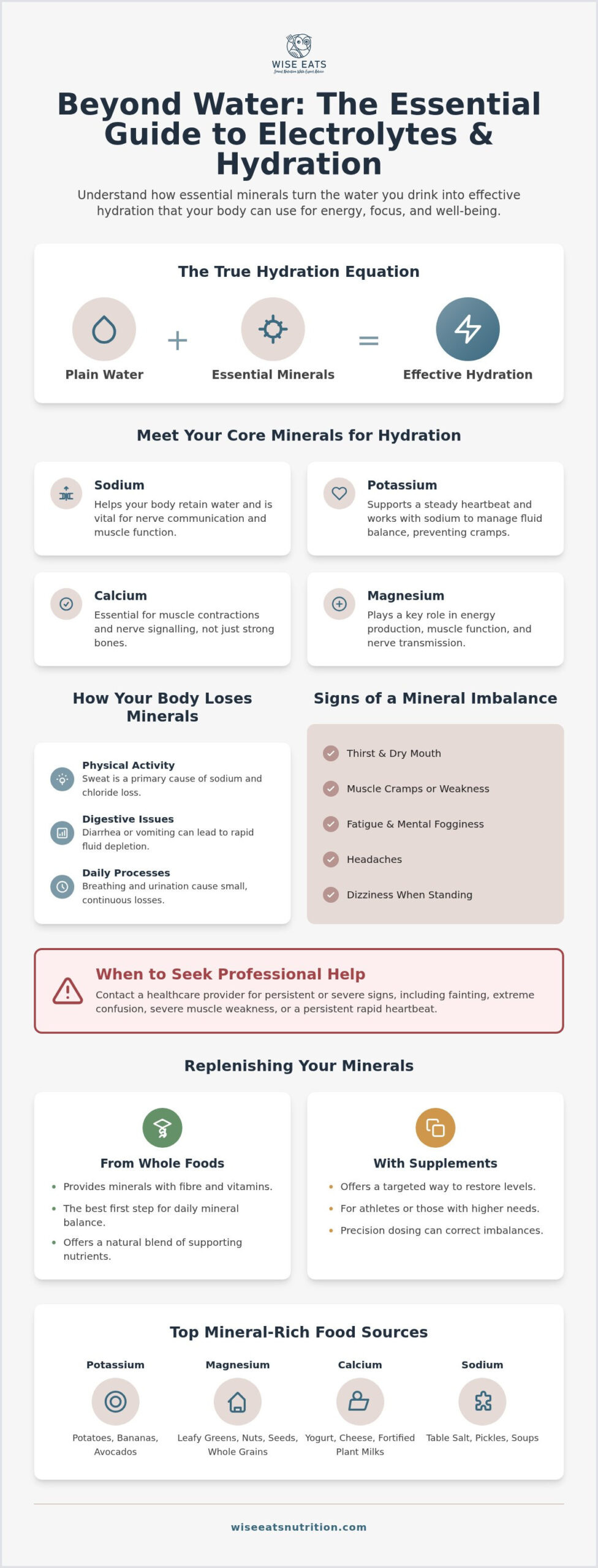
Electrolytes are minerals that carry a small electrical charge when they dissolve in fluids like water. This electrical potential is what allows them to perform some of the most important jobs in your body. Think of them as tiny managers directing traffic at a cellular level.
- These minerals assist with moving nutrients into your cells and moving waste products out.
- Sodium and potassium work together to manage the fluid balance inside and outside your cell walls, a process vital for nerve communication.
- Magnesium and calcium support muscle contractions and nerve signalling throughout your nervous system.
When these minerals are out of balance, your body cannot hydrate itself properly, no matter how much water you consume. Even mild dehydration can disrupt these functions, leading to common issues like low energy, fatigue, increased constipation, and headaches.
Core Minerals for Daily Hydration
While many minerals act as electrolytes, a few are central to your daily hydration status. Each one has a specific role to play in maintaining your body’s internal environment.
- Sodium helps your body retain the water you drink, preventing it from being lost too quickly through urination.
- Potassium supports a steady heartbeat and is important for preventing muscle stiffness and cramps.
- Chloride and bicarbonate help maintain the proper acidity levels (or pH) in your blood and other body fluids.
How Your Body Loses Minerals
Your body is constantly using and losing electrolytes through normal functions. Understanding how this happens helps you know when you might need to focus on replacing them.
- Physical activity through sweating is a primary cause of mineral loss, especially sodium and chloride.
- Digestive issues such as diarrhea or vomiting lead to rapid fluid and electrolyte depletion.
- Daily natural processes including breathing and urination result in small but continuous losses throughout the day.
Identifying an Electrolyte Imbalance
Your body has several ways of signalling that it needs more fluids and minerals. Learning to recognize these early signs can help you address an imbalance before it becomes more disruptive to your daily life.
- Thirst is often the first signal your body requires more fluids and minerals.
- Muscle cramps or weakness frequently occur when sodium, potassium, or magnesium levels drop.
- Fatigue and mental fogginess are potential signs of a hydration issue affecting your brain and energy levels.
- Headaches often result from the brain reacting to changes in fluid pressure and mineral concentrations.
Common Signs of Low Mineral Levels
Beyond the initial signals, you might notice more specific physical symptoms if your electrolyte levels remain low. These signs are your body’s way of asking for what it needs.
- Dizziness when standing up quickly.
- An irregular or fast heartbeat.
- Persistent dry mouth despite drinking plain water.
When to Seek Professional Help
While many minor imbalances can be managed with food and fluids, some symptoms require professional medical attention. It is important to contact a healthcare provider if you experience persistent or severe signs.
- Seek immediate medical attention for fainting or extreme confusion.
- Contact your healthcare team if you experience severe muscle weakness that interferes with your daily activities.
- Speak with a professional if you notice a persistent rapid heartbeat or chest pain.
Comparing Electrolyte Sources: Food vs Supplements
When it comes to replacing lost minerals, you have options. Both whole foods and supplements can be effective, but they serve different purposes. Whole foods provide a foundation of nutrients, while supplements can offer a more targeted approach when needed.
- Whole foods provide minerals alongside fibre, vitamins, and other beneficial compounds.
- Potatoes and bananas are excellent sources of potassium for daily needs.
- Dairy products or fortified plant milks offer calcium and sodium.
- Commercial sports drinks often contain high amounts of added sugar and artificial colours, which some people prefer to avoid.
Natural Food Sources for Mineral Balance
Building meals and snacks around mineral-rich foods is the best first step for maintaining hydration. A varied diet can provide the electrolytes your body needs for daily function. A custom meal plan can help organize your intake and ensure you are meeting your needs consistently.
- Leafy greens like spinach are a great source of magnesium.
- Yogurt, cheese, and nuts contribute to your daily calcium and phosphorus intake.
- For a refreshing and hydrating option, you could include the Refreshing Watermelon and Sea Salt Hydration Bowl in your meal plan.
Personalized Mineral Strategies
For some individuals, food alone may not be enough to correct an imbalance, especially for athletes, those with certain medical conditions, or people with higher needs. In these cases, supplements offer a targeted way to restore mineral levels. However, not all supplements are created equal.
- Custom supplement formulas are built for your specific body data and health requirements.
- Precision dosing ensures you receive only the minerals your body requires, without unnecessary fillers or additives.
- Companies like VitaminLab provide personalized formulas which can replace the need for multiple individual bottles. (Wise Eats Nutrition may receive a commission from VitaminLab, but purchase is not required to receive our care).
A professional supplement audit can help you determine if your current routine is effective. You can learn more about how a dietitian approaches personalized vitamin and mineral supplements.
Personalizing Your Hydration Strategy in Canada
Where you live in Canada can have a significant impact on your hydration needs. A one-size-fits-all approach rarely works because our environment and lifestyles are so varied. From the dry prairies to the humid coast, your body is constantly adapting.
- The dry air in Edmonton and Calgary increases fluid loss through your breath, especially during the winter.
- Summer heat on Vancouver Island requires proactive fluid replacement during outdoor activities to prevent dehydration.
- Pregnancy and breastfeeding increase the demand for specific minerals like calcium and magnesium to support both mother and baby.
- Medical conditions such as diabetes or IBS can change how your body absorbs and processes fluids and minerals.
Environmental Factors in Alberta and BC
The distinct climates of Alberta and British Columbia present unique challenges for staying hydrated. Awareness of these factors can help you adjust your intake accordingly.
- Heating systems in Canadian homes during winter create a very dry indoor environment, increasing fluid loss.
- Cold weather often masks the sensation of thirst, making it easy to forget to drink enough fluids.
- High altitude areas in the Rockies can lead to faster dehydration due to lower oxygen levels and increased respiration.
Lifestyle and Health Considerations
Your personal health and daily activities are just as important as your environment. A personalized hydration strategy takes these individual factors into account.
- Athletes training for long durations require more sodium and potassium to replace significant sweat losses.
- Older adults often have a reduced thirst response and may need regular reminders to drink fluids throughout the day.
- It is also important to note that drinking too much water can be an issue. Certain conditions, including some eating disorders, require careful fluid management to avoid both dehydration and the risks of over-hydration. Professional guidance can help find a safe and healthy balance. If this is a concern, you can find more information about eating disorder recovery support in BC and Alberta.
Professional Support for Your Nutritional Goals
Navigating the world of nutrition and hydration can feel overwhelming. With so much conflicting information online, it is hard to know what to believe. Working with a registered dietitian provides a clear path forward, grounded in science and tailored to your life.
- A registered dietitian assesses your current eating habits, lifestyle, and medical history to create a plan that is right for you.
- Professional guidance helps you avoid the confusion of marketing claims and fad diets.
- Evidence-informed strategies ensure your hydration and nutrition plan is both safe and effective.
- Telehealth services permit residents across BC and Alberta to access expert care from the comfort of their own homes.
Clinical Nutrition Therapy for Mineral Balance
Registered dietitians are uniquely qualified to provide medical nutrition therapy for a wide range of health concerns. They translate complex science into practical, real-world advice.
- Rachel McBryan, RD, College of Health and Care Professionals of BC, supports clients with complex needs, helping them build sustainable eating patterns.
- Sheirry Poposka, RD, Alberta College of Registered Dietitians, provides expert care in Alberta, with a focus on digestive health and metabolic conditions.
- Registered dietitians help you manage conditions like fatty liver, IBS, or gout through personalized nutrition interventions.
Book a Consultation for Personalized Care
Taking control of your health starts with getting the right support. A registered dietitian can act as your partner, providing the knowledge and tools you need to feel your best.
- If you are struggling with a nutrition-related medical condition or an eating problem, a registered dietitian can provide professional support — book a consultation.
- Speaking with a registered dietitian can help you develop a balanced, flexible approach to eating.
- A dietitian works with your healthcare team to ensure all of your nutritional needs are met.

Article by
Rachel McBryan, Dietitian
Rachel McBryan is a licenced Dietitian in British Columbia offering comprehensive nutrition counselling as virtual and/or in-person counselling sessions to suit your needs and preferences. With a Bachelor of Science in Nutrition and Food Science, Rachel has over 20 years experience helping people address their health through nutrition. She was awarded Human Nutrition and Food Science BSc.from University of Alberta followed by post-grad course work at UBC in guidance counselling.
An eating disorder is a serious mental health illness.
If you are in immediate distress or crisis, please contact emergency services by dialing 911 or calling Vancouver Island Crisis Line: 1-888-494-3888.
This article is educational information only, not professional diagnosis or treatment. This health education content is heavily AI augmented and parts or all of this article may not have been reviewed yet for accuracy. AI generated content is prone to error.
Please note that we partner with VitaminLab and financially gain if you purchase supplements. You are under no obligation to use VitaminLab products and whether you supplement your diet with VitaminLab or another product of your choice will not impact your nutrition care.