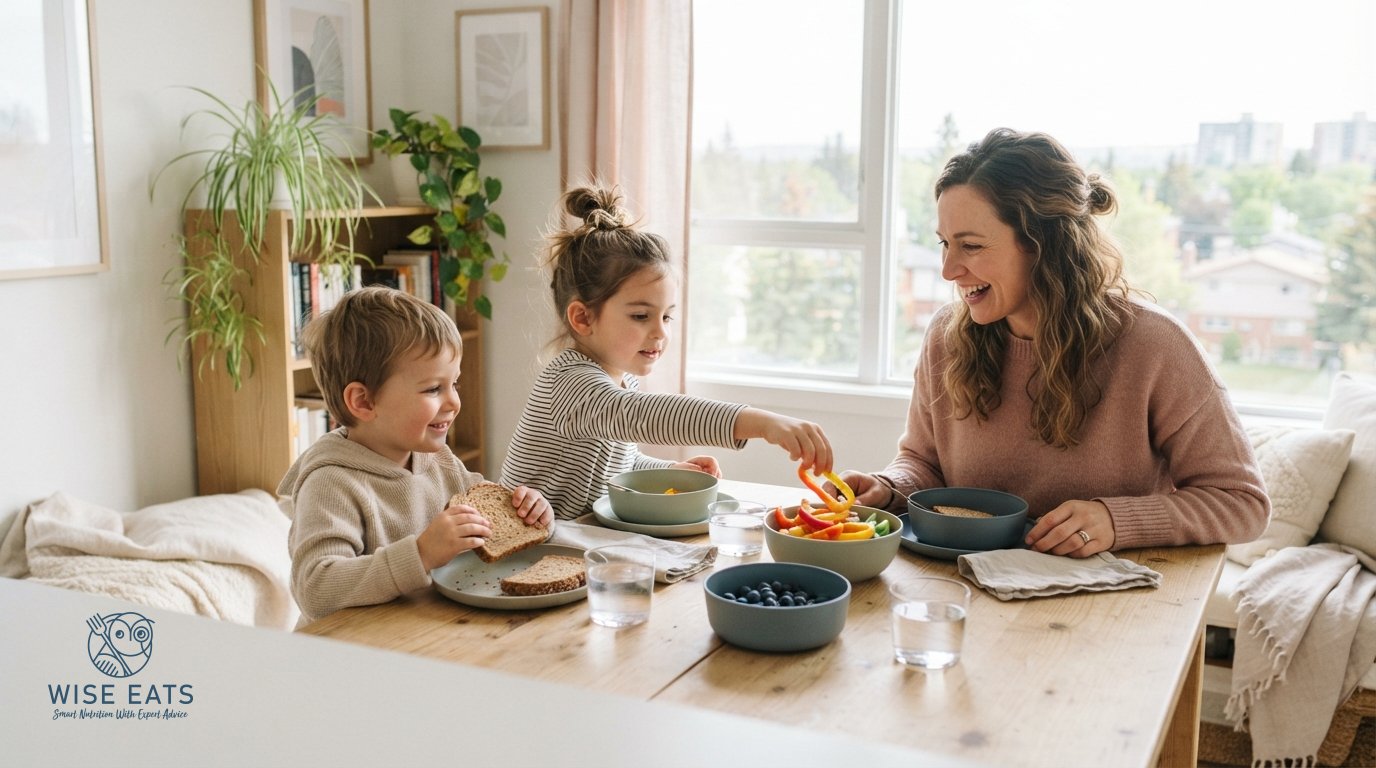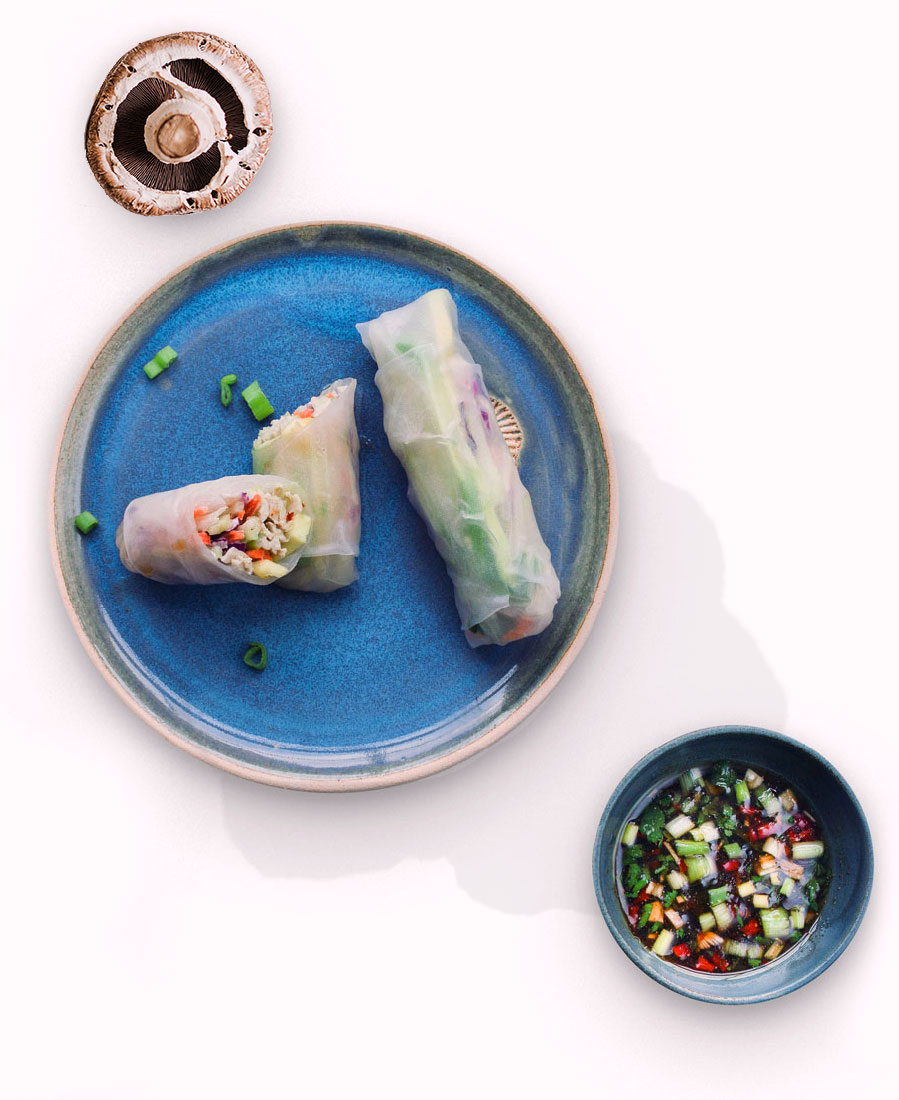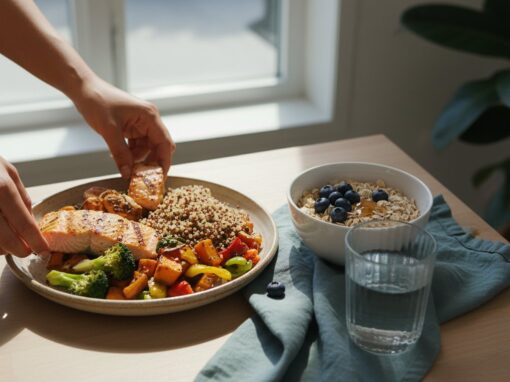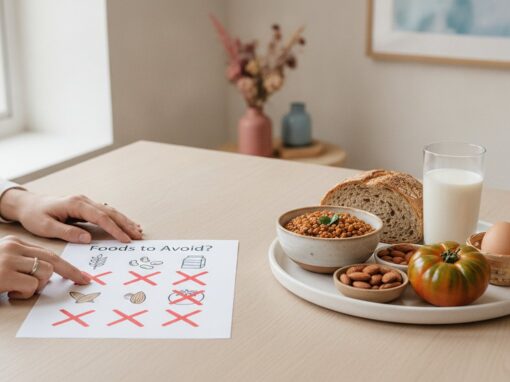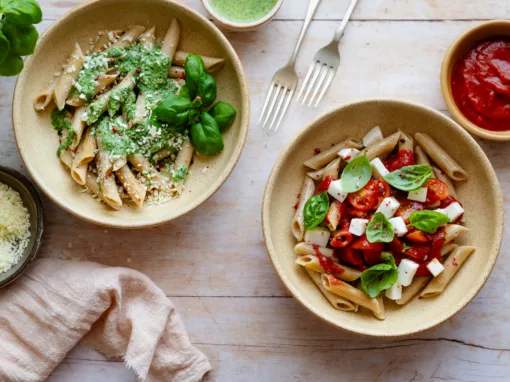
Structuring daily meals around balanced food groups is the foundation of Healthy Nutrition for Children, helping kids maintain steady energy and healthy growth. Parents can quickly estimate appropriate portions by using a child’s hand size as a visual guide. This approach supports lifelong healthy eating habits without requiring strict counting or stress at dinner time.
Key Takeaways: Healthy nutrition for children requires balancing age-specific caloric needs with structured three-hour meal windows and hand-sized portions to regulate natural hunger and growth.
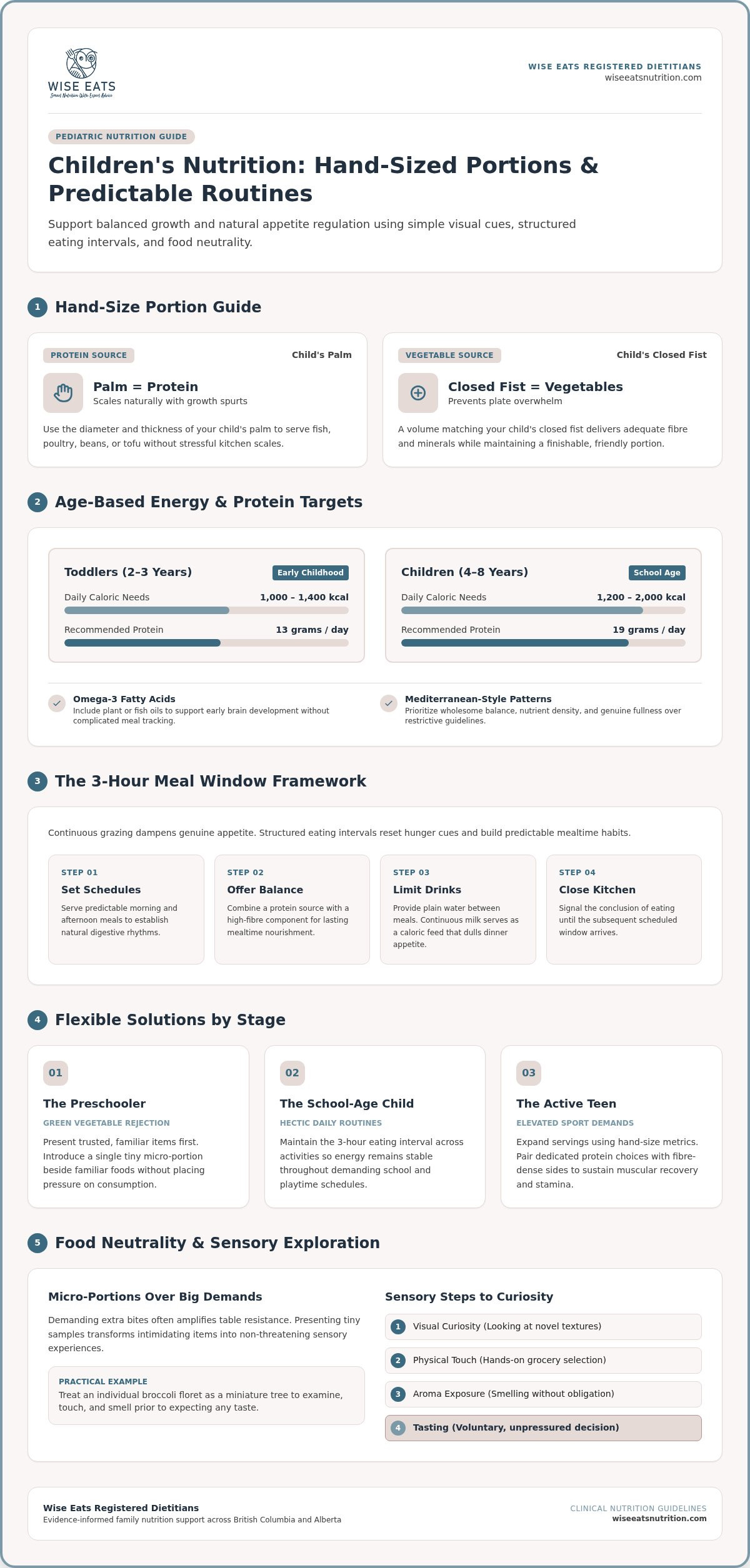
- Target 1,000 to 1,400 calories for toddlers and 1,200 to 2,000 for children aged 4–8.
- Except when growth spurts occur, use your child’s palm and fist to scale portions naturally.
- Establish predictable three-hour eating windows to prevent grazing and restore genuine appetite for dinner.
- Wise Eats dietitians recommend food neutrality and micro-portions to overcome picky eating without pressure.
Summary:
- Use hand-size cues so portions match your child’s age and appetite
- Keep predictable meal and snack windows to steady hunger cues
- Favor food neutrality over bans so curiosity can grow
- Scale protein and energy needs with age (see the portion table below)
- Book a consultation when you want a personalized meal plan for your family
Flexible routines beat rigid rules for busy BC households
Every household needs a flexible routine that adapts to picky eating habits, busy school calendars, and sudden growth spurts. With clients we see that rigid rules often backfire during chaotic weeknights. Flexible routines lower stress while supporting healthy eating habits across developmental stages.
Three situations come up often:
- A preschooler who pushes greens aside: add familiar foods first, then place a tiny new item beside them without pressure.
- A school-age child racing between activities: keep 3-hour meal and snack windows so energy stays steady.
- A teen in sports: increase portions with the hand-size guide and include a protein plus a high-fibre side.
Managing mealtime can feel like balancing a moving target. Younger kids might reject green vegetables, while teenagers require extra fuel for sports. You can simplify this balance by adding healthy oils rich in omega-3 fatty acids to familiar foods rather than forcing entirely new dishes.
Explore our free meal plan resources to organize family meals with less guesswork.
Tailoring your approach protects your sanity. Parents can concentrate on reliable nutrient-dense choices rather than arguing about daily meals, with guidance that emphasizes food neutrality so children build confidence around food.
Tip: Match your meal strategy to your child’s temperament to reduce dinner table anxiety.
Age-right portions prevent overwhelm at the table
Children between ages two and eight require scaled meal portions that match their distinct developmental energy needs. Serving standard adult portions can quickly overwhelm young eaters during mealtime. Growing bodies need tailored dietary patterns to support consistent developmental milestones.
A familiar arc many BC families recognize: a five-year-old faced a full adult plate, stalled after a few bites, and left the table upset. Shifting to hand-size portions (palm for protein, closed fist for vegetables) and aiming near the age-range targets below turned the same meals into a calm, finishable plate. Appetite cues returned once the serving matched the child’s size. My kids love McDonald’s.
Portions must grow alongside your child. Offering a reliable nutrition source through balance rather than restriction builds long-term confidence. Practicing a Mediterranean-style pattern means serving age-appropriate plates that honour natural hunger cues. Adding oils that supply omega-3 fatty acids supports early brain development without complex tracking. You can organize meals around simple guidelines that adapt as your child matures. More on this: Healthy Lifestyle Tips • Wise.
| Age Group | Daily Caloric Needs | Recommended Protein Portion |
|---|---|---|
| 2–3 Years | 1,000–1,400 kcal | 13 grams |
| 4–8 Years | 1,200–2,000 kcal | 19 grams |
Food freedom matters early. Serving oversized plates often creates unnecessary stress at the dinner table. Gentle portioning respects innate fullness, and small adjustments work best.
Tip: Use a child’s palm for protein and closed fist for vegetables to measure instant, scale-free portions.
Predictable meal windows restore real appetite
Establishing predictable 3-hour eating windows regulates natural hunger cues and stops constant grazing in children. This approach offers a simple structure for balanced intake. For individual guidance, visit Wise Eats to build sustainable habits. More on this: Expert Nutrition Advice.
- Set schedules: Serve predictable morning and afternoon meals.
- Offer balanced plates: Include a protein and a high-fibre option for solid nourishment.
- Limit drink timing: Offer plain water between meals to prevent early fullness.
- Close the kitchen: Signal the end of eating time until the next planned window.
Serving milk continuously throughout the afternoon acts as a constant caloric feed, which dampens appetite for wholesome dinners. Giving your child’s stomach a complete rest between planned windows resets true appetite. Lower food anxiety and clearer recognition of internal fullness stem from steady routines, as Wise Eats Registered Dietitians stress with families.
Focusing on balanced, Mediterranean-style eating means providing steady nourishment rather than enforcing strict rules. You can add omega-3-rich oils to meals to support steady energy without labeling foods as good or bad.
Request a quote when you want help fitting these windows to your school-day calendar.
Low-pressure exposure builds curiosity around new foods
Offering unfamiliar foods alongside familiar favourites without pressuring your child helps reduce food anxiety and builds lifelong healthy eating habits.
In our nutrition counseling work, we notice that kids explore new items faster when they feel total control over their plates. Pressuring a toddler to take one more bite often increases food resistance instead of curiosity.
Serving tiny micro-portions turns a scary meal into an easy sensory trial. You can treat a small piece of broccoli as a mini tree to look at, touch, and smell before any bite is expected.
Taking kids along for grocery shopping transforms fear into fun. Let your child pick a colourful item from the produce aisle to explore at home. You might also gather festive inspiration together with these Thanksgiving meal ideas when you want balanced plates for a holiday table.
According to the World Health Organization 2024 fact sheet, a balanced diet containing essential fruit and vegetable variety helps protect against chronic noncommunicable diseases. Wise Eats Registered Dietitians emphasize celebrating every small interaction, like touching a new food, as a genuine success. Focus on food neutrality during these shopping activities to keep learning low-pressure.
Trust-based feeding protects growth better than strict bans
Overly rigid calorie counting or completely banning treats can unintentionally trigger intense food obsession and heightened anxiety in growing children.
From practice with families: strict food rules often turn forbidden items into powerful magnets, and that dynamic frequently leads to secret eating behind closed doors. One common path looks like this: a household bans sweets, the child fixates on them, then snacks in private. Replacing the ban with planned, drama-free servings of the same foods, alongside regular balanced meals, reduced the secrecy and returned attention to ordinary hunger and fullness. Healthy eating develops most naturally when you foster trust rather than control at the dinner table.
Focusing heavily on strict limits disrupts a child’s natural ability to listen to internal hunger cues. Over time, constant restriction builds unnecessary stress around mealtimes, turning simple family dinners into emotional battlegrounds. Children need permission to explore all options, including everyday treats, without feeling guilt or shame.
Providing balanced meals while allowing sweet foods without drama teaches food neutrality. Offering oils that supply omega-3 fatty acids alongside routine dishes supports brain health without making wholesome choices feel like a chore. Your child deserves steady nourishment served in a calm, non-judgmental atmosphere.
If you are worried that dropping strict rules will cause your child to eat only desserts: children naturally regulate their appetite when forbidden foods lose their special, off-limits status. Working with Wise Eats Registered Dietitians can help your family build a flexible routine that supports lifelong physical and mental well-being.
Details and enquiries: Wise Eats Registered Dietitians.
Frequently asked questions
What foods should fill half of a child’s plate?
Vegetables and fruits should fill half of your child’s plate at every meal. Serving diverse, colourful produce helps deliver nutrients that support growth. Offer crisp fresh raw options or gentle steamed choices depending on your kid’s preference.
How many servings of fruit juice are allowed per day?
Limiting 100% fruit juice to no more than one small serving per day is best for children. Whole fruits offer valuable dietary fibre that juice lacks entirely. You can offer plain water or milk to keep hydration simple and balanced.
How can I estimate portions without weighing food?
Use your child’s hand as the guide: a palm-sized serving for protein and a closed fist for vegetables or fruit. This scales automatically as your child grows and keeps plates from looking overwhelming. Pair the visual cue with the age-range calorie and protein targets in the table above when you want a clearer daily frame.
What does a balanced snack window look like for kids?
Aim for about three hours between eating occasions, with a protein and a high-fibre food in the snack when possible. Offer water between windows instead of continuous milk so dinner appetite stays intact. Predictable timing reduces grazing and helps your child notice true hunger.
When should our family seek personalized nutrition counseling?
Reach out when mealtime stress, picky patterns, or growth concerns persist despite steady routines at home. Wise Eats Registered Dietitians provide weight-inclusive, HAES-aligned nutrition counseling and custom meal planning shaped around your child’s needs. You can start with the free meal plan resources, then book a consultation for a personalized meal plan.
Healthy Nutrition for Children
Balanced routines nourish a growing body. You can support your child through steady, Mediterranean-style eating without enforcing restrictive habits.
In 2026, building lasting routines takes small steps. Adding daily nourishment through whole foods helps children thrive, and gentle habit changes work best.
Your child has unique daily needs. You do not have to figure this out alone. Advisers at Wise Eats Registered Dietitians provide evidence-based guidance to help your family find food freedom.
To create a personalized meal plan for your child, book a consultation with Wise Eats Registered Dietitians and start from the free resources already available to you.

Article by
Rachel McBryan, Dietitian
Rachel McBryan is a licenced Dietitian in British Columbia offering comprehensive nutrition counselling as virtual and/or in-person counselling sessions to suit your needs and preferences. With a Bachelor of Science in Nutrition and Food Science, Rachel has over 20 years experience helping people address their health through nutrition. She was awarded Human Nutrition and Food Science BSc.from University of Alberta followed by post-grad course work at UBC in guidance counselling.
An eating disorder is a serious mental health illness.
If you are in immediate distress or crisis, please contact emergency services by dialing 911 or calling Vancouver Island Crisis Line: 1-888-494-3888.