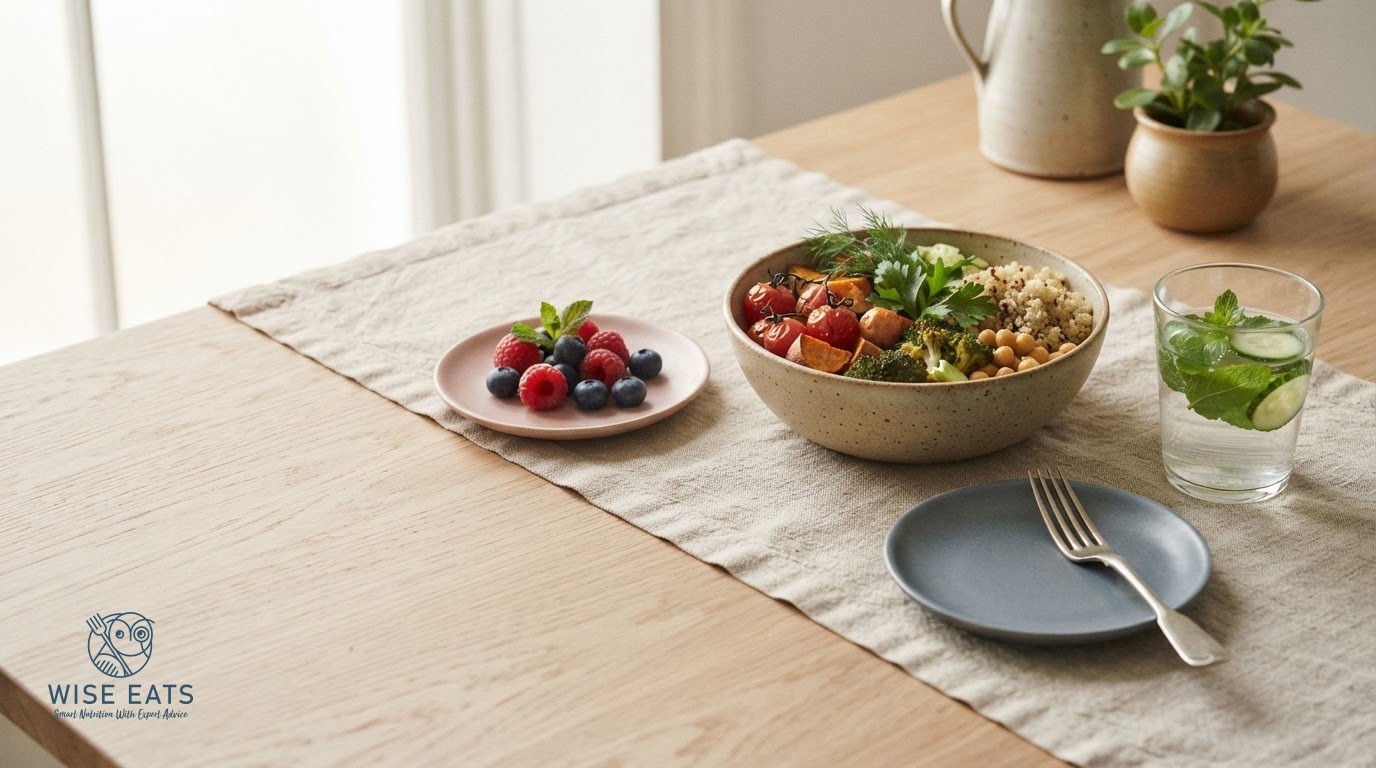
A diet plan isn’t automatically the right choice for supporting health or managing weight. The most useful approach fits your daily life, includes nourishing foods, and leaves room for flexibility rather than rigid rules. If you have an ongoing health condition or concerns about your relationship with food, talk with a healthcare professional before starting a new eating or activity program.
It’s understandable to feel unsure when plans promise fast results or label foods as off-limits. This guide explains possible risks, what to consider before trying rapid weight loss, and how to decide which health goals and supports are right for you.
You’ll also learn how everyday food choices, such as adding vegetables, fruit, whole grains, and protein foods, can support a balanced eating pattern. The goal is practical guidance to help you make a thoughtful choice without pressure, shame, or appearance-based expectations.
Key Takeaways
- Consider your health, daily life, and reasons for wanting a change before choosing a plan.
- Learn why rapid weight loss and very low-calorie plans deserve caution, and what to consider instead.
- Try practical ways to limit added sugars, sodium, and less supportive fats without relying on rigid food rules.
- Build meals around nourishing foods that support your health and fit your preferences.
- See how a Registered Dietitian can help tailor meal planning and health-focused support to your needs.
1. People in Higher Weight Bodies: Should I Use a Diet Plan to Lose Weight?
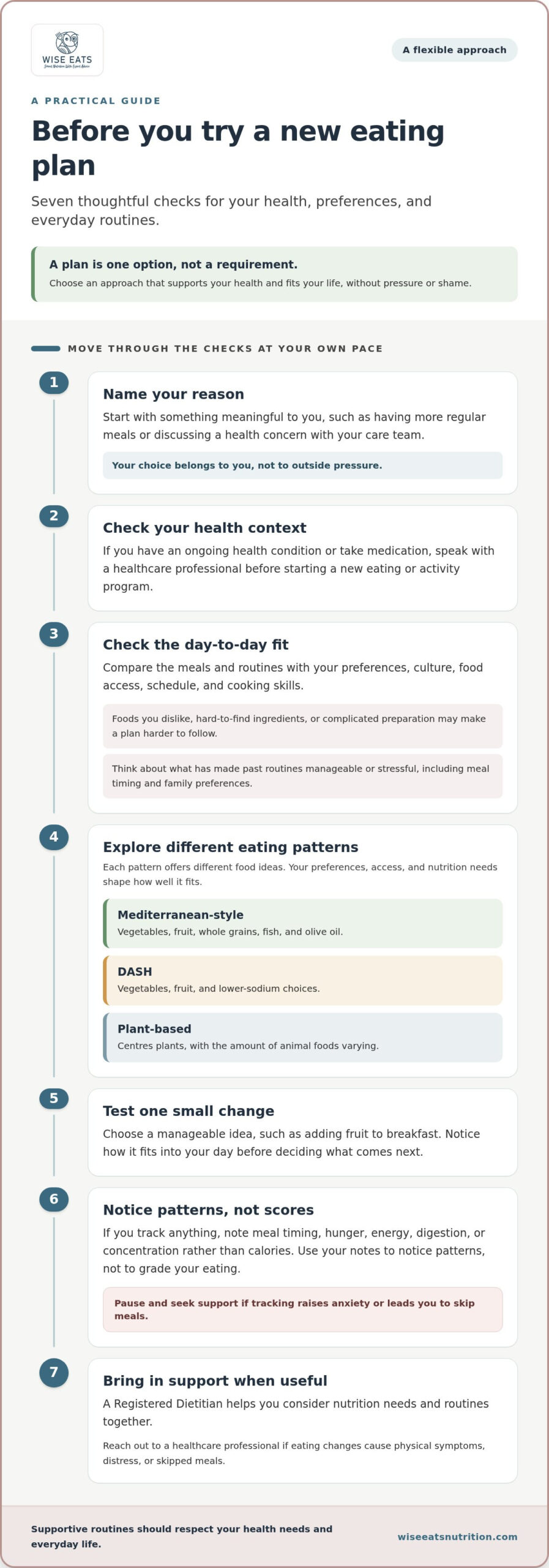
A diet plan is one option, not a requirement for managing weight or supporting health. Start by naming your reason, such as wanting more regular meals or discussing health concerns with your care team. If you have an ongoing health condition or concerns about eating, speak with a healthcare professional before starting a new diet or physical activity program. Diet plans for weight management should reflect your health needs, not pressure from others or appearance ideals.
Be cautious with fad diets that promise rapid weight loss or demand strict food rules. A plan built around foods you dislike, costly ingredients, or complicated preparation may be hard to follow. Check whether its meals suit your preferences and daily schedule. A sample menu from another source is not Canadian guidance or a personal target, so avoid treating it as a standard for everyone.
Your experience matters when assessing a plan. Note what made previous attempts manageable or stressful, such as meal timing, family preferences, or limited cooking time. If tracking food increases anxiety or leads you to skip meals, treat that response as useful information. A weight-management program or support group may offer structure and shared problem-solving. Look for an approach that respects your health needs without shame.
Rapid weight loss deserves care because plans promising quick changes often rely on strict limits. Very low-calorie diets can make it harder to meet your nutrition needs and may not suit your health or circumstances. Diet plans for weight management should not substitute for a health professional’s guidance, especially if you have a health condition or take medication.
Mediterranean, DASH, and plant-based eating patterns offer different food choices. Mediterranean-style meals often feature vegetables, fruit, whole grains, fish, and olive oil. DASH emphasizes vegetables, fruit, and lower-sodium choices. Plant-based eating centres plants, while the amount of animal foods varies. Each offers practical ideas, but your preferences, access, and nutrition needs shape how well it fits.
To choose a plan, compare its meals and routines with your health needs, budget, culture, schedule, and cooking skills. Pick one small change to test, such as adding fruit to breakfast, then note how it fits your day. A personalized weight-loss meal plan offers a way to consider meals around your routines.
A weight-loss app plan may offer a set period for recording meals, activity, or personal goals. Before starting, review what it asks you to track and whether reminders support your routine or add pressure. Choose features that help you notice useful patterns, such as which breakfasts keep you satisfied, rather than treating every entry as a score.
2. Rapid Weight Loss: Is It Safe?
Rapid weight loss plans often call for strict changes before you know whether they suit your health needs. Metabolic health involves how your body manages processes such as blood sugar and blood fats. A plan should support steady routines and adequate nourishment, rather than making the scale or a daily number the only measure. Notice changes in energy, concentration, digestion, and your ability to manage usual activities.
Very low-calorie diets involve a substantial reduction in food intake and are not recommended targets for everyone. A plan’s calorie figure doesn’t tell you whether it provides enough variety or suits your health. Talk with a healthcare professional before starting this type of plan, especially if you have an ongoing health condition or take medication.
Food tracking doesn’t have to mean recording every detail of what you eat. For a short period, note meal timing, hunger, energy, and symptoms instead. For example, record whether a long gap between meals affects your concentration during a work shift. Use those notes to identify patterns, not to grade your eating. If tracking increases anxiety or leads you to skip meals, stop and seek support.
Lower-calorie recipes and drinks can still be nourishing and enjoyable. Try adding vegetables to a familiar soup or serving a meal with water or an unsweetened drink. Focus on ingredients and preparation that suit your tastes, rather than removing whole food groups to meet a number. If a restrictive recipe plan leaves you hungry or tired, reconsider whether it’s a good fit.
A set calorie target is not a universal daily goal. Your needs vary with health, routine, and activity. An online menu or app cannot account for every part of your life. Before following a set target, consider whether the meals feel satisfying and provide enough variety. Avoid cutting portions simply to match a plan’s number.
To plan affordable meals in Canada, choose a few adaptable meals for the week and use leftovers for another lunch or dinner. Compare store brands with familiar products, and choose fresh, frozen, or canned ingredients to suit your household. A flexible shopping list helps guide purchases without requiring a separate recipe for every meal.
Speak with a doctor or Registered Dietitian before trying a very low-calorie diet, especially with a health condition or medication. Seek support if eating changes cause physical symptoms, distress, or skipped meals. A Registered Dietitian can help you consider nutrition needs and routines together. For support, book a Registered Dietitian appointment.
3. Limiting added sugars, sodium, and unhealthy fats
Food choices don’t need strict rules to support your health. Start with one practical change, such as comparing two breakfast cereals or trying a different cooking method. Added sugars, sodium, saturated fats, and trans fats appear in different foods, so look at your usual meals rather than expecting one ingredient to explain your whole eating pattern. Small adjustments can preserve familiar flavours and routines.
Added sugars appear in sweetened drinks, flavoured yoghurt, sauces, and some breakfast foods. Check the ingredient list on a product you buy often. Sugar, syrup, honey, and concentrated fruit juice are examples of sweetening ingredients. If you enjoy sweetened yoghurt, try mixing plain yoghurt with fruit, or keep your usual choice and adjust another meal. Choose changes you’re comfortable repeating.
Sodium adds flavour and helps preserve packaged foods, so it appears in items such as canned soup, sauces, and deli meats. Compare similar products by reading their labels, then choose an option with less sodium if it suits your needs. For a simple meal, season beans with garlic, pepper, lemon, or herbs rather than relying only on salty sauces. Taste before adding extra salt.
Frozen or canned vegetables without added salt are convenient options. Drain and rinse canned vegetables before adding them to pasta, soup, or a grain bowl. For canned fruit, choose products packed in water or their own juice. These adjustments keep familiar foods on the menu. For example, add rinsed canned beans and vegetables to rice for a quick lunch.
For fats, consider cooking methods and the ingredients in your regular meals. Bake or grill chicken and fish instead of frying or breading them. Add protein such as beans, eggs, fish, tofu, or poultry to a meal with vegetables and whole grains. For example, serve baked salmon with brown rice and broccoli, with dressing or sauce to taste.
A structured eating routine can make these choices easier without turning meals into a list of restrictions. Plan a few repeatable combinations, such as oatmeal with nuts, lentil soup with toast, or a bean-and-vegetable wrap. Keep sauces and dressings available, using an amount that tastes satisfying. Familiar meals make planning practical on workdays and weekends.
Start with one change to your grocery list this week. You might choose water at lunch, compare two pasta sauces, or add unsalted frozen vegetables to dinner. If label reading or food rules start to cause distress, pause and seek support. Eating should leave room for flexibility, cultural foods, and meals shared with people you care about.
Deciding whether to lose weight
Weight alone doesn’t tell you whether weight loss should be your goal. Start by asking what you want to support, such as easier movement, more regular meals, or help with a health concern. A healthy weight isn’t one number that suits everyone. Your medical history, daily routines, and relationship with food all matter when weighing your options.
Body measurements such as waist circumference don’t give a complete picture of health, and focusing on them can fuel worry about your body. You don’t need to measure or track your body to look after your health. If you’re curious about what a measurement might mean, discuss it with a healthcare professional who can consider it alongside your health history, and who can support you without judgement about your body.
Separate your own goals from pressure to change your appearance. Write down why you’re considering weight loss, then identify a related behaviour you can work on. For example, if you want more energy during a workday, consider whether regular meals or a planned afternoon snack could support that goal. Those steps can matter even if your weight stays the same.
Think through what a plan would ask you to change. A routine built around home cooking might not fit shift work, caregiving, or limited kitchen access. List your usual meals, food preferences, cultural traditions, and schedule before choosing a plan. If its rules conflict with those details, it may be difficult to maintain and could distract from your wider health goals.
Use a short review to guide your decision. Note what you hope to change, what you already do, and what support you need. Then consider whether a plan focuses on habits, such as adding vegetables to lunch, or on strict targets that cause stress. This simple check helps you choose a next step based on your life rather than a generic promise.
If weight-related advice leaves you worried about your body or your eating, NHS guidance suggests contacting a local pharmacist or GP surgery. In Canada, bring your questions to a healthcare professional familiar with your health history. Mention changes in eating, activity, medications, or symptoms, since these details help shape a safe, supportive discussion.
You don’t need to decide on weight loss before taking care of your health. Choose one goal you value, such as planning breakfast or adding a short walk to your routine, and notice how it feels. If weight loss remains a goal, discuss your reasons and possible approaches with your care team. A plan should support your health and fit your everyday life.
5. Nutrient-dense foods and weight management
Canada’s Food Guide encourages vegetables and fruits, whole grain foods, and protein foods. It also recommends water as your drink of choice. Use these ideas to build meals around foods you enjoy. For breakfast, try whole grain toast with eggs and fruit. At lunch, add vegetables and beans to a wrap or grain bowl.
A balanced meal plan includes a mix of foods, with portions and timing suited to your appetite and routine. Pair lentil soup with whole grain bread, or serve eggs with toast and fruit. Adjust ingredients to your cultural traditions, food preferences, and health needs. A plan should support your health and meet the nutrition needs of your lifestyle.
Protein foods include beans, lentils, tofu, eggs, fish, poultry, nuts, and seeds. Add chickpeas to a salad, tofu to a stir-fry, or pumpkin seeds to oatmeal. Familiar meals make food planning practical. For variety, change one ingredient, such as using lentils instead of beans in a stew.
Fresh, frozen, and canned vegetables all work in everyday meals. Add frozen spinach to pasta or canned tomatoes to soup. If you’re increasing fibre, add higher-fibre foods gradually and drink water. For dairy foods or alternatives, choose products that suit your preferences, such as lactose-free milk or a fortified soy beverage.
Nutrient-dense choices support a varied eating pattern, but meals don’t have to be perfect. Keep fruit ready for a snack, add vegetables to a familiar dinner, or choose whole grain bread for a sandwich. If changing your weight is a goal, focus on habits that fit your daily life, including regular meals and foods you enjoy, rather than treating weight as the measure of health. Adjust your plan when your schedule or needs change.
Start with one manageable addition this week. For example, add beans to soup or include fruit with breakfast. Notice whether the change suits your appetite and routine. A meal plan should leave room for social meals, cultural foods, and personal preferences, rather than making eating feel like a test you have to pass.
When to Seek Help
Reach out to a healthcare professional if you find yourself skipping meals to control your weight, experiencing binge eating, or using compensatory behaviours after eating. Eating disorders can affect people in bodies of every size: anorexia nervosa can occur in higher-weight bodies, and bulimia nervosa or binge eating disorder can occur in under- or normal-weight bodies. You deserve support without blame. A Registered Dietitian or your care team can discuss next steps and coordinated professional care with you.
Wise Eats Registered Dietitians: Custom Meal Planning
Wise Eats Registered Dietitians offers Custom Meal Planning and Weight Management support for people whose health needs, food preferences, or daily routines make meal choices difficult. Residents of Calgary, Edmonton, Nanaimo, Parksville, Vancouver Island, and Qualicum Beach can access personalized nutrition support. Wise Eats also offers Personalized Vitamin and Mineral Supplements and Eating Disorder Recovery support.
Speaking with a registered dietitian can help you develop a balanced, flexible approach to eating and meet your nutritional needs. Contact Wise Eats Registered Dietitians to discuss your next step.
Choose a next step that fits
Choose one health goal you want your daily routine to support. Describe what progress would look like in everyday terms, such as having steady energy through a work shift or feeling more at ease around meals. This gives you a way to assess your choices without making the scale the only measure.
Before changing your eating pattern, note the practical details that shape your week: work hours, food access, cooking time, family meals, and cultural preferences. Use them as design criteria, not obstacles. A plan that ignores these details may ask for changes that are difficult to maintain.
Apply these criteria to diet plans for weight management. Ask whether an approach allows flexibility when your schedule changes and supports your health priorities without fear, shame, or isolation. If food worries interfere with daily life, involve someone you trust and discuss them with your care team or a qualified eating-disorder professional.
Take this at your own pace. A small next step can still matter.
Frequently Asked Questions
Are there risks?
Yes, a plan built around strict food rules or rapid weight loss carries risks. Watch for skipped meals, growing fear around eating, binge eating, or attempts to compensate after meals. Physical symptoms or withdrawing from social meals also deserve attention. These signs aren’t a reason for shame. Pause the plan and speak with a healthcare professional or Registered Dietitian about coordinated support suited to your situation.
How Much Food Do You Need?
Your energy needs depend on your body and daily demands, so an app cannot provide a personal answer for everyone. Age, sex, height, activity level, health conditions, and changes in routine all matter. Rather than counting, pay attention to hunger, fullness, energy, and regular meals. A Registered Dietitian can help you work out what your body needs without strict numbers or daily limits.
Should I Use a Diet Plan to Lose Weight?
A diet plan is optional, and weight alone doesn’t determine which goal suits you. Consider what you want support with, such as meal planning around shift work or building a consistent breakfast routine. If you’re concerned about your health or have an ongoing condition, bring your questions to your care team. They can discuss your health history and priorities without reducing your health to a number.
Rapid Weight Loss: Is It Safe?
Rapid weight loss plans deserve caution, especially if they depend on severe limits or leave little room for varied meals. A sudden change in eating can also make it harder to meet your nutrition needs. Avoid copying another person’s plan, since their health, medications, and daily routine differ from yours. Discuss a rapid-loss approach with a healthcare professional before making major changes.
What Is a Healthy Weight?
A healthy weight isn’t one number that applies to everyone. Age, health history, body composition, and life stage all shape how health professionals interpret weight. A scale reading alone doesn’t describe eating patterns, energy, mobility, or emotional well-being. If weight concerns affect your decisions or self-worth, discuss them with a healthcare professional and focus on health goals beyond appearance.
What are diet plans?
Diet plans are organized approaches to food choices, meal timing, or preparation. Some offer set menus, while others provide flexible ideas for meals and snacks. For example, a plan might help a household prepare lunches before a busy workweek. A useful plan should account for food preferences, culture, access, and health needs rather than treating one menu as suitable for everyone.
What are the benefits of following a diet plan?
A well-matched plan can make grocery shopping and meal preparation easier. For example, planning two dinners that share ingredients might reduce last-minute decisions and help use food already at home. A plan also gives you a clear way to try a routine and notice whether it fits your schedule. These practical supports don’t guarantee weight change or a particular health result.
What are the benefits?
The benefits depend on what you need from a plan. Someone managing a busy household might value fewer daily meal decisions, while another person might want ideas for adding variety. A flexible approach also leaves room for celebrations, changing appetites, and familiar cultural foods. Look for support that makes eating feel more manageable, rather than adding stress or pressure to follow every detail.
Article by
Rachel McBryan, Dietitian
Rachel McBryan is a licenced Dietitian in British Columbia offering comprehensive nutrition counselling as virtual and/or in-person counselling sessions to suit your needs and preferences. With a Bachelor of Science in Nutrition and Food Science, Rachel has over 20 years experience helping people address their health through nutrition. She was awarded Human Nutrition and Food Science BSc.from University of Alberta followed by post-grad course work at UBC in guidance counselling.
An eating disorder is a serious mental health illness.
If you are in immediate distress or crisis, please contact emergency services by dialing 911 or calling Vancouver Island Crisis Line: 1-888-494-3888.