This article is for general educational purposes and is not a substitute for individualized medical or nutrition advice. Please speak with your physician, pharmacist, or registered dietitian for guidance tailored to your specific needs.
Myth 1: “Natural” Means It’s Safe to Take with My Medication
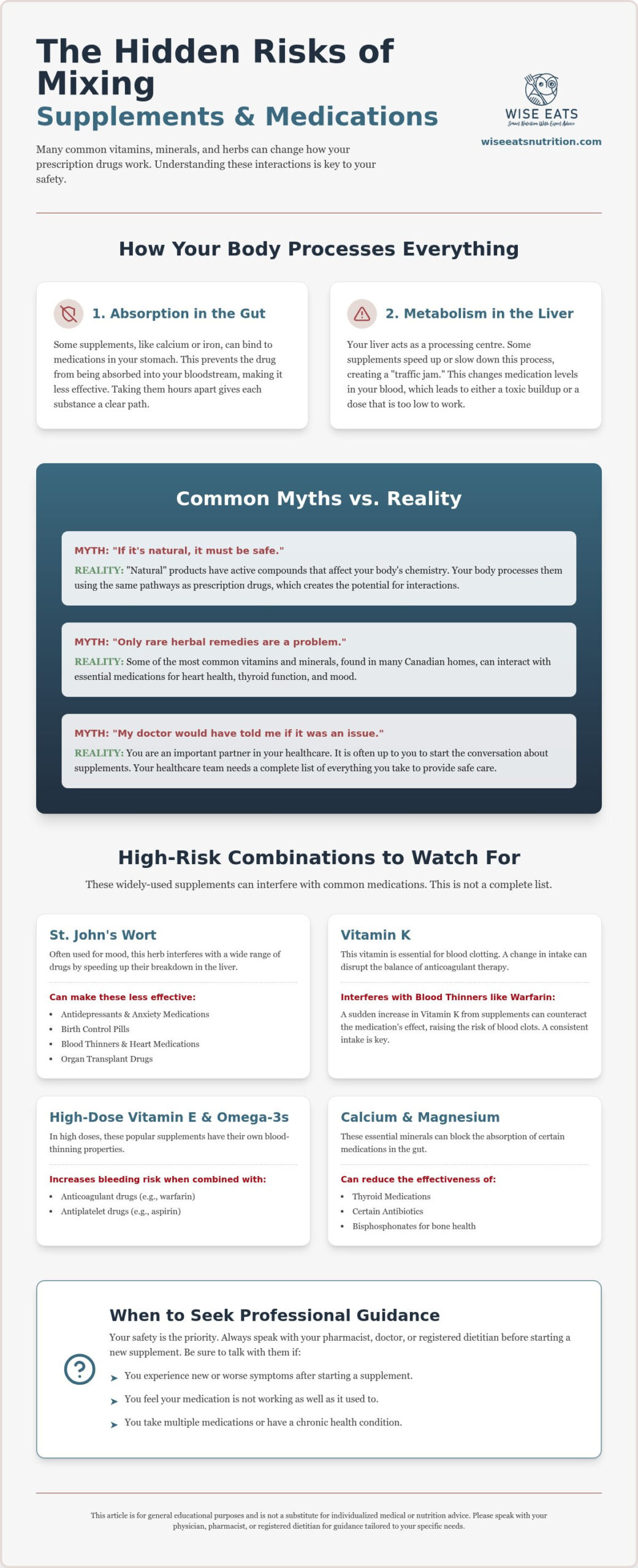
In the pursuit of wellness, many of us turn to vitamins, minerals, and herbal products to support our health. It is easy to assume that because these supplements come from natural sources, they are harmless. This belief, however, is a common and potentially risky myth. The reality is that “natural” does not automatically equal “safe,” especially when you are taking prescription medications.
A supplement-medication interaction happens when a vitamin, mineral, herb, or other supplement changes the way a drug works in your body. These substances contain bioactive compounds, which are active ingredients that produce a biological effect. Your body processes these compounds using the same pathways it uses for prescription drugs. This shared processing can lead to problems.
Why We Often Assume Supplements Are Harmless
The wellness industry often markets supplements with a “health halo,” promoting them as pure and gentle alternatives to pharmaceuticals. This marketing, combined with a long history of traditional herbal medicine, can lead us to believe they are fundamentally different from prescription drugs. While supplements are regulated differently, their effects on our biology are real and powerful.
The Reality of Bioactivity in the Body
Think of your liver as a busy traffic centre for processing everything you consume. Both medications and supplements need to pass through this centre to be broken down and used by your body. When you take certain supplements and medications at the same time, it can create a “traffic jam.” One substance might slow down or speed up the processing of another, causing the medication’s level in your blood to become dangerously high or ineffectively low. Professional guidance is not about restricting your choices, but about organizing this traffic safely.
Myth 2: Supplements and Medications Work in Separate Ways
Another common misconception is that a vitamin pill and a prescription drug operate in entirely different spheres within the body. In truth, they are on a direct collision course from the moment you swallow them. The journey of any substance through your body involves absorption, metabolism, and excretion. Supplements can interfere at every stage, altering a medication’s effectiveness.
This interference affects a drug’s bioavailability, which is a simple way of describing how much of a medication actually reaches your bloodstream to do its job. If a drug has low bioavailability, it means only a small fraction of the dose is having an effect. If a supplement changes that, the consequences can be significant.
The Liver’s Role: The Processing Centre
Your liver contains a complex system of enzymes, known as the Cytochrome P450 system, that acts like a sophisticated sorting office. These enzymes are responsible for breaking down and deactivating a huge number of medications and supplements. Some herbal products, like St. John’s Wort, can “distract” these enzymes or make them work overtime. This distraction means your medication might be processed too quickly (making it less effective) or too slowly (leading to a toxic buildup).
Absorption Hurdles in the Gut
The interference can start even earlier, in your digestive tract. Some minerals are notorious for binding to certain medications, preventing them from being absorbed into your bloodstream. For example, calcium or iron supplements can latch onto specific antibiotics or thyroid medications, rendering them much less effective. This is why a pharmacist or dietitian often advises you to take certain supplements and medications at least two hours apart, to give each one a clear path for absorption.
Myth 3: Only Obscure Herbal Remedies Cause Problems
Many people believe that only rare or potent herbal supplements pose a risk. The truth is that some of the most common vitamins and minerals found in Canadian pantries can interact with essential medications. It is not about how exotic a supplement is, but how it behaves in your body.
Here are a few high-risk combinations involving widely used supplements and medications:
- St. John’s Wort: This herb is often used for mood support, but it is the poster child for supplement-drug interactions. It interferes with a wide range of medications, including antidepressants, birth control pills, blood thinners, and organ transplant drugs, often making them less effective.
- Vitamin K: This vitamin is essential for blood clotting. People taking the blood thinner warfarin must maintain a consistent intake of Vitamin K from both food and supplements. A sudden increase from a supplement can counteract the medication’s effect, increasing the risk of blood clots.
- High-Dose Vitamin E or Omega-3s: While beneficial for many, high doses of these supplements have a blood-thinning effect. When combined with anticoagulant or antiplatelet drugs like aspirin or warfarin, they can increase the risk of serious bleeding.
- Magnesium and Calcium: These common minerals can interfere with the absorption of thyroid medications and certain antibiotics. Taking them too close to your prescription dose can prevent the medication from working properly.
Supplements That Affect Blood Sugar and Pressure
Herbs like ginseng or cinnamon can lower blood sugar levels. For someone taking diabetes medication, this combination can sometimes lead to hypoglycemia (dangerously low blood sugar). Similarly, some “natural” energy or weight management supplements contain stimulants that can raise blood pressure, which is a concern for anyone on medication to control hypertension. Careful monitoring is crucial when adding any new supplement to your routine.
Myth 4: My Doctor Would Have Mentioned It If It Were a Problem
While your doctor manages your overall health, they may not always ask about the specific vitamins or herbal products you take. It is often up to you to initiate this important conversation. To navigate your health safely, you need to be a proactive partner in your own care and seek guidance from the right professionals.
This is especially important for individuals with chronic conditions, those taking multiple medications, or anyone scheduled for surgery. A complete picture of everything you take is essential for your healthcare team to provide safe and effective care.
Preparing for Your Healthcare Appointment
To have a productive conversation, preparation is key. Create a master list of everything you take, including prescriptions, over-the-counter drugs, vitamins, minerals, and herbal supplements. Better yet, bring the actual bottles to your appointment. This allows your doctor or pharmacist to check the exact ingredients and dosages.
Here are a few questions you can ask:
- Based on my health conditions and prescriptions, are there any supplements I should be cautious about?
- Is there a specific time of day I should take my supplements to avoid interactions with my medication?
- Could this supplement be affecting the results of my blood tests?
Remember, regulated healthcare professionals provide a no-judgment zone. Their goal is to ensure your safety.
The Importance of Third-Party Testing in Canada
In Canada, look for a Natural Product Number (NPN) on supplement labels. This eight-digit number means that Health Canada has reviewed the product and found it to be safe, effective, and of high quality when used as directed. An NPN ensures that the bottle contains what the label says it does, which is a critical safety issue when you are trying to avoid risky interactions. For more information on choosing quality products, you can review a guide to selecting safe and effective vitamins in Canada.
Myth 5: A Daily Multivitamin Is a Simple, Safe Choice for Everyone
A one-size-fits-all multivitamin seems like an easy insurance policy for your health. But what if that “general” formula contains a nutrient that interferes with your specific medication? Or what if it provides high doses of nutrients you already get from your diet, creating an unnecessary risk?
A Registered Dietitian can help you move beyond generic supplementation toward a personalized nutrition strategy. This approach prioritizes your unique needs and ensures your supplement routine is both safe and effective.
Personalized Nutrition vs. General Supplementation
A dietitian performs a “supplement audit” to review everything you are taking. They identify potential risks, pinpoint unnecessary supplements, and help you understand which nutrients you might actually need based on your diet, lifestyle, and health conditions. They operate from a “food first” philosophy, exploring whether you can meet your nutrient needs safely through food before recommending a supplement.
For example, instead of relying on a high-dose supplement that could cause an interaction, a dietitian might develop a custom meal plan rich in the nutrients you need. This approach targets nutrient gaps without the risks that come with pills and powders. Working with a dietitian means you get a knowledgeable partner who helps align your nutrition with your overall healthcare plan.
Next Steps for Your Peace of Mind
Taking control of your health means being informed and proactive. Understanding the myths surrounding supplement and medication interactions is the first step. The next is to build a healthcare team that supports you in making safe choices. Small, informed changes are the key to sustainable health and peace of mind.
Frequently Asked Questions
Can I take a multivitamin if I am on blood pressure medication?
It depends on what is in the multivitamin. Some formulations contain ingredients like potassium or certain herbs that can affect blood pressure or interact with your medication. It is essential to show the multivitamin bottle to your pharmacist or doctor to ensure it is a safe choice for you.
What is the best time of day to take supplements to avoid interactions?
Timing is crucial. For example, minerals like iron and calcium should often be taken several hours apart from thyroid medication or certain antibiotics. Your pharmacist is the best person to create a specific schedule for your medications and supplements.
Is it safe to take herbal tea while on prescription drugs?
Not always. Many herbal teas contain bioactive compounds that can interact with medications. Teas containing chamomile, ginger, or ginseng, for example, can have effects on blood clotting or blood sugar. Always discuss the types of herbal tea you drink with your healthcare provider.
How do I know if my supplement is interacting with my medication?
Symptoms of an interaction can vary widely. You might notice your medication seems less effective, or you could experience unexpected side effects like dizziness, changes in heart rate, or bleeding. If you feel unwell after starting a new supplement, contact your doctor or pharmacist immediately.
Should I stop taking all supplements before a scheduled surgery?
Yes, in most cases. Many supplements, including Vitamin E, fish oil, and garlic, can increase bleeding risk during surgery. Your surgical team will provide specific instructions on when to stop taking them, usually one to two weeks before your procedure. Always provide your team with a complete list of your supplements.
Can a dietitian help me figure out which vitamins I actually need?
Absolutely. A Registered Dietitian can assess your diet to see if you have any nutrient gaps. They can help you build a food plan to meet your needs and will only recommend supplements when necessary, ensuring they are safe with your health conditions and medications.
What should I do if I think I am having a supplement-drug interaction?
Contact your doctor or pharmacist right away. If your symptoms are severe, such as difficulty breathing, chest pain, or a severe rash, seek emergency medical attention. Do not try to manage the situation on your own.
This article was written and reviewed by the team of Registered Dietitians at Wise Eats, including Rachel McBryan, RD, College of Health and Care Professionals of BC, and Sheirry Poposka, RD, Alberta College of Registered Dietitians.
If you’re struggling with a nutrition-related medical condition or an eating problem, a registered dietitian can provide professional support — book a consultation.

Article by
Rachel McBryan, Dietitian
Rachel McBryan is a licenced Dietitian in British Columbia offering comprehensive nutrition counselling as virtual and/or in-person counselling sessions to suit your needs and preferences. With a Bachelor of Science in Nutrition and Food Science, Rachel has over 20 years experience helping people address their health through nutrition. She was awarded Human Nutrition and Food Science BSc.from University of Alberta followed by post-grad course work at UBC in guidance counselling.
An eating disorder is a serious mental health illness.
If you are in immediate distress or crisis, please contact emergency services by dialing 911 or calling Vancouver Island Crisis Line: 1-888-494-3888.
This article is educational information only, not professional diagnosis or treatment. This health education content is heavily AI augmented and parts or all of this article may not have been reviewed yet for accuracy. AI generated content is prone to error.
Please note that we partner with VitaminLab and financially gain if you purchase supplements. You are under no obligation to use VitaminLab products and whether you supplement your diet with VitaminLab or another product of your choice will not impact your nutrition care.