According to Statistics Canada, the percentage of Canadians with low vitamin D levels more than doubles between November and March. Between October and April across Alberta and Vancouver Island, northern sunlight lacks the UV strength to trigger natural nutrient synthesis through your skin. Whether you live in Calgary, Edmonton, or Qualicum Beach, knowing how to get enough vitamin D in Canadian winter feels confusing when grey daylight fades by four in the afternoon and online sources post conflicting dosage advice.
You recognize the seasonal shift through afternoon fatigue, heavy limbs, and low energy. Coping with our dark months doesn’t require restrictive rules or overwhelming guesswork in the grocery aisles. You will learn practical food strategies and safe supplementation guidelines to maintain healthy vitamin D levels throughout dark Canadian winters. Our Registered Dietitian guidance reviews your specific seasonal biological needs, realistic meal additions, and safe protocols to select third-party certified formulas carrying a Health Canada Natural Product Number.
Key Takeaways
- Northern latitudes across Alberta and British Columbia prevent natural skin synthesis of this essential nutrient from October through April.
- Learning how to get enough vitamin D in Canadian winter begins by adding fatty fish and fortified foods to your weekly grocery routine.
- Selecting safe supplements requires verifying an eight-digit Natural Product Number on labels, choosing cholecalciferol for superior bodily absorption.
- Collaborating with a Registered Dietitian honours your bio-individuality, creating a practical nutrition plan without rigid dietary restrictions.
The Canadian Winter Sunlight Gap and Vitamin D Status
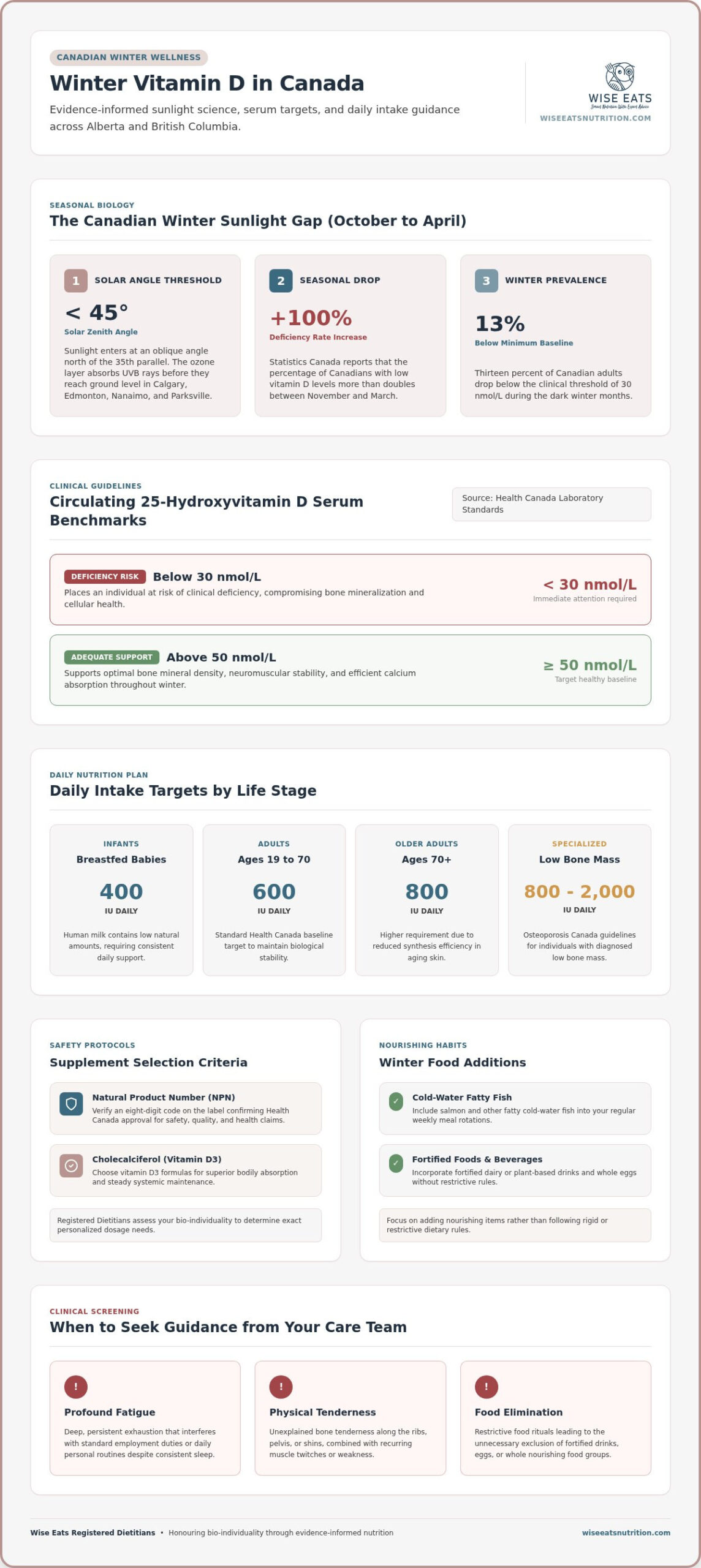
Cutaneous synthesis demands specific ultraviolet B (UVB) wavelengths reaching unprotected skin. Across Canada, every major population centre sits well north of the 35th parallel. In Calgary, Edmonton, Nanaimo, and Parksville, sunlight enters the atmosphere at an oblique winter angle. Because of this steep slant, the stratospheric ozone layer absorbs incoming UVB radiation long before reaching ground level. Figuring out how to get enough vitamin D in Canadian winter becomes an essential annual health priority across Western Canada.
To visualize how solar angles impact Canadian health status, watch this practical broadcast:
Why Northern Latitudes Prevent Cutaneous Synthesis
A brisk midday walk along Qualicum Beach or through an Edmonton river park offers fresh air, yet produces zero dermal nutrient synthesis. Cutaneous production of Vitamin D relies on direct UVB light penetrating human skin cells to transform precursors into active compounds. Between October and April, northern solar zenith angles fail to reach the 45-degree threshold required for biological activation. Knowing how to get enough vitamin D in Canadian winter therefore demands intentional food choices and routine adjustments rather than relying on cold afternoon sunshine.
Health Canada Standards for Circulating Serum Levels
Routine laboratory screenings evaluate total systemic stores by measuring circulating 25-hydroxyvitamin D concentrations within blood serum. Health Canada guidelines identify serum concentrations below 30 nmol/L as placing an individual at risk of clinical deficiency. Values above 50 nmol/L support bone mineral density, neuromuscular stability, and efficient calcium absorption. Statistics Canada reports reveal thirteen percent of Canadian adults drop below 30 nmol/L between November and March. While skeletal benefits remain well documented, scientific evidence remains condition-specific regarding non-skeletal outcomes. Consulting a Registered Dietitian helps interpret these lab values within your unique health journey.
Daily Dietary Requirements and Assessing Low Intake
Meeting minimum targets requires understanding national benchmarks while honouring personal biological differences. Approaching winter wellness begins with clear, evidence-informed guidance from public health agencies. Establishing an adequate baseline intake protects bone structure and maintains smooth cellular function through freezing weather. Daily nutrient goals reflect biological preservation rather than temporary cold-weather trends.
Daily Intake Reference Targets Across Life Stages
Following Health Canada’s recommendations, adults aged nineteen to seventy aim for 600 international units (IU) daily. For adults over seventy, the baseline climbs to 800 IU daily because aging skin synthesizes fewer nutrients. Meanwhile, Osteoporosis Canada outlines targets between 800 and 2,000 IU for adults diagnosed with low bone mass. Breastfed infants require 400 IU each day because human milk carries low natural amounts. Figuring out how to get enough vitamin D in Canadian winter means tailoring intake to your specific decade of life.
Identifying Physical Signs of Inadequate Winter Intake
Deficits often build quietly across long prairie freezes and damp coastal weeks. In some cases, persistent bone tenderness along the ribs, pelvis, or shins indicates compromised mineralization. Diffuse muscle soreness and frequent twitches also mirror inadequate circulating levels. When afternoon fatigue deepens despite consistent sleep, tracking your daily nutrition alongside a medical team helps identify emerging patterns.
When to Seek Help: Identifying Nutrition Red Flags
Differentiating ordinary seasonal sluggishness from deeper deficiencies protects ongoing physical vitality. Schedule time with your care team if you observe these symptoms:
- Profound fatigue interfering with normal employment duties or personal activities
- Unexplained bone pain, joint discomfort, or recurring muscle weakness
- Restrictive food rituals leading to elimination of fortified drinks, eggs, or whole food groups
If you want individualized support reviewing your current routine, consider booking a virtual consultation with a Registered Dietitian to review your unique bio-individuality.
Adding Vitamin D Rich Foods to Canadian Winter Meals
Few unprocessed foods naturally contain high amounts of fat-soluble calciferol. Relying on grocery selections requires deliberate meal construction, especially across cold months when sunlight synthesis stops completely. Incorporating fortified foods and cold-water seafood provides steady biological support without requiring extreme dietary changes. Understanding how to get enough vitamin D in Canadian winter through nourishing foods creates an enjoyable foundation for long-term health.
Nutrient Dense Food Sources for Winter Plates
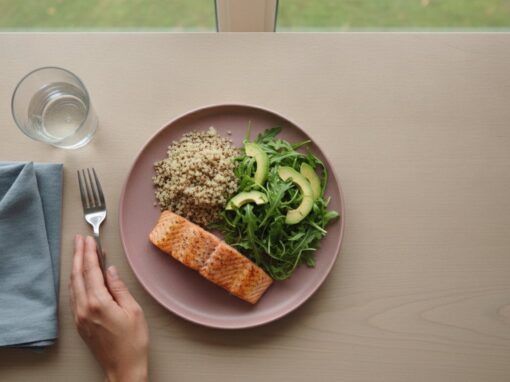
Wild Pacific sockeye salmon delivers exceptional concentrations of calciferol alongside anti-inflammatory Omega-3 fatty acids. Canned sardines and rainbow trout provide accessible alternatives fitting diverse grocery budgets. Recent Canadian regulations doubled mandatory fortification levels in fluid cow’s milk to 200 IU per 250 mL glass, while expanding voluntary fortification to yogurt and kefir. Plant-based soy or almond beverages fortified to match dairy standards offer equal nutritional support. Pasture-raised egg yolks and UV-treated mushrooms contribute smaller amounts, fitting neatly into a balanced Mediterranean eating pattern.
Recipe Inspiration: Winter Salmon and Warm Grain Bowl
Culinary combinations turn standard ingredients into comforting winter dinners. Pairing pan-seared sockeye salmon with warm brown rice, roasted delicata squash, and steamed kale creates an energizing evening meal. Whisking fortified tahini with lemon juice provides a creamy dressing offering additional micronutrients. Working with our team to build a personalized dietitian meal plan helps you incorporate these seasonal ingredients while honouring your cultural traditions and personal taste preferences.
Optimizing Fat-Soluble Vitamin Absorption at Home
Intestinal cells require dietary lipids to absorb fat-soluble vitamins efficiently. Consuming food sources alongside healthy fats improves digestive uptake substantially:
- Pairing canned salmon salads with olive oil or avocado chunks
- Enjoying fortified yogurt topped with chopped walnuts or hemp hearts
- Sautéing mushrooms in extra virgin olive oil alongside whole eggs
Distributing these meals across your week supports stable nutrient availability. Combining practical culinary habits with professional guidance shows you how to get enough vitamin D in Canadian winter through meals you look forward to eating.
Selecting Safe Winter Supplements in Canada
Living in northern latitudes requires thoughtful supplementation during darker periods. Health Canada advises adults over fifty take daily supplements during winter, since cutaneous synthesis stops completely. Exploring how to get enough vitamin D in Canadian winter points directly toward pharmacy shelves displaying dozens of competing options. Reviewing how retail options fit your personal health profile in this personalized vitamin packs Canada analysis brings clarity to your decision process.
Cholecalciferol Versus Ergocalciferol Forms
Commercial supplements supply two distinct chemical variations: vitamin D3 (cholecalciferol) and vitamin D2 (ergocalciferol). Clinical trials confirm cholecalciferol raises circulating blood concentrations far more efficiently than plant-derived ergocalciferol. Cholecalciferol traditionally originates from sheep lanolin, though sustainably harvested lichen provides an identical plant-sourced alternative for vegan preferences. Ergocalciferol breaks down rapidly in human circulation, requiring higher, more frequent doses to maintain comparable serum concentrations over time.
Locating the Health Canada Natural Product Number
Purchasing dependable formulas requires inspecting bottle labels for federal regulatory clearance. Every legitimate natural health product sold legally in Canada features an eight-digit Natural Product Number (NPN). This numeric sequence confirms Health Canada reviewed the formula for safety, ingredient purity, and approved health claims. Non-prescription retail dosages reach up to 2,500 IU per day across Canada. Reading our guide on professional supplement review Canada strategies equips you with practical screening tools before purchasing bottles at the pharmacy.
Safety Limits and Cytochrome P450 Enzyme Considerations
Higher amounts do not automatically yield better wellness outcomes. Health Canada sets the tolerable upper intake level for adults at 4,000 IU daily. Exceeding this boundary without medical oversight risks excessive calcium accumulation in blood tissue, placing unwanted strain on kidneys. The liver’s Cytochrome P450 system metabolises fat-soluble vitamins alongside prescription medications through shared enzymatic pathways. Excessive supplementation alters how these liver enzymes break down cardiovascular therapies or bone medications. Understanding how to get enough vitamin D in Canadian winter requires balancing dosage targets against your individual biological safety limits.
Personalizing Your Winter Nutrition Strategy with a Registered Dietitian
Generic supplement guidelines overlook personal biological variations. Bio-individuality determines how your system processes nutrients through long periods of darkness. Registered Dietitians evaluate the entire picture, preventing confusion over conflicting internet dosages while eliminating unnecessary spending on redundant single-ingredient products. A thorough supplement review clarifies micronutrient interactions. Proper uptake requires adequate magnesium, calcium, and vitamin K2 balance. These cofactors work together, directing calcium directly into skeletal structures rather than delicate cardiovascular tissue.
Assessing Bio-Individuality and Blood Serum Results
Physicians order serum testing when specific clinical indicators, bone density markers, or persistent fatigue warrant diagnostic investigation. Registered Dietitians interpret daily dietary patterns alongside these laboratory findings to build clear, supportive paths forward. Melanin concentration within skin layers, age-related digestive changes, and kidney conversion efficiency all influence baseline status. Residents in Calgary, Edmonton, Parksville, or Nanaimo experience similar winter solar deficits, yet each individual possesses unique metabolic traits. Learning how to get enough vitamin D in Canadian winter means adjusting targets to fit your unique physiology.
Collaborative Nutrition Prescriptions Without Food Shaming
Supportive nutrition counselling honours your favourite foods, cultural heritage, and weekly grocery budget. Registered Dietitians reject restrictive food rules, focusing instead on sustainable additions promoting long-term vitality. Rachel McBryan and Sheirry Poposka review daily routines collaboratively, helping clients introduce nourishing food combinations alongside appropriate supplementation. Investing in personalized supplement services ensures your routine remains safe, evidence-informed, and tailored specifically to your lifestyle needs. Managing how to get enough vitamin D in Canadian winter becomes simple, empowering, and sustainable when supported by trusted clinical experts.
Taking Confident Steps Toward Winter Vitality
Thriving through northern cold seasons becomes straightforward when combining purposeful meal additions with verified supplementation. Northern sunlight won’t bridge our seasonal solar gap, but mastering how to get enough vitamin D in Canadian winter restores confidence in your daily health routine. Instead of worrying about grey afternoons, you possess clear steps to nourish bones and support physical vitality through freezing temperatures.
Rachel McBryan, RD, with the College of Health and Care Professionals of BC, and Sheirry Poposka, RD, with the Alberta College of Registered Dietitians, deliver evidence-informed virtual counselling across Calgary, Edmonton, Nanaimo, and Vancouver Island communities. Their collaborative care respects personal food preferences and honours individual metabolic needs without imposing rigid diet rules.
Sustainable seasonal wellness thrives on realistic nourishment rather than strict restrictions. Mindful additions to your daily routine protect your physical foundations throughout our darkest months, helping you feel energized and supported all season long.
Frequently Asked Questions
Why does the Canadian winter sun fail to produce vitamin D in our skin?
Canadian winter sunlight strikes our northern latitude at an oblique solar angle, causing the atmospheric ozone layer to absorb all ultraviolet B radiation. Between October and April, regions like Calgary, Edmonton, and Vancouver Island sit too far north for dermal synthesis. Even on clear, bright afternoons, the sun remains too low in the sky to stimulate cutaneous production. Heavy winter clothing further blocks whatever light reaches ground level.
How much vitamin D does Health Canada recommend for adults during winter?
Health Canada recommends a baseline intake of 600 international units (IU) daily for adults aged 19 to 70. For adults over 70, the daily recommendation increases to 800 IU. Because winter sunlight provides zero cutaneous synthesis across Canada, many practitioners suggest between 1,000 and 2,000 IU daily. Determining how to get enough vitamin D in Canadian winter depends on your age, diet, and personal bone health history.
Which everyday foods provide the highest amounts of vitamin D in Canada?
Fatty fish like wild Pacific sockeye salmon, rainbow trout, and canned sardines provide the highest natural amounts of vitamin D in Canadian grocery aisles. Fluid cow’s milk and fortified plant-based beverages supply mandatory additions of roughly 200 IU per 250 mL serving. Egg yolks, fortified yogurts, and mushrooms exposed to ultraviolet light offer additional dietary calciferol, giving you practical ways to build nourishing winter meals.
What is the key difference between vitamin D3 and vitamin D2 supplements?
Vitamin D3 (cholecalciferol) elevates and maintains circulating blood concentrations far more efficiently than plant-derived vitamin D2 (ergocalciferol). Sourced from sheep lanolin or vegan-friendly wild lichen, D3 matches the form your body naturally produces through summer sun exposure. Vitamin D2 originates from irradiated yeast and clears from human circulation much faster. Health professionals generally favour third-party tested D3 carrying an active Health Canada Natural Product Number.
Is taking 5000 IU of vitamin D daily safe without medical supervision?
No, taking 5,000 IU daily exceeds Health Canada’s tolerable upper intake level of 4,000 IU and poses safety concerns without direct medical supervision. Fat-soluble vitamins accumulate within bodily tissues rather than passing through urine. Chronic high-dose consumption risks excessive calcium buildup in your blood, potentially injuring kidneys and blood vessels. When learning how to get enough vitamin D in Canadian winter, staying under 4,000 IU daily protects your organs.
Does tanning indoors or sitting near a sunny winter window provide vitamin D?
No, neither commercial tanning beds nor sitting beside an indoor window stimulates safe vitamin D creation. Standard window glass completely filters out UVB rays while allowing deeper-penetrating UVA rays through. Commercial tanning equipment emits hazardous concentrations of radiation linked to elevated skin cancer risks rather than healthy nutrient production. Safe winter strategies rely on fortified grocery foods and licensed oral supplements rather than artificial radiation sources.
When should an individual see a doctor or dietitian regarding winter fatigue?
Schedule a medical evaluation if debilitating exhaustion interferes with work, or if you experience unexplained bone tenderness and persistent muscle weakness. A physician evaluates underlying health conditions through diagnostic bloodwork, while a Registered Dietitian assesses dietary patterns to ensure optimal nutrient balance. Wise Eats Registered Dietitians Rachel McBryan and Sheirry Poposka help residents throughout Alberta and Vancouver Island build personalized nutrition plans without restrictive eating habits.

Article by
Rachel McBryan, Dietitian
Rachel McBryan is a licenced Dietitian in British Columbia offering comprehensive nutrition counselling as virtual and/or in-person counselling sessions to suit your needs and preferences. With a Bachelor of Science in Nutrition and Food Science, Rachel has over 20 years experience helping people address their health through nutrition. She was awarded Human Nutrition and Food Science BSc.from University of Alberta followed by post-grad course work at UBC in guidance counselling.
An eating disorder is a serious mental health illness.
If you are in immediate distress or crisis, please contact emergency services by dialing 911 or calling Vancouver Island Crisis Line: 1-888-494-3888.