Full recovery from an eating disorder is possible, but life after eating disorder recovery does not mean every difficult thought disappears. Some people continue to need support as they care for their well-being.
Recovery does not follow one fixed path or require reaching a point with no struggles. Progress can look different from person to person, shaped by daily routines, relationships, and available support. Whether you live in Calgary, Edmonton, Nanaimo, Parksville, Vancouver Island, or Qualicum Beach, your next steps should reflect your needs and circumstances.
This article looks at how recovery can involve food, body image, discomfort, eating-disorder thoughts, and difficult feelings. It also offers practical ways to maintain progress, notice changes in your well-being, and involve trusted people or your care team. The aim is to clarify what ongoing recovery can look like in everyday life, without expecting one fixed path or a perfect response to every challenge.
Key Takeaways
- Build steadier eating habits at a pace that feels manageable, with support for food and body image concerns.
- Expect some discomfort during recovery and practise responding to it without returning to eating-disorder behaviours.
- Notice eating-disorder thoughts without treating them as instructions, and make room for parts of your identity beyond the illness.
- Use supportive coping strategies for difficult feelings, and involve trusted people when you need connection.
- Maintain progress with a practical support plan, and reach out to your care team if old behaviours or physical symptoms return.
1. Developing a balanced relationship with food and body image
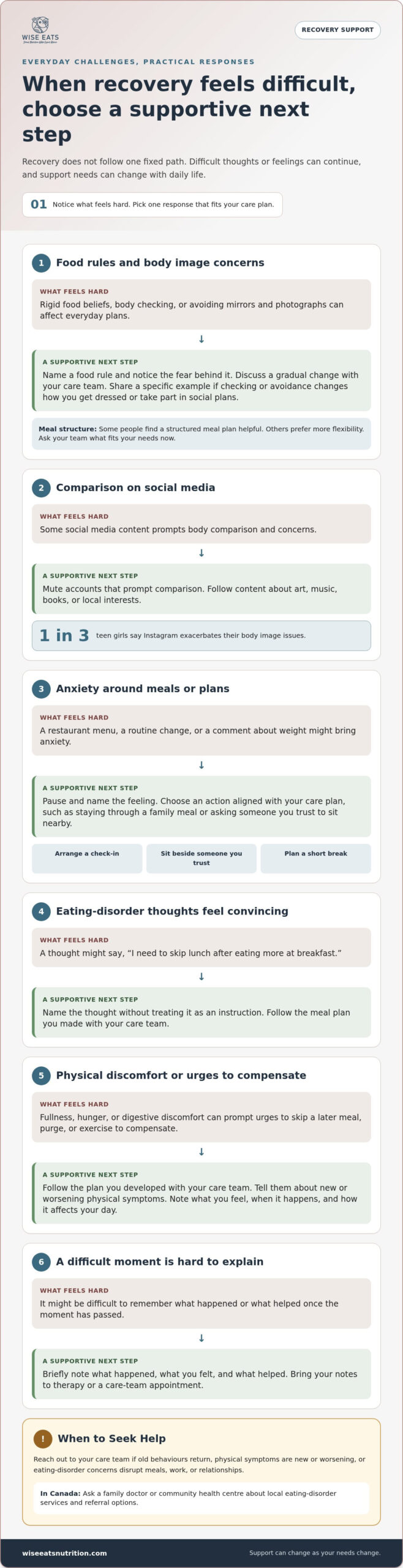
Recovery involves building a more flexible relationship with food and your body. Behavioural recovery often means reducing or stopping eating-disorder behaviours. Psychological recovery involves addressing body image distress and rigid beliefs about food, eating, and weight. These changes take time, and support needs can shift as daily life changes.
Start with one step: notice a food rule, name the fear behind it, and discuss a gradual change with your care team. Some people find a structured meal plan helpful; others prefer more flexibility. A regular eating pattern may feel more comfortable with time and consistency. Your team can help you decide what structure fits your needs now.
For a perspective on recovery beyond medical stabilization and clinical treatment, watch Kristie Amadio’s TEDx Talk:
Poor body image can contribute to disordered eating. Body checking includes repeatedly measuring your waist or inspecting your reflection. Body avoidance includes skipping mirrors or avoiding photographs. Notice how these habits affect getting dressed, attending social events, or choosing clothes. For example, note when checking or avoidance changes your plans, then share the example with your care team.
Social media feeds can affect body image concerns. One in three teen girls say Instagram exacerbates their body image issues. Mute accounts that prompt comparison, then follow content about art, music, books, or local interests. In Calgary or Edmonton, you could also look for community activities centred on shared interests rather than appearance.
Family and friends can listen without commenting on weight, portions, or appearance. Ask what support would help, such as joining you for a meal or helping you prepare for an appointment. A friend in Nanaimo, Parksville, Qualicum Beach, or elsewhere on Vancouver Island could check in after a challenging social event.
After treatment, concerns about meals, body image, relationships, or work can remain difficult. Anxiety may arise during a team lunch, or body checking might interrupt getting ready for work. Naming the situation can help you explain its impact to someone you trust or your care team.
In Canada, ask a family doctor or community health centre about local eating-disorder services and referral options. To explore affordable support, ask about publicly funded services in your province or territory, and review workplace or school health benefits for counselling or nutrition care.
2. Accepting discomfort during recovery
Recovery often means practising new responses before they feel familiar. A restaurant menu, a change in routine, or a comment about weight might bring anxiety. Discomfort does not mean you have failed. Pause, name the feeling, then choose an action that aligns with your care plan. For example, stay through a family meal or ask someone you trust to sit nearby.
Some physical sensations may feel unfamiliar or upsetting. Fullness, hunger, or digestive discomfort can prompt urges to skip a later meal, purge, or exercise to compensate. Follow the plan you developed with your care team, and report new or worsening physical symptoms. Don’t try to assess health changes on your own. Describing the sensation, when it occurs, and how it affects your day gives your team useful information.
Discomfort may also involve uncertainty about weight, control, or self-worth. If getting dressed brings harsh thoughts, pause and try a neutral phrase: “I’m having a hard moment, and I still deserve care.” You don’t need to force positive thinking or feel confident before taking a supportive next step. Tell your therapist which words feel believable, then practise a response together.
Everyday plans in Calgary or Edmonton, such as a restaurant meal or work lunch, might bring anxiety. On Vancouver Island, a family gathering in Nanaimo, Parksville, or Qualicum Beach could raise similar concerns. Before an event, identify one practical support: arrange a check-in, choose someone to sit beside, or decide how you’ll take a short break if distress rises.
Progress does not depend on feeling calm every time. It involves noticing an urge and choosing a response before it becomes a behaviour. For example, someone recovering from bulimia might tell their care team when urges to compensate return, even without acting on them. Speaking up early gives the team a chance to review support and discuss next steps.
After a difficult moment, briefly note what happened, what you felt, and what helped. For example: “Dinner plans changed, I felt anxious, and I asked my friend to stay.” Bring notes to therapy or a care-team appointment. Specific examples help you and your team notice patterns without judging yourself. If discomfort begins disrupting meals, work, or relationships, reach out for support.
If eating-disorder concerns are making recovery harder, talk with a dietitian about eating disorder recovery support as part of your care team.
3. Changing relationship with eating-disorder thoughts
Eating-disorder thoughts may focus on food, weight, shape, exercise, or rules about what you should eat. For example, a thought might say, “I need to skip lunch after eating more at breakfast.” Recovery involves noticing these thoughts without treating them as instructions. A thought can feel convincing and still not reflect what supports your health.
Physical and mental health changes don’t always happen on the same timeline. Recovery can involve addressing health effects, eating behaviours, thoughts, and daily functioning. Researchers have not established one set of criteria that fully defines recovery.
Try naming a thought before choosing what to do next. You might say, “I’m having the thought that eating lunch is unsafe,” then follow the meal plan you made with your care team. This brief pause can help separate the thought from your decision. Note the trigger and what you did next, such as eating with a friend rather than cancelling lunch.
Some thoughts are connected with a diagnosis or past behaviour. Someone recovering from anorexia might still feel distressed after a meal, even as eating patterns improve. Someone with a history of binge eating might worry about losing control when stressed. These examples don’t define a person or predict what will happen next. They can help identify concerns to discuss with a therapist or care team.
Build an identity beyond the eating disorder by naming interests and roles that matter to you. List activities such as painting, studying, caring for a pet, or spending time with a sibling. Choose one small action for the week, like returning to a class or making plans with a friend. This gives your attention a concrete focus beyond symptoms and food-related thoughts.
Thoughts often grow louder during stress, tiredness, or change. Briefly note the situation, the thought, and your response. For example: “Work deadline, urge to miss dinner, asked my roommate to eat together.” Bring recurring patterns to therapy so you and your care team can plan practical responses.
Progress doesn’t require every thought to disappear. A useful sign of change is responding differently, such as noticing a critical thought and continuing with a planned meal or social activity. If thoughts pull you toward eating-disorder behaviours, tell your care team early. They can help review your support and address changes in your recovery.
4. Emotion regulation and coping with difficult feelings
Stress, grief, shame, anger, or loneliness can feel intense during recovery. A cancelled plan or tense conversation might bring an urge to avoid a meal or withdraw. Naming the feeling gives you a clear starting point: “I feel lonely after work.” Then choose a response, such as texting a friend or continuing with your planned evening meal.
Eating disorders can serve as a way of coping with emotional pain, so recovery involves practising other responses. Many people with an eating disorder recover and learn different ways to cope. Progress might look like asking for company instead of isolating, or taking a quiet break instead of acting on an urge.
When emotions rise, try a brief pause. Notice what happened, name the feeling, and identify what you need next. For example, after a disagreement with a family member, you might write, “I feel hurt and need time to settle.” A short walk, music, or a direct conversation might help. Keep following your care plan, especially around meals.
Talking therapy for eating disorders can help you work through emotional difficulties linked with the disorder and practise healthier coping skills. In a session, you might discuss how work stress leads to meal-related anxiety, then plan a response for the next busy day. Share specific examples with your therapist, including what you felt and what you did.
Some feelings are connected with other mental health concerns, such as anxiety or low mood. Track patterns in a simple note: the situation, the feeling, and your response. For instance, record whether conflict, poor sleep, or loneliness tends to increase urges. Bring your notes to your care team to discuss support that fits your needs.
Support from another person can make coping actions easier to practise. Tell a trusted friend, “Please listen before offering advice,” or ask a family member to sit with you after a difficult appointment. If talking feels hard, send a short message instead. Agree on a manageable check-in, such as a call after work.
When emotions feel overwhelming, return to basic steps: pause, name the feeling, and contact someone you trust. If eating-disorder behaviours return or you notice troubling physical symptoms, tell your care team. You deserve support for both emotional and physical effects. You don’t need to wait until distress disrupts daily life before speaking up.
5. Relapse prevention and maintaining recovery
Eating-disorder recovery can continue after treatment ends. Old behaviours or thoughts might return during stress, illness, conflict, or major change. A relapse does not erase earlier progress. Treat a change as a sign to reconnect with support, not as a personal failure.
Make a written plan with your care team before a difficult period arises. Include early warning signs, supportive people, and practical next steps. Signs might include skipping meals, avoiding friends, or spending more time thinking about food. Your plan could name someone you trust to contact and an appointment to arrange with your care team.
The Centre for Clinical Interventions recommends tracking eating behaviours, thoughts, and feelings as they happen. A brief note could say, “Work stress, urge to miss dinner, called my sister.” These patterns can help you notice when extra support might be useful. The Centre for Clinical Interventions also includes a relapse-prevention action plan in its recovery workbook.
Set manageable goals and review them with someone you trust. If a shared meal feels difficult, a first step might be asking a supportive person to join you. A strong support system can play an important role in recovery. Agree on specific help, such as a check-in after an appointment or company during a meal.
Follow-up care in Canada can include ongoing contact with your medical and mental health care team, along with nutrition and psychological support suited to your needs. Discuss mood or anxiety concerns as part of your plan, since addressing co-occurring conditions can support ongoing recovery.
Reach out to your care team if eating-disorder behaviours return, such as restricting, binge eating, or purging. New or worsening physical symptoms also deserve prompt attention. Tell someone you trust if shame or isolation makes it harder to seek help.
If you’re struggling, explain what changed, when it started, and what support you need. For example, tell your care team, “I’ve started avoiding lunch at work, and I need help updating my plan.” Clear details help the team consider appropriate next steps and keep your recovery support connected.
Recovery is not always a straight path: people recovering from an eating disorder may relapse into old behaviours or experience periods of living with the illness again. That possibility can make a realistic plan more useful than expecting symptoms or urges never to return. Keep the plan flexible, and treat adjustments as part of caring for yourself rather than proof that recovery has failed. Eve Yang believes it is nearly impossible to consider oneself completely recovered from an eating disorder because triggers can continue to challenge recovery (100%).
Recovery may also involve managing co-occurring mood and anxiety disorders. If a broad goal feels overwhelming, break it into smaller, more manageable steps. This can clarify your next action and the support that might help. Revisit those steps as circumstances change, and keep care connected to the needs affecting daily life.
Wise Eats Registered Dietitians: Custom Meal Planning
Wise Eats Registered Dietitians offers Custom Meal Planning and Eating Disorder Recovery support for people who want help with food routines during recovery. A Registered Dietitian can work with your care team to shape meal planning around your needs, preferences, and daily life.
Consider reaching out if meal planning feels stressful, your routine has changed, or you want nutrition support alongside other care. You can also discuss Personalized Vitamin and Mineral Supplements if supplement questions are part of your nutrition concerns.
Support should respect your recovery and avoid rigid food rules. Contact Wise Eats Registered Dietitians to discuss support for your next steps.
Keep choosing support that fits your life
Recovery doesn’t need a single finish line. You can adjust your support as work, relationships, routines, and health needs change. In life after eating disorder recovery, a next step might be talking with your care team, checking in about meal planning, or asking someone you trust to stay connected during a stressful week.
Choose one action you feel ready to take. Write down what would make it easier, then share the plan with someone you trust or a care professional. If you’re unsure what nutrition support fits your needs, a Registered Dietitian can discuss options alongside your existing care.
Your next step doesn’t need to solve everything. It only needs to help you stay connected to the support and routines you value.
Frequently Asked Questions
Is it possible to achieve full recovery?
Yes. Full recovery from an eating disorder is possible, and many people with eating disorders recover. Recovery can take months or years, and progress differs from person to person. Treatment can also improve symptoms and quality of life before full recovery. Review your progress with your care team across physical health, eating behaviours, thoughts, and daily functioning. A difficult period does not erase earlier steps forward.
What might daily life look like after treatment?
Life after eating disorder recovery varies from person to person. You might spend less time planning around food and more time on work, study, relationships, or interests. Food or body concerns can still arise, and distress alone does not mean relapse. Notice what supports your daily routine, such as shared meals or regular check-ins, and keep those supports available as circumstances change.
How is eating disorder recovery defined, and how do you know you are recovered?
Recovery is assessed across several areas, not by one number or feeling. Common areas include physical health, eating behaviours, psychological and cognitive symptoms, and social functioning. Researchers have not established criteria that cover every factor involved in full recovery. Discuss personal markers with your care team, such as joining social meals, managing daily responsibilities, and responding to food-related thoughts with less disruption.
What helps someone maintain recovery and lower relapse risk?
A written plan can help you identify early changes, people to contact, and steps for reconnecting with care. Review it during a calm period, then update it after changes in work, housing, or mental health. Keep goals small and concrete, such as attending a follow-up appointment or telling someone about rising distress. Addressing mood or anxiety concerns alongside eating-disorder recovery can support continued care.
What should you do if eating-disorder thoughts or behaviours return?
Tell someone you trust and reconnect with your treatment team. Share specific changes, such as avoiding a lunch break or feeling urges to compensate after meals, and note when they began. Ask to review your recovery plan and arrange follow-up support. Continue prescribed medication as directed, and speak with the prescriber about concerns rather than changing it yourself. Reaching out early gives your care team useful details.
Which relapse warning signs call for urgent medical or mental health help?
Seek urgent help for new or worsening physical symptoms, a return to harmful eating-disorder behaviours, or difficulty staying safe. Examples include fainting, severe weakness, renewed purging, or thoughts of self-harm. Contact local emergency services or go to an emergency department if you face immediate danger or severe symptoms. Ask someone you trust to stay with you as you seek help.

Article by
Rachel McBryan, Dietitian
Rachel McBryan is a licenced Dietitian in British Columbia offering comprehensive nutrition counselling as virtual and/or in-person counselling sessions to suit your needs and preferences. With a Bachelor of Science in Nutrition and Food Science, Rachel has over 20 years experience helping people address their health through nutrition. She was awarded Human Nutrition and Food Science BSc.from University of Alberta followed by post-grad course work at UBC in guidance counselling.
An eating disorder is a serious mental health illness.
If you are in immediate distress or crisis, please contact emergency services by dialing 911 or calling Vancouver Island Crisis Line: 1-888-494-3888.