Feeling your energy crash an hour or two after a meal is a common experience. You might feel foggy, irritable, or suddenly very tired. For many people, this “afternoon slump” is a sign of a blood sugar spike followed by a rapid drop. Understanding and managing blood sugar spikes after meals is not about following a restrictive diet or eliminating your favourite foods. Instead, it is about learning how to build balanced meals that support sustained energy and overall well-being.
This guide offers a compassionate, evidence-informed approach from Canadian Registered Dietitians. We will explore what causes these spikes and provide practical, non-judgmental strategies to help you feel your best, one meal at a time.
What Exactly is a Blood Sugar Spike After Eating?
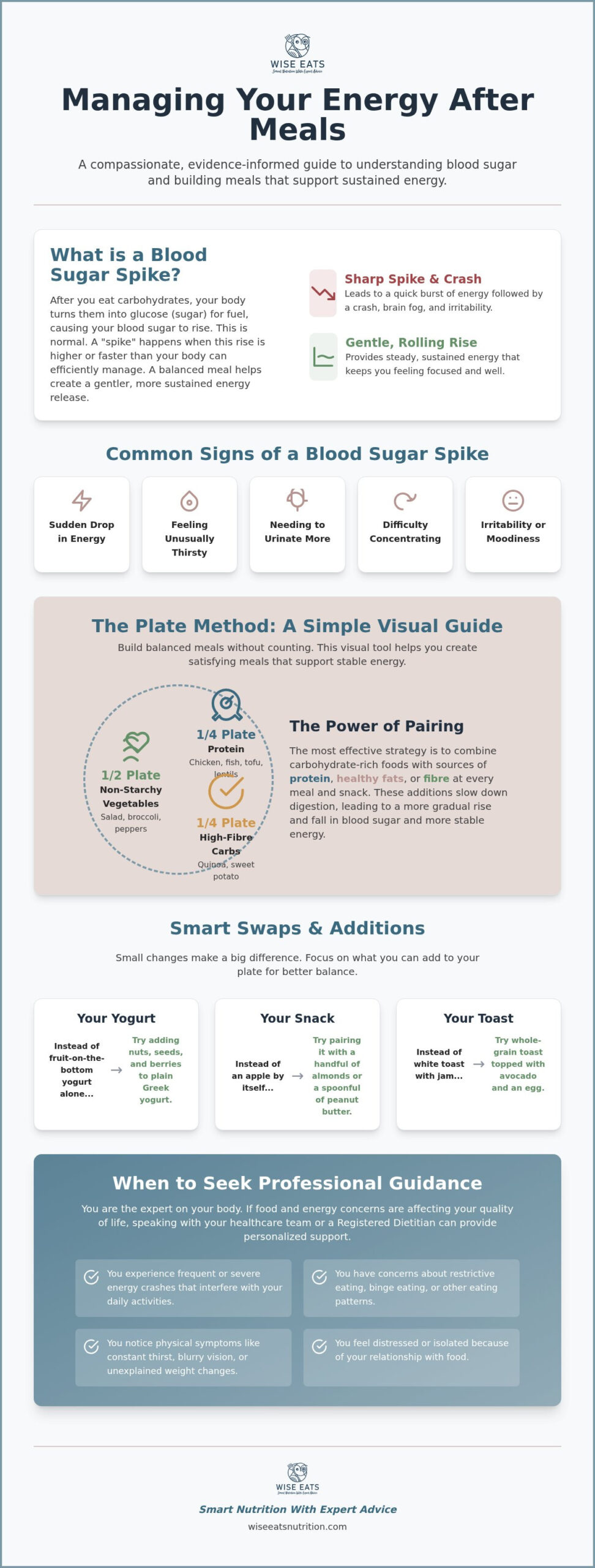
When you eat foods containing carbohydrates, your body breaks them down into glucose, a type of sugar that serves as your body’s main source of fuel. This glucose enters your bloodstream, causing your blood sugar levels to rise. This natural process is called postprandial glucose response.
In response, your pancreas releases a hormone called insulin. Insulin acts like a key, allowing the glucose to move from your blood into your cells to be used for energy. A “spike” happens when blood sugar rises higher or faster than your body can efficiently manage with its insulin response. It is important to remember that all bodies experience these fluctuations. A rise in blood sugar after eating is a normal biological function, not a sign that you have failed or “cheated” on a diet.
Normal Fluctuations vs. Hyperglycemia
Stable blood sugar does not mean your glucose levels stay in a flat line all day. A healthy response to a meal looks more like a gentle, rolling hill than a sharp peak. Your body has other tools to manage this, such as the hormone amylin, which helps slow down how quickly nutrients are absorbed from your small intestine.
While general targets exist, your personal blood sugar goals will depend on your individual health status. Your healthcare team can provide personalized targets based on the latest Diabetes Canada clinical practice guidelines. The goal is to keep your blood sugar within a range that supports your health, rather than aiming for an unchanging number.
Symptoms You Might Notice
A significant blood sugar spike can affect how you feel both physically and mentally. You are the expert on your own body, and noticing these patterns is the first step toward managing them. Common signs include:
- A sudden drop in energy or an “afternoon slump”
- Feeling unusually thirsty
- Needing to urinate more frequently
- Difficulty concentrating or “brain fog”
- Feelings of irritability or moodiness
Sometimes, a sharp spike is followed by a steep crash, where your blood sugar drops quickly. This can leave you feeling “hangry,” shaky, or anxious shortly after a meal. Tracking how you feel alongside your meals can help you identify personal patterns and understand your body’s unique responses.
Why Do Blood Sugar Spikes Happen After Meals?
Several factors influence how your body responds to a meal. It is not just about what you eat, but also how you eat it and what else is happening in your life. The most common contributors include the type and combination of foods you consume.
Eating carbohydrates alone, sometimes called “naked carbohydrates,” can lead to a faster glucose response. Simple sugars and refined grains (like those in white bread, sugary drinks, and some packaged snacks) are digested very quickly, sending a rapid rush of glucose into the bloodstream. Other factors, like insulin resistance, where your body’s cells do not respond as well to insulin’s signals, also play a role. Additionally, your stress levels, sleep quality, and hydration status have a significant impact on how your body processes every meal.
The Role of Digestion Speed
Think of glucose entering your bloodstream like water. A meal of refined carbohydrates alone is like a glucose waterfall, a large amount all at once. A balanced meal with fibre, protein, and fat is more like a gentle stream, providing a slow and steady supply. The speed at which your stomach empties its contents into the small intestine, known as gastric emptying, directly affects the timing and height of a blood sugar spike. Individual gut health and the composition of your gut microbiome also influence this process.
Individual Variability in Glucose Response
Have you ever wondered why you and a friend can eat the exact same bagel, yet have completely different energy levels afterward? This is because of individual variability. Your unique genetics, gut microbiome, activity level, and metabolic health all determine your personal glucose response. There is no one-size-fits-all answer. This is why personalized nutrition counselling is so valuable; it helps you understand your own body and identify your specific triggers without guesswork.
Practical Ways to Manage Blood Sugar Spikes with Nutrition
Managing post-meal blood sugar is about what you can add to your plate, not what you need to take away. This approach fosters a healthier relationship with food and provides your body with the nutrients it needs to thrive. The focus is on balance, pairing, and thoughtful additions.
The most effective strategy is “The Power of Pairing.” Aim to combine carbohydrate-rich foods with sources of protein, healthy fats, or fibre at every meal and snack. These nutrients slow down digestion and the absorption of sugar into the bloodstream, leading to a more gradual rise and fall in glucose. Adding volume with non-starchy vegetables like leafy greens, broccoli, or bell peppers also helps slow the overall digestion of your meal. Soluble fibre, found in foods like oats, beans, and avocados, is particularly helpful because it forms a gel-like substance in your digestive tract that slows sugar absorption.
The “Plate Method” for Balance
The Plate Method is a simple, visual tool for building balanced meals without needing to count calories or macros. It encourages a healthy proportion of different food groups:
- Fill half of your plate with non-starchy vegetables (e.g., salad, roasted asparagus, steamed green beans).
- Fill one-quarter of your plate with a source of protein (e.g., chicken, fish, tofu, or lentils).
- Fill the final quarter of your plate with a carbohydrate-rich food, preferably a high-fibre option (e.g., quinoa, sweet potato, or whole-grain bread).
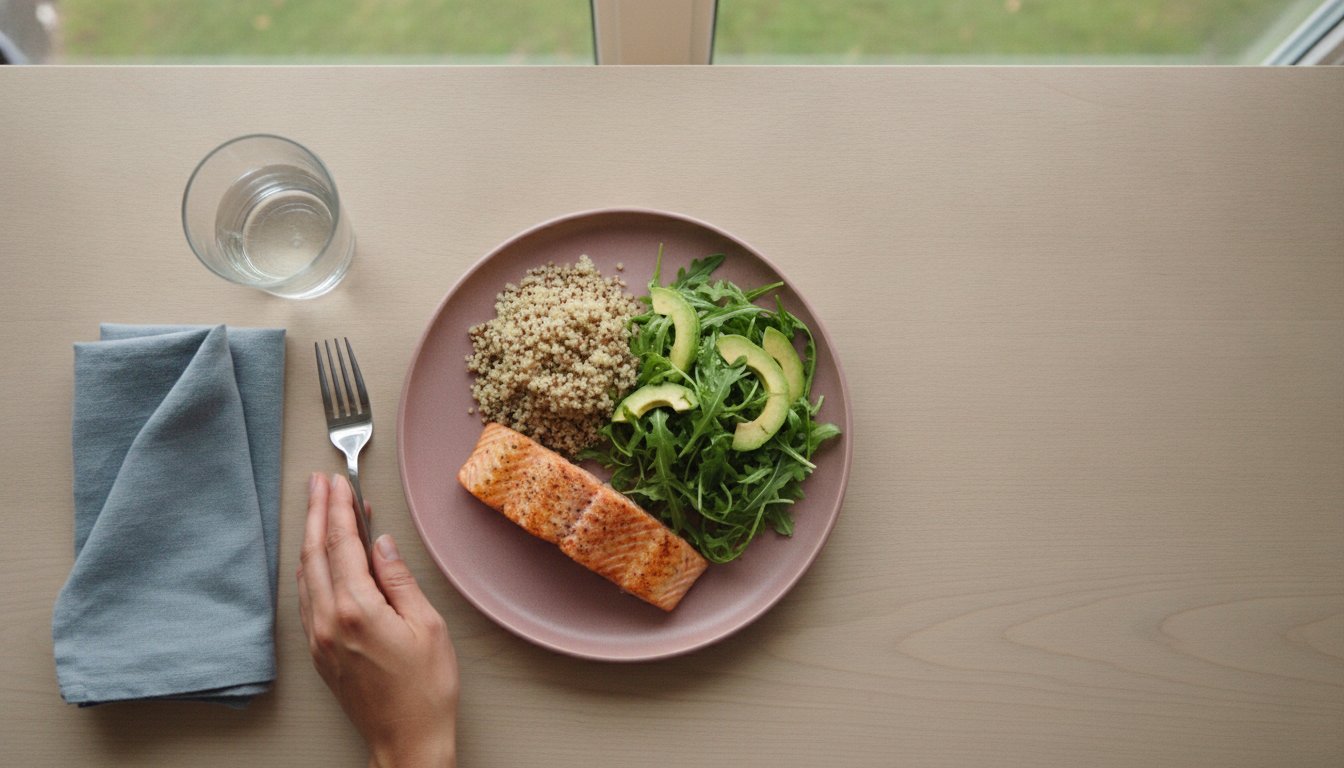
A Canadian-friendly example could be a fillet of baked salmon, a serving of quinoa, and a large portion of roasted broccoli and red peppers. This method ensures you get a variety of nutrients and helps you create satisfying meals that support stable energy. For more structured guidance, a custom meal plan can remove decision fatigue.
Smart Food Swaps and Additions
Small changes can make a big difference in your blood sugar response. These are not rules, but ideas to experiment with to see what works for you.
- Add to your yogurt: Instead of a fruit-on-the-bottom yogurt alone, choose a plain Greek yogurt and add your own berries, nuts, or seeds. The protein and fat from the yogurt and nuts help buffer the sugar from the fruit.
- Keep the skin on: When eating fruits like apples or pears, leave the skin on. The skin is a great source of fibre that helps slow down sugar absorption.
- Choose whole grains: Where possible, opt for whole-grain versions of bread, pasta, and rice. The extra fibre slows digestion compared to their refined counterparts.
The Glycemic Index (GI) is a tool that ranks carbohydrate-containing foods by how quickly they raise blood sugar, but it is best used as a general guide rather than a set of rigid rules.
The Order of Eating
Emerging research suggests that the order in which you eat your food during a meal might influence your blood sugar response. Some studies show that eating non-starchy vegetables and protein before you eat carbohydrates can lead to a lower and slower glucose rise. The theory is that the fibre and protein help “coat” the digestive tract, slowing down the absorption of the sugars you eat afterward. While this is a helpful strategy for some, it should not make mealtime feel stressful or clinical. The most important thing is a balanced plate, regardless of the order.
Lifestyle Habits That Support Stable Glucose
Nutrition is a cornerstone of blood sugar management, but it is part of a larger picture. Daily habits related to movement, hydration, stress, and sleep also play a crucial role in supporting your metabolic health.
Gentle movement after a meal, like a 10-minute walk, can be incredibly effective. Your muscles use glucose for fuel, and physical activity helps them take up glucose from the bloodstream, sometimes without needing as much insulin. Staying well-hydrated is also important; when you are dehydrated, the sugar in your bloodstream becomes more concentrated. Chronic stress is another factor, as stress hormones like cortisol can signal your liver to release stored glucose, raising your blood sugar levels. Finally, try to maintain consistent meal timing. Eating at roughly the same times each day helps your body’s internal clock regulate its metabolic processes more predictably.
The Power of a Post-Meal Walk
Your muscles are the primary destination for glucose in your body. When you move them, you create a demand for that fuel. A short, gentle walk after a meal helps your muscles act like a sponge, soaking up excess glucose from your blood. The movement does not need to be intense. A leisurely stroll around the block, some light housework, or even a few minutes of stretching is often enough to have a positive effect. Finding a “movement snack” that fits easily into your daily routine is a sustainable way to support your blood sugar goals.
Prioritizing Restorative Sleep
Sleep is essential for metabolic health. Research from Canadian institutions and worldwide shows that even a single night of poor sleep can temporarily increase insulin resistance the next day, meaning your body has to work harder to manage blood sugar. For some individuals, conditions like sleep apnoea are closely linked to challenges with blood sugar management. Creating a calming bedtime routine, such as turning off screens an hour before bed and ensuring your room is dark and cool, can support the restorative sleep your body needs.
When to Consult a Professional for Personalized Support
The information in this guide provides a solid starting point, but general advice cannot replace a personalized plan. Medical nutrition therapy from a Registered Dietitian is tailored to your specific lab results, health history, lifestyle, and food preferences. A dietitian can help you understand the “why” behind your specific blood sugar readings and work with you to create a sustainable plan.
Working with a professional removes the guesswork and helps you build confidence. The goal is to develop a collaborative partnership that supports your health goals without judgment, focusing on what you can add to your life, not what you must restrict. You can learn more about this process in our guide to medical nutrition therapy.
When to Seek Help
It is important to seek professional guidance if your efforts to manage your blood sugar are not working or are causing distress. Please consult your healthcare team if you experience the following:
- You have frequent, unexplained high or low blood sugar readings despite making changes to your diet and lifestyle.
- Managing your food choices and blood sugar is causing significant anxiety or interfering with your relationship with food and your ability to enjoy life.
- You find yourself creating rigid food rules, avoiding social events centred around food, or feeling fearful of certain foods or food groups.
If you are taking any glucose-lowering medications, always speak with your doctor or dietitian before making significant changes to your diet or activity levels.
Working with a Canadian Registered Dietitian
A Registered Dietitian who understands the Canadian food landscape and healthcare system can provide relevant, practical advice. At Wise Eats, our dietitians take a weight-neutral approach, which means we focus on health-promoting behaviours rather than the number on the scale. We believe that a healthy relationship with food is the foundation of well-being.
This article was written and reviewed by Rachel McBryan, RD, College of Health and Care Professionals of BC, and Sheirry Poposka, RD, Alberta College of Registered Dietitians.
This article provides general information and is not a substitute for professional medical advice. Always consult with your doctor or a Registered Dietitian for personalized guidance.
If you’re struggling with a nutrition-related medical condition or an eating problem, a registered dietitian can provide professional support — book a consultation.

Article by
Rachel McBryan, Dietitian
Rachel McBryan is a licenced Dietitian in British Columbia offering comprehensive nutrition counselling as virtual and/or in-person counselling sessions to suit your needs and preferences. With a Bachelor of Science in Nutrition and Food Science, Rachel has over 20 years experience helping people address their health through nutrition. She was awarded Human Nutrition and Food Science BSc.from University of Alberta followed by post-grad course work at UBC in guidance counselling.
An eating disorder is a serious mental health illness.
If you are in immediate distress or crisis, please contact emergency services by dialing 911 or calling Vancouver Island Crisis Line: 1-888-494-3888.
This article is educational information only, not professional diagnosis or treatment. This health education content is heavily AI augmented and parts or all of this article may not have been reviewed yet for accuracy. AI generated content is prone to error.
Please note that we partner with VitaminLab and financially gain if you purchase supplements. You are under no obligation to use VitaminLab products and whether you supplement your diet with VitaminLab or another product of your choice will not impact your nutrition care.