No single food or supplement has been shown to reliably ease perimenopause symptoms. If you’re sorting through claims about caffeine, alcohol, soy, or supplements, it’s understandable to want clearer answers. Nutrition for perimenopause symptoms is best approached through flexible habits and evidence for specific needs, rather than a strict list of foods to avoid.
Hot flashes, disrupted sleep, mood shifts, and changing periods often coincide with busy routines and changes in appetite. Food choices don’t explain every symptom, and nutrition isn’t a replacement for medical care. Regular meals and enough essential nutrients support your health through this transition.
This article explains current evidence in plain language, including eating habits linked with bone, heart, and muscle health. You’ll also find practical ideas, such as adding protein to meals and choosing foods with calcium, without rigid rules or one-size-fits-all promises.
We’ll look at common questions about caffeine, alcohol, and supplements, and explain when a Registered Dietitian or your care team might help you weigh your options. The goal is clearer information suited to your preferences and everyday life.
Key Takeaways
- Perimenopause is a transition, and symptoms vary. Separate everyday nourishment goals from symptom treatment.
- Evidence on food changes for hot flashes, sleep, and mood is mixed. Learn what nutrition for perimenopause symptoms supports and which claims deserve caution.
- Brief symptom notes can help you look for patterns without turning meals into rigid rules.
- Try one manageable change, such as adding a protein source to a familiar meal, then notice how it fits your routine.
- A Registered Dietitian offers support with meal planning and supplement questions to discuss with your care team.
Nutrition for Perimenopause Symptoms: Changes and Food Support
Hot flashes, disrupted sleep, mood shifts, and changing periods can make everyday food decisions feel harder. Online advice often points to one ingredient or supplement as the answer. It’s understandable to want clear guidance, especially when symptoms and eating patterns don’t follow a predictable schedule.
Perimenopause is the transition leading up to menopause, when menstrual cycles and hormone levels change. This plain-language definition reflects information from the Society of Obstetricians and Gynaecologists of Canada (SOGC). A person reaches menopause after 12 consecutive months without a menstrual period, if no other cause explains the change.
For a general overview of the transition and common symptoms, see this Menopause and Perimenopause Overview. It offers background, though personal health questions belong in a conversation with your care team.
This video features Dr. Stacy Sims discussing women’s training and nutrition:
How perimenopause differs from menopause
Perimenopause is a transition, not a stage identified by one symptom alone. Menstrual cycles might become less regular, and some people experience hot flashes, night sweats, sleep changes, or shifts in mood. Timing and experiences differ from person to person. A symptom might have causes unrelated to perimenopause or food, so don’t assume every new change signals a nutrition problem.
Why nutrition advice needs context
Food supports everyday nourishment and overall health. Regular meals with a mix of foods help you meet nutrient needs, but no single eating pattern guarantees relief from an individual symptom. Evidence for food-based approaches to specific symptoms remains mixed or limited, so approach strong claims about eliminating a food or adding a supplement with care.
Practical choices depend on more than symptoms. Your health history, cultural food traditions, preferences, budget, cooking time, and access to groceries all shape what fits. Start with a familiar meal you enjoy, then consider whether adding a nourishing option feels manageable. Advice should respect your life, not require an entirely new routine.
Nutrition for perimenopause symptoms supports overall nourishment, but it doesn’t explain or treat every change. If symptoms affect daily life, discuss them with your care team. Food guidance and medical assessment serve different roles, and both can matter.
How Nutrition Relates to Perimenopause Symptoms: Evidence Without Overpromising
Food advice often promises a direct link between one ingredient and a symptom. The evidence is less simple. General nutrition supports health through perimenopause, but no food has been established as a reliable treatment for a specific symptom. Looking at each concern separately helps keep expectations realistic.
Sleep, hot flashes, and mood
Sleep: A satisfying meal or snack with protein and a carbohydrate source might suit your routine, especially if hunger interrupts rest. Caffeine and alcohol affect people differently, and alcohol disrupts sleep for some. Notice your own patterns rather than removing either by default. Research doesn’t support any single food as a dependable solution for perimenopause-related sleep changes.
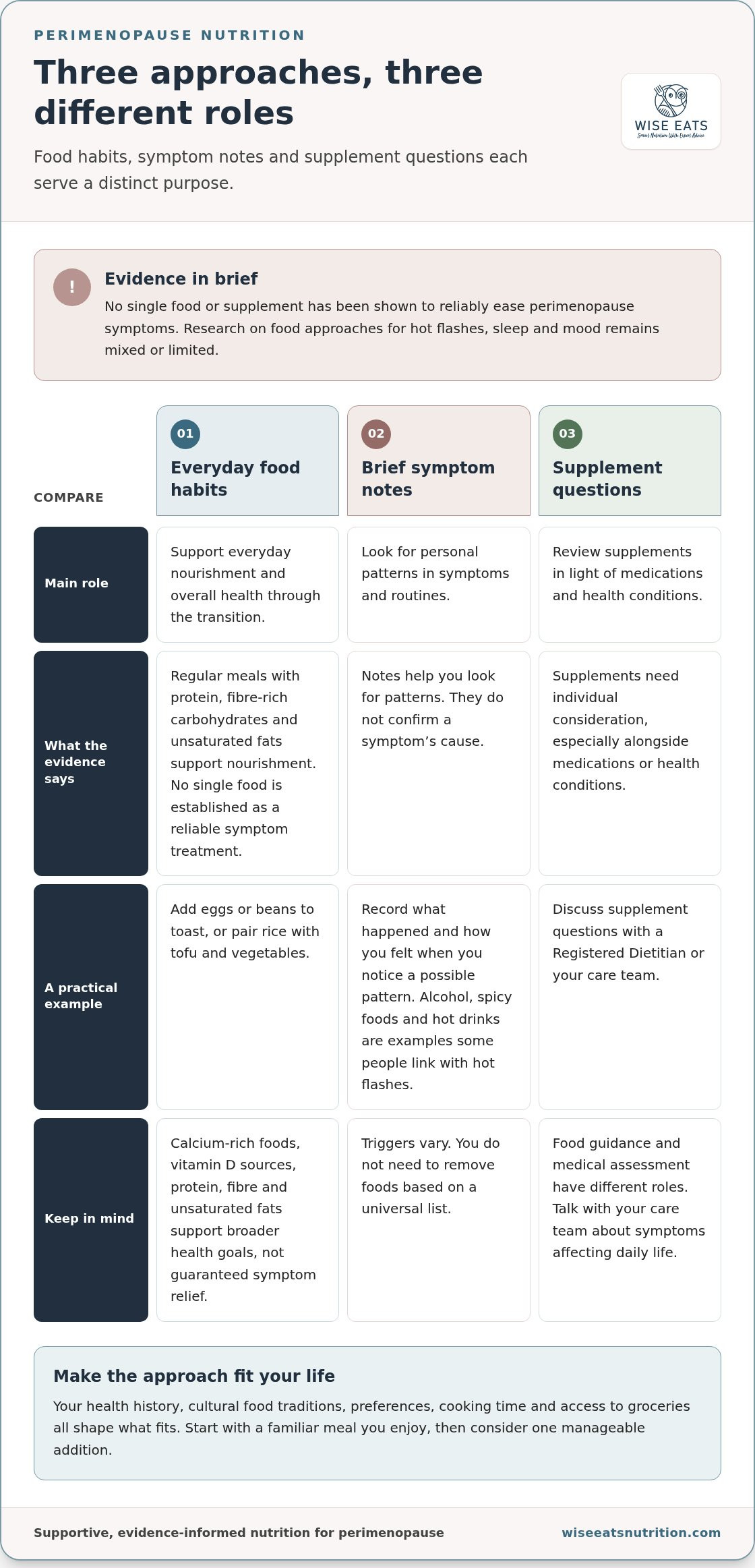
Hot flashes: Some people notice a connection with alcohol, spicy foods, or hot drinks. Evidence for avoiding these items as a general strategy is limited, and personal triggers vary. If you notice a pattern, record what happened and how you felt. You don’t need to cut out foods based on a universal list.
Mood and energy: Eating regularly and including protein, fibre-rich carbohydrates, and unsaturated fats in meals supports overall nourishment. For example, add eggs or beans to toast, or pair rice with tofu and vegetables. These combinations provide a range of nutrients, but research doesn’t show they treat mood changes linked with perimenopause.
Nourishing patterns and long-term health
Fibre-rich foods such as oats, lentils, berries, vegetables, and whole-grain breads support digestive and heart health. Protein sources include fish, eggs, dairy foods, tofu, beans, and lentils. Unsaturated fats come from foods such as canola oil, avocado, seeds, and fatty fish. Canada’s Food Guide encourages variety across food groups. Adapt this idea to familiar meals, cultural traditions, household schedules, and foods available to you. No fixed menu or portion plan suits everyone.
Bone, heart, and muscle health deserve attention over time. Calcium-rich foods, sources of vitamin D, protein, fibre, and unsaturated fats contribute to overall nourishment. These nutrients support broader health goals, but they don’t guarantee fewer hot flashes, better sleep, or steadier mood. Supplements also need individual consideration, especially alongside medications or health conditions.
Why single-food promises fall short
Claims about one food or nutrient resolving several symptoms at once often go beyond the evidence. Studies examine different groups, foods, and outcomes, so results don’t always apply to your circumstances. A food diary might help you notice a personal pattern, but it can’t confirm a symptom’s cause. Seek guidance from your care team for persistent or concerning changes. A Registered Dietitian counselling appointment offers space to discuss food habits and questions in the context of your routine.
Comparing Perimenopause Nutrition Approaches, Food Changes, Supplements, and Symptom Tracking
There’s no single approach to nutrition for perimenopause symptoms. You might focus on everyday meals, keep brief notes about symptoms, or review a supplement question with a professional. Each approach has a different purpose, and none confirms on its own what causes a symptom.
Food changes versus rigid food rules
Adding a source of protein to breakfast or including a fibre-rich food in a familiar meal is a flexible change. Broadly cutting out foods is a different step, with more effort and no guarantee of symptom relief. Choose an addition only if it feels useful and manageable. Your food traditions, health needs, preferences, and access all matter.
Compare the approaches
| Approach | Possible use | Evidence caveat | When to seek guidance |
|---|---|---|---|
| Flexible food-pattern changes | Support regular nourishment and overall health. | Evidence for treating specific perimenopause symptoms with food is limited or mixed. | If changes feel hard to manage or fit with health needs. |
| Symptom tracking | Note timing, sleep, meals, drinks, and cycle changes to see if patterns emerge. | A pattern does not prove a food caused a symptom. | If notes increase worry or symptoms interfere with daily life. |
| Supplement discussion | Review ingredients, intended use, medications, and personal health context. | Evidence varies by supplement and symptom. An identifier does not establish personal suitability. | Before starting a supplement, or if you have questions about interactions. |
Supplements, interactions, and symptom notes
Tracking is optional. A few brief notes can help you describe a concern to your care team. Record only details useful to you, and stop if tracking feels stressful. It’s a way to notice possible patterns, not a test of willpower or a reason to blame yourself for symptoms.
Supplement safety depends on your health history and current medications. The Cytochrome P450 system is a group of liver enzymes that metabolise many drugs and supplements, influencing their effectiveness and safety. A Natural Product Number is an eight-digit code indicating Health Canada has assessed a supplement for safety, quality, and health claims. It does not show whether a product suits your specific needs. A Registered Dietitian can support an individualized supplement review and help identify questions for your care team.
If you want support weighing food choices or supplement questions, book a nutrition counselling appointment to discuss options suited to your routine.
Practical Nutrition Steps for Perimenopause, Plus When to Seek Help
Changing your eating habits can feel like one more task when symptoms already disrupt your routine. Keep the next step small. A flexible approach to nutrition for perimenopause symptoms starts with what matters to you, then leaves room to adjust if a change doesn’t fit.
A flexible starting routine
Try this sequence at your own pace. You don’t need to track every meal or change several habits at once.
- Notice a concern. Choose one issue you want to pay attention to, such as low energy at work or waking during the night.
- Pick one supportive step. Add a satisfying protein source to a familiar meal. For example, try eggs with toast, tofu in a noodle dish, or beans alongside rice.
- Check how it fits. Does the change work with your schedule, appetite, food preferences, and access to ingredients?
- Adjust if needed. Keep it, adapt it, or set it aside. A nutrition habit should support your life, not add pressure.
Regular, satisfying meals support everyday nutrition needs. Your routine might include leftovers for lunch, a prepared snack for a long shift, or a family meal shaped by cultural traditions. There’s no single schedule or menu you need to follow. Budget, cooking time, health needs, and food availability all influence what feels realistic.
Dietitian meal planning offers a way to tailor food ideas to your preferences and routine if planning meals feels difficult.
If you choose to keep symptom notes, make them brief. You might write down the time a symptom occurred, how you slept, what you ate or drank, and anything else affecting your day, such as a stressful event or a change in schedule. A note records context, not cause. You don’t need to collect data if it feels burdensome.
When to Seek Help
Please reach out to a healthcare professional if any of these concerns arise. You deserve support, and asking for help doesn’t mean you’ve done anything wrong.
- You’re avoiding more and more foods, or persistent food avoidance is making meals stressful.
- Binge eating or behaviours such as fasting, vomiting, or exercising to compensate for eating are causing concern.
- Physical symptoms disrupt daily life, work, sleep, or your ability to manage usual activities.
A Registered Dietitian can support food planning, but nutrition guidance doesn’t diagnose symptoms or replace medical assessment. Share ongoing concerns with your healthcare team so they can help determine next steps.
Personalized Perimenopause Nutrition Support from a Registered Dietitian
Conflicting advice about food and supplements can leave you unsure which changes are worth trying. A Registered Dietitian offers space to talk through your questions and consider options suited to your routines, preferences, and health context. Counselling focuses on nutrition education and practical planning. It doesn’t diagnose or treat medical conditions, and it works alongside care from your healthcare team.
What personalized nutrition counselling covers
A conversation might cover your usual meals, food traditions, schedule, appetite, symptoms, and nutrition goals. Bring questions about claims you’ve seen online or changes you’re considering. Sharing what works in your household helps shape suggestions around your daily life, rather than a rigid plan you’re expected to follow.
Meal planning offers ideas for making nourishing meals easier to manage, such as adapting familiar dishes or planning around busy workdays. You decide what feels practical. There’s no single menu for everyone, and changes should take your food preferences and access to ingredients into account.
If you have supplement questions, a Registered Dietitian can review product ingredients and discuss possible interactions in the context of your health history and current medications. You can also bring those questions to your healthcare team. Nutrition counselling doesn’t replace their advice or ask you to change medication.
For nutrition questions you’re unsure how to sort through, ask a dietitian about your concerns and discuss the guidance suited to your needs.
Registered Dietitian support in Alberta and British Columbia
Wise Eats Registered Dietitians provides nutrition education and personalized counselling for residents of Alberta and British Columbia, including Calgary, Edmonton, Nanaimo, Parksville, Vancouver Island, and Qualicum Beach. Registered Dietitian Rachel McBryan, RD, College of Health and Care Professionals of BC, supports clients in British Columbia. Registered Dietitian Sheirry Poposka, RD, Alberta College of Registered Dietitians, supports clients in Alberta.
These credentials reflect the professionals’ provincial registration. In counselling, you can discuss practical food planning and supplement questions without expecting a dietitian to diagnose symptoms. If a concern needs medical assessment, share it with your care team. Nutrition support and medical care have different roles, and your care team remains part of decisions about symptoms or treatment.
Speaking with a registered dietitian can help you develop a balanced, flexible approach to eating and meet your nutritional needs.
Choose a Next Step That Fits Your Life
You don’t need to make every food decision at once. Pick one question you want help sorting out, such as whether a meal-planning change suits your routine or how to discuss a supplement with your care team. A clear question gives your next conversation a useful starting point.
Nutrition for perimenopause symptoms is personal. Your health history, preferences, and daily demands all shape which habits feel realistic. Personalized counselling and meal planning offer room to talk through options without rigid rules. A Registered Dietitian can also help you prepare nutrition questions for your healthcare team.
Start with the concern you want to address, and choose support at a pace that feels right for you.
Steady, practical steps count. You deserve guidance that respects your needs and makes space for the way you live.
Frequently Asked Questions
Is there one eating pattern for perimenopause symptoms?
No single eating pattern suits everyone or reliably eases every symptom. Choose meals that work with your health needs, culture, preferences, and budget. For example, add fruit to breakfast or choose lentil soup for lunch if those foods fit your routine. The phrase “perimenopause diet” often suggests strict rules, but you don’t need a special menu to support everyday nourishment.
How much protein should I eat during perimenopause?
A general guide is 1.0 to 1.2 grams of protein per kilogram of body weight per day, though individual needs differ. Aiming for about 25 to 30 grams at a meal is another broad reference, not a personal prescription. Protein sources include Greek yogurt, fish, lentils, cottage cheese, and chicken. A dietitian or your healthcare professional can help assess what fits your needs.
Is soy safe to include during perimenopause?
Soy foods such as tofu, tempeh, edamame, and soy milk fit many eating patterns. Evidence for soy’s effect on hot flashes is mixed, so it isn’t a reliable symptom treatment. Whole foods also differ from concentrated isoflavone supplements. If you have a soy allergy, a health condition, or questions about medicines, discuss your circumstances with a healthcare professional before making a major change.
Do supplements help with perimenopause symptoms?
No food or supplement has been shown to reliably relieve perimenopause symptoms for everyone. Evidence differs by product and symptom, and some supplements interact with medications. Before starting one, write down its ingredients, dose, and intended use, then review these details with your care team or a Registered Dietitian. A Natural Product Number shows Health Canada assessed a product, but it doesn’t confirm personal suitability.
What happens if food tracking makes me anxious?
You don’t need to track food or symptoms. If notes make you anxious, stop and tell a healthcare professional or Registered Dietitian how tracking affects you. You might instead bring one concern to an appointment, such as sleep disruption or a change in appetite, without recording meals. If tracking brings up food avoidance or distress around eating, ask for support. Your wellbeing matters more than keeping a log.
When should I talk with a healthcare professional about perimenopause symptoms?
Talk with a healthcare professional if symptoms persist, affect your daily activities, or leave you unsure about their cause. Seek medical advice for unusually heavy bleeding, bleeding after menopause, or symptoms such as dizziness or fainting. These concerns deserve assessment rather than assumptions about food or perimenopause. A Registered Dietitian can discuss nutrition questions, while your healthcare team assesses symptoms and care options.
Article by
Rachel McBryan, Dietitian
Rachel McBryan is a licenced Dietitian in British Columbia offering comprehensive nutrition counselling as virtual and/or in-person counselling sessions to suit your needs and preferences. With a Bachelor of Science in Nutrition and Food Science, Rachel has over 20 years experience helping people address their health through nutrition. She was awarded Human Nutrition and Food Science BSc.from University of Alberta followed by post-grad course work at UBC in guidance counselling.
An eating disorder is a serious mental health illness.
If you are in immediate distress or crisis, please contact emergency services by dialing 911 or calling Vancouver Island Crisis Line: 1-888-494-3888.