At a family dinner, you ask about ingredients and someone replies, “A little won’t hurt.” Now you’re weighing whether to explain more, repeat your request, or skip the meal. If you’re figuring out how to explain dietary restrictions to family, it’s understandable to worry about being dismissed or asked to share personal details.
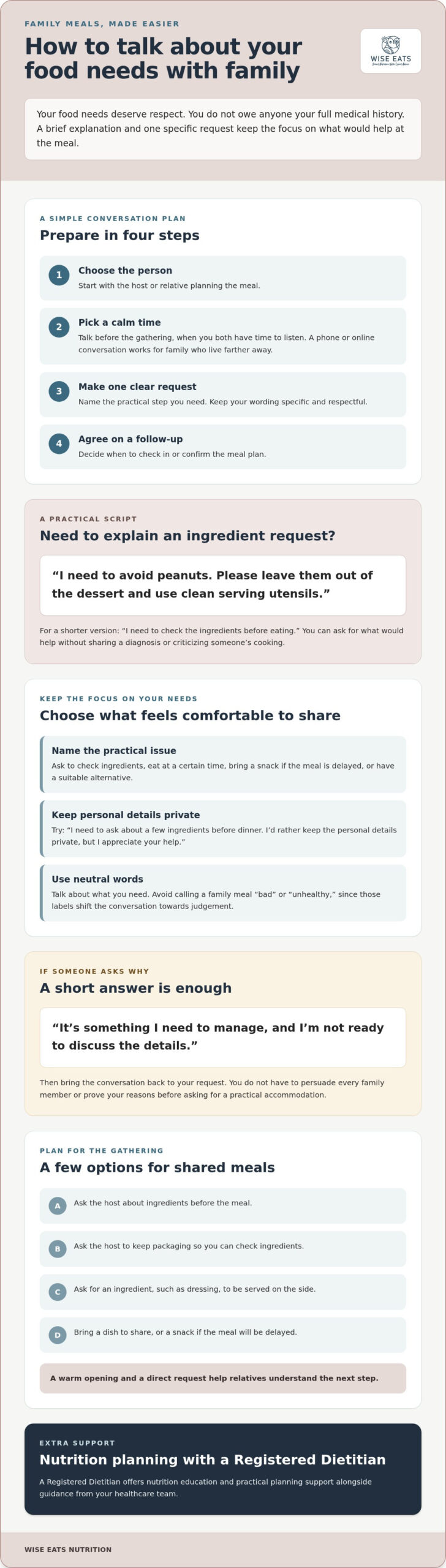
Your food needs deserve respect, and you don’t owe anyone your full medical history. A brief explanation and a specific request can help relatives understand what you need without turning dinner into a debate. For example: “I need to avoid peanuts. Please leave them out of the dessert and use clean serving utensils.”
This guide offers clear, respectful ways to explain your needs, respond to questions, and set boundaries if someone pushes back. You’ll also find practical ideas for discussing shared meals, gatherings, and food prepared by relatives, so you can plan ahead with less pressure and more support.
Key Takeaways
- Describe your food need in plain, neutral language without judging anyone else’s choices.
- Prepare for how to explain dietary restrictions to family by choosing a good time, a clear request, and who to speak with first.
- Use a brief reply, repeat your request, or pause the conversation if questions turn into a debate.
- Choose a plan that fits the gathering, such as asking the host about ingredients or bringing a dish to share.
- A Registered Dietitian offers nutrition education and practical planning support alongside guidance from your healthcare team.
Start by naming your food needs without judging anyone’s choices
If you feel anxious, misunderstood, or tired of explaining what you eat, a family meal can bring extra pressure. Learning how to explain dietary restrictions to family starts with one practical point: your food need matters, even if you’d rather keep the reasons private.
A food need might be a health-related requirement, a personal preference, or a practical consideration, such as needing to eat at a certain time. People have different reasons for choosing special diets. You don’t have to name a diagnosis or share your full history to ask for an accommodation.
Decide what you want your family to understand
Before talking, identify the practical issue you want your family to understand. Focus on what would help at the meal rather than preparing a long explanation. You might want to:
- Check the ingredients in a dish before eating it.
- Eat at a certain time or bring a snack if the meal will be delayed.
- Have a suitable alternative available.
Then decide who to speak with and which details feel comfortable to share. You might tell the host, “I need to ask about a few ingredients before dinner. I’d rather keep the personal details private, but I appreciate your help.” You can share more later if you choose.
Use neutral words for food and personal needs
Direct, specific language helps relatives hear your request without feeling blamed. Try, “I need to check the ingredients before eating,” or, “Please let me know if the recipe includes sesame.” Avoid describing a family meal or someone’s cooking as “bad” or “unhealthy.” Those labels shift attention from your needs to a judgement about another person’s choices.
For a medically required accommodation, you might say, “I need to avoid peanuts. Please leave them out of the dish and tell me if they’re in any packaged ingredients.” This names the action you need without sharing a diagnosis or criticizing the meal. A clear request keeps the focus on your needs, not a review of someone else’s cooking.
If a relative asks why, try a brief answer: “It’s something I need to manage, and I’m not ready to discuss the details.” Then bring the conversation back to the practical request.
Plan what to say before your next family meal
Thinking through a conversation ahead of time can make it easier to speak up. A useful plan has four parts: choose the person, pick a calm time, make one specific request, and decide how you’ll follow up. You don’t need a perfect speech. A few clear words are enough to start.
A clear food request is specific, respectful, and actionable. It tells your relative what would help, without judging their cooking or asking them to guess what you need.
Choose the right time and person
Speak with the host or relative planning the meal before the gathering, rather than trying to sort things out while they’re serving food or managing guests. Choose a private moment when you both have time to listen. A phone call or online conversation can also work for family members in Alberta or British Columbia who live farther away.
For more ideas on how to plan ahead for gatherings, see guidance from Nationwide Children’s Hospital. The aim is to give the host time to respond and ask practical questions before meal preparations begin.
Use a simple request-and-reason script
Start with what you need, give a brief reason if you want, then ask for one concrete step. For example: “I need to ask about ingredients before eating so I can choose what works for me. Would you keep the packaging so I can check it?”
Or, if an ingredient can be served on the side, try: “I’m looking forward to dinner. Could you set the dressing aside? I’ll add it to my plate if it suits my needs.” A warm opening shows appreciation, while the direct request makes the next step clear.
Use this short preparation sequence before you reach out:
- Person: Who is responsible for the meal?
- Time: When can you speak without rushing?
- Request: What one action would help?
- Follow-up: When will you check in or confirm the plan?
You can keep your reason brief and decide in advance which questions you’re comfortable answering. Try: “This is something I need to manage. I’d rather not go into personal details, but keeping the ingredient list would help.” If you’re still working out how to explain dietary restrictions to family, write down your request and read it aloud once before the conversation.
If food conversations feel hard to prepare for, a Registered Dietitian appointment offers space to discuss practical nutrition planning and communication.
Respond to questions without debating your food needs
Relatives might ask what you eat, offer advice, or need time to adjust to changes at family meals. Their questions may come from curiosity, concern, or uncertainty. You don’t have to decide what they mean before choosing how much to share. A short answer can keep the focus on what you need for the meal.
A respectful boundary states what you need, what you’re comfortable discussing, and what you’d like to happen next. You don’t have to persuade every family member or prove your reasons before making a practical request.
Answer personal questions at your comfort level
If someone asks for health details you’d rather keep private, try: “I appreciate you asking, but I’d rather not discuss personal details. Could we check the ingredients together?” This acknowledges the question and redirects the conversation to the meal.
For a more direct reply, say, “I’m following guidance from my care team. I’m comfortable sharing what I need for dinner, but not the details behind it.” If the person asks again, repeat the same response. You don’t need to add new reasons each time.
Set a boundary when advice or pressure continues
A relative might suggest trying a food, question whether your need is necessary, or share advice you didn’t ask for. You can respond calmly without debating the suggestion:
- “I appreciate your concern, and I am following guidance from my care team.”
- “I hear your suggestion. I’m going to stick with the plan I’ve discussed with my care team.”
- “I’m not looking for advice right now. Please help me check what’s in the dish.”
Keep your wording steady. If the conversation becomes upsetting, pause it: “I’m going to step away from this discussion. We can talk another time.” You can also change the subject or speak with someone you trust at the gathering. Ending a discussion is a choice, not a failure to explain yourself.
For a nutrition question you want to discuss outside a family conversation, Wise Eats Registered Dietitians offers an Ask a Dietitian resource. A Registered Dietitian offers nutrition education and planning support, and does not replace your healthcare team or their advice.
Make family gatherings easier with a practical meal plan
There isn’t one meal plan for every family. You might ask the host to adjust a dish, bring something suitable to share, or agree on a shared alternative. Choose the approach that fits the gathering, your needs, and the host’s time. Family traditions, shared kitchens, and different routines all deserve consideration in the conversation.
| Approach | Effort and timing | Who coordinates |
|---|---|---|
| Ask the host about ingredients or a small adjustment | Usually needs a conversation before shopping or cooking | The host checks the dish with you |
| Bring a suitable dish to share | You prepare or arrange the dish before the gathering | You handle the dish, and the host helps find space to serve it |
| Plan a shared alternative | Needs agreement and coordination ahead of time | You and the host decide what works for the meal |
Agree on a plan with the host
Talk through the meal before anyone shops or starts cooking. Ask which ingredients the host plans to use, then agree on a practical option. For example: “Could you keep the ingredient labels so I can check them before we eat?” If you bring a dish, ask where it can be stored and served.
For a medically required food accommodation, discuss relevant preparation details too. You might ask the host to use a clean utensil or prepare your portion separately. Shared kitchens and family recipes vary, so check details instead of assuming a dish suits your needs. You can respect a cultural tradition while finding an arrangement that works for you.
Planning ahead is one useful part of how to explain dietary restrictions to family. Agree on who will check ingredients, how dishes will be served, and what you’ll do if the planned option doesn’t work. Keep the plan simple and confirm it before the gathering.
When to Seek Help
Family food conversations deserve support if they start affecting your eating or wellbeing. Contact a healthcare professional or your care team if you notice:
- Distress around meals disrupts your daily eating.
- You repeatedly avoid family meals or feel isolated from them.
- You experience physical symptoms related to eating or food choices.
These concerns aren’t a reason to blame yourself. A Registered Dietitian can offer nutrition education and practical meal-planning support alongside your healthcare team.
Get support if family conversations affect eating or wellbeing
It’s tiring to manage food needs and family reactions on your own. A Registered Dietitian offers nutrition education and collaborative planning to help you consider your food routines, preferences, and practical goals for family meals. You might talk through what to ask a host, how to plan an alternative, or how to respond when relatives have questions.
Nutrition counselling does not replace your healthcare team or medical advice. A dietitian can work alongside your care team on nutrition-related concerns, but does not diagnose medical conditions or direct medical treatment. Keep your healthcare professionals informed about symptoms or changes in your eating.
What to expect from dietitian support
A session gives you space to discuss what happens around meals and what you’d like to change in the conversation. You might bring up an upcoming family gathering, a food need you find hard to explain, or a request you want to practise saying. The discussion should respect your comfort level and focus on practical steps, without requiring you to share details you’d rather keep private.
Wise Eats Registered Dietitians provides nutrition education and counselling to people in Alberta and British Columbia. Sessions are available online, in person, and through home visits. Ask which options suit your location. The team includes Rachel McBryan, RD, College of Health and Care Professionals of BC, and Sheirry Poposka, RD, Alberta College of Registered Dietitians. Read more about working with a dietitian. If food conversations connect with eating-disorder recovery, the Wise Eats eating-disorder recovery guide offers related information.
Choose a next step that feels manageable
You don’t need to prepare a full history before asking for support. Write down one question or concern, such as, “How do I ask my family to check ingredients without sharing personal health details?” You can also note what happens at meals and what kind of response from relatives would make the gathering easier. Bring those notes to your conversation if they help you explain your needs.
If family discussions leave you unsure how to explain dietary restrictions to family, a Registered Dietitian can help you consider practical language and meal-planning options. Your healthcare team remains part of your support.
Take one clear step towards easier family meals
Learning how to explain dietary restrictions to family starts with naming what you need and making a specific request. You decide how much personal information to share. Speaking with a relative before a gathering gives everyone time to discuss ingredients, meal plans, or a suitable alternative.
If questions turn into pressure, repeat your request or pause the conversation. You don’t have to convince every relative to deserve consideration. Choose a plan that fits your needs and the family gathering.
Wise Eats Registered Dietitians provides nutrition education and counselling in Alberta and British Columbia, with online, in-person, and home-visit sessions. The Registered Dietitians include Rachel McBryan, RD, College of Health and Care Professionals of BC, and Sheirry Poposka, RD, Alberta College of Registered Dietitians.
Your needs matter. A clear request is a practical place to begin.
Frequently Asked Questions
How do I tell my family I have specific food needs?
A helpful starting point for how to explain dietary restrictions to family is to state what you need and what would help. For example, say, “I need to check the ingredients before eating. Could you keep the packaging?” Speak with the host before the meal if possible. Keep your wording focused on your needs, not on judging someone’s cooking, and share only the personal details you feel comfortable discussing.
Should I explain the medical reason behind my food needs?
No, you decide how much personal information to share. You might give a brief reason, such as, “This is a health need I manage with my care team,” or keep the explanation focused on the meal: “Please tell me what ingredients are in the sauce.” A relative’s question doesn’t mean you owe them your full health history. If you want to share more, do so at your own pace.
What do I say if a family member dismisses my request?
Repeat your request calmly and state what you need next. Try, “I hear you, but I still need to check the ingredients before eating.” If the person continues to argue, you don’t have to persuade them. You might say, “I’m going to pause this conversation. We can talk another time.” If you need support at the gathering, speak with a relative you trust or the host.
How do I ask a host about ingredients before a family dinner?
Contact the host before shopping or cooking, and ask direct questions about the dishes you plan to eat. For example: “Could you tell me what’s in the marinade and keep the ingredient labels?” If a food need relates to medical guidance, explain any relevant preparation steps clearly. Don’t assume a dish suits your needs based on its name or appearance. Ask about ingredients and handling details.
Is it okay to bring my own food to a family gathering?
Yes, bringing a dish that suits your needs is one option. Check with the host first, especially if kitchen space, storage, or serving arrangements matter. You might say, “Would it help if I brought a dish to share?” For some gatherings, the host might prefer to set aside an ingredient or plan a shared alternative. Choose an approach together, with your needs and the family’s routines in mind.
What happens if family meals make eating feel stressful?
Take the stress seriously, especially if it disrupts your usual eating or leads you to avoid family meals repeatedly. Talk with your healthcare team or another health professional if food conversations affect your wellbeing, or if you notice physical symptoms related to eating. You deserve support without blame. Wise Eats Registered Dietitians offers nutrition education and practical planning alongside your healthcare team’s advice.
When should I talk with a Registered Dietitian about family food conversations?
Consider speaking with a Registered Dietitian if you want help planning meals, explaining a food need, or managing stress around eating with relatives. Wise Eats Registered Dietitians offers nutrition sessions online, in person, and through home visits for people in Alberta and British Columbia, including Calgary, Edmonton, Nanaimo, Parksville, Vancouver Island, and Qualicum Beach. A dietitian supports nutrition education and planning, and doesn’t replace your healthcare team or medical advice.
Article by
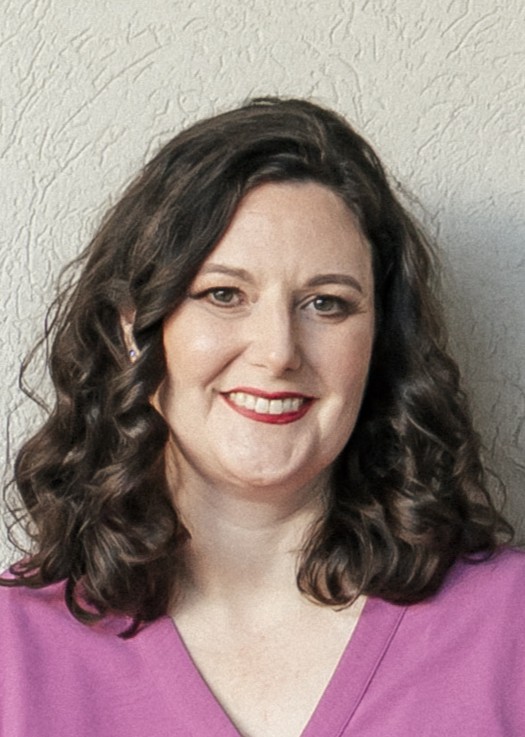
Rachel McBryan, Dietitian
Rachel McBryan is a licenced Dietitian in British Columbia offering comprehensive nutrition counselling as virtual and/or in-person counselling sessions to suit your needs and preferences. With a Bachelor of Science in Nutrition and Food Science, Rachel has over 20 years experience helping people address their health through nutrition. She was awarded Human Nutrition and Food Science BSc.from University of Alberta followed by post-grad course work at UBC in guidance counselling.
An eating disorder is a serious mental health illness.
If you are in immediate distress or crisis, please contact emergency services by dialing 911 or calling Vancouver Island Crisis Line: 1-888-494-3888.