What if family meals didn’t require everyone to eat the same way? A family dietitian helps you build shared routines while respecting each person’s nutrition needs, food preferences, and daily schedule. When work, school, caregiving, and conflicting online advice compete for your attention, meal planning can feel like one more job.
Family nutrition counselling offers practical, non-judgmental support shaped around your household. A Registered Dietitian learns about your routines and goals, then works with you on shared meals, meal planning, and individual nutrition concerns. You’ll learn what sessions involve and how to find strategies suited to your family, without relying on rigid rules or one-size-fits-all advice.
Wise Eats Registered Dietitians serves residents of Alberta and British Columbia through online, in-person, and home-visit sessions. Sheirry Poposka, RD, is registered with the Alberta College of Registered Dietitians. Rachel McBryan, RD, is registered with the College of Health and Care Professionals of BC. Read on to learn how personalized support works and how to prepare for a conversation about your household.
Key Takeaways
- A family dietitian helps your household consider individual nutrition needs alongside shared meals and routines.
- Flexible meal planning accounts for different schedules, food preferences, and cooking confidence.
- Personalized counselling offers support beyond general meal-planning tools, including nutrition education and condition-related concerns.
- Prepare for an appointment by noting your priorities and bringing a few details about your usual meals.
- Wise Eats offers nutrition sessions for residents of Alberta and British Columbia, including online, in-person, and home visits.
What a family dietitian does for everyday nutrition needs
A family dietitian is a Registered Dietitian who supports nutrition needs within family life. Instead of expecting everyone to follow the same plan, they consider each person’s preferences, routines, and nutrition concerns alongside shared meals. A Registered Dietitian is a regulated health professional. In Alberta and British Columbia, the title reflects registration with the relevant provincial college.
Wise Eats provides nutrition education and counselling for residents of Alberta and British Columbia, ages 12 to 100. Sessions focus on practical steps for everyday eating and the needs of each household member. The dietitian’s role is to provide nutrition education and support, not to diagnose a medical condition.
This video offers a brief overview of dietitian roles:
How family nutrition counselling differs from a one-size-fits-all plan
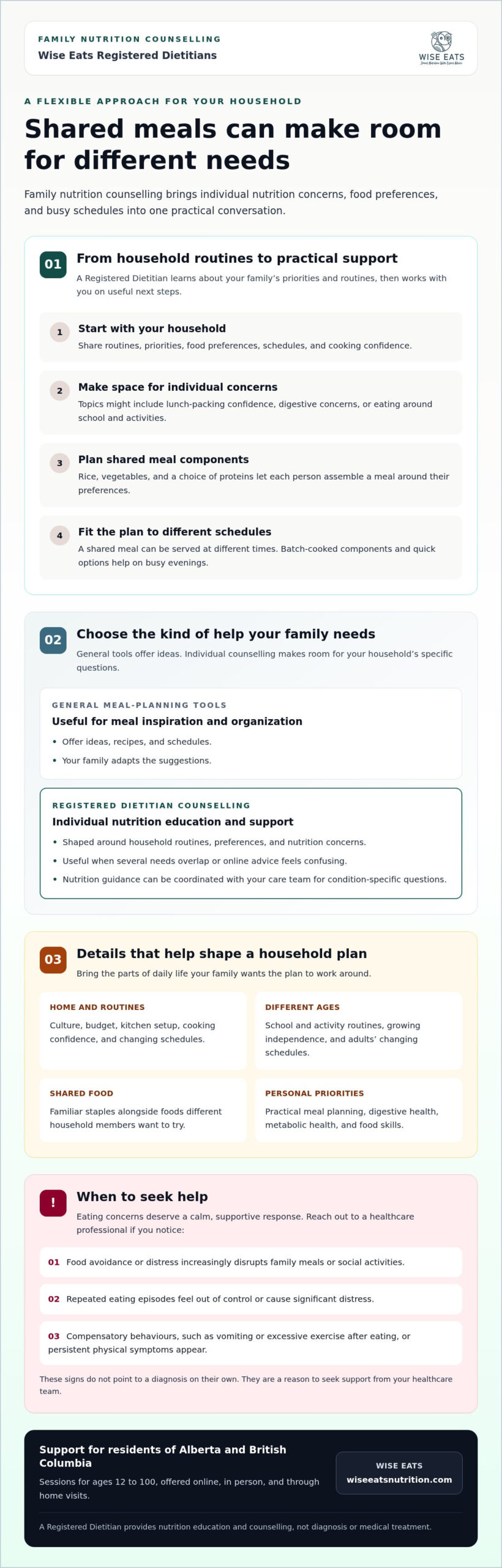
A family dietitian works with your household’s real routines. One person might want more confidence packing lunches, another might have digestive concerns, and a teen might need ideas for eating around school and activities. Counselling makes room for these differences without labelling foods or expecting identical portions and preferences.
For example, if one caregiver works late and an adolescent gets home from an activity earlier, the family might prepare a shared meal in components. The teen could eat earlier, and the caregiver could reheat the same meal later. Rice, vegetables, and a choice of proteins work well as separate components, so each person can assemble a meal that suits their preferences. Planning around schedules helps make shared food practical without requiring everyone to sit down at the same time.
Which family needs a Registered Dietitian supports
Support includes practical meal planning, digestive health, metabolic health, and eating-disorder recovery. Adolescents and adults can also use nutrition education to build food skills, discuss questions, and find approaches suited to changing routines. For more on working with a dietitian, learn about the counselling process.
Nutrition support provides education and counselling, not diagnosis or medical treatment. A dietitian discusses food-related strategies and, when needed, coordinates nutrition guidance with your care team. This keeps the focus on realistic steps within the dietitian’s role.
How a family dietitian adapts support across ages and nutrition needs
Nutrition routines often change as children grow, adults’ schedules shift, or a family’s needs evolve. An adolescent might have little time between school and an activity, while an adult works through lunch or has questions about digestive health. A family dietitian takes these differences into account rather than expecting one meal pattern to suit every age and household.
Supporting family members with different food preferences and schedules
Shared meals don’t require identical portions, ingredients, or goals. A family might serve rice, vegetables, and a choice of proteins, allowing each person to put together a plate suited to their preferences. A shared grocery list can include familiar staples alongside a few foods different household members want to try.
Cooking confidence matters too. A plan might use a batch-cooked component on a less busy day, then pair it with quick options on evenings with different schedules. Your family’s culture, budget, kitchen setup, and routines all belong in the conversation. The healthy diet guidelines for kids from Mayo Clinic offer general ideas, but a household plan still needs to fit the people who will use it.
Keeping health advice evidence-informed and collaborative
Nutrition evidence varies by health concern, age, and individual circumstances. A dietitian offers nutrition education and counselling, not diagnosis or medical treatment. For a condition-specific question, include your physician or other healthcare professionals in the discussion. Follow your care team’s guidance, and discuss nutrition changes with them before changing prescribed treatment.
For adolescents, sessions might address meal routines around school, activities, or growing independence. Adults might bring questions about meal planning, digestive health, or metabolic health. The dietitian adapts the discussion to each person’s priorities and the household’s shared routines.
When to seek help with eating-related concerns
Eating concerns deserve a calm, supportive response. Reach out to a healthcare professional if you notice any of the following:
- Food avoidance or distress increasingly disrupts family meals or social activities.
- Repeated eating episodes feel out of control or cause significant distress.
- Compensatory behaviours, such as vomiting or excessive exercise after eating, or persistent physical symptoms appear.
These signs don’t point to a diagnosis on their own. They do signal a reason to seek support from your healthcare team. For nutrition counselling shaped around your household’s needs, explore appointment options.
Family dietitian or meal-planning help: choosing support that fits
General meal-planning tools offer ideas, recipes, and schedules you can adapt yourself. They suit families looking for inspiration or help organizing meals. A Registered Dietitian offers individualized nutrition education and counselling shaped around your household’s routines, preferences, and nutrition concerns. A family dietitian is a useful fit when several needs overlap or online advice feels confusing. Choose support based on what your family wants to work on.
When a family benefits from individualized nutrition counselling
If one person has digestive concerns, another has questions about meal routines, and you’re trying to plan around work and school, a general template might leave gaps. Counselling gives you space to discuss those needs together and set individual goals alongside shared household routines. Condition-related nutrition support should reflect the specific concern and work alongside guidance from your healthcare team.
Wise Eats provides custom meal planning shaped around your household. You might focus on building a flexible grocery routine, finding lunch options a teen will bring to school, or planning meals around different work shifts. The goal is to make recommendations fit everyday life, rather than adding rules your household struggles to follow.
What to look for in family nutrition support
In Alberta and British Columbia, look for a Registered Dietitian registered with the appropriate provincial regulatory college. A respectful approach matters too. You should be able to discuss culture, budget, food preferences, cooking confidence, and health concerns without being judged.
Collaborative goals focus on practical steps, such as adding a convenient snack before an after-school activity or planning a shared grocery list. Rigid rules and moral labels for foods don’t account for different needs or circumstances. Family routines also shift with life changes. New parents, for example, often need meal ideas suited to limited time and changing schedules, alongside support for their own nutrition questions.
Choose support based on the kind of help your family needs. A planning tool might be enough for meal inspiration. Individual counselling offers a chance to discuss nutrition education, practical planning, or condition-related concerns with a Registered Dietitian. View appointment options to take a next step with Wise Eats.
What to expect from a family dietitian appointment
An appointment with a family dietitian starts with your priorities. You and the dietitian discuss household routines, food preferences, and nutrition questions, then agree on practical goals and next steps. The conversation should feel collaborative, not like a test. You don’t need to arrive with a perfect meal plan or a detailed food diary.
Nutrition counselling offers education and support with food-related concerns. It doesn’t diagnose medical conditions or replace medical care. For condition-specific questions, your dietitian can coordinate nutrition guidance with your healthcare team and support food-related goals within their role.
How to prepare for a family nutrition appointment
A little preparation helps, but extensive notes aren’t needed. Before the session, invite each participating family member to think about one priority or question. You might note a busy school night, limited time to cook, or a meal-planning challenge you’d like to address.
- Jot down usual meal and snack routines, food preferences, and practical barriers.
- Bring relevant nutrition guidance from your healthcare team, if available.
- Share questions about how household routines fit with existing care.
Keep prescribed treatment plans unchanged unless your healthcare team advises otherwise. The dietitian can help you discuss food-related steps that fit with your care.
Choosing an appointment format in Alberta or British Columbia
Wise Eats offers online, in-person, and home-visit nutrition sessions for residents of Alberta and British Columbia. Online sessions suit households looking for remote support. In-person or home visits offer other ways to meet, depending on your needs and location.
Families in Calgary and Edmonton, as well as Nanaimo (also written as Naniamo), Parksville, Qualicum Beach, and other communities on Vancouver Island, can learn about working with a Registered Dietitian. In Alberta, Alberta Registered Dietitian Sheirry Poposka is registered with the Alberta College of Registered Dietitians.
Choose a format that fits your household’s schedule and access needs. The first conversation helps clarify priorities and identify realistic next steps, with your care team involved for medical concerns.
Family nutrition support with Wise Eats in Alberta and British Columbia
Wise Eats offers nutrition education and counselling for residents of Alberta and British Columbia, with support for people ages 12 to 100. Sessions address practical nutrition, digestive health, metabolic and weight-related nutrition, and eating-disorder recovery. A family dietitian works with you on nutrition questions and goals suited to your household, without diagnosing medical conditions or replacing medical care.
Online, in-person, and home-visit sessions offer different ways to take part. Support is tailored to your priorities, routines, food preferences, and relevant health concerns. You don’t need to have every question figured out before starting. A few notes about what feels challenging or what you’d like to change are enough to begin a useful conversation.
Meet the Registered Dietitians supporting Alberta and British Columbia
Rachel McBryan, RD, is registered with the College of Health and Care Professionals of BC. Sheirry Poposka, RD, is registered with the Alberta College of Registered Dietitians. Their regional credentials connect Wise Eats’ nutrition counselling with the regulatory colleges in the provinces they serve.
If you’re still sorting through your questions, the ask a dietitian page shares information about asking nutrition questions and arranging an appointment. You might start by noting the main concern for your household, such as fitting meals around school and work, finding practical meal-planning ideas, or discussing a nutrition question alongside existing care.
Take a practical next step for your household
Before booking, write down one or two priorities. Each family member might have a different concern, and that’s useful context for the conversation. Your first discussion helps identify relevant nutrition goals and agree on practical next steps together. Bring questions or details about your usual routines if they’re handy, but extensive preparation isn’t needed.
Build nutrition support around your household
Nutrition support works best when it respects each person’s needs and fits household routines. A family dietitian offers personalized guidance for shared meals, individual preferences, and practical nutrition questions. Counselling also helps you sort through conflicting advice and identify goals suited to your family, without relying on rigid food rules.
Wise Eats serves residents of Alberta and British Columbia through online, in-person, and home-visit sessions. Rachel McBryan, RD, is registered with the College of Health and Care Professionals of BC. Before booking, note the main nutrition questions your household wants to discuss. A short list is enough to start a focused conversation.
Your family’s needs deserve thoughtful, practical support. Start with the questions that matter most to you.
Frequently Asked Questions
What does a family dietitian do?
A family dietitian is a Registered Dietitian who offers nutrition education and counselling suited to family life. Sessions might cover practical meal planning, food preferences, digestive health, or other nutrition questions. Each person’s needs remain part of the discussion, even when everyone shares meals. A dietitian doesn’t diagnose medical conditions or replace guidance from your healthcare team. Nutrition support complements your existing care.
Does a family dietitian help with meal planning?
Yes. A Registered Dietitian helps families plan around schedules, preferences, cooking routines, and nutrition goals. Support might include flexible meal ideas or ways to organize shared meals when household members have different needs. Everyone doesn’t need to eat the same foods or follow identical goals. Wise Eats offers personalized nutrition counselling and custom meal planning shaped around your household’s routines and priorities.
How does a family dietitian support teenagers and adults?
Sessions start with each person’s questions, routines, preferences, and relevant concerns. Wise Eats serves people ages 12 to 100 in Alberta and British Columbia, including Calgary, Edmonton, Nanaimo (Naniamo), Parksville, and Qualicum Beach. A Registered Dietitian discusses practical nutrition, digestive health, metabolic health, or eating-related concerns within nutrition scope. For condition-specific needs, keep your healthcare team involved in decisions about care.
Is family nutrition counselling suitable when household members have different needs?
Yes. Family members don’t need identical goals for counselling to support shared routines. A Registered Dietitian discusses individual preferences and concerns alongside practical meal planning for the household. For example, family members might share a main meal and choose different sides or portions to suit their preferences. Counselling should avoid food judgement and rigid rules. For medical questions, nutrition guidance works alongside care from your healthcare team.
What happens at a first family dietitian appointment?
The first appointment usually starts with your priorities, routines, preferences, and questions. You’ll discuss what makes meal planning easier or harder, then work with the Registered Dietitian to set realistic goals and next steps. Wise Eats offers online, in-person, and home-visit sessions. Bring questions or relevant advice from your healthcare team if useful. You don’t need extensive preparation, and you should continue following your current medical guidance.
When should a family seek help for eating-related concerns?
Seek professional support if food avoidance disrupts family meals, repeated eating episodes cause distress, or compensatory behaviours or persistent physical symptoms arise. These concerns deserve a calm, respectful response, not blame. A Registered Dietitian supports nutrition needs as part of appropriate care. Contact your healthcare team about symptoms or safety concerns. If someone faces an immediate health emergency, seek urgent help through local emergency services.
Article by
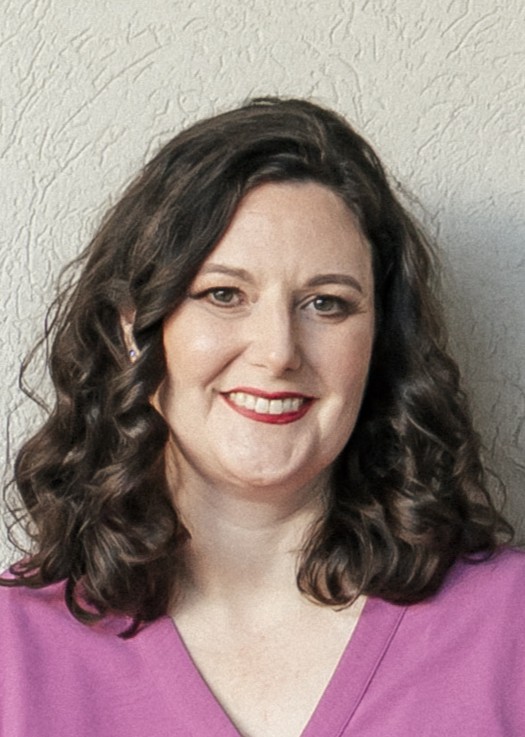
Rachel McBryan, Dietitian
Rachel McBryan is a licenced Dietitian in British Columbia offering comprehensive nutrition counselling as virtual and/or in-person counselling sessions to suit your needs and preferences. With a Bachelor of Science in Nutrition and Food Science, Rachel has over 20 years experience helping people address their health through nutrition. She was awarded Human Nutrition and Food Science BSc.from University of Alberta followed by post-grad course work at UBC in guidance counselling.
An eating disorder is a serious mental health illness.
If you are in immediate distress or crisis, please contact emergency services by dialing 911 or calling Vancouver Island Crisis Line: 1-888-494-3888.