Did you know the risk of a premature birth drops by more than half when you wait eighteen months between pregnancies? You likely feel the heavy weight of persistent fatigue while others expect you to keep moving at full speed. Keeping up with a toddler feels exhausting as your body struggles with depletion of the nutrients it gave away during your last pregnancy. You deserve a moment to focus on your own wellness. Your health matters.
Interpregnancy Care: Healing Your Body Between Pregnancies focuses on replenishing those vital stores and supporting your physical recovery. This guide offers a clear plan to help you regain your energy and feel confident in your nutritional status. We explore how personalized vitamin strategies and custom meal planning provide the foundation for your future health. You will find practical steps to move from a state of depletion toward a sense of vitality and readiness for your next stage of parenthood.
Key Takeaways
- Healing involves more than physical repair. You need to restore internal chemical balances before your next pregnancy begins.
- Interpregnancy Care: Healing Your Body Between Pregnancies focuses on replenishing iron, folate, and calcium stores used during your last birth.
- Stable blood sugar prevents energy crashes. Add protein and fibre to every meal to support consistent moods and steady energy levels.
- Use the plate method to reduce the mental load of feeding yourself and your family. Aim for half vegetables, a quarter protein, and a quarter grains at most meals.
- Registered Dietitians in BC and Alberta offer expert guidance for medical conditions and recovery. Collaborative care ensures your existing health team works together for your wellness.
Understanding the Interconception Period for Physical Recovery
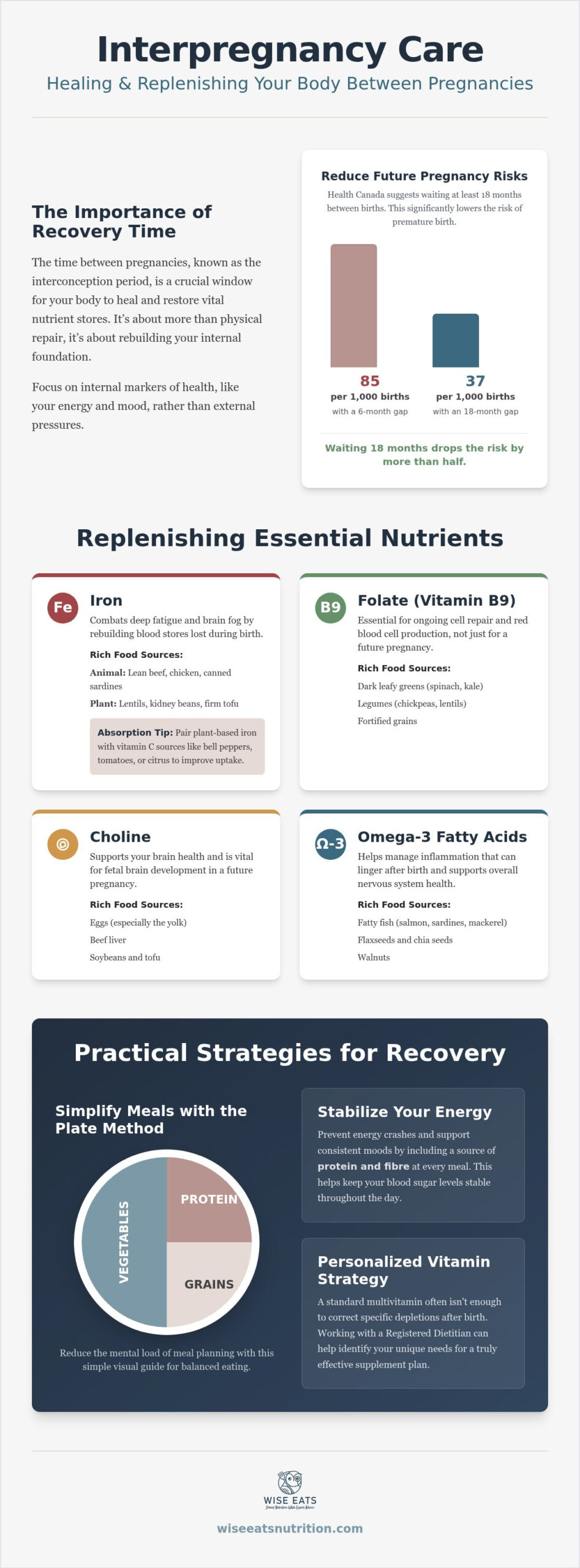
The interpregnancy period starts the moment you give birth and continues until you conceive again. Many people call this the interconception period. It is a window of time dedicated to your recovery. While the first six weeks of the postpartum period focus on immediate healing, true restoration takes much longer. Healing involves more than physical tissue repair. It requires restoring internal chemical balances and refilling the nutrient levels your baby used to grow. Health Canada suggests waiting at least eighteen months between births. This gap helps reduce risks for both you and your future baby. For instance, the rate of premature birth drops from 85 per 1,000 to 37 per 1,000 when you wait eighteen months compared to only six months. The interconception period offers a chance to address health concerns before they impact a future pregnancy. It is a proactive time for wellness.
Defining Your Healing Timeline
Every body recovers on its own timeline. Factors like birth type and whether you are breastfeeding change how your body uses energy. You feel pressure to return to your pre-pregnancy state quickly, but focus on internal markers of health instead. How is your energy in the afternoon? How is your mood when the house gets loud? Avoid comparing your progress to others on social media. Their curated photos don’t show their iron levels or sleep quality. Interpregnancy Care: Healing Your Body Between Pregnancies looks different for everyone because your starting point is unique. Nutrient depletion often persists long after the first six weeks. Your body needs time to replenish stores of iron, folate, and calcium before starting the cycle again. Focusing on these internal signals provides a more accurate picture of your recovery than a number on a scale. Your body prioritizes healing internal organs and tissues first.
The Role of the Nervous System
Pregnancy and early parenthood place high demands on your stress response. Your nervous system needs time to shift out of a high-stress state. Adequate rest supports hormonal regulation and physical healing. Nutrition provides the essential components for neurotransmitters supporting mental wellness. When you eat enough protein and healthy fats, you give your brain the tools necessary to stay calm. Working with a Registered Dietitian helps you build a plan supporting your nervous system through food. Proper nutrition acts as consistent support during times of change. It helps you transition from feeling depleted to feeling capable and energized for the day ahead. Restoring chemical balance involves balancing your blood sugar and ensuring your thyroid has the minerals necessary to function. These internal processes happen quietly but require significant resources from your daily meals.
Replenishing Essential Nutrient Stores Post-Birth
Your body gave an enormous amount to grow your baby. Iron, folate, calcium, choline, and omega-3 fatty acids all transferred to support your baby’s development, and your own stores took the hit. Feeling foggy, exhausted, or emotionally flat after birth is rarely about sleep alone. In many cases, it reflects nutrient depletion requiring months to correct. Professional guidance on interconception care from Johns Hopkins researchers confirms addressing these gaps before a next pregnancy matters significantly for both parent and baby outcomes.
Two nutrients often going unaddressed are choline and omega-3 fatty acids. Choline supports your brain health and plays a direct role in fetal brain development during a future pregnancy. Eggs, beef liver, and soybeans provide practical sources. Omega-3 fatty acids, found in fatty fish like salmon and sardines, help manage inflammation lingering after birth. Both nutrients are frequently missing from standard prenatal vitamins. Knowing this before you assume your supplement provides enough is helpful.
Iron and Folate: The Foundation of Recovery
Blood loss during birth depletes iron quickly. Low iron, even without a formal anemia diagnosis, produces real symptoms. You experience bone-deep fatigue, difficulty concentrating, and a short fuse when your toddler tips their water glass. Eating iron-rich foods helps. Pairing them with vitamin C makes a measurable difference in how your body absorbs non-heme iron from plant sources. Think lentil soup with a squeeze of lemon or a bean salad topped with bell peppers.
- Animal sources: lean beef, chicken, canned sardines
- Plant sources: lentils, kidney beans, firm tofu, pumpkin seeds
- Pair with vitamin C: tomatoes, citrus, strawberries, broccoli
Folate requirements stay high if you plan another pregnancy within a few years. Your body uses folate continuously for cell repair and red blood cell production. It is not only for early fetal development. Dark leafy greens, chickpeas, and fortified grains all contribute to your daily intake.
Custom Vitamin Strategies
A standard multivitamin is a starting point, not a complete solution. Doses in off-the-shelf products are often designed for general populations. They don’t account for someone recovering from birth with specific gaps in their iron or choline levels. A personalized supplement review, like those offered through Wise Eats Registered Dietitians, identifies your specific intake gaps. High-dose supplements carry real risks without proper assessment. Checking your levels with a healthcare provider before adding anything new is a practical first step.
Interpregnancy Care: Healing Your Body Between Pregnancies works best when your supplement plan reflects your actual needs. If you’d like support building a recovery plan fitting your real life, book a session with a Registered Dietitian to get started.
Balancing Energy Needs and Hormonal Health
Your hormones don’t operate in isolation. Thyroid function, cortisol regulation, and reproductive hormones all depend on a steady supply of calories and nutrients to do their jobs. When you restrict food, even unintentionally because you’re too busy to eat lunch, your body pulls resources away from recovery and toward basic survival. Muscle repair slows. Connective tissue healing stalls. The fatigue you’re already fighting gets harder to shake.
This is where Interpregnancy Care: Healing Your Body Between Pregnancies becomes about more than vitamins. It’s about eating enough, consistently, to give your body the raw materials it needs. The Interpregnancy Care guidelines from the American College of Obstetricians and Gynecologists reinforce this, noting that nutritional status between pregnancies directly affects outcomes for both parent and future baby. Eating adequately isn’t optional during this period. It’s foundational.
Supporting Blood Sugar Stability
Blood sugar swings are one of the most common reasons new parents feel irritable, foggy, and exhausted by mid-afternoon. The fix isn’t complicated. Pairing carbohydrates with protein or healthy fat slows digestion and keeps your energy steadier for longer. Apple slices with almond butter, whole grain toast with eggs, or hummus with crackers all work well. Skipping meals or eating carbohydrates alone sets off a cycle of spikes and crashes that makes everything harder, including your mood and your patience.
Hydration matters here too. Water carries nutrients to your cells and supports the chemical reactions your body runs constantly in the background. Aim to drink water throughout the day rather than catching up in large amounts at once.
Nutrition for Hormonal Harmony
Healthy fats are essential for hormone production. Avocado, olive oil, nuts, and fatty fish all contribute. Without adequate fat intake, your body struggles to produce the hormones that regulate your menstrual cycle, stress response, and thyroid function.
One thing worth addressing directly: detox products. Your liver and kidneys filter waste continuously without any outside help. Products marketed as cleanses or detoxes don’t accelerate this process, and some interfere with nutrient absorption. Skip them. Focus instead on variety in your meals, which naturally delivers the range of micronutrients your endocrine system relies on.
- Include healthy fats daily: avocado, olive oil, walnuts, salmon
- Eat protein at every meal: eggs, legumes, Greek yogurt, chicken
- Add fibre consistently: vegetables, oats, beans, fruit with skin
- Eat regularly: three meals with snacks as needed to avoid energy crashes
If you’d like help building a custom meal plan that supports your hormonal recovery without the guesswork, a Registered Dietitian can help you figure out what your body actually needs right now.
Practical Meal Planning for Busy Parents
Feeding yourself and your family while recovering from birth feels like a full-time job on top of your existing responsibilities. The mental load of deciding what to cook often causes more stress than the cooking itself. Simple strategies help lower this burden. Interpregnancy Care: Healing Your Body Between Pregnancies relies on making nutritious choices accessible even on your most exhausting days. Using the plate method provides a quick visual guide without requiring complex measurements or calorie counting. Aim to fill half your plate with colourful vegetables to ensure a wide range of vitamins. One quarter of the plate should contain a protein source like chicken, tofu, or fish. The final quarter belongs to grains or starchy vegetables like potatoes or brown rice. This balance supports stable blood sugar and keeps you satisfied until your next snack.
Batch cooking ensures you have reliable options when time is short. Preparing a double portion of soup or roasting extra vegetables on Sunday saves you from making difficult decisions later in the week. Custom meal plans tailored to your specific taste and household needs take the guesswork out of your grocery list. These tools allow you to focus on your recovery rather than staring at an empty fridge at five in the evening. Having a plan in place reduces the likelihood of skipping meals, which is essential for maintaining your energy levels throughout the day.
Easy Prep Strategies
Pantry staples provide a reliable backup for your meals. Keep frozen vegetables and canned beans on hand for nights when chopping feels impossible. Frozen produce retains its nutrients because it is frozen at peak ripeness, and it requires zero preparation time. Canned beans provide a quick protein source for salads, stews, or quick tacos. If you find the planning process overwhelming, personalized meal planning offers a structured path forward. Choosing recipes with minimal active cooking time keeps you out of the kitchen and gives you more time for rest or connection with your family.
Gentle Nutrition and Movement
Focus on how food makes you feel instead of how it changes your body weight. Your body needs energy to heal tissues and balance hormones after the demands of pregnancy. Listen to your hunger cues. If you feel hungry between meals, your body is likely asking for more fuel to support its recovery processes. Restricting food leads to fatigue and irritability, which makes parenting much more difficult. Movement should feel restorative and life-giving. A gentle walk around the block or light stretching supports circulation and improves your mood. Avoid using movement as a way to earn food or punish yourself for what you ate. Healing happens best when you treat your body with kindness and provide it with consistent, nourishing fuel.
Professional Support for Your Healing Journey
Registered Dietitians offer evidence-based support for your recovery. In British Columbia and Alberta, these professionals hold regulation through provincial colleges. Rachel McBryan, RD, holds registration with the College of Health and Care Professionals of BC. Serving clients in Alberta, Sheirry Poposka, RD, is a member of the Alberta College of Registered Dietitians. Interpregnancy Care: Healing Your Body Between Pregnancies involves working with your existing healthcare team to ensure all aspects of your wellness receive attention. This collaborative approach means your dietitian coordinates with your doctor or midwife. Many extended health plans through providers like Sun Life cover these visits. In some cases, coverage is available through WorkSafeBC. You deserve a clear path toward feeling like yourself again. Visit the Wise Eats team page to meet the professionals ready to walk with you. Professional guidance ensures your supplement choices and meal plans align with your blood work and medical history.
When to Seek Help
Recovery takes time, but certain signs suggest you need extra support. Reach out if you feel an intense fear of weight gain or find yourself restricting food. These feelings are common but benefit from professional guidance. Persistent fatigue preventing you from completing daily tasks or caring for your child is another signal. If you notice yourself avoiding family meals or feeling isolated, a dietitian provides a safe space to discuss these challenges. We focus on lifestyle integration rather than rigid restrictions. Our goal is to help you find ease in your relationship with food as your body heals. These red flags deserve attention because they impact your long-term health and the well-being of your family. If your relationship with food feels like a source of anxiety, professional support provides the tools to find peace.
- Intense fear of weight gain or food restriction
- Persistent fatigue preventing daily tasks
- Social isolation or avoidance of family meals
Booking a Consultation in Western Canada
Virtual appointments offer the flexibility parents on Vancouver Island or in Edmonton need. You have the opportunity to meet from the comfort of your home without worrying about childcare or travel. Your dietitian helps interpret your nutrient needs without using judgment. We translate complex information into actionable steps for your daily life. This personalized approach ensures your plan fits your unique household. Learn more about working with a dietitian to see how professional care supports your health goals. You are not responsible for figuring this out alone.
Your Path to Restored Vitality
Recovering between births requires patience and the right tools. You learned about the eighteen-month window for optimal healing and the importance of refilling your iron and folate stores. Stable blood sugar and consistent meal planning provide the energy you need for daily life with your family. Interpregnancy Care: Healing Your Body Between Pregnancies is about giving yourself the same care you give your children. Focusing on your health now creates a strong base for your future.
Our team offers the expert guidance you need to move forward. Rachel McBryan, RD, with the College of Health and Care Professionals of BC, and Sheirry Poposka, RD, with the Alberta College of Registered Dietitians, provide evidence-based nutrition counselling. We provide customized VitaminLab supplement reviews to identify your specific nutrient gaps. These reviews ensure your supplements meet your unique needs. You don’t have to manage this recovery alone. Our personalized approach helps you regain your energy and confidence.
You deserve to feel strong and energized as you prepare for your next stage of parenthood. We are here to support your journey throughout the process. Your wellness is our priority.
Frequently Asked Questions
How long should I wait between pregnancies for optimal healing?
Optimal recovery usually requires a wait of eighteen to twenty-four months between births. This window allows your body to replenish nutrient stores and supports physical tissue repair. Waiting at least eighteen months reduces the risk of premature birth and other health complications. Residents in Nanaimo find this time essential for regaining energy before the next stage of parenthood begins. Interpregnancy Care: Healing Your Body Between Pregnancies focuses on this critical recovery period.
Which vitamins are most important for healing between pregnancies?
Iron, folate, and calcium are essential for recovery after giving birth. Choline and omega-3 fatty acids support your brain health and future fetal development. Vitamin D and B12 also play roles in maintaining consistent energy levels. Personalized supplement reviews help identify your specific needs. We use VitaminLab to create custom formulas replacing multiple individual bottles. Purchase of these supplements is not a requirement for our services.
How do I know if my iron stores are low after birth?
Persistent fatigue and brain fog often signal low iron stores. You notice difficulty concentrating or feeling exhausted despite getting sleep. Cold hands or feet and pale skin are other common indicators. A healthcare provider confirms your levels through specific tests. Registered Dietitians help you interpret results and build a plan to restore your levels. Addressing iron deficiency helps you regain energy for parenting on Vancouver Island.
Does breastfeeding affect how I should eat between pregnancies?
Breastfeeding increases your daily energy and nutrient requirements significantly. Your body prioritizes milk production. This means you need extra calories, protein, and fluids to support your own healing. Focus on eating regular meals including a variety of whole foods. Interpregnancy Care: Healing Your Body Between Pregnancies involves adjusting your intake. This ensures both you and your baby receive adequate nourishment without depleting your internal stores.
What foods support hormonal balance after having a baby?
Healthy fats from avocados, nuts, and olive oil support the production of essential hormones. Including protein at every meal helps maintain steady blood sugar. Fibre from vegetables and whole grains also assists in hormonal regulation. Avoiding restrictive eating patterns ensures your thyroid and adrenal glands have the fuel necessary to function. Focus on variety to give your endocrine system the micronutrients it requires for recovery in Calgary.
How does a Registered Dietitian help with postpartum recovery?
A Registered Dietitian provides evidence-based guidance tailored to your specific recovery goals. We create custom meal plans using the EatLove system. This reduces the mental load of feeding your family in Parksville. Our team reviews your nutrient intake and suggests personalized vitamin strategies. Rachel McBryan, RD, College of Health and Care Professionals of BC, and Sheirry Poposka, RD, Alberta College of Registered Dietitians, offer professional support.
Are dietitian services covered by insurance in British Columbia?
Many extended health insurance plans in British Columbia provide coverage for Registered Dietitian services. Providers like Sun Life or WorkSafeBC often include these professional consultations in their wellness packages. While the BC Medical Services Plan does not cover private practice fees, out-of-pocket costs qualify as a medical expense tax credit. Check your specific policy to see how your benefits apply to nutrition counselling for your recovery journey in Nanaimo.

Article by
Rachel McBryan, Dietitian
Rachel McBryan is a licenced Dietitian in British Columbia offering comprehensive nutrition counselling as virtual and/or in-person counselling sessions to suit your needs and preferences. With a Bachelor of Science in Nutrition and Food Science, Rachel has over 20 years experience helping people address their health through nutrition. She was awarded Human Nutrition and Food Science BSc.from University of Alberta followed by post-grad course work at UBC in guidance counselling.
An eating disorder is a serious mental health illness.
If you are in immediate distress or crisis, please contact emergency services by dialing 911 or calling Vancouver Island Crisis Line: 1-888-494-3888.