The right amount of protein with kidney disease depends on how well your kidneys are working and whether you’re on dialysis. There isn’t one target for everyone. Protein helps maintain and rebuild muscle, but its breakdown creates waste your kidneys need to remove.
It’s understandable to feel unsure when advice about protein seems to change. Your needs can shift as kidney health changes, and regular testing helps your care team decide when your food choices need review.
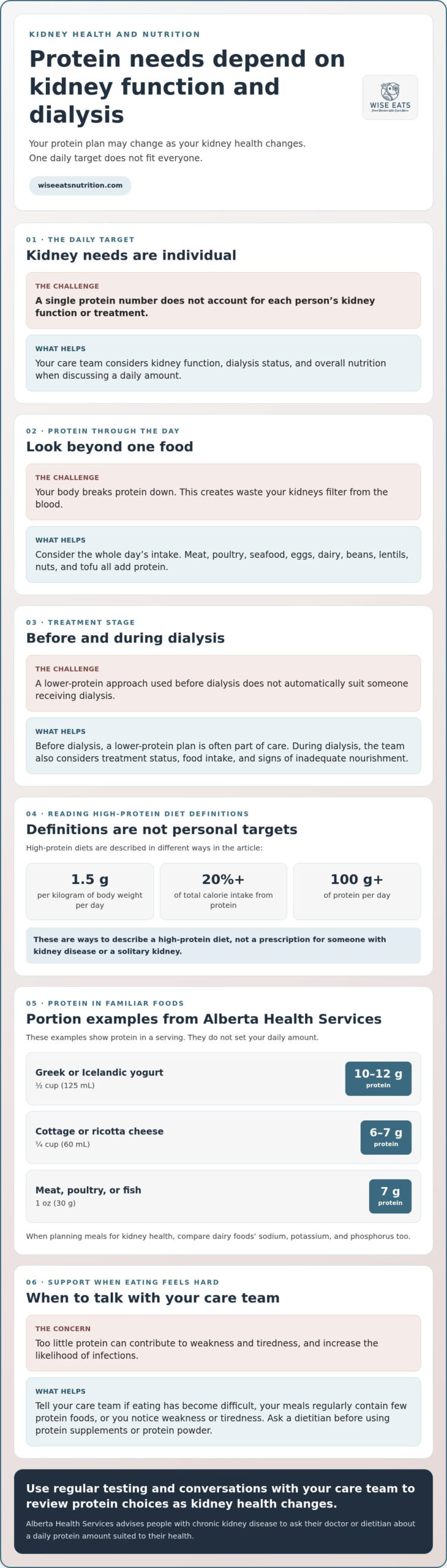
This guide explains how protein needs are personalized and why they differ over time. You’ll also see how familiar foods fit: according to Alberta Health Services, ½ cup (125 mL) of Greek or Icelandic yogurt provides 10-12 grams of protein, while ¼ cup (60 mL) of cottage or ricotta cheese provides 6-7 grams. The amount you eat and your overall meal plan both matter.
Key Takeaways
- Your protein needs depend on kidney function and whether you’re on dialysis. Ask your care team what daily amount fits your current health needs.
- A high-protein diet is not a one-size-fits-all choice, especially when you have a solitary kidney. Consider your overall intake and kidney health together.
- Regular testing helps your care team assess whether your food choices need to change as chronic kidney disease progresses.
- According to Alberta Health Services, ½ cup (125 mL) of Greek or Icelandic yogurt provides 10-12 grams of protein, while ¼ cup (60 mL) of cottage or ricotta cheese provides 6-7 grams.
- Compare the protein in dairy foods with their sodium, potassium and phosphorus content when planning meals for kidney health.
High-protein diets in people with a solitary kidney
A solitary kidney does the body’s filtering work alone, so protein choices deserve careful consideration. Research findings vary, and one daily target does not suit everyone.
Observational Findings on Protein Consumption
Observational studies follow people’s diets and health over time, then look for links between them. The Nurses’ Health Study followed participants for 11 years while researchers examined diet and kidney health. This type of study can identify patterns, but it cannot establish that protein intake caused a particular kidney outcome. The studies involved more than 13-hundred participants, so results still need context, including kidney function and other health factors.
For someone with one kidney, a study of a general population cannot determine what that individual should eat. It does show why advice about a high-protein diet needs to account for kidney health, rather than rely on a single study.
Protein Breakdown and Kidney Waste Removal
Protein is made of amino acids, which the body breaks down and uses. This process produces waste that the kidneys filter from the blood. When kidney disease affects filtering, waste can build up. For someone with a solitary kidney, available kidney function is central to decisions about daily protein.
Meat, poultry, seafood, eggs, dairy, beans and nuts all provide protein. A meal plan that includes several of these foods can add up differently from one with smaller portions. Looking at the whole day gives a clearer picture than judging one food in isolation.
Choosing an Appropriate Protein Amount
A high-protein diet is commonly described using different measures: 1.5 grams of protein per kilogram of bodyweight per day, at least 20% of total caloric intake from protein, or at least 100 grams per day. These are definitions, not a personal prescription for someone with one kidney.
In Canada, Alberta Health Services’ kidney diet guide offers portion examples, including 7 grams of protein in 1 oz (30 g) of meat, poultry or fish. It does not replace a daily target based on your kidney health. Alberta Health Services advises people with chronic kidney disease to ask their doctor or dietitian how much protein they can have each day. Kidney function and dialysis status help shape that discussion.
Does a high-protein diet damage healthy kidneys? Evidence does not show a uniform effect, so it is not accurate to say that a high-protein diet damages every healthy kidney. Still, someone with one kidney should discuss their intake in light of their kidney function.
Metabolic Effects of High-Protein Diets
Higher protein intake affects kidney measurements in different ways across studies. In a United States randomized trial lasting 24 months, creatinine clearance was higher in the high-protein group at 12 months. That change had attenuated by 24 months, and albumin excretion did not differ between groups.
Creatinine clearance reflects how the kidneys filter a waste product. A change in this measurement alone does not establish progressive kidney damage. The trial’s differing results over 12 and 24 months show why protein intake, study duration and the outcome being measured all matter when interpreting metabolic effects.
Personalizing protein intake for chronic kidney disease
For chronic kidney disease, protein needs depend on kidney function and dialysis status. Findings differ across studies, so a meal plan should reflect the person’s health and nutritional needs.
Albumin and Protein Intake
Albumin is a blood protein, and its level offers one piece of information about nutritional and kidney health. A level of 4.0 g/dL or higher is identified as healthy for people with kidney disease. It does not set a person’s daily protein target by itself.
Too little protein can contribute to weakness and tiredness and increase the likelihood of infections. Are plant proteins better than animal proteins for kidney disease? There is no single answer for everyone. For people with kidney disease who are not on dialysis and follow a lower-protein diet, at least half of their daily protein allowance should come from high-quality protein sources.
Protein Intake Before Dialysis
Before dialysis, a lower-protein plan is often part of chronic kidney disease care, but the amount depends on kidney function and overall nutrition. The aim is to avoid excess intake without falling short of the protein needed to maintain strength and health.
Research findings differ. Some research has not found a clear association between protein intake and kidney-function decline. A Korean Genome and Epidemiology Study linked the highest protein-intake quartile with a 1.32-fold increased risk of rapid eGFR decline, with a 95% confidence interval of 1.02 to 1.73. These findings describe associations, not a personal target.
Protein Intake During Dialysis
Dialysis status changes how a care team considers protein intake. A lower-protein approach used before dialysis does not automatically suit someone receiving dialysis. Kidney function, treatment status, food intake and signs of inadequate nourishment all matter when planning meals.
What are the symptoms and risks of too little protein with kidney disease? Concerns include weakness, tiredness and a greater likelihood of infections. Tell your care team about these changes, especially if eating has become difficult or your meals regularly contain few protein foods.
Plant and Animal Protein Sources
Plant proteins include beans, lentils, nuts and tofu. Animal sources include eggs, dairy, poultry, meat and fish. Neither category is automatically a better fit for every kidney meal plan. The right balance depends on kidney function, dialysis status and the amount of protein across your meals.
Can protein supplements or protein powder be used with kidney disease? Ask your dietitian before using them. A supplement adds protein beyond food, so include it in the day’s total rather than treating it as separate from meals. For help discussing food choices and supplements, ask a dietitian.
Diet changes over time and regular testing
Chronic kidney disease changes over time, so your meal plan needs regular review. Test results help your care team decide whether your food choices need adjusting.
Diet Changes Over Time
A kidney-friendly eating plan should reflect your current health needs, rather than stay fixed. For example, a protein target from an earlier stage of care might not suit your current test results or dialysis status. Your doctor or dietitian can help translate nutrition guidance into everyday meals.
Recommended changes can affect foods you enjoy, making meal planning difficult. Bring specific meals and questions to your care team instead of removing foods without guidance. If you often have eggs for breakfast, ask how they fit your current nutrition plan. A dietitian can discuss practical alternatives if a change is needed.
Keep a brief record between appointments. Note new recommendations, foods you find difficult to include, and questions about portions or meal routines. If your care team adjusts your plan, ask which part of your eating pattern the change addresses. This helps you understand the recommendation and prepare useful questions for your next visit.
Test results help guide these conversations. A new result gives your care team information to consider alongside your diet and health. Follow the guidance you receive, and describe any meal or routine that makes it difficult to follow. A specific example, such as a regular lunch you struggle to adapt, keeps the discussion practical.
Urine Protein and Kidney Function Tests
Doctors assess kidney health with urine tests for protein and blood tests that help measure kidney filtering. These tests provide different information, so your care team considers the results together rather than relying on one result alone.
A urine sample can identify protein in the urine. A blood test helps assess kidney function, and estimated glomerular filtration rate, or eGFR, describes how well the kidneys filter. Your doctor reviews these results to assess changes and decide whether your nutrition plan needs review.
Bring questions about both types of test to your appointment. Ask how a change in urine protein or eGFR relates to your meals, protein intake or dialysis status. Your doctor or dietitian can explain which result matters for your care and what steps suit your situation.
Regular testing supports decisions over time because chronic kidney disease progresses differently for each person. Keep appointments and share changes in your eating routine. If a recommendation feels difficult, name the specific food or meal involved so your next discussion can focus on a workable adjustment.
When to Seek Help
Contact your care team if kidney-related food rules lead you to skip meals, worry about eating makes you avoid shared meals, or weakness and tiredness persist. These concerns deserve calm, practical support. Explain what has changed, such as missing lunch most days or withdrawing from family meals.
Glomerular hyperfiltration
Glomerular hyperfiltration describes an increased filtering rate through the glomeruli, the kidney’s tiny filtering structures. It refers to filtering activity, not a complete measure of kidney health. If you encounter the term in a discussion about protein intake, ask which test or finding prompted it and how your care team interprets it alongside your other results.
A higher filtration reading and albumin in urine are different findings. One concerns filtering activity; the other indicates albumin detected in a urine sample. A change in one result does not automatically establish a change in the other. Keeping these measures distinct helps clarify what a test result does and does not show.
Hyperfiltration needs context. Your care team considers kidney function, health history and your current nutrition plan when discussing a result. The term alone does not set a daily protein target or explain the cause of a change. If protein intake comes up, share details about your usual meals, including protein powders or drinks, so the discussion reflects your full routine.
Ask for a clear explanation of the findings behind the term. For example, ask whether it refers to a filtration measure, urine albumin, or both. Then ask how those findings relate to your other test results and whether they affect your current nutrition guidance. These questions keep the conversation focused on your results rather than broad claims about high-protein diets.
Research findings about protein and kidney measures vary by study group, diet and outcome. A result from one group does not automatically apply to everyone with chronic kidney disease or a solitary kidney. Hyperfiltration is one measure to interpret carefully, not a stand-alone diagnosis or a reason to change your eating pattern without guidance.
If a report uses the word “hyperfiltration,” note the exact wording and discuss it at your next appointment. Ask which result prompted the term, how it fits with your urine and blood tests, and whether your current meal plan needs review. These questions support a clearer discussion about protein intake, kidney function and your individual care plan.
Greek yogurt and cottage cheese
Greek yogurt and cottage cheese offer measured portions of protein, but their nutrition profiles differ. According to Alberta Health Services’ kidney diet guide, ½ cup (125 mL) of Greek or Icelandic yogurt provides 10-12 grams of protein. A full cup of Greek yogurt provides 22 grams. Portion size matters when you’re fitting either food into your daily protein plan.
Cottage or ricotta cheese provides 6-7 grams of protein in ¼ cup (60 mL), according to Alberta Health Services’ kidney diet guide. That smaller serving is easy to add to a meal, but compare the portion with what you typically eat. A half-cup portion, for example, contains twice as much cottage cheese as the guide’s ¼-cup serving, so it contributes more protein.
Protein is only one part of the comparison. Cottage cheese is lower in potassium and phosphorus than milk, yogurt and cheese, but sodium remains a concern. Check the product label for serving size and sodium, then compare the portion with your kidney care plan. Brands and product types differ, so refer to the package for the specific food you buy.
Greek yogurt and cottage cheese are not automatic choices to include or avoid. Your kidney function, dialysis status and nutrition plan shape how each food fits. For example, if your plan sets a protein allowance, count the yogurt or cheese portion alongside other protein foods eaten that day. A larger bowl of yogurt provides more protein than the ½-cup reference serving.
Try using a measuring cup for the first serving, then note how it compares with your usual bowl or spoonful. For yogurt, compare your portion with ½ cup (125 mL). For cottage cheese, compare it with ¼ cup (60 mL). This simple check helps you estimate protein more consistently without removing familiar foods from meals.
If you enjoy Greek yogurt at breakfast, pair a measured portion with foods that fit your care plan. Cottage cheese can also be served with a meal or snack, while keeping sodium and serving size in mind. If you’re unsure how its protein or sodium fits your plan, bring the product label to an appointment. Your care team can review it alongside your kidney test results and nutrition needs.
Wise Eats Registered Dietitians: Custom Meal Planning
Wise Eats Registered Dietitians offers Custom Meal Planning to help turn your care team’s protein guidance into meals that suit your routine and food preferences. This support can be useful when kidney-related food advice feels difficult to apply to everyday meals or your nutrition needs change over time.
A Registered Dietitian can help organize meal ideas and discuss how foods such as Greek yogurt or cottage cheese fit your plan. Wise Eats also offers Personalized Vitamin and Mineral Supplements. Discuss supplements with your care team before adding them, especially if you have chronic kidney disease or receive dialysis.
For nutrition support tailored to your eating habits, contact Wise Eats Registered Dietitians.
Make your next nutrition conversation practical
Protein choices with kidney disease are personal, and your needs can change as your health changes. Before your next care conversation, write down one meal or food choice you’re unsure about. Bring your question and any guidance you’ve already received. A specific example helps focus the discussion on options that fit your everyday routine.
If you want help turning nutrition guidance into a workable plan, Wise Eats Registered Dietitians offers Custom Meal Planning, Personalized Vitamin and Mineral Supplements, and Weight Management. These services address different nutrition needs, so consider which support fits your current goals. Your care team remains part of decisions about kidney health and protein needs.
Taking one question to a Registered Dietitian is a practical next step. You deserve nutrition support that respects your preferences and health needs.
Frequently Asked Questions
CKD Diet: How much protein is the right amount?
The right amount depends on kidney function, dialysis status and your nutritional needs. A general target based on a high-protein diet definition is not a personal prescription. Bring your recent kidney test results and a typical day of meals to your doctor or dietitian. Together, discuss a daily target based on your health rather than choosing an amount from a general diet plan.
What is the relationship between protein and kidney disease?
Protein supports muscle maintenance and other body functions, and its breakdown produces waste that the kidneys filter from the blood. With chronic kidney disease, changes in filtering can affect how well your body clears this waste. Protein and kidney disease therefore need to be considered together: eating too little also raises concerns, including weakness and tiredness. Share changes in strength, energy or eating with your care team.
How much protein should people with chronic kidney disease eat per day?
There is no single daily gram amount for everyone with chronic kidney disease. Kidney function, dialysis status and overall nutrition needs shape the target. A practical starting point is to ask your care team to explain your current daily recommendation, then compare it with the protein in your usual meals. Include snacks and drinks, since yogurt, milk and protein beverages also contribute.
Which foods are good sources of protein for kidney disease?
Protein sources include lentils, beans, tofu, eggs, fish, poultry and dairy. Alberta Health Services lists 5 grams of protein in ¼ cup (60 mL) of cooked or canned lentils, and 6 grams in a serving of firm tofu. These examples help you compare portions. Your kidney care plan also guides choices based on your overall needs and the other nutrients in foods.
How does protein intake change for people on dialysis?
Dialysis status affects the protein guidance from your care team, so a plan for someone not receiving dialysis may not suit someone on treatment. Ask your doctor or dietitian to review your target when dialysis starts or your treatment plan changes. Mention appetite changes, difficulty eating or meals you often miss, since these details help the team assess whether your food intake meets your needs.

Article by
Rachel McBryan, Dietitian
Rachel McBryan is a licenced Dietitian in British Columbia offering comprehensive nutrition counselling as virtual and/or in-person counselling sessions to suit your needs and preferences. With a Bachelor of Science in Nutrition and Food Science, Rachel has over 20 years experience helping people address their health through nutrition. She was awarded Human Nutrition and Food Science BSc.from University of Alberta followed by post-grad course work at UBC in guidance counselling.
An eating disorder is a serious mental health illness.
If you are in immediate distress or crisis, please contact emergency services by dialing 911 or calling Vancouver Island Crisis Line: 1-888-494-3888.