
Can diet help with brain fog? Sometimes. Regular meals, fluids and adequate nutrients may support concentration, but brain fog can also reflect anemia, thyroid issues, perimenopause, poor sleep, stress, illness or medicines. Identifying the underlying cause matters.
Skipped meals, low fluid intake or a nutrient gap might affect how you feel. Evidence varies by cause, so cutting out foods or starting supplements without guidance risks adding confusion. Regular meals and familiar foods offer a practical place to start, without strict rules.
This article explains practical nutrition strategies, coffee use and the lifestyle factors that influence concentration, including exercise, sleep and stress management. A Registered Dietitian can support nutrition changes alongside your broader healthcare team.
Key Takeaways
- Regular meals, varied foods and adequate fluids can support everyday concentration.
- Anemia, thyroid issues and perimenopause may contribute to brain fog and require attention to nutrition and overall health.
- Exercise, sufficient sleep and stress management are as important as food choices.
- Coffee may temporarily improve alertness, but excess or late-day caffeine can disrupt sleep.
- A Registered Dietitian can help tailor nutrition support alongside assessment and care from your healthcare team.
Brain fog and diet: what the symptom description means
Foggy thinking can make ordinary tasks feel tiring. You might lose your train of thought in a conversation, reread the same email or struggle to recall a familiar name. It can feel unsettling, especially when your concentration changes from day to day. Your experience deserves attention, even though “brain fog” does not point to one specific explanation.
Brain fog is an informal term for difficulty concentrating or thinking clearly, not a medical diagnosis. It describes how you feel, rather than identifying why you feel that way. Supporting your nutrition and finding the cause are separate steps. Food habits might support your day, but persistent or concerning symptoms call for a broader conversation with a healthcare professional.
What people mean by brain fog
People use “brain fog” to describe slower thinking, reduced concentration, forgetfulness or trouble organizing tasks. These examples are not a test or checklist, and they do not confirm a health condition. The experience differs from person to person. It might last briefly, come and go, or continue for longer.
Notice what feels different for you, without judging yourself for it. Difficulty focusing on a busy afternoon, for example, does not explain the cause on its own. Sleep, stress, illness, medicines and nutrition offer useful context for a healthcare professional. Other health factors might matter too.
What diet can and cannot tell you
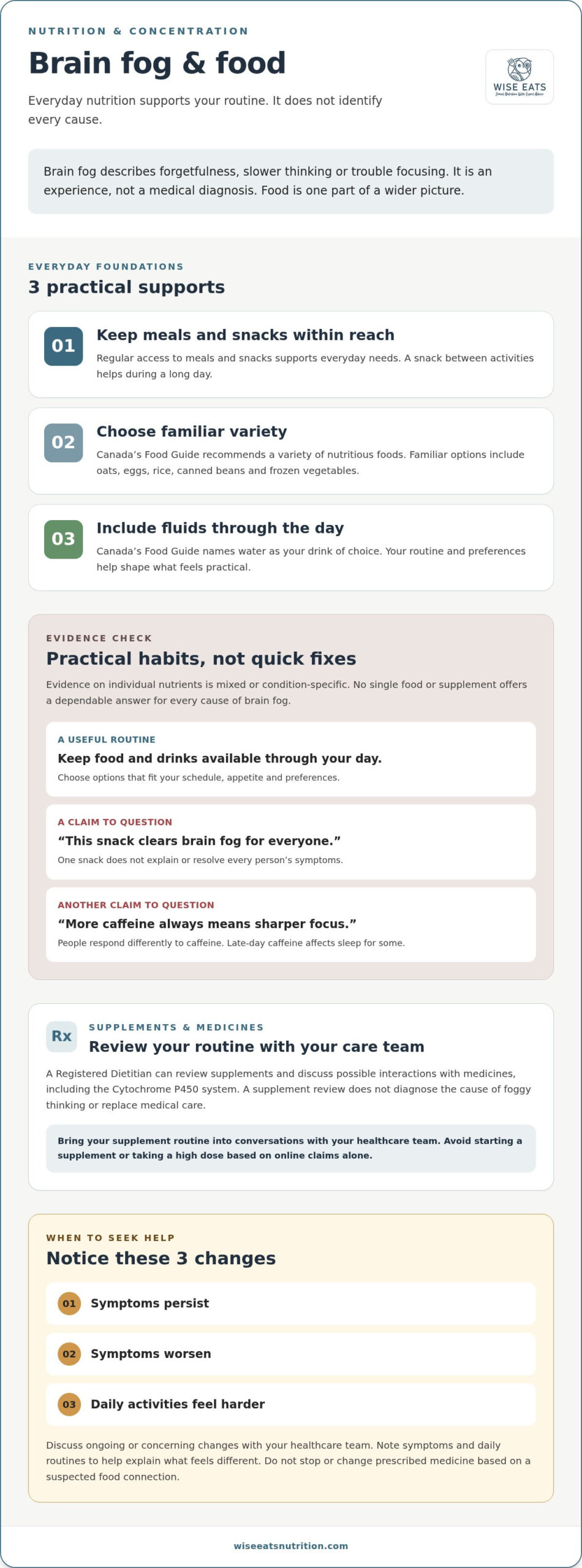
Eating patterns affect energy and concentration for some people. Going a long time without food, for instance, might leave you feeling low on energy or make it harder to focus. Regular access to meals and snacks, along with fluids through the day, supports everyday needs. These habits offer a practical starting point, not a way to confirm what’s behind your symptoms.
The question “Can Diet Help With Brain Fog” has no single answer for everyone. Food choices alone do not identify the cause, and no one food or eating plan is known to prevent or resolve every experience of foggy thinking. Evidence about specific foods and nutrients also depends on the health concern being studied. Supplements are not a substitute for finding out whether symptoms need medical assessment.
Keep the wider picture in view. A new medicine, an illness, ongoing stress or disrupted sleep might coincide with changes in concentration. Do not stop or change prescribed medicine based on a suspected food connection. If symptoms persist, worsen or interfere with daily activities, discuss them with your healthcare team. They can consider possible causes, while nutrition support focuses on your eating patterns and practical needs.
Underlying causes of brain fog and nutrition support
Brain fog can have nutritional or health-related causes that need different solutions. Anemia, including iron- or vitamin B12-deficiency anemia, may affect energy and thinking; iron- and B12-containing foods or supplements can be part of treatment when a deficiency is identified. Thyroid issues can also affect concentration, so nutrition support should reflect the diagnosis, nutrient status and prescribed treatment rather than relying on a generic thyroid diet.
Perimenopause is another life stage in which changes in concentration can occur. Regular meals, adequate protein and fibre, and nutrition strategies tailored to symptoms can support wellbeing; see our guide to nutrition for perimenopause symptoms. A dietitian can also help with nutrition for iron-deficiency anemia and other medical conditions.
Lifestyle factors matter too. Regular physical activity, sufficient sleep and stress-management practices support concentration and energy. Nutrition works best as part of this broader routine, not as a replacement for addressing the underlying cause.
Nutrition and brain fog: what evidence supports, and what remains uncertain
Research on nutrition and thinking looks at different outcomes, from short-term concentration to memory and long-term brain health. Those findings do not automatically explain brain fog, which has many possible influences. It helps to separate everyday nourishment habits from claims about a particular food or nutrient. Evidence for one health outcome does not establish that a food will prevent or ease foggy thinking.
Food patterns and concentration
Regular access to meals, a range of foods and enough fluids supports your body’s everyday needs. For example, breakfast might be toast with nut butter, or yoghurt with fruit, if those options fit your preferences and routine. A packed lunch or snack between activities helps make food available during a long day. There is no single schedule or meal combination suited to everyone.
Canada’s Food Guide recommends eating a variety of nutritious foods and making water your drink of choice. This is general guidance, not a treatment for brain fog. (Government of Canada, Canada’s Food Guide.) Research on whole dietary patterns and specific foods often examines broader health outcomes, so findings might not apply directly to concentration or your symptoms.
Instead of focusing on one “brain food,” consider whether your usual routine gives you enough chances to eat and drink. Frozen vegetables, canned beans, oats, eggs, rice or other familiar staples might make meals easier to manage. These are examples, not a prescribed plan. Food access, culture, appetite, allergies, budget and schedule all shape what’s practical.
Nutrients, supplements, and evidence limits
A nutrient gap is one possible issue for a healthcare professional to assess, but symptoms alone do not identify a deficiency. Research on individual nutrients and thinking is mixed or condition-specific. A finding in one group does not show a supplement will help everyone with brain fog. Avoid starting a supplement or taking a high dose based on online claims alone.
If you already take supplements, include them in conversations with your healthcare team. A Registered Dietitian can review your routine and discuss possible interactions, including how supplements and medicines are processed by the Cytochrome P450 system, a group of liver enzymes that metabolise many drugs and supplements. This review supports informed decisions, but it does not diagnose the cause of foggy thinking or replace medical care.
Brain fog food advice compared: useful habits versus unsupported shortcuts
Online advice often turns a complex symptom into a simple food rule. A more useful approach is to compare practical habits with claims promising a fast result. The question “Can Diet Help With Brain Fog” deserves an answer based on your overall routine, not a guarantee tied to one ingredient or supplement.
Everyday habits worth observing
For a short time, note when foggy thinking occurs alongside meal timing, fluid intake, sleep or caffeine. A few brief notes are enough. Skip detailed tracking if it feels stressful or hard to maintain. If a long stretch without food seems relevant to your routine, an easy-to-carry snack is one option. Adjust around your circumstances rather than following a strict schedule.
Coffee can temporarily increase alertness, but more is not always better. Keep track of how much and when you drink it; choosing a smaller amount or having coffee earlier in the day may help if caffeine causes restlessness or disrupts sleep. Do not use increasing caffeine to compensate for ongoing fatigue or poor sleep.
Claims that need more context
Be wary of posts promising one food, restrictive elimination diet or supplement will quickly clear brain fog. Evidence for specific foods and brain fog is mixed or indirect, and research on broader brain health does not necessarily answer this narrower question. Removing foods without professional guidance might also make eating harder or reduce variety. If symptoms seem connected to a particular food, discuss the pattern with a clinician rather than making sweeping changes on your own.
Supplement claims need the same care. A product’s ingredients or marketing language do not show whether it suits your needs. A personalized vitamin and mineral supplement review considers your routine and health context as part of nutrition decision-making.
What to try when brain fog affects your day
- Notice the pattern. Jot down when foggy thinking shows up and what was happening around then. Include meals, drinks, sleep, stress or a busy day if those details seem relevant.
- Support regular nourishment. If your day often leaves a long gap between meals, consider keeping an easy snack nearby or planning a meal break. Choose options suited to your appetite, preferences and access to food.
- Talk with a clinician if symptoms persist. Bring notes that help explain what has changed, how often it happens and how it affects daily tasks.
Nutrition is one part of managing brain fog. Prioritize regular movement, sufficient sleep and practical stress-management strategies alongside balanced meals and fluids. If symptoms persist, worsen or interfere with daily life, discuss possible causes with your healthcare team and keep taking prescribed medicines as directed.
When to Seek Help
Sudden or serious changes in thinking or movement need prompt attention. Call 911 or seek emergency medical care for sudden symptoms. Arrange an appointment with a healthcare professional for ongoing concerns.
- Sudden confusion or sudden trouble speaking.
- New weakness or sudden vision changes.
- Persistent or worsening brain fog that affects daily life.
How a Registered Dietitian supports nutrition concerns about brain fog
A Registered Dietitian helps you explore whether your eating patterns and practical circumstances deserve attention. They do not diagnose the cause of brain fog. Instead, they listen, ask about your routines and identify nutrition questions to discuss with your healthcare team. This support works alongside medical care, especially if symptoms persist or need assessment.
What nutrition support may cover
A conversation might include your usual meals and snacks, fluid intake, food preferences, work or caregiving demands, and barriers such as limited time or access to food. You might discuss whether a long gap between meals fits your schedule, or ways to make food easier to manage on a busy day. Recommendations should reflect your needs and circumstances, not rigid rules or assumptions about body size.
Depending on your goals and health needs, a dietitian might offer personalized nutrition counselling or Medical Nutrition Therapy as part of a wider care plan. They can also review supplements in light of your health history and medicines. Nutrition counselling does not replace a medical assessment, and a dietitian will not determine the medical cause of your symptoms. If your healthcare team is assessing brain fog, nutrition support can complement that care.
You decide what feels realistic to try. That might mean finding a portable snack you enjoy, keeping a drink nearby, or adjusting meal planning around your workday. Small, practical changes support nourishment without requiring you to avoid foods or follow a strict eating plan.
Getting support from Wise Eats Registered Dietitians
Wise Eats Registered Dietitians offers consultations by video, phone and in person. Rachel McBryan, RD, is licensed with the College of Health and Care Professionals of BC. Sheirry Poposka, RD, is licensed with the Alberta College of Dietitians. Wise Eats serves people in Calgary, Edmonton, Nanaimo, Parksville, Vancouver Island and Qualicum Beach, with online consultations available across British Columbia and Alberta. Learn about the Registered Dietitian team and their professional backgrounds.
If your healthcare team is looking into possible causes, bring a short record of your routines and questions about food or supplements to a nutrition appointment. A dietitian can help review those concerns without treating a symptom log as a diagnosis. If you’re asking, “Can Diet Help With Brain Fog,” the discussion can focus on what nutrition support covers and how it fits alongside medical care.
Choose a next step that feels manageable
Choose a manageable next step: make meals more regular, review supplements, improve sleep, add movement or discuss stress and possible causes with your healthcare team. A Registered Dietitian can help adapt nutrition strategies to your preferences, culture, budget and daily life.
Frequently Asked Questions
Does diet affect brain fog?
Food routines sometimes affect energy and concentration, especially if meals are missed or fluid intake is low. This does not show food is the cause of brain fog, since sleep, stress, illness and medicines also matter. Research findings vary by outcome, and studies on specific nutrients do not always examine brain fog directly. For “Can Diet Help With Brain Fog,” the answer depends on your health and circumstances.
Is there one diet for brain fog?
No single eating plan is known to prevent or ease brain fog for everyone. Choose meals and snacks you enjoy and have access to, with variety suited to your needs, culture, budget and health. Avoid removing whole food groups in response to unclear symptoms unless a clinician recommends it for a specific concern. A Registered Dietitian helps you consider practical options without imposing rigid food rules.
Does dehydration affect concentration?
Inadequate fluid intake is linked with poorer concentration in some situations, though thirst, weather, activity, illness and medicines all affect fluid needs. Sip water with meals or keep a drink nearby if it suits your day. One episode of foggy thinking does not confirm dehydration. Seek urgent medical care for sudden confusion or trouble speaking rather than assuming fluids explain a sudden change.
Does low iron or vitamin B12 cause brain fog?
Low iron or vitamin B12 can contribute to anemia, fatigue and changes in thinking when a deficiency is present. Thyroid issues and perimenopause can also affect concentration. Nutrition support may include iron- or B12-rich foods and strategies suited to thyroid health or perimenopause, but the right approach depends on assessment, your health and current medicines.
Does caffeine help with brain fog?
Coffee may temporarily improve alertness, but its effects vary. Keep caffeine earlier in the day if it affects your sleep, and avoid increasing intake to manage persistent brain fog. If caffeine causes restlessness or interacts with your health needs or medicines, discuss your intake with your healthcare team.
Do food sensitivities explain brain fog?
Foggy thinking after a meal does not confirm a food sensitivity. Symptoms can have several explanations, and broad food exclusions might affect eating variety or make meals harder to manage. If you notice a repeated pattern, write down what happened and discuss it with a healthcare professional. They can assess your concern and consider whether a specific medical evaluation is appropriate before you change your usual eating habits.
How long does nutrition-related brain fog last?
There’s no set timeline, because symptoms and their causes vary. A change in meals or fluid intake will not explain every case, and persistent foggy thinking deserves a broader health assessment. Contact a healthcare professional if symptoms continue, worsen or interfere with daily activities. In Calgary, Edmonton, Nanaimo, Parksville, Vancouver Island and Qualicum Beach, bring your concerns to your local care team and ask what follow-up fits your situation.

Article by
Rachel McBryan, Dietitian
Rachel McBryan is a licenced Dietitian in British Columbia offering comprehensive nutrition counselling as virtual and/or in-person counselling sessions to suit your needs and preferences. With a Bachelor of Science in Nutrition and Food Science, Rachel has over 20 years experience helping people address their health through nutrition. She was awarded Human Nutrition and Food Science BSc.from University of Alberta followed by post-grad course work at UBC in guidance counselling.
An eating disorder is a serious mental health illness.
If you are in immediate distress or crisis, please contact emergency services by dialing 911 or calling Vancouver Island Crisis Line: 1-888-494-3888.