
Balanced eating for older adults means choosing a variety of foods to meet energy and nutrient needs, drinking fluids regularly, and adapting meals to appetite, chewing, swallowing and health needs. Nutrition for Seniors is about nourishing choices and routines that fit daily life, not strict food rules. Your needs and preferences deserve consideration at every meal.
Eating well can feel harder when your appetite changes, groceries are difficult to manage, or cooking takes more effort. Chewing concerns, changes in taste and eating alone can also affect your routine. These challenges are real, and practical adjustments often start with identifying what gets in the way. You don’t need to make every change at once.
This guide covers balanced nutrition, practical meal planning and safe food handling. You’ll find ways to include vegetables, fruit, whole grains and protein foods, along with options for adapting meals to chewing needs. It also explores appetite changes, shared meals and signs that support could help. For older adults in Calgary, Edmonton and communities across Vancouver Island, the aim is clear, practical guidance for everyday eating and informed conversations with your care team.
Key Takeaways
- Build meals around a mix of nourishing foods, and add snacks when regular meals aren’t enough.
- Plan meals that suit your appetite, chewing needs and daily routine, then store and handle food safely.
- Include different vegetables, fruit, whole grains and protein foods across your meals.
- Small meals, shared meals and easier-to-prepare options can help when appetite or cooking feels difficult.
- Notice changes in eating habits and seek nutrition support when food choices, supplements or meal planning feel hard to manage.
What is nutrition and why is it important for older adults?
Nutrition includes the foods and fluids your body needs for energy and health. Nutrition for Seniors means choosing a variety of nourishing foods while considering appetite, health and daily routines.
For a short overview of food and healthy aging, watch this video from Alliance for Aging Research:
Benefits of healthy eating with age
Healthy eating means choosing a variety of foods that provide nutrients your body needs. Regular meals with protein foods, vegetables, fruit and whole grains provide energy and support health and independence. Getting enough nutrients also helps maintain muscles and bones. If meals feel too large, add a snack such as yogurt with fruit or toast with nut butter. Olive oil provides unsaturated fats for cooking.
Nutrient and calorie needs
Adults over 65 need enough protein, vitamins, minerals and other nutrients, even if calorie needs decrease with age. Adults aged 19 to 64 need 0.8 grams of protein per kilogram of body weight, but protein requirements increase for older adults to 1.0 g/kg. Daily calorie needs depend on body size, activity, appetite and health. Nutrition for Seniors also considers whether everyday meals provide enough nutrients without rigid rules.
Calcium, vitamin D and hydration
Calcium supports bones, and daily calcium needs increase to 1200 mg at age 50 for women and men. Some older adults may need a vitamin D supplement; ask a health care provider whether one is appropriate. Thirst often declines with age, so drink fluids regularly, even without feeling thirsty. Daily fluid needs vary with health and activity. Follow fluid limits set for kidney, heart or liver disease.
Nutrition advice for health conditions
Nutrition guidance depends on your health conditions, medicines and eating habits. Diabetes care often involves meal timing and carbohydrate choices. Heart disease plans often consider sodium and saturated fat. Kidney disease can change fluid and mineral needs, while osteoporosis care includes calcium and vitamin D. Before changing your eating routine, tell your care team about your usual meals, supplements and current care plan.
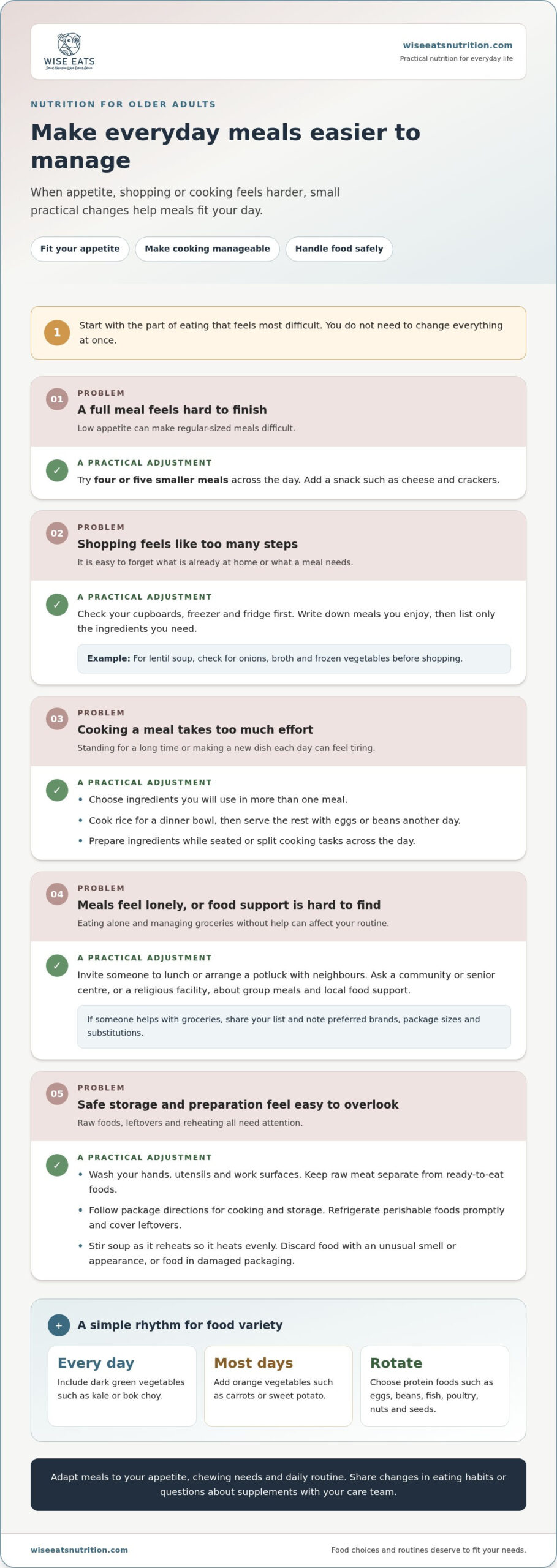
A low appetite makes full meals hard to finish. Try four or five smaller meals throughout the day, with snacks such as cheese and crackers. For healthy fats, include walnuts, flaxseed or fatty fish. Omega‑3 fatty acids are found in these foods. Adults over 50 sometimes have difficulty absorbing vitamin B12. Eggs, meat, fish, poultry and fortified breakfast cereal provide food sources.
Medicines and supplements can affect appetite, taste, digestion or nutrient absorption. Some may also interact with foods or prescriptions. Bring a current list of medicines, vitamins and supplements to appointments. Ask your care team to review it and discuss possible interactions before changing a supplement or eating pattern.
Meal planning, food safety and nutrition assistance
A meal plan works best when it reflects your schedule, appetite and kitchen setup. Before shopping, check your cupboards, freezer and fridge. Write down meals you already enjoy, then list only the ingredients you need. For example, a lentil soup plan might use onions, broth and frozen vegetables you already have. A focused list helps you shop efficiently and avoid forgetting ingredients.
When cooking one or two portions, choose ingredients you can use in more than one meal. Cook rice for a dinner bowl, then serve the rest with eggs or beans another day. Wash and portion produce soon after shopping if that makes it easier to use. Keep frequently used items within reach, and choose containers with lids you can open comfortably.
Food safety starts with clean hands, utensils and work surfaces. Keep raw meat separate from ready-to-eat foods, and follow package directions for cooking and storage. Refrigerate perishable foods promptly, and cover leftovers before storing them. When reheating, stir foods such as soup so they heat evenly. Discard food with an unusual smell or appearance, or food in damaged packaging.
A relative, friend or caregiver might be able to help with groceries. Share your list before the trip, noting preferred brands, package sizes and substitutions. If standing for a long time feels tiring, prepare ingredients while seated or divide cooking tasks across the day. A neighbour might carry groceries while you wash vegetables or portion ingredients for later meals.
For company at meals, invite someone to share lunch or arrange a potluck with neighbours. Community and senior centres, along with religious facilities, are places to ask about group meals or local food support. Services vary by community, so describe the help you need, such as grocery access, meal delivery or a shared table.
Dietitians of Canada created a sample weekly meal planner. Use it as a starting point, then adapt dishes to your preferences, appetite and kitchen routine. A written plan can also help a caregiver coordinate shopping and meal preparation. Read packaged food labels to compare ingredients and nutrition information. Keep a short list of products you buy often, then discuss questions with a health care provider or Registered Dietitian.
If digestive symptoms make meal planning difficult, book nutrition support to discuss food choices for your routine.
Variety of vegetables, fruit, whole grains and protein foods
A varied eating pattern includes choices from different food groups and within each group. Small swaps throughout the week can keep meals interesting and nourishing.
Choosing a variety of foods
Variety means eating different vegetables, fruits, whole grains and protein foods. Canada’s food guide recommends dark green vegetables, such as kale and bok choy, every day. Choose orange vegetables, including carrots and sweet potato, most days. Add brown rice, oatmeal or whole-grain bread, and rotate protein foods such as eggs, beans, fish, poultry, nuts and seeds.
Protein foods can be included at meals and snacks. Add cooked beans to soup, top oatmeal with nuts, or serve eggs with whole-grain toast. Choose fruit in different forms, such as fresh berries, canned peaches or sliced apples. Frozen vegetables and fruit offer more options when fresh produce is hard to store or prepare.
Selecting nutrient-dense options
Nutrient-dense foods provide vitamins, minerals and other nutrients in each serving. Try lentils, vegetables, fruit, whole grains, fish, eggs and fortified alternatives. Canada’s food guide recommends choosing foods with little to no added sodium, sugars or saturated fat. Compare labels on packaged soups, cereals and sauces, then choose options that suit your preferences and health needs.
Small changes add variety without replacing familiar meals. Stir spinach into pasta sauce, add grated carrots to a sandwich, or serve fruit with breakfast. Choose olive or canola oil for cooking, as these oils provide unsaturated fats. Rinse canned beans or vegetables under water to reduce some surface salt.
Chewing difficulties may call for changes to food texture and preparation. Choose soft-cooked vegetables, canned fruit or ripe bananas. Chop or shred meat, poultry and fish into small pieces. Add sauce or gravy to keep these foods moist and easier to chew and swallow. If swallowing remains difficult, speak with a health care provider.
On days when your appetite is low, combine familiar foods in smaller portions. A bowl of oatmeal with fruit and nuts, or yogurt with soft fruit, brings several food groups together. Keep easy-to-see, easy-to-reach options nearby, such as washed grapes or portioned cheese. Ask anyone who helps with meals to note which textures and flavours you enjoy.
Use colour, texture and flavour to make food appealing, especially when smell or taste changes. Add herbs to soup, pair soft sweet potato with eggs, or serve tender fish with cooked greens. Keep preferred foods in rotation, and introduce one new item alongside a familiar dish.
What can I do if I am having trouble eating healthy?
Changes in appetite, chewing, swallowing or cooking can make regular meals harder. Identify what is causing difficulty, then choose a practical adjustment that fits your day.
Age-related changes in appetite
Age-related changes can affect thirst, taste, smell and interest in food. A meal that once appealed might feel less inviting when its flavour or smell seems muted. Add colour with berries, carrots or leafy greens, and try herbs for more flavour. If chewing feels tiring, softer foods such as oatmeal, eggs or cooked vegetables may be easier to eat.
Illness can also make shopping, cooking or feeding yourself more difficult. Ask your care team about an occupational therapist if daily meal tasks become challenging. A dentist can assess chewing problems, and a health care provider can help address swallowing concerns.
Managing poor appetite with smaller meals
A large plate can feel overwhelming when your appetite is low. Try having smaller meals throughout the day instead of one or two large ones. For example, have yogurt with fruit in the morning, then soup with beans later. Keep a snack within reach, such as cheese and whole-grain crackers.
Choose foods that provide nourishment in a manageable amount. Add nut butter to toast, grated cheese to soup, or milk to oatmeal. If a few bites feel easier than a full serving, divide familiar foods into smaller portions and return to them later.
Causes and risks of unintended weight loss
Poor appetite and unintended weight loss can follow low food intake, illness, difficulty chewing or swallowing, or trouble shopping and preparing meals. Eating too little can lead to malnutrition, when inadequate food or nutrient intake affects health. Frailty is also linked with high rates of poor nutrition among older adults.
Low intake can make it harder to maintain muscle and bone. Losing muscle and bone can raise the risk of falls or broken bones. Tell your health care provider about ongoing appetite changes, unplanned weight loss or meals you often leave unfinished. If swallowing trouble continues despite drinking liquids with meals, contact a provider.
Movement and company can support eating routines. A walk suited to your abilities, such as a short trip around the block, may help you feel hungrier. Invite a friend for lunch, share a potluck meal, or eat at a nearby community or senior centre. If eating alone feels discouraging, schedule a shared meal into your week.
Eating habits and reasons for nutrition support
Eating habits can offer clues about what makes meals difficult. A missed breakfast, smaller portions or fewer protein foods might reflect appetite changes, illness, chewing trouble, or barriers to shopping and cooking. Notice what happens across several meals. A brief record of foods, appetite and symptoms gives you concrete details to discuss with your care team.
Support can help when your daily routine changes. Arthritis pain, for example, might make opening jars difficult, or fatigue might leave little energy for cooking. A friend could help prepare ingredients, and a health care provider could discuss tools or other support. If eating alone reduces your interest in meals, plan a shared lunch or community meal.
Health changes can also affect food choices. Diabetes, digestive disease, heart conditions and kidney disease each bring different nutrition needs. A Registered Dietitian can help connect your health goals, usual foods, preferences and care plan. Bring a list of medicines, supplements, meals that feel manageable, and foods causing difficulty. This gives the conversation practical detail.
Ask for help if you notice ongoing unintended weight loss, repeated difficulty eating, or growing concern about food. Tell your care team if chewing or swallowing problems persist, meals regularly go unfinished, or eating starts to feel isolating. Changes in eating patterns deserve attention without blame. They provide a starting point for finding support that fits your circumstances.
A caregiver and older adult can complete the Self-Mini Nutritional Assessment (Self-MNA®) questionnaire to help recognize malnutrition. Treat it as a prompt for conversation, not a diagnosis. Share the results and recent meal changes with a health care provider. If eating concerns connect with distress, restrictive patterns, binge eating or compensatory behaviours, discuss them with your care team.
Make the next step specific. Write down one concern, such as low appetite at dinner or trouble preparing lunch, and bring it to an appointment. A dietitian can help review eating habits and identify practical changes. Your care team can also consider medical, dental, mobility or social factors that influence meals. The right support depends on what is getting in the way.
On Vancouver Island, a nearby community centre or trusted support person might help with shared meals or grocery routines. If a health condition or ongoing eating concern calls for nutrition guidance, speak with a dietitian.
Wise Eats Registered Dietitians: Custom Meal Planning
Wise Eats Registered Dietitians offers Custom Meal Planning for older adults who want meals shaped around their preferences, appetite, cooking routine and nutrition needs. A Registered Dietitian can help adapt familiar meals, such as softening vegetables or choosing protein foods that suit your chewing comfort. If you have questions about vitamins or minerals, Personalized Vitamin and Mineral Supplements can be discussed alongside guidance from your care team.
Consider nutrition support if meal planning feels difficult, your eating habits have changed, or a health condition affects food choices. Support may also suit people working on Weight Management or Eating Disorder Recovery. It’s an opportunity to discuss your concerns and practical next steps without judgement.
Contact Wise Eats Registered Dietitians to discuss nutrition support for your needs.
Choose a next step that fits your life
Your eating routine belongs to your life, preferences and changing needs. A useful plan leaves room for cultural foods, familiar flavours, shared meals and days when energy is low. You deserve nutrition guidance that respects your experience and avoids rigid rules.
Before changing several habits, choose one area you would like to make easier. Perhaps you want more confidence with food choices, help adapting meals to a health concern, or support discussing supplements with your care team. Share your priorities, food traditions and daily routines during a nutrition visit.
Nutrition for Seniors is personal because appetite, health, mobility and support needs differ. Your goals may shift over time. Returning to the plan with your care team helps keep decisions connected to what matters in your everyday life.
A thoughtful conversation is a worthwhile place to begin. You deserve support with your questions and room to choose a next step at your own pace.
Frequently Asked Questions
First things first, what does nutritional balance mean?
Nutritional balance means eating different foods throughout the day to meet your body’s needs. A meal might pair oatmeal with milk and fruit, or combine beans, rice and cooked vegetables. Across meals, include protein foods, whole grains, vegetables and fruit. The mix can change with appetite, culture, budget and health needs. No single meal has to contain every nutrient.
What can make it harder for me to eat healthy as I age?
Changes in taste or smell, dental discomfort, illness, low appetite, or trouble shopping and preparing meals can affect eating. A changed routine, such as moving or losing a meal companion, can also disrupt familiar habits. Briefly note what gets in the way, such as difficulty opening packages or food tasting different. Share those details with your care team to discuss practical support.
How much protein should seniors eat daily to maintain muscle and strength?
Protein requirements increase for older adults to 1.0 grams of protein per kilogram of body weight daily, compared with 0.8 g/kg for younger adults. Spreading protein across meals and snacks helps. Protein foods include eggs, yogurt, fish, poultry, tofu, beans, nuts and seeds. If you have kidney disease or concerns about strength or weight changes, discuss your protein needs with your care team.
What affordable, nutrient-dense foods are recommended for older adults in Canada?
Budget-friendly options include oatmeal, dried or canned beans, eggs, canned fish, carrots, canned fruit and plain yogurt. These foods work in simple meals: add beans to soup, top oatmeal with fruit, or serve eggs with toast. Compare labels on packaged foods, and plan meals around ingredients you already have. Frozen vegetables and fruit are also convenient when fresh produce is difficult to store.
How can seniors with chewing, swallowing, or digestive problems adapt their meals safely?
If chewing is difficult, choose soft-cooked vegetables or canned produce, and chop or shred meat, poultry and fish. Add sauce or gravy to keep foods moist. If swallowing trouble continues despite drinking liquids with meals, contact a health care provider. For digestive symptoms, note which foods and meal patterns seem connected, then discuss your observations with your care team before making major changes.
What Canadian nutrition programs, food benefits, and meal services are available to seniors?
Options depend on the community. On Vancouver Island, ask a local senior or community centre, or a religious facility, about shared meals, potlucks and food support. In Nanaimo, Parksville or Qualicum Beach, ask about local meal delivery, grocery help or food benefits, and how to apply. A health care provider or social worker can help identify relevant local support.
Which medications and supplements can affect nutrition or interact with foods in older adults?
Some medicines and supplements can affect appetite, taste, digestion or nutrient absorption, and some can interact with foods or prescriptions. Bring a current list to appointments and ask your care team to review it.

Article by
Rachel McBryan, Dietitian
Rachel McBryan is a licenced Dietitian in British Columbia offering comprehensive nutrition counselling as virtual and/or in-person counselling sessions to suit your needs and preferences. With a Bachelor of Science in Nutrition and Food Science, Rachel has over 20 years experience helping people address their health through nutrition. She was awarded Human Nutrition and Food Science BSc.from University of Alberta followed by post-grad course work at UBC in guidance counselling.
An eating disorder is a serious mental health illness.
If you are in immediate distress or crisis, please contact emergency services by dialing 911 or calling Vancouver Island Crisis Line: 1-888-494-3888.