Insulin does more than affect a blood glucose reading. These insulin and metabolism tips start with its role: insulin helps move glucose from the blood into cells, lowering blood glucose and helping the body use or store glucose.
For readers in Calgary, Edmonton, Vancouver, Nanaimo, Parksville, Qualicum Beach, and elsewhere on Vancouver Island, advice about meals, cinnamon, and exercise may feel unclear. Responses to food and activity vary, so one tip won’t suit everyone.
Learn how everyday activity and meal planning relate to insulin and metabolism, what cinnamon may contribute, and why exercise planning matters for people using insulin. The aim is practical, weight-inclusive guidance to discuss with your care team, without rigid food rules or changing medication on your own.
Supporting Your Blood Sugar and Insulin Care
- Understand how insulin moves glucose from your blood into cells and why dose changes belong in a conversation with your care team.
- See how everyday movement and time spent sitting relate to blood sugar, and explore realistic ways to add activity.
- Use flexible meal-planning ideas that support nourishment, and learn why responses to meals differ from person to person.
- Get a clear view of the mixed evidence on cinnamon and insulin sensitivity before treating it as a solution.
- Recognize when repeated low blood glucose or difficulty managing insulin calls for support from your care team or a Registered Dietitian.
1. Does insulin lower or raise blood sugar?
Insulin helps move glucose from your blood into cells, lowering blood glucose. Your body uses glucose for energy or stores it as glycogen in the liver and muscles, or as body fat. Insulin supports blood glucose regulation, with effects shaped by dose, timing, food, activity, and your individual response.
A dose that exceeds your needs raises the risk of hypoglycemia, or low blood glucose. Food intake, illness, and physical activity all affect insulin needs. Discuss repeated low readings with your care team. Don’t change or skip prescribed insulin without their guidance.
Insulin also relates to weight through its role in storing energy, but weight reflects many factors. Higher insulin levels are associated with greater energy storage and growth of muscle and fat tissue. A person’s weight does not reflect effort or insulin dose alone.
Sleep deprivation raises cortisol and is associated with insulin resistance, affecting how your body responds to insulin. Ongoing stress can also reduce insulin sensitivity over time. Discuss sleep and stress with your care team alongside blood glucose patterns.
In Canada, clinicians assess diabetes and prediabetes using blood glucose tests and health information. Symptoms alone don’t identify insulin resistance. Your care provider reviews test results and other factors as part of an assessment.
Review supplements marketed for blood sugar carefully if you use insulin or other diabetes medication. Fasting changes meal timing and can affect glucose management for people taking insulin. Discuss supplements or fasting with your care team, and don’t replace prescribed treatment.
Follow your care team’s instructions for checking blood sugar around exercise. Activity affects glucose for hours and into the next day. Record readings and activity as directed. A 2021 review found apple cider vinegar lowered fasting blood sugar and HbA1C, but did not appear to affect fasting insulin or insulin resistance.
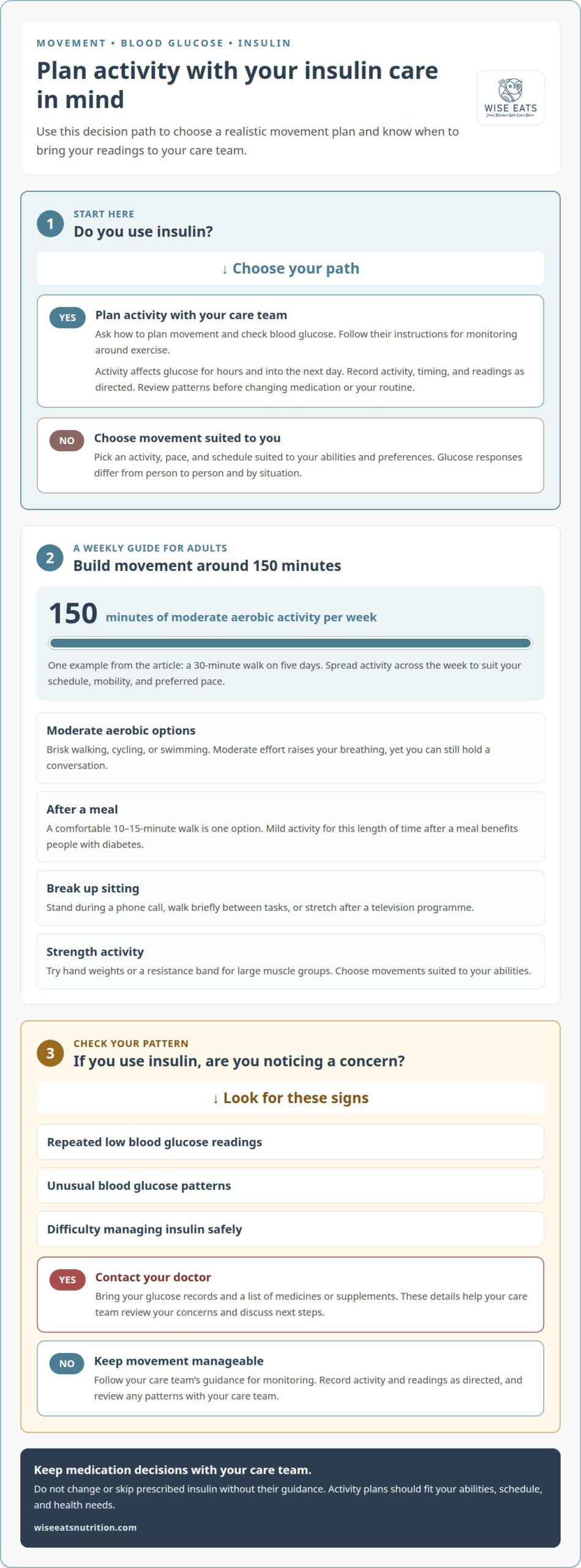
Contact your doctor about repeated low readings, unusual blood glucose patterns, or difficulty managing insulin safely. Bring glucose records and a list of medicines or supplements. These details help your care team assess your concerns and discuss next steps.
2. Physical activity and sedentary time
For adults, a weekly goal of 150 minutes of moderate aerobic activity offers a practical starting point. Brisk walking, cycling, and swimming count. Moderate effort raises your breathing, yet conversation remains possible. Spread activity across the week to suit your schedule, mobility, and preferred pace.
A short walk after eating offers another option. Mild activity for 10 to 15 minutes after a meal benefits people with diabetes. Try a comfortable stroll after lunch or walk partway to an errand. Choose a route and pace suited to your current abilities.
One example is a 30-minute walk on five days, reaching 150 minutes for the week. Cycling or swimming also counts as aerobic activity. Regular movement relates to insulin sensitivity, though glucose responses differ by person and situation. Track how different activities fit your routine.
Long periods of sitting leave fewer opportunities to move. Stand during a phone call, walk briefly between tasks, or stretch after a television programme. These small changes break up sitting without a gym visit or long workout. Adapt them to your comfort.
Strength activities work large muscle groups. Try lifting hand weights at home or using a resistance band. Strength training is associated with changes in insulin sensitivity soon after activity and over time. Choose movements suited to your abilities, and discuss exercise concerns with your care team.
If you use insulin, ask your care team how to plan activity and monitor blood glucose. Exercise sometimes affects glucose for hours and into the next day. Keep a record of activity, timing, and readings as directed. Review patterns with your care team before changing medication or your routine.
If meal timing and movement feel hard to coordinate, book a nutrition appointment to discuss your food routines and health needs.
3. Calorie intake and meal planning
Meal planning for diabetes focuses on nourishment and blood glucose patterns rather than calorie counting. Your body uses glucose for energy, and insulin helps regulate its movement from the blood into cells. A meal plan should suit your daily routine, preferences, health needs, and access to food. For practical insulin and metabolism tips, start with meals you enjoy and prepare regularly.
Build a flexible plate with vegetables, a protein food, and a carbohydrate food. For example, pair roasted vegetables and chicken with potatoes, or add beans and rice to a vegetable stew. These are starting points, not fixed portions or rules for every meal. Choose foods suited to your appetite, budget, culture, and access.
Carbohydrate-containing foods affect blood glucose, but the size and timing of the response vary by meal and person. Oatmeal with milk and berries, for example, affects your readings differently from toast eaten on its own. Note how meals fit your routine, then discuss recurring patterns with your care team. These insulin and metabolism tips encourage curiosity about your own patterns, not judgement about food.
Meal timing matters for people who use insulin or other glucose-lowering medication. Meal timing varies from person to person, so choose a routine suited to your needs and discuss it with your care team. Your medication, appetite, work schedule, and activity all help shape a suitable routine. Don’t skip meals or change medication to follow a general meal plan.
Fasting plans set eating and fasting hours within a 24-hour period. A long gap without food complicates blood glucose management for people using insulin. Talk with your care team before trying a fasting routine, especially if you’ve had low readings or changing meal patterns. Meal plans should support health and meet your nutrition needs within your lifestyle.
A nourishing meal pattern also provides muscles and other tissues with nutrients they need. Include foods you enjoy, such as lentil soup with whole-grain bread or salmon with potatoes and vegetables. A Registered Dietitian can tailor meal planning to your preferences and daily life, without making calorie targets the focus.
4. Cinnamon and insulin sensitivity
Cinnamon adds flavour to foods such as oatmeal, yoghurt, or stewed apples. It is a spice, not a form of insulin or a diabetes treatment. Research on cinnamon supplements and insulin sensitivity remains mixed, so cinnamon should not replace prescribed medication or established care.
There isn’t a single amount of cinnamon to recommend for improving insulin sensitivity. A sprinkle in breakfast or baking is a food choice, not a measured treatment dose. Concentrated supplements differ from culinary use, so discuss a cinnamon product with your care team if you take glucose-lowering medication.
To support metabolic health, build meals around varied, nourishing options. Beans, lentils, whole grains, vegetables, nuts, and seeds provide fibre and other nutrients. For example, add lentils to soup or choose whole-grain toast with eggs. No single food guarantees a particular blood glucose response.
Practical steps focus on regular habits rather than a cinnamon cure. Include fibre-rich foods in meals, add movement that suits your abilities, and keep a steady sleep routine. If you use insulin, discuss major changes to eating or activity with your care team, since these affect glucose patterns.
Pay attention to how you feel and to any glucose readings you already track. A meal with oatmeal and cinnamon still contains carbohydrates, and cinnamon does not cancel their effect. Your response depends on the full meal, medication, timing, and individual health needs.
If you’re considering a cinnamon supplement, write down the product name and ingredients before discussing it with your care team. This helps them review it alongside your medicines and health conditions. Don’t reduce or stop prescribed treatment to make room for a supplement.
Food choices that support metabolic health need to suit your culture, budget, appetite, and routine. A bowl of bean chilli or a side of vegetables offers a practical starting point. Treat cinnamon as an optional flavour, not a shortcut or substitute for ongoing diabetes care.
5. Insulin adjustments around exercise
Exercise and insulin affect blood glucose in connected ways. Physical activity changes glucose levels for hours, sometimes into the next day. The direction and timing vary with the activity, your insulin plan, meals, and health condition. A routine walk and a longer workout call for different planning.
Don’t adjust an insulin dose on your own to prevent a low or high reading. Ask your diabetes care team for a plan based on your insulin type, activity, eating schedule, and glucose patterns. The plan should explain what to monitor and what steps to take if readings move outside your target range.
Before starting a new activity, note its type, duration, and timing alongside your usual meals and insulin. Follow your care team’s instructions for checking blood glucose before, during, and after exercise. If you use a glucose monitor, review its readings with your care team when discussing an exercise plan.
A brisk walk before a meal involves different considerations from activity after eating. Walking before a meal, when mealtime insulin isn’t active, is linked with improved insulin sensitivity and a lower risk of hypoglycemia. Your own insulin timing matters, so don’t use this as a reason to shift a dose without clinical guidance.
Automated insulin delivery systems adjust insulin delivery in response to glucose readings, but users sometimes need to make manual changes for meals and physical activity. If you use one, follow its instructions and your care team’s guidance. Record how activity and eating relate to readings, including delayed changes later that day.
Follow your agreed plan for treating low blood glucose during exercise. Keep the supplies recommended by your care team nearby, and tell an exercise partner what to do if you need help. Repeated lows, unexpected highs, or uncertainty about dose changes are reasons to contact your diabetes care team before your next workout.
Exercise should suit your abilities and daily routine. Start with an activity you already know, such as a familiar walk, and track your glucose response as directed. Share that record with your care team before increasing duration or intensity, so any insulin adjustments reflect your actual pattern.
When to Seek Help
Blood glucose patterns change with meals, activity, illness, sleep, and insulin timing. Contact your diabetes care team if you’re worried about your readings or unsure how to manage your treatment safely. You deserve support before a pattern becomes harder to manage.
Contact your care team if you notice any of these concerns:
- Repeated low blood glucose: Share when the readings happen, such as after exercise, overnight, or when a meal is delayed.
- Physical symptoms alongside unusual readings: Describe what you feel and note the related blood glucose reading, meal, activity, and insulin timing.
- Difficulty managing insulin safely: Ask for help if doses, eating routines, or exercise plans feel hard to coordinate, or you’re unsure what to do after a missed meal.
A brief record helps make your discussion more useful. Note the time of a reading, the insulin you took as prescribed, recent food, activity, and symptoms. Bring your glucose monitor or written notes to your appointment, and list any recent changes in routine or medicines.
Don’t change, skip, or reduce prescribed insulin without guidance from your care team. If a new exercise routine or eating schedule seems connected to repeated lows, contact them to review your plan. Automated insulin delivery systems may still need manual input for meals and activity, so share any concerns about how yours is working.
Blood glucose concerns often feel stressful, especially when readings seem unpredictable. You don’t need to manage repeated symptoms or uncertainty about dosing alone. A doctor or diabetes care team is able to review your readings, symptoms, medication routine, and daily schedule, then discuss appropriate next steps with you.
If food choices or eating patterns feel difficult to manage alongside diabetes care, tell your care team. They’re able to connect nutrition concerns with your overall treatment plan and discuss support suited to your needs.
Wise Eats Registered Dietitians
Wise Eats Registered Dietitians connect food choices and daily routines with the insulin and metabolism questions covered here. A Registered Dietitian provides nutrition support and works alongside your medical care team. For insulin dose changes, low blood glucose, or medication concerns, contact your doctor or diabetes care team.
Support includes Custom Meal Planning that fits your preferences, schedule, and nutrition needs. Personalized Vitamin and Mineral Supplements include a review of your current supplement routine. Weight Management and Eating Disorder Recovery support can focus on health behaviours and a respectful relationship with food, without rigid rules.
Each meal planning session includes a one-month EATLOVE app subscription. Phone calls are available for check-ins.
Between sessions, email and messenger support are available. Wise Eats offers a sliding scale, so discuss this option with Rachel if session costs are a concern. Extended health coverage varies by plan, so review your policy for dietitian services.
If you’re considering a supplement while managing diabetes, bring the product details to a food and supplement follow-up. A dietitian reviews the ingredients and your current routine, then helps you discuss relevant concerns with your care team.
For support with insulin-related meal planning, changing eating routines, or food-related stress, a Registered Dietitian supports you in identifying practical next steps. Medical decisions and insulin adjustments remain part of your care team’s role.
Contact Wise Eats Registered Dietitians
Choose a Next Step That Fits Your Life
Your next step doesn’t need to involve changing everything at once. Choose one routine to observe, such as how meals fit around activity, and note questions as they arise. Bring them to your diabetes care team before changing prescribed medication or insulin.
Use these insulin and metabolism tips as a starting point for a plan shaped around your needs, preferences, and daily routine. A Registered Dietitian helps connect nutrition goals with practical choices, while your medical team guides clinical decisions. No single food, supplement, or exercise adjustment defines progress. Your observations and lived experience deserve a place in care conversations.
A useful question for your next appointment is which change deserves attention first, and how you’ll know whether it fits your daily life. Keep the process flexible. Your schedule, health needs, and routines change, so revisit your plan with your care team as needed.
You deserve support that respects your needs and helps you take the next step at your own pace.
Frequently Asked Questions
What is insulin?
Insulin is a hormone made by the pancreas. It helps your body move glucose from the bloodstream into cells for energy, then store some glucose for later use. Think of insulin as part of the body’s normal response to food, not a measure of personal effort or health habits. A blood glucose reading shows glucose levels, not insulin levels.
Does drinking a lot of water lower insulin?
Drinking water supports hydration, but extra water is not an insulin-lowering treatment. It doesn’t replace prescribed diabetes medication, meals, or guidance from your care team. If you feel unusually thirsty or notice changes in urination alongside concerning glucose readings, record what’s happening and contact your healthcare provider. Follow any fluid advice you’ve received for a health condition.
Does insulin lower or raise blood sugar?
Insulin lowers blood sugar by helping glucose move from the bloodstream into cells. The effect depends on how much insulin is active compared with your body’s needs. For example, a prescribed dose combined with a delayed meal or unexpected activity might contribute to low blood glucose. Follow your treatment plan, and contact your care team about recurring lows or confusing readings.
What conditions involve issues with insulin?
Diabetes and prediabetes involve concerns with blood glucose regulation and insulin. With insulin resistance, the body responds less effectively to insulin and might produce more insulin to keep glucose levels within range. Prediabetes refers to blood glucose levels above the usual range but below the diabetes range. A healthcare provider uses blood tests and your health history to assess these concerns.
How does insulin regulate blood sugar and metabolism?
After glucose enters your bloodstream, insulin helps cells take it up for energy. The body also stores glucose as glycogen in the liver and muscles, or stores energy as body fat. This process links insulin with metabolism, which describes how the body uses and stores energy. Food, activity, and the amount of active insulin all affect glucose patterns.
How do exercise and physical activity affect insulin sensitivity?
During movement, muscles use glucose for energy. Regular aerobic activity and strength exercises are associated with insulin sensitivity, or how well the body responds to insulin. A walk, cycling, or a resistance-band session offers different ways to move. If you use insulin, note how an activity fits with meals and your glucose readings, then discuss recurring patterns with your care team.
What are the symptoms and risk factors of insulin resistance?
Fatigue after meals or after a high-carbohydrate meal sometimes occurs, but symptoms alone do not confirm insulin resistance. Sleep deprivation and ongoing stress are associated with reduced insulin sensitivity. If you notice persistent symptoms or have concerns about blood glucose, speak with your healthcare provider. Your provider is able to assess your health history and arrange appropriate testing rather than relying on symptoms alone.

Article by
Rachel McBryan, Dietitian
Rachel McBryan is a licenced Dietitian in British Columbia offering comprehensive nutrition counselling as virtual and/or in-person counselling sessions to suit your needs and preferences. With a Bachelor of Science in Nutrition and Food Science, Rachel has over 20 years experience helping people address their health through nutrition. She was awarded Human Nutrition and Food Science BSc.from University of Alberta followed by post-grad course work at UBC in guidance counselling.
An eating disorder is a serious mental health illness.
If you are in immediate distress or crisis, please contact emergency services by dialing 911 or calling Vancouver Island Crisis Line: 1-888-494-3888.