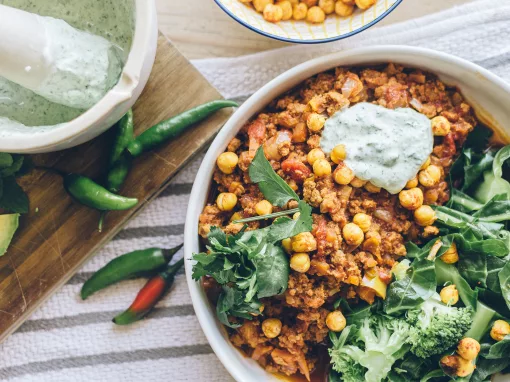
You don’t need to give up flavour to reduce saturated fat. Learning how to reduce saturated fat starts with swapping some foods high in saturated fat for options such as nuts, seeds, fish, or plant oils. Some health guidelines suggest keeping saturated fat below 10% of daily calories. For a 2,000-calorie diet, that equals 22 grams per day.
Changing what you buy, cook, or order can feel like a lot, especially when you want meals to stay satisfying. Small, practical swaps are a good place to start, without making favourite foods off-limits.
This guide covers food choices, Canadian nutrition labels, cooking, restaurant orders, and recommended limits. Whether you live in Calgary, Edmonton, Nanaimo, Parksville, Vancouver Island, or Qualicum Beach, these ideas can help you make choices that suit your meals and preferences.
Key Takeaways
- Choose lower-fat foods that still suit your tastes, such as lean ground beef listed by HealthLink BC at 97% lean.
- Compare saturated fat on nutrition labels instead of relying on front-of-package claims alone.
- Try steaming, grilling, or broiling to prepare meals with little or no added fat.
- At restaurants, ask for sauces and dressings on the side, and consider tomato sauce with pasta.
- Some guidelines suggest keeping saturated fat below 10% of daily calories. For a 2,000-calorie diet, that equals 22 grams per day.
1. Should you choose low-fat or fat-free foods?
Low-fat and fat-free foods are options, not requirements for every meal. Start with one change to a dish you already enjoy. For example, add lentils to a chilli that usually includes fatty meat, while keeping the familiar spices and toppings. Learning how to reduce saturated fat can begin with a small swap that suits your taste and routine.
To replace butter, try olive or canola oil in cooking, or spread avocado on toast. Nuts, seeds, fish, and plant oils provide unsaturated fats. Beans and lentils work well in soups, stews, tacos, and pasta sauces. Add garlic, herbs, spices, or citrus for flavour, or replace some of the meat in a familiar recipe with beans.
Lean protein options include fish, skinless poultry, beans, lentils, tofu, and lean cuts of meat. HealthLink BC lists lean ground beef that is 97% lean as a healthier protein choice. Compare the lean-to-fat information on beef packages. Before cooking, trim visible fat. After browning, drain the fat from the pan. These steps reduce fat in the finished dish.
For dairy, choose products suited to your taste and how you plan to use them. One per cent milk is a lower-fat choice than whole milk or 2% milk. Skim milk has about half the saturated fat of semi-skimmed milk. Lower-fat milk works in cereal, coffee, or smoothies. Plain lower-fat yogurt suits dips and sauces. For a richer flavour, add a smaller amount of cheese to pasta.
Fat-free products aren’t automatically the right choice for everyone. Compare the Nutrition Facts tables and consider how the food fits into your meal. Lower-fat yogurt might suit breakfast, while a little full-fat cheese can add flavour to a shared dish. Reducing saturated fat is about finding swaps you enjoy, not turning every food choice into a rule.
Replacing some foods high in saturated fat with unsaturated fats supports healthier blood cholesterol and may lower heart disease risk. The NHS notes that eating too much saturated fat can raise LDL cholesterol and increase heart disease and stroke risk. Consider your overall eating pattern rather than judging one food in isolation.
Try one change at a time. Add beans to part of a meat sauce, choose 1% milk for cereal, or select leaner ground beef for tacos. If a lower-fat version tastes less satisfying, adjust the herbs, spices, or preparation. These steps make reducing saturated fat more practical and leave room for foods and flavours you value.
2. Reading nutrition labels
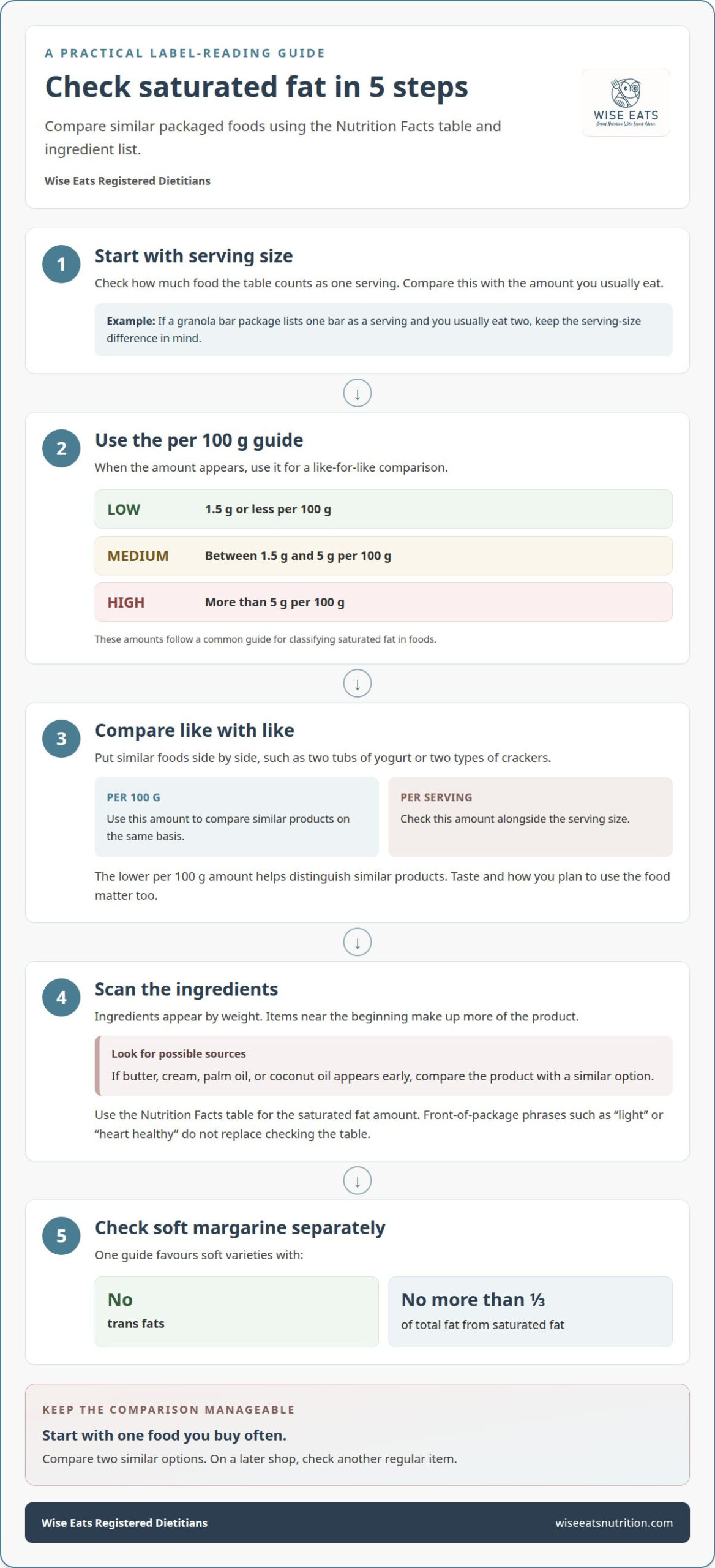
Compare the Nutrition Facts tables on similar packaged foods. Start with the serving size, then check the saturated fat amount. A granola bar package might list one bar as a serving, even if you usually eat two. Keep serving sizes in mind when comparing products, or the numbers may not reflect your usual portion.
Use the per 100 g amount for a like-for-like comparison when it appears. A common guide classifies foods with more than 5 g of saturated fat per 100 g as high. Foods with 1.5 g or less per 100 g are low. Between 1.5 g and 5 g per 100 g is considered medium.
Compare products from the same category. Set two tubs of yogurt side by side, or compare similar crackers. Look at saturated fat per serving and per 100 g, then check the serving size. A lower number per 100 g helps distinguish similar products, but taste and how you plan to use each food matter too.
For packaged foods, look for options with little saturated fat and no trans fat. Check soft margarine labels closely, too. One guide favours soft varieties with no trans fats and no more than one-third of total fat from saturated fat. Don’t rely on phrases such as “light” or “heart healthy” alone. Read the table to compare the actual amounts.
Check the ingredients list for more context. Ingredients are listed by weight, so those near the start make up more of the product. If butter, cream, palm oil, or coconut oil appears early, compare the product with a similar one. The table shows the saturated fat amount, while the ingredients list can help you identify its sources.
To keep meals nutritious and affordable, build them around familiar staples such as dried lentils, canned beans, oats, and frozen vegetables. Add lentils to soup or beans to a grain bowl. Compare the labels on packaged sauces or toppings, then use herbs, garlic, or tomatoes to add flavour.
Make label reading manageable by focusing on one food you buy often. Compare two breakfast cereals or spreads by checking the serving size and saturated fat amounts. Choose the option that suits your meals and budget. On a later shop, compare another regular item. This focused approach supports practical choices without turning every aisle into a calculation.
3. Cooking methods that use little or no fat
Broiling, steaming, and grilling keep added fat low. HealthLink BC recommends these methods when choosing how to cook. Match the method to the ingredient: steam broccoli or carrots, grill salmon, or broil chicken. Then build flavour with herbs, spices, citrus, or aromatics, rather than relying on butter or lard.
Steaming works well for vegetables and fish. Place broccoli florets or a salmon fillet in a steamer basket above simmering water. Add lemon slices, garlic, or fresh dill for fragrance, then keep the lid on so the steam cooks the food evenly. Finish vegetables with black pepper, vinegar, or chopped herbs instead of a butter-based sauce.
Grilling gives foods such as peppers, zucchini, chicken, and fish a browned surface and smoky flavour. Use a grill basket for smaller vegetables, and turn the food as it cooks. A marinade of lemon juice, garlic, mustard, and herbs adds flavour before grilling. Use a marinade without a large amount of oil, and spoon it over the food before cooking.
Broiling uses direct heat from above, making it suitable for thinner foods that cook quickly. Try broiled tomatoes, fish fillets, or sliced eggplant. Arrange pieces in a single layer so heat reaches each surface. Add paprika, black pepper, or dried oregano before cooking, and check the food often because thin pieces can brown quickly.
For meals that need a softer texture, try poaching or simmering in broth. Gently cook eggs in water, or simmer chicken in low-sodium broth with onions and celery. Use the cooking liquid as a base for soup or sauce. It carries flavour from the ingredients, so you can use less added fat while keeping the dish satisfying.
Baking or roasting suits a range of foods, including potatoes, cauliflower, and chicken pieces. Spread ingredients in a single layer on a baking sheet, then season with rosemary, cumin, or garlic. If a recipe calls for butter, consider using a small amount of canola or olive oil instead. Measure it with a spoon rather than pouring directly from the bottle.
Keep flavours varied by changing the seasoning as well as the cooking method. Add ginger and garlic to steamed vegetables, smoked paprika to grilled peppers, or lemon zest to broiled fish. For a quick meal, pair grilled vegetables with rice and beans. These combinations make lower-fat cooking practical for weeknight dinners, lunches, and familiar family recipes.
4. Making lower-fat restaurant choices
Restaurant menus often offer several ways to prepare the same main ingredient. Choose broiled or poached foods instead of fried or breaded options. For example, order broiled fish with potatoes or poached eggs with toast. These methods avoid the breading and frying used for dishes such as battered fish or breaded chicken.
Look for preparation details in menu descriptions. Words such as “crispy,” “breaded,” or “deep-fried” signal a different cooking style from “grilled,” “broiled,” or “poached.” If the menu doesn’t say how a dish is cooked, ask your server. You can then choose from the available options without guessing based on the dish name.
Sauces, gravies, and salad dressings may arrive with a meal or be mixed into it. Ask for them on the side, then add a little as you eat. This works with salads, roasted vegetables, or grilled chicken. A side portion lets you enjoy the flavour without coating the entire plate.
For pasta, choose tomato sauce instead of cream sauce. Tomato sauce pairs well with vegetables, seafood, or meat, and herbs such as basil add flavour. If you prefer cream sauce, consider ordering it on the side or asking for a smaller amount. That lets you tailor the dish to your taste.
Build a meal around the main dish and its sides. For example, pair poached fish with a baked potato and vegetables, or order broiled chicken with rice and a side salad. If a dish comes with fries, ask about alternatives such as vegetables or potatoes prepared without frying. Menus vary, so use the listed sides to put together a meal you’ll enjoy.
At a sandwich shop, compare fillings and preparation methods. A grilled chicken sandwich with lettuce and tomato differs from breaded chicken with creamy dressing. Ask for dressing or mayonnaise on the side, then add the amount you prefer. At a café, ordering salad dressing separately gives you the same control.
Keep your request simple and specific. You might say, “Could I have the dressing on the side?” or “Is the fish available broiled?” These questions help you understand the dish and choose an option that suits you. Restaurant meals can still include familiar flavours, such as tomato sauce, herbs, or a favourite side.
5. Recommended saturated fat limits
A commonly used guideline suggests keeping saturated fat below 10% of daily calories. For a 2,000-calorie diet, that equals 22 grams per day. Treat this figure as a reference point, not a personal prescription or a daily score. Your overall eating pattern matters more than reaching an exact number at every meal.
That 10% benchmark describes the share of energy from saturated fat. It doesn’t mean you need to count calories to make food choices. Instead, look at the ingredients you eat regularly and consider which ones have a practical alternative. For example, replacing some butter used in cooking with a plant oil shifts the type of fat in that dish.
Some guidelines also give daily limits in grams, but recommendations differ. A gram target depends on the guideline and a person’s daily energy needs. Avoid treating one figure as a universal rule. If a health condition affects your food choices, discuss an approach suited to you with your care team, especially if you’ve received specific nutrition advice.
Use the benchmark to consider patterns over time, not to judge a single food. Saturated fat is found in foods such as pastries, cheese, creamy sauces, and some meat dishes. If you enjoy one of these foods, you don’t need to label or automatically remove it. Consider how often it appears and what other choices fit your routine.
Choose one ingredient you use often and try a swap in a familiar meal. For example, use nuts or seeds as a topping, or choose a plant oil for a recipe that calls for butter. Keep the seasonings and meal format you enjoy. This focuses the change on the source of fat, rather than requiring a new menu.
Nutrition Facts tables help you compare similar packaged foods. Check the serving size and saturated fat amount, then compare like with like. If a product appears in your meals often, choosing an alternative with less saturated fat can shift your usual pattern. You don’t need to review everything in your kitchen or track every gram.
Treat a guideline as context, then choose changes that work in real meals. Your preferences, access to food, health needs, and routines all shape what feels manageable. If you want help adapting meals or understanding how a general benchmark relates to your needs, a Registered Dietitian can talk through options with you.
Wise Eats Registered Dietitians
Wise Eats Registered Dietitians offers nutrition support to help you make food choices that fit your health needs, tastes, and routines. If comparing labels or changing meals feels difficult, Custom Meal Planning can help organize meals around foods you enjoy. Support can also address digestive concerns or eating disorder recovery when these are part of your experience.
You don’t need to change every meal at once. A Registered Dietitian can help you explore realistic swaps and build a flexible approach, without turning food into rigid rules. Wise Eats Registered Dietitians also offers Weight Management and Personalized Vitamin and Mineral Supplements.
Contact Wise Eats Registered Dietitians to discuss nutrition support.
Choose a next step that fits your routine
Learning how to reduce saturated fat is an ongoing process, not a test to pass. Start with a food choice you feel ready to adjust, then give yourself time to see how the change fits your meals. Your preferences, schedule, and food traditions belong in the plan.
If making changes feels confusing, support from a Registered Dietitian can help you find an approach suited to your needs. Talk through what matters to you, including favourite meals, health concerns, and routines you want to keep. A thoughtful plan should feel practical in everyday life.
Take the next step at your own pace. A conversation can help you decide what kind of nutrition support feels right for you.
Small, comfortable changes are worth recognizing. Keep choosing what supports your wellbeing and feels sustainable for you.
Frequently Asked Questions
How can you make healthier choices?
Start with one food you eat often, then choose a change that fits your routine. For example, add lentils to a familiar stew or choose fish for a meal you usually make with processed meat. Keep the seasonings and sides you enjoy. A steady change to a regular meal may be easier to maintain than changing everything on your plate at once.
How do you get started replacing saturated fats with unsaturated fats?
Pick one recipe and replace an ingredient high in saturated fat with an option that contains unsaturated fat. For example, top oatmeal with walnuts instead of butter, or serve avocado with a sandwich instead of a creamy spread. Keep the flavour and amount you enjoy in mind. Once the swap feels familiar, try another dish. This ties each change to foods you already eat.
Should you choose low-fat or fat-free foods?
Choose lower-fat products if you enjoy them and they suit the meal, but you don’t need to choose them every time. Lower-fat yogurt might work in a breakfast bowl, while a little richer cheese adds flavour to a shared dish. Compare similar products and consider how you’ll use them. The best fit is one you find satisfying and practical.
How can I reduce saturated fat when cooking and baking?
For baking, replace some of the fat in muffins or quick breads with applesauce, or use canola oil instead of butter or shortening. In savoury dishes, trim visible fat from meat before cooking and drain fat after browning. For soup or stew, chill it first, then skim off the hardened fat. These steps adjust familiar recipes without removing herbs, spices, or other flavourings.
How can I compare saturated fat on Canadian Nutrition Facts labels?
Check the serving size first, then compare saturated fat amounts in similar foods. If one package lists a smaller serving, use the same serving size for both products before deciding. For example, compare two crackers using equal portions, rather than relying on the printed numbers alone. Treat front-of-package phrases as a starting point, then read the Nutrition Facts table for product details.
What are the Canadian recommendations for replacing saturated fat with unsaturated fats?
A practical approach is to replace some foods high in saturated fat with options such as fish, nuts, seeds, avocado, or plant oils. For example, use olive oil in salad dressing or add seeds to a grain bowl. These swaps focus on the types of fat in your eating pattern, rather than avoiding all sources of fat. Your preferences and health needs still matter.
Do plant-based oils and spreads contain less saturated fat than butter?
Olive and canola oils are suggested alternatives to butter for cooking. Soft margarine is another option, but products differ, so check the package details. HealthLink BC advises choosing soft margarine with no trans fats and no more than one-third of its total fat from saturated fat. The amount used and the product chosen both affect the dish.
How can I lower saturated fat in restaurant meals and takeout?
Choose a preparation style and ask for adjustments that suit your order. For takeout pasta, request tomato sauce instead of cream sauce. Ask for dressing, gravy, or sauce in a separate container, then add the amount you prefer. If a menu describes a dish as breaded or fried, look for a broiled or poached option. These requests work for dine-in meals and delivery orders.

Article by
Rachel McBryan, Dietitian
Rachel McBryan is a licenced Dietitian in British Columbia offering comprehensive nutrition counselling as virtual and/or in-person counselling sessions to suit your needs and preferences. With a Bachelor of Science in Nutrition and Food Science, Rachel has over 20 years experience helping people address their health through nutrition. She was awarded Human Nutrition and Food Science BSc.from University of Alberta followed by post-grad course work at UBC in guidance counselling.
An eating disorder is a serious mental health illness.
If you are in immediate distress or crisis, please contact emergency services by dialing 911 or calling Vancouver Island Crisis Line: 1-888-494-3888.