What if maintaining your strength as you age had less to do with spending hours at the gym and more to do with how you organize your plate? It’s completely natural to feel a sense of worry when activities like carrying groceries or walking through your neighbourhood feel more tiring than they used to. You want to stay independent and active; however, figuring out the right nutrition to prevent muscle loss in elderly adults can feel like trying to find your way through a thick fog of conflicting advice.
We are here to help clear that path. You can maintain your mobility and confidence by focusing on a few key nutritional strategies that actually matter. In this article, you’ll learn evidence-based ways to support your muscles using practical, Canadian-focused advice. We’ll look at how specific nutrients work together to keep you moving and share simple ways to improve your meals, such as incorporating a Hearty Lentil and Vegetable Stew, without any rigid rules or feelings of restriction.
Key Takeaways
- Define sarcopenia and explore how maintaining muscle mass directly supports your ability to stay mobile and independent.
- Identify the specific role of protein as a building block and how to use nutrition to prevent muscle loss in elderly adults through better meal timing.
- Understand why Vitamin D is a key factor for muscle function, especially for those of us navigating the darker Canadian winter months.
- Learn simple strategies to manage food fatigue and cooking for one, making it easier to get the nutrients you need every day.
- Explore how a personalized dietitian analysis can help you organize your meals to support your strength without using rigid rules.
Understanding Age-Related Muscle Loss (Sarcopenia)
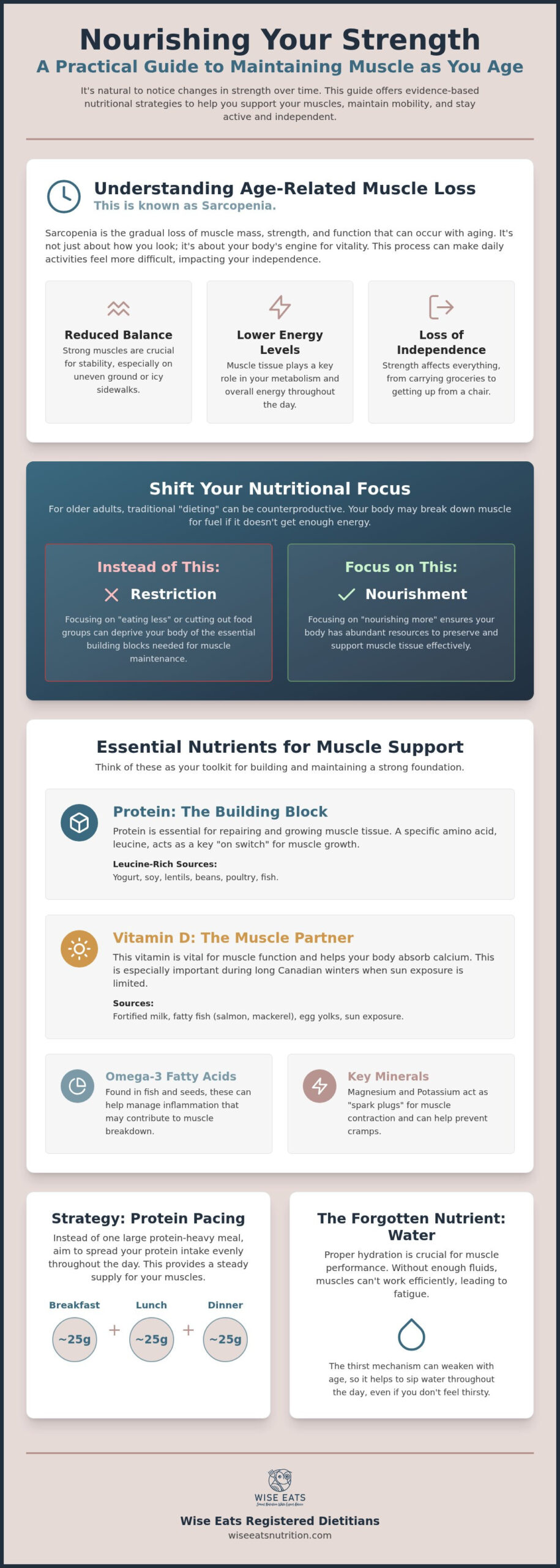
Have you noticed that opening a heavy door or getting out of a low chair feels a bit more challenging lately? This change isn’t just a part of getting older. It has a medical name: sarcopenia. This is the gradual loss of muscle mass, strength, and function. Understanding the right nutrition to prevent muscle loss in elderly is the first step toward regaining your confidence and keeping your body moving as it should.
Think of your muscle as your body’s foundation for vitality. It’s not about body image or looking a certain way. It’s about your engine. As we age, our metabolism shifts and our bodies become less efficient at processing protein. This means we need to be more strategic with our food choices. Focusing on nutrition to prevent muscle loss in elderly can feel overwhelming, but it’s really about making small, consistent shifts to support your body’s changing needs.
The Impact of Muscle Loss on Daily Life
Strength affects everything from your balance to your energy levels. In Canada, this is especially vital for your safety. You might be navigating the varied, hilly terrain of Vancouver Island or trying to keep your footing on an icy Calgary sidewalk. Your muscles act as your internal shock absorbers and stabilizers. Beyond movement, muscle mass plays a huge role in metabolic health. It helps manage blood sugar levels by acting as a sponge for glucose. Because it’s much easier to preserve muscle than to rebuild it, starting now is the best way to ensure you can stay active for years to come.
Why Traditional ‘Dieting’ Can Be Counterproductive
Many of us spent years hearing that we should eat less or restrict certain foods. For seniors, this "less is more" approach can actually be harmful. When you don’t take in enough total energy, your body may look for fuel in the wrong places. It might start breaking down your muscle tissue to keep your systems running. We want to avoid this at all costs. Instead of restriction, we focus on abundance. We look at how a dietitian meal plan can help you add the right nutrients to support your body. It’s about shifting the focus from "eating less" to "nourishing more," ensuring your body has the resources it needs to stay strong.
Essential Nutrients to Prevent Muscle Loss in the Elderly
Think of your body like a house that needs constant maintenance. To keep the structure strong, you need the right materials delivered at the right time. While we often focus on protein, a complete approach to nutrition to prevent muscle loss in elderly adults involves a team of nutrients working together. Each one plays a specific role in keeping you moving comfortably and safely.
- Protein: This is the essential building block your body uses to repair and grow muscle tissue.
- Vitamin D: It helps your body absorb calcium and is vital for muscle function. This is especially important during our long Canadian winters when sunlight is scarce.
- Omega-3 Fatty Acids: Found in fish and seeds, these help manage the inflammation that can sometimes lead to muscle breakdown.
- Magnesium and Potassium: These minerals are the spark plugs for muscle contraction, helping to prevent those painful nighttime cramps.
Water is often the forgotten nutrient when we talk about muscle performance. Without enough fluids, your muscles can’t work efficiently, and you might feel more fatigued during your daily walk. Because the thirst mechanism can weaken as we age, it helps to keep a glass of water nearby throughout the day, even if you don’t feel thirsty yet.
Protein Quality and Leucine-Rich Foods
Not all protein sources are the same. A specific amino acid called leucine acts like a biological on switch for muscle growth. To get the most benefit, it helps to include leucine-rich foods like yogurt, soy, lentils, and beans in your meals. Instead of having one large protein-heavy meal, try protein pacing. This means spreading your protein intake evenly across breakfast, lunch, and dinner. This steady supply gives your muscles the support they need throughout the entire day.
The Role of Micronutrients and Hydration
Living in places like Edmonton or Nanaimo means we often don’t get enough Vitamin D from the sun. Health Canada suggests that adults over 70 may need higher levels of Vitamin D to support bone and muscle health. Additionally, magnesium can be a wonderful tool for supporting deep sleep; this is when your body does its best recovery work. If you’re curious about how these nutrients fit into your routine, you can explore more about personalized supplements to see what might be right for you.
If you find it hard to drink plain water, try adding a slice of cucumber or a few frozen berries to your glass. Every small sip counts toward keeping your muscles hydrated and resilient. If you’re feeling unsure about which nutrients you need most, you can book a consultation with a dietitian to review your current intake and create a plan that fits your unique lifestyle.
Practical How-To: Implementing Muscle-Supporting Nutrition
Knowing which nutrients help is a great start, but the real benefit comes from how you organize your plate each day. Implementing nutrition to prevent muscle loss in elderly doesn’t have to mean spending hours in the kitchen or following a complicated plan. It’s about finding small, repeatable habits that fit into your current lifestyle. How can you make these changes feel manageable without feeling like you’re on a restrictive diet?
- Step 1: Aim for protein at every meal. Instead of saving all your protein for dinner, try to include a serving at breakfast and lunch too. This provides a steady supply of building blocks for your muscles to use throughout the day.
- Step 2: Combine protein with fibre-rich carbohydrates. Pairing a piece of chicken or some tofu with oats, quinoa, or sweet potatoes gives you sustained energy. This helps ensure your body uses protein for muscle repair rather than just for basic fuel.
- Step 3: Use simple cooking methods. If you find your energy is lower in the evening, look for ways to reduce the work. Using a slow cooker or a steamer can make meal prep much easier while keeping the food nutritious.
- Step 4: Incorporate muscle-supporting snacks. If your appetite is small, snacks can be your best friend. A bowl of Greek yogurt or a small handful of walnuts can provide an extra boost of nutrients between your main meals.
Meal Ideas for Seniors
One of the best ways to ensure you’re getting enough nutrition is to choose foods that are easy to prepare and easy to eat. A Slow Cooker Beef and Barley Stew is a wonderful option; the long cooking time makes the meat very tender and easy to chew. On days when a full meal feels like too much, try a "snack plate." You can combine some cheese, whole-grain crackers, and sliced fruit for a balanced mini-meal. Don’t forget that frozen or canned vegetables are excellent choices. They are often just as nutritious as fresh options and are a reliable way to keep your plate colourful when getting to the grocery store is difficult.
Supplementation: When is it Necessary?
While food is always the foundation, there are times when supplements can help fill the gaps. This is common for those who find it hard to eat enough or have specific health needs. Vitamin D and Omega-3 supplements can be particularly helpful for supporting muscle and joint health in our northern climate. To make things easier, personalized vitamin packs can simplify your routine so you don’t have to manage multiple bottles. Please note that a purchase from VitaminLab is not required for your health, and we may receive a commission if you choose to use their services. It’s always best to speak with your healthcare team before starting something new.
Overcoming Barriers and When to Seek Help
Even with the best intentions, life can sometimes make it difficult to stay on track. You might find that your appetite isn’t what it used to be, or perhaps certain foods have become harder to chew. These are common hurdles, and they don’t mean you’ve failed. It’s simply a sign that your strategy needs to shift. When looking for the best nutrition to prevent muscle loss in elderly adults, we have to account for these real-world challenges. Whether you’re living in a retirement community in Parksville or enjoying the quiet of Qualicum Beach, cooking for one can feel like a lot of effort for a small reward. In these cases, focusing on simple, high-impact additions to your plate can make a world of difference.
It’s also helpful to remember that food doesn’t work in a vacuum. While the right nutrients provide the bricks, movement provides the blueprint. Pairing your nutrition with gentle resistance exercise, such as using elastic bands or doing chair-based movements, helps your body actually use the protein you’re eating. If you’re managing multiple health conditions alongside muscle concerns, our Medical Nutrition Therapy Master Guide offers a deeper look at how clinical nutrition can support complex needs in a balanced way.
When to Seek Professional Support
While small changes often help, there are times when a more structured approach is necessary for your safety. We want you to feel empowered, not alarmed, so keep an eye out for these few signals that it’s time to check in with your healthcare team:
- Unintentional weight loss: If you’ve lost more than 5% of your body weight in the last six months without trying, your body may be struggling to get enough fuel.
- Swallowing or appetite changes: Persistent difficulty swallowing or a lack of interest in eating that lasts more than a few days can lead to nutrient gaps.
- Changes in mobility: Noticing more frequent falls or finding it suddenly hard to do daily tasks like dressing can be a sign that your muscles need more targeted support.
The Value of a Registered Dietitian
You don’t have to figure this out alone. A Registered Dietitian acts as a knowledgeable partner who can translate science into a plan that actually fits your life. By working with a dietitian, you get a personalized roadmap that considers your medical history, your favourite flavours, and even your grocery shopping habits. Many people are pleased to find that these professional services can be covered by extended health insurance providers like Sun Life or through programs like Veterans Affairs. It’s about finding a sustainable rhythm that protects your independence and gives you peace of mind.
Personalized Nutrition Planning for Healthy Aging
Every person brings a unique history to the table. You may be managing a specific medical condition, navigating a changing appetite, or simply trying to stay as active as possible. This is why a one-size-fits-all approach rarely provides the results you deserve. When it comes to nutrition to prevent muscle loss in elderly adults, your plan needs to be as individual as your own life story. It isn’t just about following a list of rules; it’s about finding a rhythm that feels natural and supportive.
A professional dietitian meal plan analysis is a collaborative process. We look at what you already enjoy eating and identify where we can add more muscle-supporting nutrients. We don’t focus on what to take away. Instead, we look for opportunities to include more of the building blocks your body needs to stay resilient. This personalized approach helps you move from confusion toward a clear, actionable path that prioritizes your peace of mind.
Customized Strategies for BC and Alberta Residents
Living in Western Canada presents its own set of considerations. Whether you are in a bustling centre like Edmonton, a coastal community on Vancouver Island, or a more rural area, your access to certain foods can change with the seasons. We help you integrate local food availability into your daily routine, ensuring your nutrition is practical and sustainable. Our team understands the specific needs of residents in BC and Alberta, and we use telehealth to bring expert guidance directly to your home. We prioritize your unique relationship with food, ensuring that your lifestyle and preferences are always at the heart of our recommendations.
Meet Your Support Team
We believe that you should have a reliable partner in your health journey. Our team acts as a filter against misinformation, translating complex data into simple steps you can take today. We encourage you to book a discovery call to see how we can help you realize your health goals and maintain your strength for years to come. You can age with clarity and confidence, knowing you have a steady hand to guide you.
About the Authors
This evidence-informed guide was developed by our team of regulated health professionals who specialize in medical nutrition therapy for seniors across Western Canada:
- Rachel McBryan, Dietitian (licenced) (College of Health and Care Professionals of BC)
- Sheirry Poposka RD, Registered Dietitian (Alberta College of Registered Dietitians)
Our goal is to provide you with the tools you need to support your mobility and independence through balanced, enjoyable nutrition.
Taking Your Next Steps Toward Strength
You’ve explored how small, intentional shifts in your daily routine can make a significant difference in your mobility. By focusing on protein pacing and ensuring you get enough Vitamin D during the winter, you are providing your body with the tools it needs to stay resilient. Remember that the right nutrition to prevent muscle loss in elderly individuals is not about following a restrictive list of rules. It’s about nourishing your body so you can continue doing the things you love, like walking through your neighbourhood or gardening.
Our team of Registered Dietitians is licensed in BC and Alberta to provide evidence-based clinical nutrition tailored to your specific medical history. Through our telehealth services, we can help you organize a plan that fits your lifestyle, no matter where you live in Western Canada. You don’t have to navigate these changes alone. We are here to act as your guide, helping you move forward with clarity and hope.
Frequently Asked Questions
What is the best protein for seniors to prevent muscle loss?
The most effective protein sources for seniors are those rich in the amino acid leucine, which acts as a trigger for muscle repair. Foods like Greek yogurt, eggs, soy, and lean poultry are excellent choices. Including these as part of a balanced approach to nutrition to prevent muscle loss in elderly adults helps ensure your body has the high-quality building blocks it needs. Spreading these protein sources across all your meals provides a steady supply for your muscles to use throughout the entire day.
How much protein do elderly people need per day in Canada?
Most Canadian health guidelines suggest that older adults aim for approximately 1.0 to 1.2 grams of protein for every kilogram of body weight. For someone weighing 70 kilograms, this translates to roughly 70 to 84 grams of protein each day. This target is higher than the recommendations for younger adults because our bodies become less efficient at processing protein as we age. Consulting with a professional can help you determine the exact amount that fits your specific health goals and activity levels.
Can you regain muscle mass after age 70 with just nutrition?
Nutrition provides the essential materials for repair, but regaining muscle mass usually requires a combination of proper food and gentle resistance exercise. While focusing on nutrition to prevent muscle loss in elderly adults can help stop further decline, adding movement like light weights or resistance bands tells your body to use that fuel to build new strength. It’s a partnership between what you eat and how you move that creates the best results for your mobility and independence.
Is Vitamin D essential for muscle strength in older adults?
Vitamin D is vital for muscle strength because it supports the function of muscle fibres and helps your body manage calcium. In our northern climate, it’s very difficult to get enough Vitamin D from the sun, especially during the winter months. Health Canada recommends that adults over 70 take a daily supplement of 800 IU. This simple step can help improve your balance and is a key part of a strategy to stay steady on your feet.
What are the early signs of sarcopenia I should look for?
Common early signs of muscle loss include finding it more difficult to climb stairs, noticing a slower walking pace, or feeling a general sense of weakness during daily tasks. You might also find that your grip is not as strong as it used to be or that you feel more fatigued after activities that used to be easy. Noticing these changes early allows you to make gentle shifts in your nutrition and activity to protect your long-term strength and confidence.
Are protein shakes a good idea for seniors with low appetite?
Protein shakes can be a very helpful tool when a small appetite or difficulty chewing makes it hard to eat enough at mealtimes. They are most effective when used as a supplement between your regular meals to boost your total nutrient intake. Choosing a shake that includes a balance of vitamins and minerals can help fill the gaps and ensure your body has enough energy to maintain your muscle mass even on days when you don’t feel like eating a full meal.
How does hydration affect muscle function in the elderly?
Hydration is essential for muscle function because water carries nutrients to your muscle cells and helps them contract properly. Even mild dehydration can lead to increased muscle fatigue, cramping, and a higher risk of falls. Since the feeling of thirst often decreases as we get older, it’s helpful to sip water regularly throughout the day. Staying well-hydrated ensures that the work you’re doing with your nutrition can actually reach your muscles and keep them working efficiently.

Article by
Rachel McBryan, Dietitian
Rachel McBryan is a licenced Dietitian in British Columbia offering comprehensive nutrition counselling as virtual and/or in-person counselling sessions to suit your needs and preferences. With a Bachelor of Science in Nutrition and Food Science, Rachel has over 20 years experience helping people address their health through nutrition. She was awarded Human Nutrition and Food Science BSc.from University of Alberta followed by post-grad course work at UBC in guidance counselling.
An eating disorder is a serious mental health illness.
If you are in immediate distress or crisis, please contact emergency services by dialing 911 or calling Vancouver Island Crisis Line: 1-888-494-3888.
This article is educational information only, not professional diagnosis or treatment. This health education content is heavily AI augmented and parts or all of this article may not have been reviewed yet for accuracy. AI generated content is prone to error.
Please note that we partner with VitaminLab and financially gain if you purchase supplements. You are under no obligation to use VitaminLab products and whether you supplement your diet with VitaminLab or another product of your choice will not impact your nutrition care.