Understanding the Difference Between a Dietitian and a Nutritionist in Canada
If you are looking for nutrition advice in Canada, you have likely encountered the titles “dietitian” and “nutritionist.” People often use these terms as if they mean the same thing, but in the eyes of the law and for your health, they are quite different. Understanding this distinction is the first step toward finding safe, reliable, and effective care.
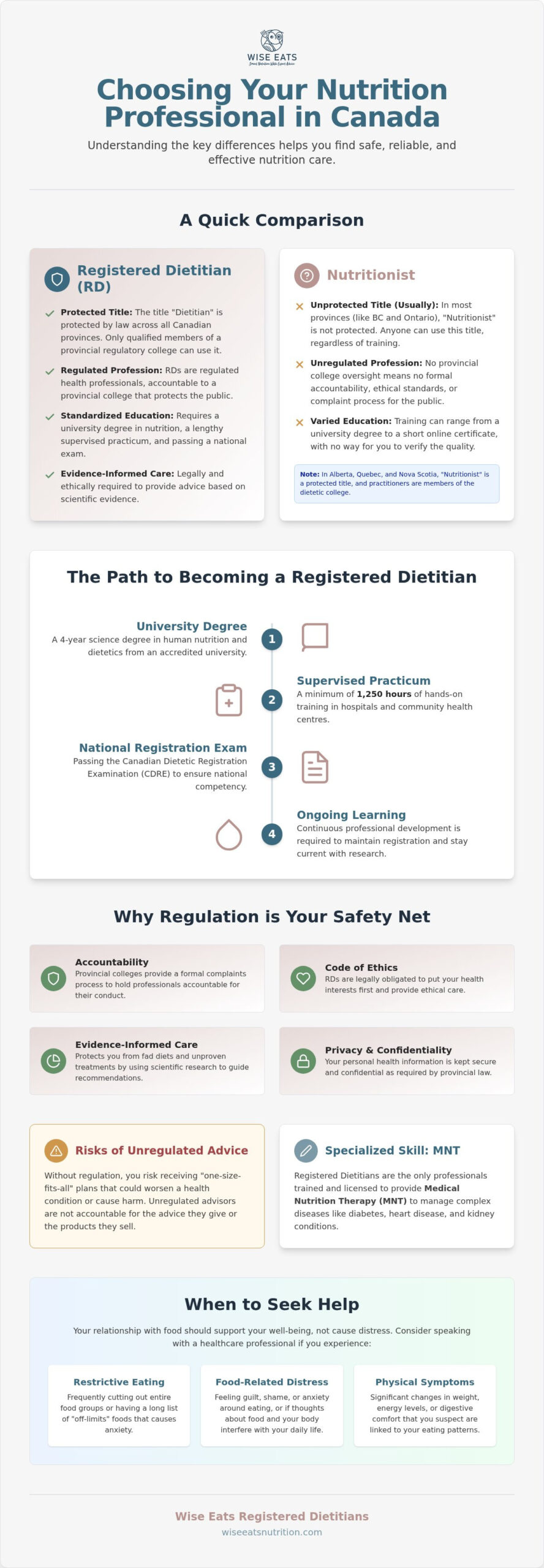
- The title “Dietitian” is protected by law in every Canadian province. This means only qualified professionals who meet specific education and training standards are permitted to use it.
- In many provinces, such as British Columbia and Ontario, “Nutritionist” is an unregulated term. Anyone, regardless of their training or background, is able to call themselves a nutritionist.
- This legal difference is why you should always look for the “RD” (Registered Dietitian) or “PDt” (Professional Dietitian) designation after a person’s name. It is your assurance of quality and accountability.
What is a Registered Dietitian (RD)?
A Registered Dietitian is a regulated health professional, much like a nurse, pharmacist, or dentist. They are legally required to base their advice on the latest scientific evidence and are held accountable for their competence and conduct by a provincial regulatory body, often called a college. For example, dietitians in British Columbia are governed by the College of Dietitians of British Columbia.
These provincial colleges exist to protect the public. They set high standards for education, ethics, and professional practice. If you ever have a concern about the care you receive from an RD, you have a formal process to file a complaint, ensuring your safety is always the top priority.
The ‘Nutritionist’ Title: A Provincial Grey Area
The term “nutritionist” creates confusion because its legal status varies across Canada. In Alberta, Quebec, and Nova Scotia, “Nutritionist” is also a protected title, reserved for members of the provincial dietetic college. In these provinces, the titles are often used together, such as “Registered Dietitian/Nutritionist.”
However, in most other provinces, the title is not protected. This creates a significant risk for the public. A person with a weekend certificate in “holistic nutrition” and a university-educated professional with a four-year degree in nutritional sciences could both call themselves a “nutritionist.” Without regulation, there is no way to know the quality of their education, no requirement for evidence-based practice, and no accountability for harmful advice.
The Journey to Becoming a Registered Dietitian (RD)
The path to becoming a Registered Dietitian in Canada is demanding and standardized across the country. This ensures every RD has the knowledge and skills to provide safe and effective nutrition care. The journey involves a rigorous combination of academic learning, practical training, and national certification.
- Academic Degree: A four-year bachelor’s degree in human nutrition and dietetics from an accredited Canadian university program.
- Supervised Practicum: A minimum of 1,250 hours of supervised, hands-on training in settings like hospitals, community health centres, and long-term care facilities.
- National Examination: A passing grade on the Canadian Dietetic Registration Examination (CDRE), which tests for the knowledge and skills required for safe practice.
- Ongoing Competence: RDs must participate in continuous professional development throughout their careers to stay current with scientific research and maintain their provincial registration.
Academic Foundations and Clinical Training
The university curriculum for dietitians is deeply rooted in science. Coursework includes biochemistry, physiology, metabolism, and medical nutrition therapy (MNT). This training prepares RDs to understand how food affects the human body at a cellular level and how nutrition can be used to manage complex health conditions. During their practicum, students apply this knowledge in real-world situations, working with patients in hospitals and other clinical settings under the supervision of experienced RDs. This transition from student to practitioner is governed by strict provincial standards.
The National Exam and Provincial Licensing
The CDRE is the final hurdle before a dietetic graduate can apply for registration. The exam does not just test nutrition facts. It evaluates a candidate’s ability to make safe, ethical, and evidence-based decisions in complex situations. After passing the CDRE, an individual must register with the dietetic regulatory body in the province where they intend to practise. This registration is mandatory and signifies they are legally authorized to provide nutrition care and use the “Registered Dietitian” title.
Why Regulation Matters for Your Health and Safety
Choosing a regulated health professional is about more than just credentials. It is about protecting your health. The system of regulation provides a crucial safety net, ensuring the advice you receive is reliable, ethical, and tailored to your unique needs.
- Accountability: Provincial colleges give the public a formal complaints process. If a dietitian’s conduct is unprofessional or harmful, the college can investigate and take disciplinary action.
- Ethics: RDs are bound by a code of ethics that legally obligates them to put your health interests first.
- Evidence-Informed Care: Dietitians must use scientific evidence to guide their recommendations, protecting you from fad diets or unproven treatments that could cause harm.
- Privacy: RDs are required to follow provincial health information acts, ensuring your personal health information is kept confidential and secure.
The Risks of Unregulated Nutrition Advice
When you work with an unregulated individual, these protections do not exist. A “one-size-fits-all” meal plan from an uncertified “nutrition expert” could worsen a digestive condition like IBS or fail to account for a serious medical issue. Some unregulated practitioners also sell supplements without the training to assess for potential nutrient-drug interactions or safety concerns. Titles that include words like “holistic” or “certified” are not legally regulated, which creates confusion for people seeking a qualified expert.
Medical Nutrition Therapy (MNT) vs. General Wellness
Registered Dietitians are the only nutrition professionals trained and licensed to provide Medical Nutrition Therapy (MNT). MNT is an evidence-based approach to managing chronic diseases like diabetes, heart disease, and kidney disease through tailored nutrition interventions. While general wellness coaching has a place, it is not a substitute for the specialized clinical care required to manage complex health conditions safely and effectively.
How to Choose the Right Nutrition Professional for Your Needs
Finding the right person to guide your nutrition journey starts with clarity about your goals and an understanding of how to verify credentials. Taking a few simple steps can help you make an informed choice and find a professional who is a good fit for you.
- Identify Your Goal: Are you looking for general healthy eating advice, or do you need help managing a specific medical condition? If you have a diagnosis from your doctor, a Registered Dietitian is the appropriate choice.
- Check Credentials: You can verify if a person is a Registered Dietitian by checking the public registry on their provincial college’s website. Every province has one.
- Review Insurance Benefits: Most private Canadian health insurance plans cover services provided by Registered Dietitians. Check your plan details or speak with your HR department.
- Find the Right Fit: Your relationship with a nutrition professional is a partnership. Look for someone who communicates clearly and offers a non-judgmental, compassionate approach to care.
Insurance Coverage and Financial Planning
Before your first appointment, contact your insurance provider to ask about your coverage for “Registered Dietitian services.” Many plans offer a specific amount per year for nutrition counselling. In Canada, services provided by an RD are also considered a tax-deductible medical expense. Many RDs now offer secure online nutrition counselling, making it easier to access care from home.
When to Seek Help: Red Flags and Complex Needs
While improving your eating habits is often a positive step, certain situations require professional support from a regulated expert. It is important to seek help if you experience:
- Significant or unexplained changes in weight, appetite, or energy levels.
- Persistent digestive distress, such as bloating, pain, or changes in bowel habits.
- Concerns about your relationship with food, including thoughts of restriction or loss of control around eating.
Complex issues, especially those related to eating disorder recovery, require a collaborative team approach involving a doctor, therapist, and a Registered Dietitian.
Navigating Your Nutrition Journey with Wise Eats
At Wise Eats, our team of Registered Dietitians is committed to providing evidence-informed, compassionate care to residents of British Columbia and Alberta. We understand the confusion and stress that often comes with managing your health, and our goal is to provide a clear, supportive path forward.
- Our RDs specialize in complex areas, including digestive health, diabetes management, and eating disorder recovery.
- We move beyond simple meal plans to develop personalized strategies, including advice on vitamins and mineral supplements when appropriate.
- Our process is built on a non-judgmental partnership designed to lower your stress, not add to it.
The Wise Eats Difference: Empathy Meets Science
We believe the most effective nutrition plans are the ones that fit into your real life. Our approach focuses on validating your struggles while providing actionable, science-backed solutions. We act as a filter, helping you tune out the noise of online misinformation and focus on sustainable changes that support your well-being. We work with you to integrate new habits into your lifestyle, rather than handing you a rigid set of rules.
Getting Started with Professional Guidance
Booking a virtual consultation from anywhere in British Columbia or Alberta is simple. In your first session, your Wise Eats Registered Dietitian will take the time to listen to your story, understand your health history, and learn about your goals. From there, we will work together to build a personalized plan that makes sense for you.
If you’re struggling with a nutrition‑related medical condition or an eating problem, a registered dietitian can provide professional support — book a consultation.
Frequently Asked Questions
Is a dietitian the same as a nutritionist in British Columbia?
No. In British Columbia, “Registered Dietitian” is a legally protected title for a regulated health professional. “Nutritionist” is an unprotected title that anyone can use, regardless of their education or training.
Will my Canadian health insurance cover the cost of a dietitian?
Most private health insurance plans in Canada offer coverage for services provided by a Registered Dietitian. It is best to check your specific plan details to confirm the amount of coverage you have.
Can a nutritionist in Canada provide meal plans for diabetes or IBS?
Only a Registered Dietitian is trained and licensed to provide Medical Nutrition Therapy for conditions like diabetes or IBS. An unregulated nutritionist does not have the clinical training to safely manage these conditions.
How do I verify if a nutrition professional is actually a Registered Dietitian?
You can verify their credentials by visiting the website of the dietetic regulatory body for your province and searching for their name on the public register of members.
What is the difference between a Registered Dietitian and a Holistic Nutritionist?
A Registered Dietitian is a regulated health professional with standardized university education, a supervised practicum, and licensing. A “Holistic Nutritionist” is not a regulated title in Canada, and the training programs are not standardized or accredited through the same process as dietetics.
Do I need a doctor’s referral to see a Registered Dietitian in Canada?
In most cases, you do not need a doctor’s referral to see a dietitian in private practice. However, some extended health insurance plans may require one for reimbursement, so it is always a good idea to check your plan.
Why is the title ‘Registered Dietitian’ protected by law in Canada?
The title is protected by law to ensure public safety. It guarantees that anyone using the title has met strict national standards for education and training and is accountable to a provincial regulatory body for providing safe, ethical, and evidence-based care.
This article was written and reviewed by Rachel McBryan, RD, College of Dietitians of British Columbia, and Sheirry Poposka, RD, College of Dietitians of Alberta.
This article is for general educational purposes and is not a substitute for individualized medical or nutrition advice. Please speak with a physician or Registered Dietitian for guidance tailored to your specific needs.
Article by
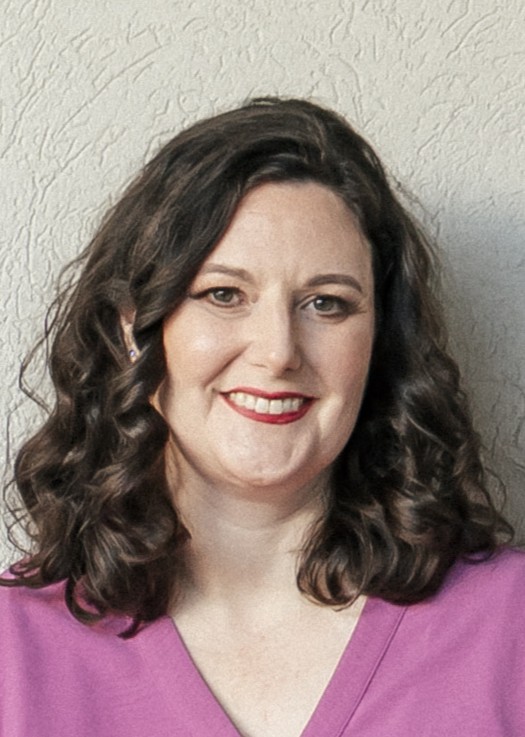
Rachel McBryan, Dietitian
Rachel McBryan is a licenced Dietitian in British Columbia offering comprehensive nutrition counselling as virtual and/or in-person counselling sessions to suit your needs and preferences. With a Bachelor of Science in Nutrition and Food Science, Rachel has over 20 years experience helping people address their health through nutrition. She was awarded Human Nutrition and Food Science BSc.from University of Alberta followed by post-grad course work at UBC in guidance counselling.
An eating disorder is a serious mental health illness.
If you are in immediate distress or crisis, please contact emergency services by dialing 911 or calling Vancouver Island Crisis Line: 1-888-494-3888.
This article is educational information only, not professional diagnosis or treatment. This health education content is heavily AI augmented and parts or all of this article may not have been reviewed yet for accuracy. AI generated content is prone to error.
Please note that we partner with VitaminLab and financially gain if you purchase supplements. You are under no obligation to use VitaminLab products and whether you supplement your diet with VitaminLab or another product of your choice will not impact your nutrition care.