
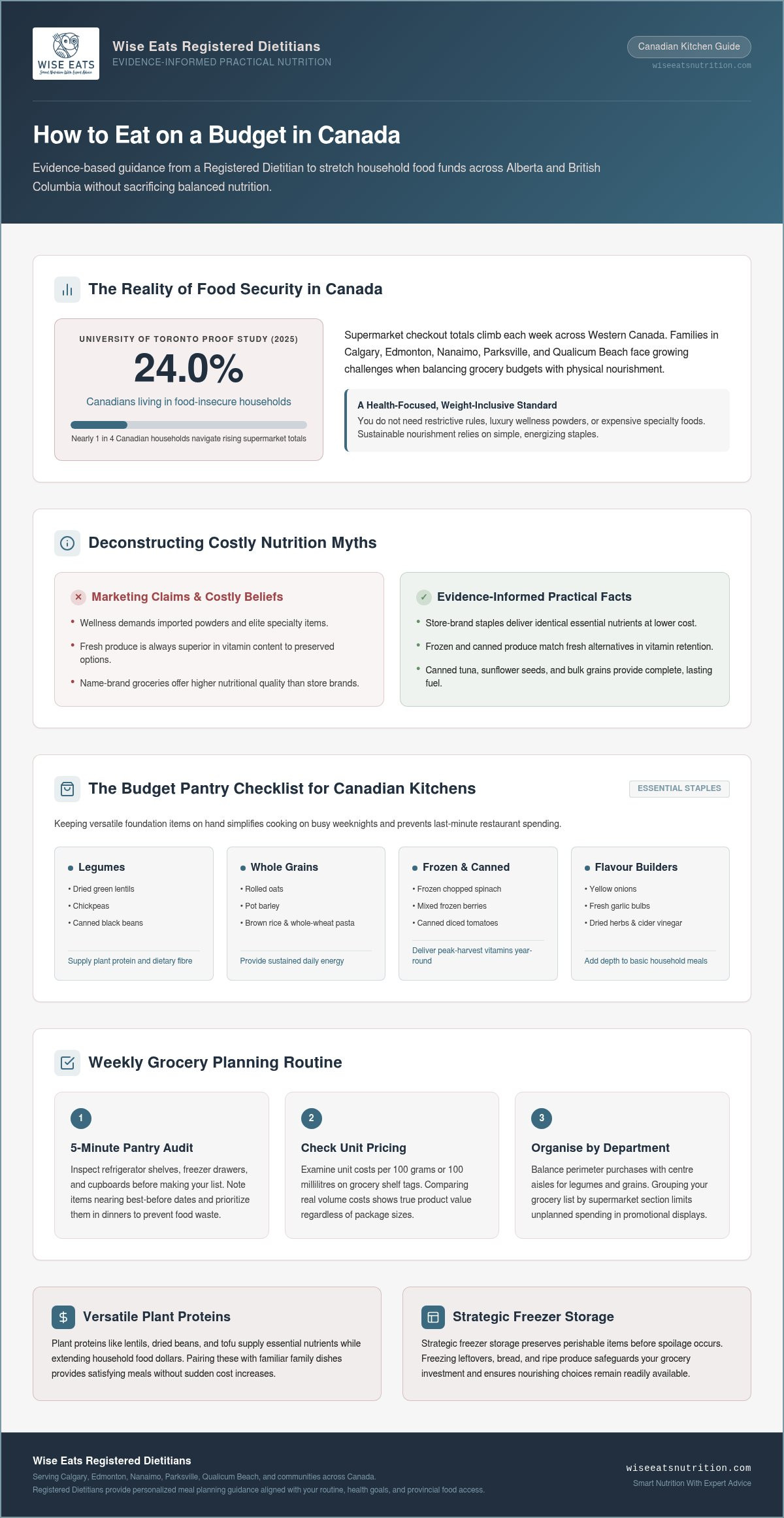
According to research from the University of Toronto’s PROOF group, 24.0% of Canadians lived in a food-insecure household in 2025. Rising supermarket bills leave many people feeling exhausted, especially when checkout totals climb each week. Figuring out how to eat on a budget in Canada has become an urgent challenge for families from Calgary and Edmonton to Vancouver Island communities like Nanaimo and Parksville. Standing in grocery aisles wondering how to afford balanced meals while tuning out confusing fad diets creates real anxiety.
You do not need restrictive rules, luxury superfoods, or guilt over buying frozen peas and canned beans to feed your household well. In this guide, you will learn realistic ways to lower grocery bills while nourishing your body across Canadian provinces. Practical adjustments recommended by a Registered Dietitian help ease financial strain without sacrificing satisfaction. We walk through simple pantry audits, versatile staple proteins, and seasonal food choices designed to stretch your grocery dollars across Western Canada.
Key Takeaways
- Learning how to eat on a budget in Canada begins with a quick pantry inventory before shopping, keeping forgotten staples in rotation and stopping repeat purchases.
- Plant proteins like lentils, dried beans, and tofu supply essential nutrients while stretching grocery funds when paired with family favourite meals.
- Nutritious plates do not require expensive specialty items, since budget-friendly frozen produce and canned ingredients offer nourishment comparable to fresh alternatives.
- Strategic freezer storage preserves perishable items before spoilage occurs, safeguarding your household food investment.
- A Registered Dietitian provides custom meal planning guidance aligned with your routine, personal health goals, and provincial food access.
Foundations of Nourishing Budget Eating in Canada
Nutritious meals do not require expensive wellness powders or specialty items. Daily nourishment comes from balanced plates featuring energizing carbohydrates, protein sources, colourful produce, and fats. Unsweetened frozen vegetables and canned legumes match fresh alternatives in vitamin content, offering practical options for families across Alberta and British Columbia. Establishing this groundwork ensures household grocery spending drops while meals stay deeply satisfying. Simple ingredients provide consistent energy throughout demanding workdays.
See practical strategies in action with this grocery haul demonstration:
Deconstructing the Myth of Costly Nutrition
Marketing campaigns frequently suggest wellness demands imported powders or elite specialty foods. Store-brand staples deliver identical essential nutrients without elevated price tags. Canned tuna, sunflower seeds, bulk brown rice, and frozen broccoli supply vital minerals for active bodies. Choosing shelf-stable ingredients removes guilt around convenience items, replacing restrictive diet trends with food abundance. Families mastering how to eat on a budget in Canada gain financial peace while honouring their physical health.
The Budget Pantry Checklist for Canadian Kitchens
Keeping foundational items on hand simplifies cooking on busy evenings. A stocked pantry lets home cooks assemble balanced recipes without making last-minute restaurant runs. Incorporating shelf-stable items helps shoppers in Calgary, Edmonton, Parksville, and Nanaimo manage changing grocery prices. Look for these flexible building blocks in local markets:
- Legumes: Dried green lentils, chickpeas, and canned black beans provide dietary fibre along with plant protein.
- Whole Grains: Rolled oats, pot barley, brown rice, and whole-wheat pasta supply lasting daily energy.
- Canned and Frozen Produce: Frozen spinach, mixed berries, and diced tomatoes deliver peak-harvest nutrients year-round.
- Flavour Builders: Yellow onions, garlic bulbs, dried herbs, and cider vinegar bring rich depth to basic ingredients.
Organizing these pantry staples into a structured dietitian meal plan creates a predictable routine. Reliable staples ease daily decision fatigue, helping you nourish yourself while honouring your household budget.
Step-by-Step Weekly Grocery Planning for Lower Food Bills
Planning meals in advance relieves mental fatigue and prevents duplicate purchases. Establishing a predictable routine gives structure to household expenses. When exploring how to eat on a budget in Canada, shoppers benefit from looking at what already sits in kitchen cupboards before heading out. A reliable schedule accommodates unexpected evening disruptions while protecting household grocery funds. For individualized assistance building balanced routines, a personalized dietitian meal plan provides step-by-step structure tailored to your daily schedule.
Conducting a Quick Home Pantry Audit
Take five minutes to inspect refrigerator shelves, freezer drawers, and pantry shelves prior to drafting a shopping list. Note items approaching their best-before dates and prioritize those ingredients in upcoming dinners. Choose two or three versatile staples, such as a bag of green lentils or cooked whole-wheat pasta, to repurpose across different lunches and suppers. This simple check ensures forgotten groceries get consumed promptly, keeping money from landing in compost bins.
Navigating Canadian Supermarket Aisles Strategically
Smart grocery trips balance perimeter selections with inner aisles. Centre aisles contain nutrient-dense dried legumes, canned fish, and whole grains, while outer walls hold fresh dairy, eggs, and seasonal produce. Digital grocery flyers and store apps point out weekly sales on everyday pantry essentials before you enter the doors. Comparing prices across nearby markets in Alberta and British Columbia keeps baseline food expenses manageable.
- Examine Unit Pricing: Look at the cost per 100 grams or 100 millilitres on shelf tags to determine authentic value across different package sizes.
- Select Store Brands: Choose generic label alternatives for flour, rolled oats, and canned tomatoes to get identical nutritional quality at reduced costs.
- Organize by Department: Group items on your list according to supermarket sections, which speeds up your trip and stops unplanned impulse spending in high-traffic end caps.
Shoppers across Calgary, Edmonton, Nanaimo, and Qualicum Beach face rising supermarket bills, yet intentional preparation restores a sense of agency. If you want personalized guidance tailored to your health goals, book an initial consultation with a Registered Dietitian to build a practical kitchen routine.
Cost-Effective Protein Sources for Everyday Meals
Dietary protein supports immune defence, tissue repair, and steady fullness between meals. According to Canada’s Food Price Report, meat prices faced annual projected increases of 4% to 6%, making animal protein one of the quickest-rising expense categories in grocery carts. When learning how to eat on a budget in Canada, expanding your protein repertoire brings substantial financial relief without compromising nutrition. Combining plant options with conventional favourites keeps dinners flexible for busy households.
Affordable Plant Proteins to Add to Your Rotation
Plant pulses deliver iron, potassium, and dietary fibre alongside plant-based protein. World Health Organization guidelines note that pulses provide lean protein with zero dietary cholesterol, making them an exceptional foundational food. You do not need hours of soaking to use them on weeknights:
- Black Beans: Rinse canned beans and toss them directly into warm quesadillas, corn salads, or seasoned rice bowls.
- Split Red Lentils: Simmer red lentils directly into tomato pasta sauces or coconut curries, where they melt down smoothly in fifteen minutes.
- Firm Tofu: Slice pressed tofu into slabs, pan-fry with canola oil until crisp, and coat with garlic soy glaze.
For an easy weeknight supper, try a warm batch of Hearty Lentil and Barley Soup. This comforting dish simmers dried brown lentils, pot barley, diced carrots, and vegetable broth in one pot, creating filling portions for minimal prep effort.
Smart Strategies for Animal-Based Proteins
You do not have to eliminate meat entirely to maintain a balanced grocery budget. A blended approach lets you stretch familiar animal proteins across twice as many servings while respecting time limits on busy weeknights. Simple culinary adjustments ease the pressure at supermarket checkout stands:
- The Fifty-Fifty Blend: Sauté ground beef or poultry with an equal volume of cooked brown lentils or finely minced cremini mushrooms for taco fillings, shepherd’s pie, and meat sauces.
- Canned Salmon and Light Tuna: Canned wild Pacific salmon delivers beneficial Omega-3 fatty acids, vitamin D, and calcium. Mix it with Greek yogurt, mustard, and green onions for fast weekday lunches.
- Eggs for Dinner: Whisk four eggs with defrosted spinach, canned corn, and shredded cheese for a fast skillet frittata served alongside toasted whole-wheat bread.
Stretching proteins this way honours personal taste preferences while safeguarding household finances. If you experience persistent bloating or digestive discomfort when introducing high-fibre pulses, consulting a professional for digestive health nutrition ensures your gut adapts comfortably to these nourishing changes.
Practical Kitchen Habits That Cut Food Waste
Discarded food directly inflates household grocery spending. When greens turn slimy in the crisper drawer, money disappears. Canadian households lose significant funds each month simply through prematurely discarded groceries and forgotten leftovers. Understanding how to eat on a budget in Canada requires protecting what you bring through your front door. Simple storage techniques keep ingredients usable longer, reducing the pressure to cook complex meals when energy runs low after work.
Optimal Storage Methods for Fresh Produce
Storing produce correctly prolongs quality and keeps crisp texture intact. Carrots and potatoes thrive inside cool, dark cupboards away from ambient humidity, whereas onions belong in open baskets to maintain airflow. Damp environments speed decay. Wrapping leafy greens in cotton towels inside airtight bins absorbs excess moisture, extending storage life past the weekend. Peel overripe bananas, slice them into rounds, and freeze them in sealed bags alongside softening spinach leaves for morning blending.
Understanding date markings stops needless food waste. The Canadian Food Inspection Agency notes a “best before” date indicates peak flavour and nutritional value on unopened goods, not bacterial danger. Items remain edible past that date if stored properly.
Batch Cooking Routines That Save Time and Energy
Cooking every evening from scratch quickly leads to takeout orders when workdays run late. Preparing versatile base ingredients in bulk removes the weeknight scramble. This straightforward kitchen workflow helps busy households across Edmonton, Calgary, and Vancouver Island keep dinners stress-free:
- Double Base Batches: Boil extra pot barley or whole-wheat pasta to store in flat glass containers, cutting mid-week cooking steps in half.
- Pre-Portion Freezer Meals: Ladle large batches of vegetarian chili, bean soups, and curry into single-portion mason jars or silicone bags, freezing them flat to maximize storage room.
- Scheduled “Smorgasbord” Evenings: Designate Thursday nights to reheat collected portions of vegetables, grains, and meats, assembling nourishing bowls before new groceries arrive.
Remnants become fresh meals with quick additions. Spoon extra cooked grains into a morning frittata, or wrap roasted root vegetables with canned black beans in a warm tortilla for a portable lunch.
Personalized Support and When to Seek Professional Guidance
Every person brings unique nutritional requirements shaped by life stage, cultural heritage, work patterns, and underlying health factors. General supermarket tips provide a helpful starting point, yet rigid rules often fail when real-world schedules interfere. Figuring out how to eat on a budget in Canada works best when tailored to individual circumstances rather than following one-size-fits-all meal sheets. Working alongside a Registered Dietitian gives you collaborative guidance that fits your kitchen routines, family preferences, and local food availability.
Co-founders Rachel McBryan, RD (College of Health and Care Professionals of BC) and Sheirry Poposka, RD (Alberta College of Registered Dietitians) provide virtual nutritional counselling across both provinces. If specific grocery questions or nutritional concerns arise, you can easily ask a dietitian for clear, evidence-informed guidance.
When to Seek Help: Identifying Food Distress
Financial strain around groceries can place heavy emotional burdens on individuals and families. Sometimes, attempts to cut costs unintentionally trigger distressing thought patterns or restrictive behaviours around eating. Speaking with a healthcare professional or accessing specialized eating disorder recovery support helps restore balance if you notice these signs:
- Constant Food Anxiety: Enduring persistent guilt, mental exhaustion, or panic reactions when selecting grocery staples or checking out at the register.
- Intentional Food Deprivation: Skipping meals under the guise of budgeting, ignoring bodily hunger cues, or establishing rigid rules that forbid essential food groups.
- Physical or Social Impact: Experiencing frequent lightheadedness, daytime lethargy, or withdrawing from family meals and social gatherings due to acute food worry.
How Registered Dietitians Support Sustainable Habits
Professional nutrition support emphasizes adding nourishing ingredients rather than cutting out whole food groups. A Registered Dietitian assesses bio-individuality, helping you craft balanced habits without diet-culture baggage. Sessions center on realistic routines that honour your energy limits and kitchen setup. Rather than prescribing extreme changes, clinicians help you identify versatile staples that deliver essential nutrients comfortably.
Many private health insurance plans in British Columbia and Alberta include coverage for licensed dietitian visits. Employers frequently provide coverage through an Employee Assistance Program (EAP), lowering the personal barrier to accessing registered care. Personalized support helps you cultivate confidence in supermarket aisles from Calgary to Vancouver Island, keeping nourishment approachable and sustainable.
Building Confident, Affordable Kitchen Routines
Mastering how to eat on a budget in Canada comes down to practical habits rather than rigid food rules. Taking a regular inventory of kitchen shelves, pairing economical plant pulses with familiar family suppers, and freezing extra portions protects your grocery investment from retail inflation. Nourishing meals do not require expensive specialty items or elaborate cooking marathons.
Registered Dietitians Rachel McBryan, RD (College of Health and Care Professionals of BC) and Sheirry Poposka, RD (Alberta College of Registered Dietitians) provide weight-inclusive, non-diet nutritional counselling aligned with Canadian healthcare standards. Their collaborative guidance helps you create flexible meal solutions suited to your unique household rhythm, cultural foods, and local grocery access.
Nourishing yourself while honouring your budget is entirely achievable. Take things one recipe at a time, lean on versatile staples, and celebrate small, steady steps toward food confidence.
Frequently Asked Questions
Is it possible to meet daily protein needs on a budget in Canada?
Yes, meeting daily protein requirements on a budget remains fully achievable across Canada. Plant-based pulses like dried lentils, split peas, chickpeas, and canned kidney beans supply substantial protein alongside iron and dietary fibre. Combining these affordable pulses with whole eggs, canned light tuna, or reduced portions of ground meat ensures your body receives complete protein every day while keeping supermarket expenditures manageable.
Are frozen vegetables as nutritious as fresh produce from the grocery store?
Frozen vegetables match fresh alternatives in vitamin content and overall mineral density. Produce packaging companies flash-freeze vegetables within hours of harvest, locking in essential nutrients before shipping items to grocers in Calgary, Edmonton, and Vancouver Island. Buying plain frozen greens, peas, or broccoli crowns protects shoppers against fast spoilage and steep seasonal price jumps common during cold Canadian winters.
How do registered dietitians help people balance food costs with nutritional goals?
A Registered Dietitian teaches practical strategies showing how to eat on a budget in Canada without following rigid dietary restrictions. Registered Dietitians Rachel McBryan, RD (College of Health and Care Professionals of BC) and Sheirry Poposka, RD (Alberta College of Registered Dietitians) build collaborative routines. They help clients identify nutrient-dense pantry staples, plan around store sales, and honour cultural food preferences without supermarket burnout.
What are the most affordable nutrient-dense staples to keep in a Canadian pantry?
High-value Canadian pantry staples include dried brown lentils, rolled oats, pot barley, brown rice, canned black beans, sunflower seeds, and canned wild salmon. These versatile ingredients store safely for long periods, providing steady fuel and essential minerals. Keeping reliable foundation items on your kitchen shelves helps you assemble balanced meals quickly on busy weeknights, bypassing expensive commercial takeout orders.
Does employee health insurance in Alberta and British Columbia cover dietitian visits?
Yes, many employer health plans and private insurance policies throughout Alberta and British Columbia reimburse services provided by a licensed Registered Dietitian. Coverage often falls under extended medical benefits or an Employee Assistance Program (EAP). Contact your insurance provider directly or consult workplace human resources documentation to confirm yearly benefit allowances before scheduling your initial consultation session.
How does meal planning reduce weekly grocery expenses for busy households?
Proactive planning stops duplicate purchases by ensuring you inspect your refrigerator before entering supermarket aisles. Building a flexible dinner list around items already in your cupboards prevents ingredient waste, keeping hard-earned money in your wallet. Families learning how to eat on a budget in Canada discover intentional planning curbs impromptu convenience stops and cuts checkout totals across Alberta and British Columbia grocers.

Article by
Rachel McBryan, Dietitian
Rachel McBryan is a licenced Dietitian in British Columbia offering comprehensive nutrition counselling as virtual and/or in-person counselling sessions to suit your needs and preferences. With a Bachelor of Science in Nutrition and Food Science, Rachel has over 20 years experience helping people address their health through nutrition. She was awarded Human Nutrition and Food Science BSc.from University of Alberta followed by post-grad course work at UBC in guidance counselling.
An eating disorder is a serious mental health illness.
If you are in immediate distress or crisis, please contact emergency services by dialing 911 or calling Vancouver Island Crisis Line: 1-888-494-3888.