
Why can’t I get rid of Belly Fat, even when I’m trying to change my routines? Abdominal fat can shift over time, and changes in your midsection don’t tell the whole story about your health or effort.
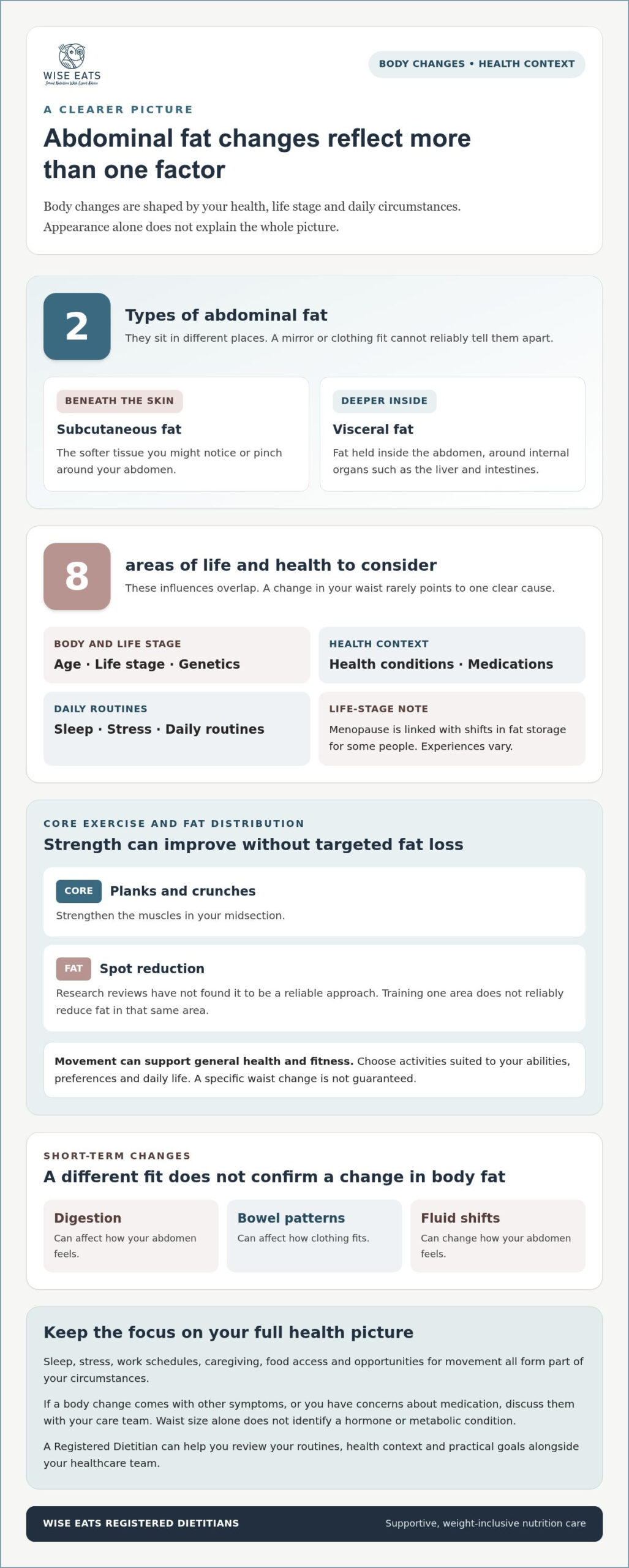
Age, life stage, sleep, stress, genetics, health conditions, medications, and daily routines all affect how bodies change. Conflicting food and exercise advice adds to the frustration. Stomach-focused exercises strengthen your core, but they don’t target fat loss in one specific area.
This article explains why abdominal fat changes over time, which factors deserve attention, and when a conversation with your care team might help. You’ll also find realistic ways to support your health without strict food rules or shame. A Registered Dietitian offers personalized nutrition support to help you review your routines, health context, and practical goals at a pace that fits your life.
Key Takeaways
- If you’re wondering, “Why can’t I get rid of Belly Fat,” changes in your midsection don’t measure your effort or worth.
- Learn the difference between fat beneath the skin and deeper visceral fat, and why body changes have more than one influence.
- Abdominal exercises don’t target fat loss in one area, and no single food or supplement guarantees a change in belly fat.
- Review practical habits around nourishment, sleep, movement, and daily routines without cutting out whole food groups.
- A Registered Dietitian can help you consider your preferences, health context, and goals alongside your healthcare team.
Why belly fat can seem hard to lose, even when you are trying
You’ve adjusted meals, made time for movement, or tried advice that sounded convincing. Yet your middle looks or feels much the same. It’s discouraging, but it doesn’t mean you’ve failed or lack willpower. Body changes reflect many influences, and effort doesn’t always show up as a change in waist size.
“Belly fat” is a common term for abdominal fat. It includes fat beneath the skin and fat held deeper inside the abdomen. The term abdominal obesity describes fat around the waist. Appearance alone doesn’t show how much of each type a person has or give a full picture of their health.
A short video offers another perspective on why changes in your midsection might feel confusing. Treat its advice as general information, not an assessment of your health.
Visceral and subcutaneous fat are different
Subcutaneous fat sits just beneath your skin. It’s the softer tissue you might notice or pinch around your abdomen. Visceral fat sits deeper in the abdomen, around internal organs. The NHS describes visceral fat as fat stored around organs such as the liver and intestines. In plain language, it’s fat held inside the abdomen, not directly under the skin.
You can’t reliably tell these types apart by looking in a mirror or checking how clothing fits. This article explains the terms, but it doesn’t assess your individual fat distribution. If you’re concerned about health risks, discuss them with your healthcare team. They can consider your broader health context.
Why one person’s experience differs from another’s
Genetics influence how bodies tend to store fat. Age and life stage matter too. Body composition and fat distribution often shift over time, and hormonal changes during menopause are linked with shifts in fat storage for some people. These influences don’t act alone or affect everyone in the same way.
Health conditions, medications, sleep, stress, work schedules, caregiving, food access, and movement routines all form part of a person’s circumstances. For example, shift work might make regular meals and rest harder to manage. Such context matters when you’re trying to understand body changes. Appearance alone rarely reveals one clear cause.
If your waist looks different from one day to another, digestion, bowel patterns, or fluid shifts might also affect how your abdomen feels or how clothes fit. A short-term difference doesn’t confirm a change in body fat. The question of why abdominal fat feels difficult to change deserves an answer based on your whole experience, not blame or a single explanation.
How age, hormones, sleep, stress, and health context affect belly fat
Body composition and fat distribution shift over a lifetime. Genetics also shape individual patterns, and daily routines change with work, caregiving, sleep, food access, and opportunities for movement. These influences overlap, so a change in your waist rarely points to one clear cause. Effort and visible body changes don’t always happen at the same pace.
Quotable summary: Belly-fat changes reflect a mix of body, life-stage, health, and routine factors, so one explanation rarely fits everyone.
Age and life-stage changes
With age, people often experience changes in muscle mass and body composition. Fat distribution shifts too, though patterns vary. Age alone doesn’t explain what’s happening for you.
Menopause is one possible part of this picture. The World Health Organization describes menopause as a natural life stage, with timing and experience varying from person to person. Hormonal changes during this stage are associated with shifts in fat distribution for some people. This doesn’t mean everyone notices the same change, or menopause explains every change in abdominal size. For a general overview, see this article on belly fat.
Sleep, stress, and health circumstances
Sleep and stress affect how daily life feels and how manageable routines seem. A demanding work schedule, night shifts, caregiving, or ongoing stress often makes regular meals, rest, and movement harder to fit in. Research on sleep, stress, and abdominal fat shows associations, but those links don’t prove one factor caused a body change. Better rest or less stress supports well-being, but neither guarantees a particular waist measurement.
Health conditions and medications also belong in the conversation. If you notice a body change alongside other symptoms, or have concerns about how a medication relates to your health, discuss them with your care team. Don’t diagnose a hormone or metabolic condition based on waist size, tiredness, or one other symptom. A clinician can review your personal history and decide whether further assessment makes sense.
To discuss personal routines and nutrition goals without assuming one cause, consider a Registered Dietitian appointment.
Why belly-fat tactics often disappoint, and what the evidence supports
It’s easy to feel discouraged by plans promising a smaller waist through one exercise, food, or supplement. These claims often blur two different goals: building strength and changing how your body stores fat. Useful health habits still matter, but no single routine guarantees a specific change in one body area.
Can exercises target fat only around the stomach?
Abdominal exercises such as planks or crunches strengthen the muscles in your midsection. They don’t selectively remove the fat covering those muscles. Research reviews have not found spot reduction to be a reliable approach. In other words, training one body area doesn’t reliably reduce fat in that same area.
Whole-body movement, including activities you enjoy and strength exercises suited to your abilities, supports general health and fitness. It still doesn’t promise a specific waist change. Movement doesn’t need to serve as punishment or payment for eating. Choose activities that fit your health, access, preferences, and daily life.
Claim: Ab exercises burn fat only around your stomach.
What evidence supports: They strengthen abdominal muscles, but evidence does not show reliable spot reduction.
Practical interpretation: Include core exercises if you enjoy them, and set broader goals for movement and strength.
Claim: One food or supplement will reduce belly fat.
What evidence supports: No single food or supplement guarantees a change in abdominal fat for everyone.
Practical interpretation: Consider your overall eating pattern and discuss supplements with your care team.
Claim: A rapid change in appearance proves lasting progress.
What evidence supports: Short-term appearance changes alone don’t establish lasting health outcomes.
Practical interpretation: Look at whether a routine supports nourishment, well-being, and everyday life.
Why quick-fix plans are a poor measure of progress
Strict plans often promise precise results from detoxes, supplements, or cutting out broad food groups. Those promises overlook differences in health, preferences, resources, and routines. A quick change in how your abdomen looks also doesn’t tell you whether a plan is nourishing or sustainable. If you’re asking, “Why can’t I get rid of Belly Fat,” a rigid plan is unlikely to explain your individual experience.
Before following a plan, check whether it leaves room for foods you enjoy, fits your schedule, and supports regular, nourishing meals. Notice how it affects your energy, mood, and relationship with food. A plan demanding severe rules or leaving you anxious around meals deserves a second look. If supplements interest you, review them with your care team, especially if you take medication or manage a health condition.
A Registered Dietitian can help you consider food routines, preferences, and health context without promising a particular body shape. If personalized nutrition guidance feels useful, you can book a nutrition counselling appointment.
Supportive steps to review when belly-fat progress feels stalled
A stalled change in your waist doesn’t mean you need stricter rules. Before changing your meals or adding more exercise, pause and review how your routines fit your health, energy, and daily responsibilities. The goal is to find one supportive step that feels manageable, not to meet a weight, waist, calorie, or timeline target.
If you’re thinking, “Why can’t I get rid of Belly Fat,” try looking beyond appearance. Notice what supports your well-being and what gets in the way. A busy week, poor sleep, or limited time to prepare food offers useful context, not a reason for blame.
A flexible check-in for everyday routines
Use the prompts below as a gentle review, not a scorecard. You don’t need to change everything at once. Choose one area to support first, then see how it fits into your life.
- Nourishment: Notice whether meals leave you satisfied and energized. Add a convenient option, such as fruit with breakfast or a filling snack for a long shift, if it suits your needs.
- Routine: Look for long gaps between meals or times when work and family duties disrupt eating. If mornings feel rushed, set aside a breakfast option the night before or plan a meal break around your work schedule.
- Sleep: Consider what affects your rest, such as changing shifts, caregiving, or a late bedtime. A small routine, like setting aside time to wind down, might feel more realistic than trying to overhaul your schedule.
- Movement: Choose an activity based on your ability, access, and preferences. A short walk, chair-based movement, or a few minutes of stretching are options. Movement supports health without serving as punishment for eating.
- Health context: Write down questions about symptoms, health conditions, or medication effects. Bring them to your care team. Don’t stop or change medication without their guidance.
Adding a meal, snack, or movement break often feels more workable than cutting out broad food groups. A Registered Dietitian can help you consider food preferences, routines, and health needs without setting body-shape promises.
When to Seek Help
Support is appropriate whenever food or body concerns start to affect your well-being. Consider talking with your care team or a Registered Dietitian if you notice any of these changes:
- You often skip meals or find yourself avoiding more foods because eating feels stressful.
- Binge eating happens repeatedly, or you use behaviours such as vomiting, laxatives, or extra exercise to compensate for eating.
- You have concerning physical symptoms, or food and body worries lead you to withdraw from people or activities.
These concerns deserve care without blame. Your healthcare team can help decide what support fits your needs, and a Registered Dietitian can work alongside them on nutrition goals.
How a Registered Dietitian supports a personalized approach to belly fat concerns
Questions about your midsection often come with a lot of conflicting advice. A Registered Dietitian helps bring the focus back to your routines, preferences, health context, and goals. Together, you can discuss what feels manageable and choose practical nutrition steps without treating body shape as a measure of success.
At an appointment, you might talk about what meals look like on a typical workday, foods you enjoy, cooking time, sleep, and any health concerns. The dietitian can help you identify useful changes, such as planning a satisfying lunch for a long shift or adding a convenient snack to a busy afternoon. The plan should fit your life, not ask you to follow rigid rules.
What personalized nutrition support focuses on
Support may include meal planning, reviewing eating patterns, and setting goals related to nourishment and daily routines. A dietitian can help you weigh options based on your needs and preferences, then revisit the plan as circumstances change. This process doesn’t promise a particular waist size or body shape. If you’re asking, “Why can’t I get rid of Belly Fat,” an individualized discussion helps look beyond one number or tactic.
Nutrition counselling doesn’t diagnose health conditions or replace your healthcare team. A Registered Dietitian can work alongside your care team, and you should discuss symptoms or medication concerns with them. Wise Eats Registered Dietitians offers virtual appointments for people in Alberta and British Columbia, as well as in-person options in selected communities. Clients in Calgary, Edmonton, Nanaimo, Parksville, Qualicum Beach, and across Vancouver Island can learn about weight-management nutrition support.
For broader health needs, your dietitian can coordinate nutrition goals with the guidance of your healthcare team. If a concern needs medical assessment, bring it to your care team rather than relying on food changes alone. The roles are different, and working together helps keep nutrition support within its proper scope.
Meet the dietitians supporting Alberta and British Columbia
Rachel McBryan, RD, College of Health and Care Professionals of BC, is licensed in British Columbia. Sheirry Poposka, RD, Alberta College of Dietitians, is licensed in Alberta. They support people with different routines, food preferences, and health contexts. Your first conversation can focus on what matters to you, including what you’ve tried and what you want help with now.
You don’t need to arrive with a complete food diary or a polished list of goals. It’s enough to describe what feels difficult, what’s working, and what you’d like to change. A Registered Dietitian can help turn those details into realistic next steps, while your healthcare team remains involved in medical care.
Choose support that fits your next step
If “Why can’t I get rid of Belly Fat” keeps coming up, you deserve a conversation focused on your needs, not another set of strict rules. Start with one concern you want help sorting out, such as meal routines around work, nutrition needs, or how to discuss health changes with your care team. You don’t need a finished plan before asking for support.
Before an appointment, note what you’d like help with, the foods you enjoy, and any routine that makes eating harder. A few details about your schedule or health concerns can help guide the conversation. You decide which goals feel relevant and what changes suit your life.
Wise Eats Registered Dietitians’ team brings more than 30 years of combined clinical experience. Nutrition counselling offers a collaborative space to consider practical next steps, with your healthcare team involved in decisions about symptoms, diagnoses, and medication.
You deserve nutrition support that respects your needs and priorities. Speaking with a registered dietitian can help you develop a balanced, flexible approach to eating and meet your nutritional needs.
Frequently Asked Questions
Is belly fat different from bloating?
Yes. Belly fat is body tissue, while bloating is a feeling of fullness or pressure in your abdomen. Bloating often changes during the day or after eating, and it might come with gas or altered bowel habits. Fat tissue doesn’t usually appear and disappear over a few hours. If bloating persists, causes pain, or comes with other new symptoms, discuss it with your healthcare professional.
Does a waist measurement show how much visceral fat I have?
No. A waist measurement records the size of your abdomen, but it doesn’t separate deeper visceral fat from fat beneath the skin. Health professionals sometimes use waist measurements as one part of a broader health assessment. If you track your waist, take measurements under similar conditions and avoid treating small changes as a diagnosis. Your care team can explain what a measurement means in your health context.
Do body composition scales measure belly fat accurately?
Consumer body composition scales don’t directly measure fat around your organs. Many estimate body composition using a small electrical current, and results shift with hydration, recent meals, exercise, and other factors. Treat the number as a rough estimate, not a precise measure of abdominal fat or health. If frequent readings cause worry, consider setting the scale aside and discussing your concerns with your care team.
Does belly fat change after menopause?
Fat distribution can shift around menopause, but the pattern differs from person to person. A change in waist size alone doesn’t confirm its cause or indicate a specific hormone problem. If you notice changes alongside new symptoms or have questions about menopause and health, bring them to your healthcare professional. They can review your history and help decide whether further assessment is appropriate.
Will belly fat change first when someone loses weight?
No predictable order applies to everyone. Genetics and individual body patterns influence which areas change first, and some people notice changes in other areas before their abdomen. Exercises aimed at one body part don’t reliably control fat loss in that area. If you’re asking, “Why can’t I get rid of Belly Fat,” a change in another part of your body doesn’t mean your efforts have failed.
When should I speak with a healthcare professional about abdominal changes?
Speak with a healthcare professional about sudden or persistent abdominal swelling, ongoing pain, or changes alongside symptoms such as vomiting or changes in bowel habits. Seek timely care for severe or worsening symptoms. For gradual changes that concern you, book a routine appointment and note when they began and any related symptoms. This information gives your care team a clearer starting point for discussing next steps.

Article by
Rachel McBryan, Dietitian
Rachel McBryan is a licenced Dietitian in British Columbia offering comprehensive nutrition counselling as virtual and/or in-person counselling sessions to suit your needs and preferences. With a Bachelor of Science in Nutrition and Food Science, Rachel has over 20 years experience helping people address their health through nutrition. She was awarded Human Nutrition and Food Science BSc.from University of Alberta followed by post-grad course work at UBC in guidance counselling.
An eating disorder is a serious mental health illness.
If you are in immediate distress or crisis, please contact emergency services by dialing 911 or calling Vancouver Island Crisis Line: 1-888-494-3888.