If you want to heal your relationship with food, a helpful place to start is with fewer rules. If food choices leave you feeling guilty, worried, or as though you’ve failed, it makes sense to want a different approach. Rigid rules and all-or-nothing thinking often make everyday meals stressful, even when your goal is to care for yourself.
A flexible approach starts with less judgment and habits suited to real life. Your schedule, culture, preferences, health needs, and access to food all matter. You don’t need one ideal way of eating to make thoughtful choices. Small shifts, such as packing a satisfying snack for a busy day or making room for foods you enjoy, help build routines suited to your life.
This article shares ways to approach food choices with less judgment, build practical habits, and recognize when extra support would be useful. A Registered Dietitian offers collaborative nutrition counselling shaped around your circumstances, rather than a one-size-fits-all plan. You’ll also find signs to notice, such as food worries or eating patterns interfering with daily life.
Food Choices Without Judgment
- To heal your relationship with food, aim for more comfort and flexibility, with less distress around everyday choices.
- Family messages, culture, food access, and busy schedules all shape how you eat. Notice these influences without blaming yourself.
- Try one small change, such as planning a snack for a busy afternoon or making meals easier to fit your routine.
- Reach out for support if food worries disrupt daily life, eating feels difficult to manage, or physical symptoms concern you.
- A Registered Dietitian offers collaborative nutrition counselling shaped around your needs and daily life, alongside your existing care team.
What Does It Mean to Heal Your Relationship with Food?
To heal your relationship with food is to feel more comfortable and flexible around eating, with less guilt, worry, or distress about food choices. It means making room for your needs and preferences without expecting every meal to follow rigid rules. It isn’t a diagnosis or a single way of eating.
Food relationships differ from person to person. Culture, family traditions, health needs, sensory preferences, food access, finances, and life experiences all play a part. A familiar meal might bring comfort for one person, while another person prefers different textures or flavours. Both experiences are valid.
Life circumstances also shape how eating fits into your day. Work schedules, caregiving, changes in health, or limited access to certain foods affect routines. For example, someone with a short lunch break might rely on easy-to-carry foods, while another person plans meals around a health need. Neither routine is a universal model.
You don’t need to copy someone else’s habits. Notice how food rules and expectations affect your choices, then consider which routines feel useful and which add stress. Intuitive Eating: A Holistic Approach offers an overview of an approach centred on hunger and fullness cues rather than outside food rules. People experience this approach differently, and health needs vary.
What Shapes Your Experiences with Food?
Messages from family, community, and social settings influence what eating means to you. Finances, time, and the foods available nearby also affect daily choices. These factors aren’t signs of personal failure. They’re part of the context behind a meal or routine.
Health needs, sensory preferences, and life changes matter too. A new work schedule, a change in appetite, or a need to adapt food texture might shift what feels manageable. There’s no single cause behind a person’s food habits, and no single ideal pattern to aim for.
Signs Food Is Taking Up Too Much Mental Space
Food thoughts deserve attention when they bring ongoing guilt, anxiety, or stress to ordinary decisions, such as choosing lunch or eating with others. You might spend a lot of time planning what to eat, replaying a meal in your mind, or avoiding social plans involving food.
These experiences don’t define you or, on their own, point to a diagnosis. They do offer useful information about how eating feels in your life. Notice when food worries interrupt daily activities or make it harder to enjoy meals with people you care about.
How Past Experiences and Daily Pressures Shape Food Choices
Food choices develop within the details of daily life. Family comments, social expectations, past experiences, and practical limits can shape what feels comfortable or stressful around eating. Understanding those influences helps you respond with curiosity instead of self-blame. It doesn’t mean every food habit has one clear cause.
Emotional eating is one example. You might reach for food during a tense day, enjoy a familiar meal when you feel homesick, or notice appetite changes during a difficult period. These experiences vary from person to person. Emotional eating on its own doesn’t establish a disorder or say anything about your character.
How Food Rules and Messages Take Hold
Repeated messages can influence how you judge your own choices. A family member might comment on portion sizes, or a social setting might place strong expectations on what people eat. Over time, you might second-guess a meal or feel uneasy when your routine differs from those expectations.
Family and cultural food traditions also hold meaning, connection, and comfort. They don’t need to be treated as problems. Instead, notice how particular messages affect you today. For instance, a person raised with set meal times might feel unsettled after starting shift work. Their routine changed, not their worth or commitment to caring for themselves.
Try separating a message from your present-day needs. You might ask yourself, “Does this routine suit my schedule and health needs now?” The answer can change over time. There’s room to value family traditions and make choices suited to your current life.
The Role of Stress, Emotions, and Access
Stress, mood, time, and food availability all affect what feels manageable. After a long shift, you might choose a quick meal. A limited grocery selection or a tight household budget also shapes what’s on hand. These circumstances matter. A food choice doesn’t tell the whole story about someone’s health, priorities, or relationship with food.
If you notice eating in response to emotions, pause without turning the moment into a test. Consider what was happening: Were you tired, under pressure, short on time, or looking for comfort? You don’t need to count calories or criticize yourself to spot a pattern. A simple note about the situation and how you felt helps you notice useful support, such as a convenient snack or a steadier meal break.
General education offers ideas, but it can’t assess your personal health needs or explain every eating pattern. A Registered Dietitian discusses your circumstances and provides nutrition counselling alongside your existing care team. To reflect on your food habits with a professional, visit Wise Eats Registered Dietitians.
Practical Ways to Build More Flexible Food Habits
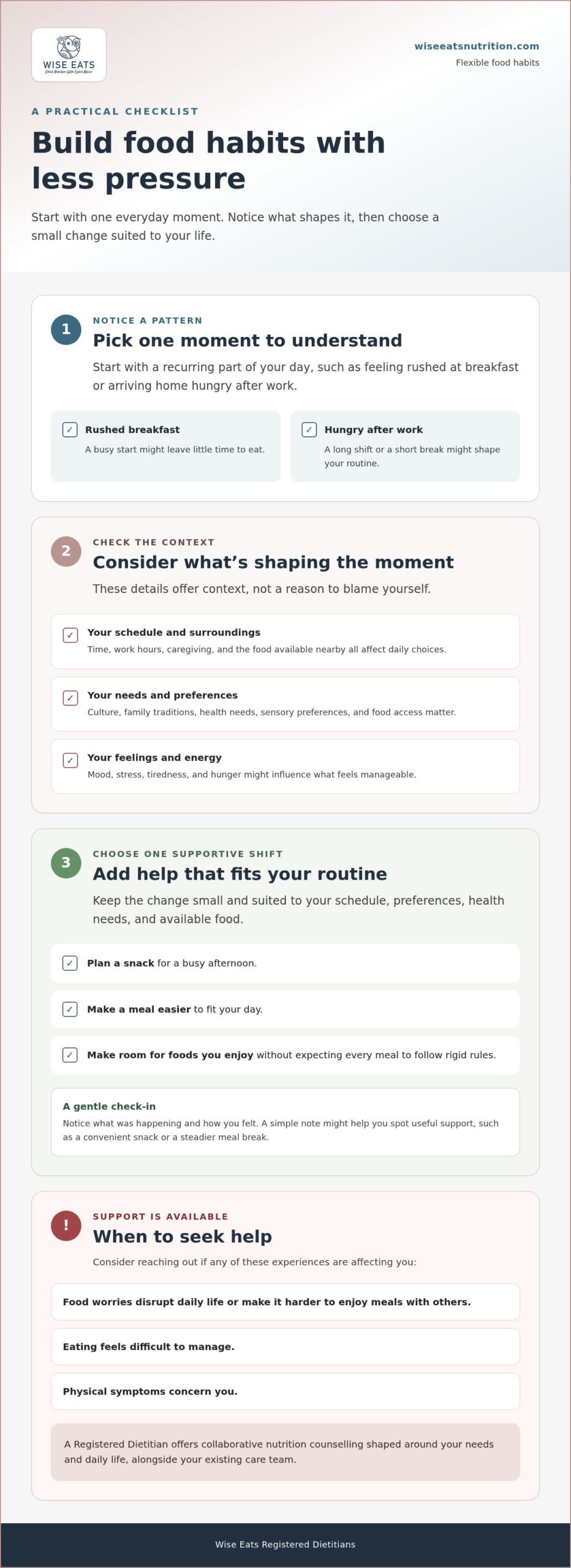
Small, low-pressure adjustments are easier to fit into daily life than a strict plan. Start with one moment or routine you want to understand. Then choose a change suited to your schedule, preferences, culture, health needs, and available food. The aim is to add support, not to judge or remove foods.
Use this simple sequence as a starting point:
- Notice a pattern. Pick a recurring moment, such as feeling rushed at breakfast or arriving home hungry after work.
- Identify the context. Consider your mood, hunger, time, surroundings, and available food. Ask what made the moment easier or harder.
- Choose one manageable adjustment. Add a step suited to your life, such as setting aside a convenient snack for a long commute.
- Reflect without grading yourself. Notice whether the adjustment felt useful. Keep it, adapt it, or try another option without treating the result as a pass or fail.
Start with Curiosity Instead of Self-Criticism
Pay attention to hunger, satisfaction, mood, and surroundings without recording numbers. You might ask, “Did I have enough time to eat?” or “What would make lunch more satisfying today?” If you notice a difficult moment, consider what was happening before it. This kind of reflection helps identify needs and practical barriers without turning eating into a scorecard.
One meal doesn’t define your overall eating pattern. If lunch was rushed, you don’t need to compensate or make a strict plan for the next meal. Return to your usual routine, or consider what would make the next eating opportunity more comfortable.
Make Small Changes That Fit Real Life
Choose additions that feel useful and realistic. For a busy morning, set out a familiar breakfast the night before. If work breaks vary, keep a preferred snack in your bag or desk, if it suits your needs. You might also add a familiar food to a meal or prepare an extra portion when cooking fits your routine.
Practical changes should reflect your budget, food access, tastes, and traditions. A meal plan overlooking those details is unlikely to feel supportive. If fresh ingredients are hard to store, shelf-stable choices might fit better. If shared meals matter to you, build around foods your household enjoys.
These ideas offer general education, not individualized treatment. Health needs and eating concerns differ, so a Registered Dietitian helps tailor nutrition support alongside your existing care. Wise Eats provides nutrition counselling to discuss food habits with a professional.
When to Seek Help and How to Respond to Setbacks
Changes in your eating habits and feelings about food often take time. A disrupted routine or a difficult meal doesn’t erase what you’ve been learning. You don’t need to start over or prove your commitment. Returning to a familiar, manageable routine is a reasonable next step.
Responding to Difficult Days Without Starting Over
After a demanding day, you might miss a meal, eat differently from what you planned, or feel unsettled about a food choice. Try to identify what made the day harder, such as a schedule change, low energy, stress, or limited food options. This isn’t a reason to criticize yourself. It’s useful context.
Then choose a supportive action for the next eating opportunity. You might prepare a familiar meal, make time for a snack, or return to a routine you find comfortable. Keep the step small enough to fit your day. Consistency isn’t a test of willpower, and one challenging moment doesn’t define your overall pattern.
Learning to heal your relationship with food doesn’t mean handling every concern on your own. A Registered Dietitian offers nutrition education and counselling alongside your existing healthcare providers. This support doesn’t replace medical or mental health care. Talk with your care team about concerns involving your health or eating, especially if you already receive care.
When to Seek Help
Consider talking with a healthcare professional or your care team if food-related distress starts to affect your safety, health, or daily life. You don’t need to wait until you feel certain your concern is serious. A conversation helps you understand what kind of support fits your situation.
- Food-related worry leads you to avoid meals or social situations involving food.
- Binge eating or behaviours intended to compensate for eating feel difficult to manage.
- Physical symptoms or growing isolation accompany increased distress about food.
These signs don’t confirm a diagnosis. They do deserve care and attention. A Registered Dietitian supports practical nutrition needs as part of a broader care plan, in coordination with your other providers. If physical symptoms concern you, share them with a healthcare professional or your care team.
Seeking help doesn’t mean you’ve failed. It gives you a chance to talk through what’s happening and consider support suited to your needs and circumstances.
How a Registered Dietitian Supports a Healthier Relationship with Food
Nutrition counselling with a Registered Dietitian is collaborative. You bring your questions, goals, preferences, health needs, and daily realities. Together, you explore practical steps suited to your food traditions and routine. The focus isn’t on judging your choices or prescribing one way of eating.
A Registered Dietitian provides nutrition education and support within their professional role. They don’t diagnose every concern or replace medical or mental health care. If you already work with a healthcare team, your dietitian coordinates nutrition support with that care, with your involvement.
What Nutrition Counselling May Cover
Sessions start with what feels difficult or important to you. You might talk about meal routines, food-related worries, preferences, health needs, or practical barriers affecting your choices. From there, you and your dietitian set manageable goals, such as making meals easier during a busy work week or finding ways to include familiar foods.
For people seeking eating disorder recovery support, nutrition counselling addresses food routines and nourishment as part of a broader care plan. It doesn’t promise a particular outcome or take the place of other providers. Wise Eats offers eating disorder recovery nutrition support as part of collaborative care.
Finding Support in Alberta and British Columbia
Wise Eats Registered Dietitians support residents of Alberta and British Columbia. Rachel McBryan, RD, is registered with the College of Health and Care Professionals of BC. Sheirry Poposka, RD, is registered with the Alberta College of Registered Dietitians. Online, in-person, and home-visit sessions offer ways to access nutrition support across the service area.
Support is available to people in Calgary and Edmonton, as well as Nanaimo, Parksville, Qualicum Beach, and other communities on Vancouver Island. If you’re unsure what nutrition counselling involves, the Ask a Dietitian resource offers a way to raise food and nutrition questions.
For eating disorder recovery information in Canada, look to trusted health and community resources alongside guidance from your care team. A Registered Dietitian contributes nutrition support while other professionals address needs within their own areas of care.
Choose a Next Step That Feels Supportive
Progress with food doesn’t need a deadline or a perfect plan. As you continue to heal your relationship with food, give yourself room to adjust your approach as your needs and circumstances change. A next step might be sharing a concern with someone you trust, bringing a question to your care team, or arranging nutrition counselling. You deserve support respecting your health needs, culture, preferences, and lived experience.
A conversation with a Registered Dietitian offers space to discuss food concerns and practical nutrition support. Counselling complements care from other professionals, with your goals and daily life guiding the discussion. Use the conversation to name what support feels useful, which concerns need attention first, and how your existing care team fits into the plan. You’re allowed to ask for help before food worries feel overwhelming.
Speaking with a registered dietitian can help you develop a balanced, flexible approach to eating and meet your nutritional needs.
Frequently Asked Questions
Is it possible to improve my relationship with food without following a meal plan?
Yes, a meal plan isn’t required. Some people prefer a written structure, while others find a few loose routines more comfortable. You might keep an easy breakfast option on hand or decide which snacks travel well in your bag. Treat these as supports, not rules. If a health condition affects your nutrition needs, discuss options with your care team or a Registered Dietitian.
How do I stop feeling guilty after eating?
Start by noticing the guilt without treating it as proof you did something wrong. Try naming the thought, such as “I’m judging myself for choosing this,” then remind yourself food choices don’t measure your worth. You might shift to a calming activity, like calling a friend or returning to a task. Avoid trying to compensate for what you ate. If guilt keeps affecting daily life, talk with a professional.
How long does it take to heal your relationship with food?
There’s no set timeline. Your pace depends on your experiences, current stress, health needs, and available support. Rather than waiting for a finish line, notice specific changes, such as spending less time replaying a meal or feeling more at ease at a family gathering. Difficult periods don’t erase earlier changes. A Registered Dietitian or your care team reviews support options with you as your needs shift.
Is intuitive eating the same as healing your relationship with food?
No. Intuitive eating is one approach encouraging attention to body cues and a more flexible response to food. Healing your relationship with food is a broader personal process, and it doesn’t require following one named approach. Health needs, access to food, and lived experience all shape what feels workable. If you have a condition affecting eating, talk with your care team before making nutrition changes.
What do I do if family comments affect how I eat?
You can prepare a short response before a family meal, such as “I’d rather not discuss my food choices.” If you prefer, change the subject or ask someone you trust to support the boundary. Comments can feel difficult even when a relative means well. You don’t have to debate your needs at the table. If family pressure affects your eating or social life, discuss it with a supportive professional.
Article by
Rachel McBryan, Dietitian
Rachel McBryan is a licenced Dietitian in British Columbia offering comprehensive nutrition counselling as virtual and/or in-person counselling sessions to suit your needs and preferences. With a Bachelor of Science in Nutrition and Food Science, Rachel has over 20 years experience helping people address their health through nutrition. She was awarded Human Nutrition and Food Science BSc.from University of Alberta followed by post-grad course work at UBC in guidance counselling.
An eating disorder is a serious mental health illness.
If you are in immediate distress or crisis, please contact emergency services by dialing 911 or calling Vancouver Island Crisis Line: 1-888-494-3888.