What if managing your gout didn’t mean memorizing a long list of forbidden foods or living in fear of the next painful flare? If you’ve ever woken up with that sudden, intense throbbing in your joint, you know how isolating it feels. You might feel overwhelmed by conflicting purine lists or worry that Edmonton’s dry winters are making it harder to stay hydrated. It’s exhausting to feel like your body is working against you when you just want to stay active and comfortable.
Working with a dietitian for gout Edmonton can help you move past the confusion and build a flexible plan that focuses on variety. You’ll learn how to lower your uric acid levels and reduce the frequency of those painful flares through a supportive, evidence-based approach tailored for Alberta residents. This guide explores how personalized meal planning, hydration strategies for our climate, and clear guidance on supplements can help you regain your peace of mind.
Key Takeaways
- Understand how Edmonton’s dry climate can impact hydration and why maintaining fluid intake is a key step in managing uric acid concentration.
- Learn why consulting a dietitian for gout Edmonton offers more clarity than generic internet purine lists by focusing on your unique nutritional needs.
- Discover how a balanced plate of vegetables, whole grains, and protein can support your kidney function and help manage inflammatory flares.
- Gain a clearer understanding of how purines work in the body, helping you shift focus from restriction to variety and lifestyle integration.
- Find out how professional support from an Alberta-registered dietitian can help you build a flexible meal plan that fits your local lifestyle.
Managing Gout Flares in Edmonton: Why Nutrition Matters
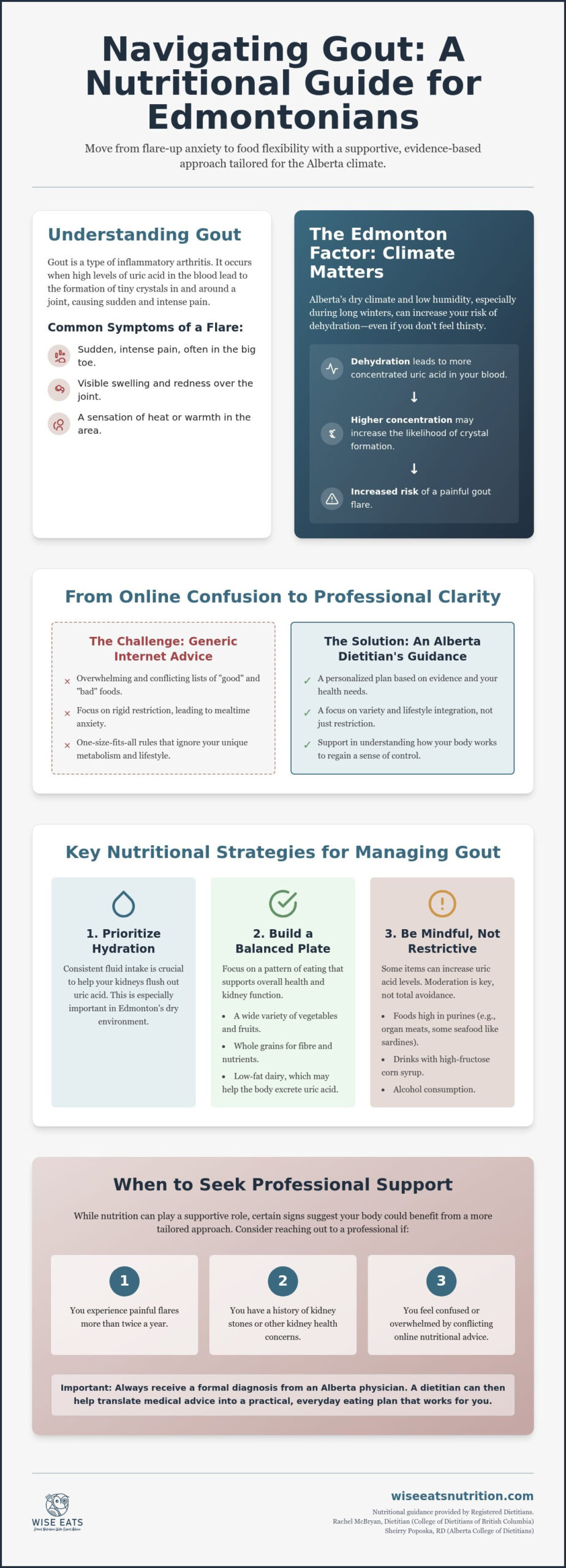
Gout is more than just a sore joint. It is a form of inflammatory arthritis that occurs when uric acid crystals settle into your joints, causing sudden and often intense pain. If you have ever felt like your toe was on fire in the middle of the night, you are not alone. Many people in our community struggle with these flares, and the dry Alberta air often plays a role. In Edmonton, our low humidity levels can lead to dehydration faster than you might realize. When your body is low on water, uric acid can become more concentrated in your blood, which may trigger a flare. It is frustrating to feel like you are doing everything right only to be sidelined by pain. This is where a dietitian for gout Edmonton can act as a steady hand, helping you stabilize your long-term health through evidence-based Medical Nutrition Therapy (MNT).
Working with a professional provides you with a partner who understands the science of metabolic health and the local environment. MNT is a supportive framework designed to lower uric acid levels while keeping your meals enjoyable. By focusing on how your body processes nutrients, you can move away from the anxiety of the “next flare” and toward a sense of control. This approach focuses on lifestyle integration rather than rigid rules, helping you find a sustainable path forward that respects your unique needs and preferences.
Common Gout Symptoms and Local Factors
A gout flare often appears as heat, visible swelling, and intense pain, frequently starting in the big toe. These symptoms can appear suddenly, often at night when body temperature drops. In Alberta, our seasonal shifts can play a surprising role in how your body feels. During our long, cold winters, we might not feel as thirsty as we do in the summer, yet our bodies still need consistent fluid intake to help the kidneys process uric acid. It is helpful to realize that flares are a medical condition caused by biological processes, not a personal failure or a lack of willpower. Your body is simply sending a signal that it needs a bit more support to maintain balance.
When to Seek Help
While many people manage occasional discomfort, there are times when extra support can help you regain your quality of life. You might consider reaching out if you notice these signs that your current routine may need an adjustment:
- You are experiencing painful flares more than twice in a single year.
- You have a history of kidney stones or other concerns related to kidney function.
- You feel overwhelmed or confused by conflicting nutritional advice you have found online.
These red flags suggest that your body could benefit from a more tailored approach to nutrition. It is always important to receive a formal diagnosis from an Alberta physician to ensure you are targeting the right issue. Once you have that diagnosis, working with a registered dietitian in Edmonton can help you translate medical data into a practical, everyday eating plan. Professional support offers a filter against misinformation, giving you a clear and steady path toward peace of mind.
The Science of Purines: Evidence-Based Advice from a Registered Dietitian
Purines are often misunderstood as something to be entirely avoided. In reality, these are natural compounds found in every cell of your body and in many of the foods we eat daily. When your body breaks down purines, it produces uric acid as a byproduct. Under normal circumstances, your kidneys filter this out efficiently. However, when levels rise too high or excretion slows down, crystals can settle into the joints. Organizations like Diabetes Canada emphasize that managing metabolic conditions, including gout, isn’t about extreme restriction. It’s about finding a sustainable balance that supports your kidneys and reduces inflammation. Working with a dietitian for gout Edmonton helps you understand this biological process so you can make choices that support your body rather than fight against it.
Shifting your focus toward a flexible eating pattern is key for long-term success. Instead of seeing foods as “safe” or “dangerous,” we look at how different choices interact with your unique metabolism. This evidence-based approach aligns with WHO standards for reducing chronic inflammation through diverse, nutrient-dense intake. By focusing on balance, you can maintain a high quality of life while still being mindful of your uric acid levels.
High-Purine vs. Low-Purine Choices
Building a plate that supports your joints doesn’t have to be complicated. Low-purine options often include low-fat dairy, most vegetables, and a wide variety of fruits. Interestingly, some research suggests that low-fat dairy may actually help your body excrete uric acid more effectively. On the other hand, certain foods like organ meats and specific types of seafood, such as sardines or mackerel, are more concentrated in purines. Using labels like “clean eating” often adds unnecessary stress and shame to your mealtime. Effective gout management is more successful when you focus on lifestyle integration rather than rigid rules. If you’re feeling stuck on how to build your meals, you can book a session to create a plan that fits your preferences.
The Role of Fructose and Alcohol
While purines get most of the attention, other dietary factors play a major role in uric acid production. High-fructose corn syrup, frequently found in sweetened drinks and processed snacks, can actually trigger your body to produce more uric acid. Similarly, alcohol can be a double-edged sword. It not only increases production but also interferes with how well your kidneys can flush uric acid out. Beer is often a specific trigger because it contains guanosine, a type of purine that is absorbed quite quickly. Simple swaps, like choosing sparkling water with a splash of citrus over sugary pop, can help support your kidney function and lower your flare risk. A dietitian for gout Edmonton can help you navigate these social situations without feeling like you’re missing out.
Why Consult a Dietitian for Gout in Edmonton vs. Searching Online?
If you’ve spent any time searching for gout advice online, you’ve likely found yourself staring at a long list of foods you “shouldn’t” eat. It’s overwhelming to feel like your favourite meals are suddenly off-limits. While the internet is full of generic purine charts, it lacks the context of your specific health history. A dietitian for gout Edmonton acts as an expert guide, filtering out the noise and focusing on what actually works for your body. Instead of just handing you a list of restrictions, professional nutrition counselling for medical conditions provides a clear, manageable path toward feeling better. We help you move from a state of fear to a state of clarity.
One common concern is the cost of professional support. It’s helpful to know that many private insurance plans in Alberta cover the services of a Registered Dietitian. If you have extended health benefits through your employer, you might already have the coverage you need to get started. Investing in professional advice can actually save you money in the long run by reducing the need for emergency care or expensive, unproven supplements that don’t deliver results.
Dietitian vs. Nutritionist in Canada
In Alberta, the title “Dietitian” is protected by law. This means that anyone using this title must meet rigorous educational and clinical standards. They are regulated by the Alberta College of Registered Dietitians, ensuring you receive safe and evidence-based care. On the other hand, the term “nutritionist” isn’t always regulated in the same way, which can lead to inconsistent advice. To understand why this distinction matters for your health, you can read our full Dietitian vs Nutritionist Canada guide. Choosing a Registered Dietitian means you’re working with a professional who is legally and ethically bound to provide high-quality nutritional care.
Individualized Assessment vs. One-Size-Fits-All
A generic internet list doesn’t know your blood pressure or the current state of your kidney health. During a professional assessment, a dietitian for gout Edmonton reviews your full health history. We look at how your gout might interact with other conditions, such as metabolic concerns or digestive health. This deep dive allows us to create a custom meal plan that actually fits your Edmonton lifestyle. Do you enjoy local farmers’ markets? Are you struggling to stay hydrated during our dry winters? We take these local factors into account. There is an immense sense of relief that comes from having a professional plan of action tailored specifically to you. You no longer have to guess what’s for dinner or worry if a specific ingredient will trigger a flare.
How to Organize a Gout-Friendly Meal Plan: A Practical Guide
Transitioning from understanding the science of purines to actually building a plate can feel like a big leap. It is helpful to break this process down into manageable steps that fit into your daily life in Alberta. A dietitian for gout Edmonton can help you simplify these choices, ensuring you get the nutrients you need without the stress of constant second-guessing. By focusing on a few key pillars, you can create a routine that supports your kidney health and reduces the intensity of future flares.
- Step 1: Focus on Hydration. Aim for 2 to 3 litres of water daily. In our dry climate, your body loses moisture quickly, which can make uric acid more concentrated.
- Step 2: Build a Balanced Plate. Try to fill half your plate with vegetables, one-quarter with whole grains, and the final quarter with a protein source. This variety ensures you aren’t over-relying on any single food group.
- Step 3: Incorporate Vitamin C. Foods rich in Vitamin C, like bell peppers, strawberries, and citrus fruits, may help support healthy uric acid levels by assisting the kidneys in the excretion process.
- Step 4: Conduct a Professional Supplement Audit. Reviewing your current vitamins with a professional ensures they are safe and effective for your specific needs.
Hydration Strategies for Edmonton Residents
Staying hydrated in a city known for its dry winters and breezy summers requires a bit of planning. Whether you are walking through the North Saskatchewan River valley or visiting one of our local parks, carrying a reusable water bottle makes it easier to reach your goals. You can monitor your hydration by simply checking the colour of your urine; aiming for a pale yellow colour is a reliable sign that you are on the right track. For those managing gout, optimal hydration means consistently hitting that 2 to 3 litre target every single day.
Customizing Your Supplement Strategy
For some, managing multiple health concerns leads to “pill fatigue.” This is where personalized supplements can offer relief. We sometimes use VitaminLab to create bespoke formulas that combine multiple nutrients into one daily dose, simplifying your routine. It is vital to check for potential interactions between supplements and gout medications, such as allopurinol. Remember that supplements are a support tool, not a cure, and work best when integrated into a balanced lifestyle. Financial disclosure: A purchase from VitaminLab is not required for your care.
Clinical Nutrition Support: Working with an Edmonton Registered Dietitian
Finding the right support for a chronic condition like gout can feel like a significant turning point in your health journey. In our community, you have access to a local partner who understands the specific challenges of managing this condition in the Alberta climate. Sheirry Poposka, RD, is a dedicated dietitian for gout Edmonton who brings both clinical expertise and a warm, supportive presence to every session. At Wise Eats Registered Dietitians, we believe that health isn’t about rigid rules or guilt. Our approach is non-judgmental and weight-inclusive, focusing on how nutrition can enhance your quality of life rather than restrict it. Taking the first step toward managing your flares doesn’t have to be intimidating. We are here to help you translate complex medical data into a clear, actionable plan that works for your unique lifestyle.
The process of getting started is designed to be as simple and stress-free as possible. You can choose between virtual or in-person consultations, depending on what fits best with your schedule. All bookings are handled through the Jane app, a secure and user-friendly platform that keeps your health information private. By choosing to work with a dietitian for gout Edmonton, you’re gaining a steady hand to help you navigate through the misinformation often found online. We focus on evidence-based strategies that prioritize your peace of mind and long-term stability.
What to Expect in Your First Session
During your initial assessment, we take the time to look at the big picture of your health. This involves a thorough review of your health history and any recent lab results from your physician, such as your serum uric acid levels or kidney function markers. Understanding these numbers allows us to tailor our suggestions to your specific biological needs. After the assessment, we move into a collaborative goal-setting phase. This is where you decide which health priorities feel most important to you, whether that’s reducing flare frequency or finding new ways to stay hydrated. You can book a consultation to begin this personalized process.
About the Authors
This guide was developed by the professional team at Wise Eats Registered Dietitians to provide clear, evidence-informed education for those living with gout. Rachel McBryan is a Registered Dietitian and a member of the College of Health and Care Professionals of BC. Sheirry Poposka is a Registered Dietitian and a member of the Alberta College of Registered Dietitians. Both professionals are committed to providing high-quality, clinical nutrition care that respects the individual needs of every client. Their work focuses on helping people in Alberta and British Columbia find a balanced, flexible approach to eating that supports their medical conditions and overall well-being.
Moving Forward with Confidence and Clarity
Managing gout doesn’t have to feel like a lonely or confusing struggle. By focusing on consistent hydration in our dry Alberta climate and shifting your mindset from restriction to a balanced, nutrient-dense plate, you can significantly influence your long-term comfort. You’ve learned that purines are a natural part of life and that finding a flexible rhythm is more sustainable than following rigid lists. Working with a dietitian for gout Edmonton provides you with the expert guidance needed to filter out misinformation and focus on evidence-based Medical Nutrition Therapy.
Sheirry Poposka, RD, is a member of the Alberta College of Registered Dietitians and is ready to support you with non-judgmental care. Whether you need a custom meal plan to reduce decision fatigue or a professional audit of your supplements, the goal is always to help you regain your peace of mind. You don’t have to guess about your health anymore. A steady, supportive hand is available to help you navigate these changes at your own pace.
You deserve to feel comfortable and active in our beautiful city. Taking this first step is a powerful way to advocate for your well-being and start living with less fear of the next flare-up.
Frequently Asked Questions
Can a dietitian help with gout flares in Edmonton?
Yes, a dietitian for gout Edmonton can support you by identifying specific dietary triggers and developing a strategy to manage uric acid levels. We focus on stabilizing your nutrition to help reduce the frequency and intensity of painful flares. This personalized approach helps you move beyond generic online lists and toward a plan that fits your local lifestyle and unique health history.
What foods should I prioritize to manage my gout symptoms?
You should prioritize nutrient-dense, low-purine options like low-fat dairy, most vegetables, and fruits high in Vitamin C. Some evidence suggests that low-fat yogurt or milk can help the kidneys excrete uric acid more effectively. Focus on building a balanced plate that includes whole grains and plant-based proteins to support your overall metabolic health and kidney function.
Is a gout dietitian covered by my Alberta health insurance?
Many private insurance plans in Alberta provide coverage for the services of a Registered Dietitian. If you have extended health benefits through your employer, it is worth checking your policy for “Dietitian” or “Nutrition” services. While Alberta Health Care does not typically cover private practice dietitians, many residents find their workplace benefits make professional care quite accessible and affordable.
How much water should I drink for gout during an Edmonton winter?
You should aim for 2 to 3 litres of water daily, even during a cold Edmonton winter. Our indoor heating and dry outdoor air can lead to dehydration quite quickly without you noticing. Maintaining this level of fluid intake is a simple but effective way to keep uric acid from becoming too concentrated in your blood and settling in your joints.
Can I still eat meat if I have gout?
Yes, you can still enjoy meat while managing gout by focusing on portion sizes and variety. Rather than labeling meat as “bad,” we work on balancing it with plenty of vegetables and whole grains on your plate. Some types of meat, like organ meats, are more concentrated in purines, so we might explore leaning more toward poultry or plant proteins for most of your meals.
What is the difference between a dietitian and a nutritionist for gout in Alberta?
In Alberta, “Registered Dietitian” is a protected title that requires specific university education and clinical training. They are regulated by the Alberta College of Registered Dietitians to ensure safe, evidence-based care. The term “nutritionist” is not regulated in the same way in our province, meaning anyone can use it regardless of their training or expertise.
Do I need a doctor’s referral to see an Edmonton dietitian for gout?
No, you don’t need a formal doctor’s referral to book a session with a dietitian for gout Edmonton. However, we do recommend having a professional diagnosis from your physician first. This ensures that we are targeting the correct inflammatory condition and can review your most recent lab results together during our initial assessment process.
How long does it take to see results from nutritional changes for gout?
The timeline for seeing results can vary, but many people notice a difference in their flare frequency within a few months of consistent changes. While shifts in hydration can help you feel better more quickly, stabilizing uric acid levels is a gradual process. We focus on sustainable habits that support your long-term health rather than looking for an overnight fix.

Article by
Rachel McBryan, Dietitian
Rachel McBryan is a licenced Dietitian in British Columbia offering comprehensive nutrition counselling as virtual and/or in-person counselling sessions to suit your needs and preferences. With a Bachelor of Science in Nutrition and Food Science, Rachel has over 20 years experience helping people address their health through nutrition. She was awarded Human Nutrition and Food Science BSc.from University of Alberta followed by post-grad course work at UBC in guidance counselling.
An eating disorder is a serious mental health illness.
If you are in immediate distress or crisis, please contact emergency services by dialing 911 or calling Vancouver Island Crisis Line: 1-888-494-3888.