What if feeling safer around food starts with less pressure, not more? If a particular food, texture, smell, or meal brings anxiety, you might be unsure how to respond. Searching for how to overcome fear of food can add to that uncertainty, especially when advice tells you to push through before you feel ready. Your concern deserves care, not judgement.
Food fear takes many forms. You might avoid certain foods, worry about choking or feeling unwell, or find it hard to eat with other people. Sensory needs, anxiety, past experiences, and eating disorders such as avoidant/restrictive food intake disorder (ARFID) are among the possible contexts. Your experience is personal, and an article cannot determine what’s behind it.
This guide explains common forms of food fear and offers gentle steps to consider at your own pace, without pressure to eat a certain way. You’ll also learn when distress, limited intake, or physical symptoms call for support from a Registered Dietitian and other members of your care team. Nutrition counselling can be collaborative and responsive to your needs, with your readiness and safety at the centre.
Key Takeaways
- Recognize how food fear might show up in your feelings, food choices, or eating situations.
- Learn how stress, sensory responses, past experiences, and avoidance can shape anxiety around food.
- Explore how to overcome fear of food with gentle steps that respect your readiness, without tracking calories or weight.
- Notice signs that call for support, such as limited eating, physical symptoms, or pulling away from others.
- Find out how a Registered Dietitian offers collaborative nutrition counselling tailored to your concerns and needs.
How to Overcome Fear of Food Starts with Understanding What You Feel
Food-related fear often feels confusing, tiring, or isolating. You might worry about a meal long before it begins, feel distressed by a certain texture, or turn down plans involving food. Naming the experience without judging yourself is a useful first step. Learning how to overcome fear of food starts with noticing your feelings, not forcing yourself to eat in a particular way.
Food fear is anxiety or distress linked to foods, eating, or situations involving food. It describes an experience, not a diagnosis. One upsetting meal or difficult food experience alone doesn’t establish a mental health or eating-disorder diagnosis. If distress keeps returning or affects daily life, a qualified professional can help you understand what support fits.
What fear of food looks like
The worry might focus on a food’s taste, smell, or texture. You might fear choking or vomiting, feel uneasy eating in front of other people, or become anxious when you don’t know what a meal contains. Triggers differ from person to person, and the same food or setting won’t feel the same to everyone.
Notice the effect on your day, rather than judging the food or yourself. You might skip a family meal, avoid a restaurant with friends, or need extra time to prepare lunch for school or work. Distress or avoidance also affects routines for some people. These details help describe your experience, but they don’t explain its cause on their own.
Food fear is not one single experience
For some people, general anxiety or stress forms part of the picture. Others have sensory concerns, such as strong reactions to certain textures, or worries linked to an eating disorder. Past experiences and social pressure around eating also shape how food feels. More than one factor might be involved, and an explanation fitting one person might not fit another.
Avoidant/Restrictive Food Intake Disorder (ARFID) is a clinical term for a specific eating disorder, not a label to apply based on one fear or preference. Its features include sensory concerns, low interest in eating, or fear of unpleasant outcomes such as choking or vomiting. Read an overview of Avoidant/Restrictive Food Intake Disorder (ARFID) for background, but rely on qualified professionals for assessment. You don’t need to decide what explains your experience before asking for help.
Why Food Fear Develops and How Anxiety Can Affect Eating
Food anxiety doesn’t have one cause. Past experiences, sensory responses, stress, and messages about eating all influence how a meal feels. These influences differ from person to person, and a difficult experience doesn’t automatically lead to ongoing fear. Looking at possible influences offers context, not a diagnosis or a complete explanation of your experience.
Experiences and messages that shape food worries
A distressing eating experience, such as feeling unwell after a meal, might make a similar food or setting feel worrying later. For someone else, strong sensitivity to certain smells or textures might cause distress without one clear upsetting event. Neither experience follows a set pattern, and neither explains every food concern on its own.
Messages from family, peers, media, or health discussions sometimes add to uncertainty. Repeated warnings about ingredients or rigid rules about eating might lead someone to question whether a meal feels safe or acceptable. A person might also feel tense when a shared meal includes unfamiliar dishes or when others comment on their choices. These reactions deserve attention without blame.
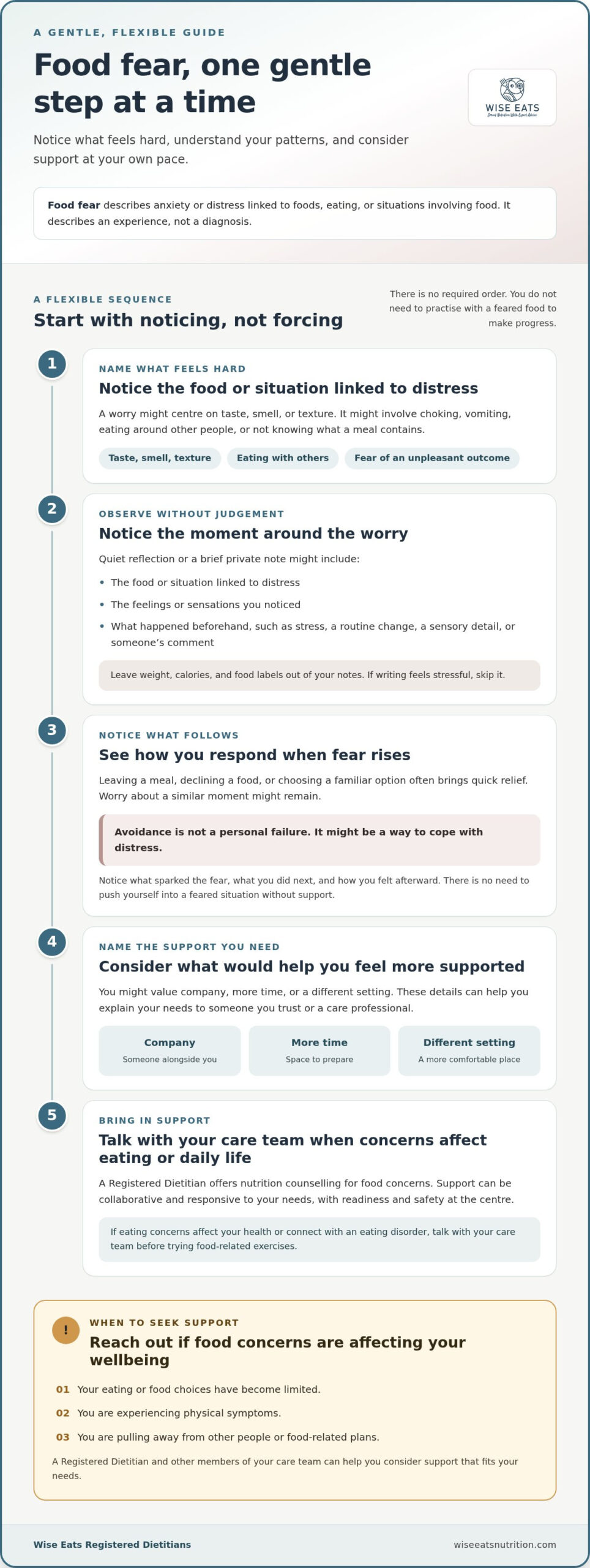
If you want to understand your own pattern, notice the situation around the worry. What happened beforehand? Did stress, a change in routine, a sensory detail, or someone’s comment play a part? You don’t need a detailed food log or a firm explanation. A few private notes about the setting and your feelings might help you describe the concern to someone you trust or a care professional. If writing feels stressful, skip it.
Why avoiding a feared food can feel relieving
When fear rises, leaving a meal, declining a food, or choosing a familiar option often brings quick relief. Your thoughts might settle for a time. At another similar moment, uncertainty about what would happen might remain. This describes one possible anxiety cycle, not a diagnosis or a pattern shared by everyone.
“Avoiding a feared food might ease distress for now, but short-term relief doesn’t always resolve the worry underneath.” Avoidance isn’t a personal failure. It might be a way to cope with distress, and pushing yourself into a feared situation without support isn’t required. Needs differ, especially if eating-disorder concerns or sensory needs affect meals.
For now, notice the sequence without judgement: what sparked the fear, what you did next, and how you felt afterward. This reflection offers a starting point for a conversation with someone you trust or a qualified professional. Wise Eats Registered Dietitians provides nutrition counselling for food concerns. Explore appointment options if a conversation with a dietitian feels like a useful next step.
Gentle Steps to Work with Food Fear at Your Own Pace
There’s no single sequence you need to complete, and you don’t have to practise with a feared food to make progress. Use these options to better understand your needs and consider support. Choose only what feels manageable. If eating concerns affect your health or connect with an eating disorder, talk with your care team before trying food-related exercises.
Notice patterns without judging yourself
Start with observation, not correction. A brief note or quiet reflection might include:
- The food or situation linked to distress
- The feelings or sensations you noticed
- Support you’d find useful, such as company, more time, or a different setting
Leave out weight, calories, and labels about foods. You don’t need to challenge every thought or prove it wrong. If writing increases distress, stop and reflect privately, or skip this step. The aim is to notice what matters to you, not to monitor or judge your eating.
Build a support plan before trying a new step
If you feel ready to do something differently, choose an action relevant to you and decide who you’d like beside you. A small step might involve telling someone you trust what makes a meal hard, or choosing a calmer setting for a meal you already feel able to attend. You’re also free to hold off on trying anything new. Readiness matters.
Before taking a step, consider what would help you feel supported and how you’ll pause or leave if distress rises. You don’t need a deadline, a list of foods to try, or a promise anxiety will settle. Avoid abrupt exposure, especially if food fear connects with disordered eating or eating-disorder concerns. In those situations, a qualified care team can help shape appropriate support.
If you’re looking for background on recovery and professional support, Wise Eats’ eating-disorder recovery nutrition support page describes nutrition counselling. A Registered Dietitian can work alongside your care team on nutrition concerns and practical meal support. For counselling with Wise Eats, explore appointment options.
Use these steps as choices, not a test. You might return to reflection, ask for support, or pause. If an approach increases distress or affects your ability to eat, step back and discuss it with a qualified professional. Learning how to overcome fear of food doesn’t require forcing yourself through an experience before you feel ready.
When to Seek Help for Fear of Food
Food-related distress deserves attention when it starts to interfere with your health, daily routines, or relationships. You don’t need to wait until things feel unmanageable before speaking with someone. Asking for help doesn’t require you to label your experience or decide what’s causing it.
General information can explain common patterns, but only an individual assessment can help clarify what care fits your needs. The signs below aren’t a checklist for self-diagnosis. They’re reasons to share your concerns with a healthcare professional.
Three signs that extra support is worth seeking
- Food avoidance is growing and disrupting daily life. Meals, school, work, or regular routines feel harder to manage because more situations or foods bring distress.
- Binge episodes or compensatory behaviours cause distress. You might feel upset by episodes of eating a large amount in a short time, or by attempts to compensate, such as vomiting or excessive exercise.
- Physical symptoms or growing isolation accompany food fear. You notice changes in how your body feels, or you increasingly avoid friends, family meals, and social plans involving food.
Any one of these concerns is enough to start a conversation. You don’t need to wait for several signs, and you don’t have to explain everything perfectly. If symptoms feel severe or change quickly, contact your healthcare team promptly. Keep following existing medical advice, and talk with your care team before changing any part of it.
Who can support your next step?
A Registered Dietitian offers nutrition-focused support. They can discuss eating routines, food concerns, preferences, and ways to meet nutrition needs, while working within their professional role. A dietitian doesn’t diagnose an eating disorder. A family doctor, mental health professional, and other members of your care team may each have a role, depending on your needs.
If binge-eating concerns feel familiar, Wise Eats’ eating-disorder recovery nutrition support is one option for nutrition counselling. Your healthcare team can help coordinate care across different needs. If you’re unsure how to begin, share one specific concern, such as skipping meals with others or feeling distressed after eating.
Learning how to overcome fear of food doesn’t mean you need to manage every part of it on your own. A conversation with a qualified professional can help you understand available support without pressure to adopt a label or follow a particular plan.
How a Registered Dietitian Can Support a More Flexible Relationship with Food
Food concerns can affect what feels manageable at meals, how you plan your day, and whether you feel comfortable eating with others. A Registered Dietitian offers nutrition-focused support that starts with your experience. You can talk about your concerns, preferences, routines, and nutrition needs without being expected to follow a set food plan or try something before you feel ready.
What nutrition counselling may include
Nutrition counselling is collaborative. A dietitian might help you look at how food worries affect your usual meals, discuss practical options for meal support, and share education that speaks to your questions. You set the pace of the conversation. The dietitian can also work with your broader care team when other health or mental health support is part of your care.
Support should reflect your needs and circumstances. It doesn’t promise a particular outcome, and a dietitian doesn’t diagnose or provide medical treatment. If food concerns relate to eating-disorder recovery, Wise Eats provides eating-disorder recovery nutrition support as part of its counselling services.
Wise Eats serves residents of Alberta and British Columbia, including Calgary, Edmonton, Naniamo, Parksville, Vancouver Island, and Qualicum Beach. Sessions are available online, in person, and through home visits. Rachel McBryan, RD, College of Health and Care Professionals of BC, and Sheirry Poposka, RD, Alberta College of Registered Dietitians, provide nutrition counselling. You can discuss food concerns in a respectful setting and consider practical support within the dietitian’s role.
A gentle next step for residents of Alberta and BC
You don’t need to arrive with a clear explanation or a list of goals. It’s enough to bring one concern, such as feeling tense before meals or finding it hard to eat around other people. You can also talk about what has felt supportive in the past and what you’d prefer to avoid. If you already receive care, include your healthcare team in decisions about next steps and keep following their advice.
Speaking with a registered dietitian can help you develop a balanced, flexible approach to eating and meet your nutritional needs.
Choose a Next Step That Respects Your Pace
Food fear doesn’t have to be resolved before you ask for support. Learning how to overcome fear of food starts with a choice you control: pause, name one concern, or talk with someone you trust. You set the pace, and choosing to wait is also a valid decision.
You don’t need a diagnosis or a detailed plan before speaking with a Registered Dietitian. Consider what would help a conversation feel more comfortable. You might want a trusted person with you, or a few notes about what you hope to discuss. It’s also okay to state boundaries, including if you aren’t ready to try food-related practices. Your care team can help shape next steps around your needs.
There is no need to measure progress by how quickly your feelings change. For now, focus on a step that feels safe and useful to you. Support should respect your pace, preferences, and concerns.
Your experience deserves thoughtful care. Speaking with a registered dietitian can help you develop a balanced, flexible approach to eating and meet your nutritional needs.
Frequently Asked Questions
Is fear of food always a sign of an eating disorder?
No. Anxiety about a meal, ingredient, or eating setting alone doesn’t establish an eating-disorder diagnosis. For example, worry during lunch at school might relate to social stress, sensory discomfort, or another concern. A qualified professional assesses your individual experience and its effects. If food worries begin affecting attendance, meal routines, health, or time with others, tell your healthcare team rather than trying to identify a diagnosis online.
How do I start feeling less anxious around a food?
Start by naming the part of the experience which feels hardest, such as uncertainty about ingredients or eating in a crowded room. Note what support would make the situation feel more manageable, and share it with someone you trust. There’s no need to set a deadline or force a food practice. If you’re learning how to overcome fear of food, let your readiness and sense of safety guide your next step.
What happens if I keep avoiding foods that make me anxious?
Effects differ from person to person. Skipping one food might ease distress for now, but repeated avoidance sometimes narrows meal choices or makes shared meals harder to plan. It doesn’t mean you’ve failed or establish a diagnosis. If avoidance interferes with grocery shopping, meal preparation, or getting enough nourishment for your needs, describe those changes to your healthcare team. They’ll help you consider what support fits your situation.
Can a Registered Dietitian help with fear of food?
Yes. A Registered Dietitian offers nutrition education and collaborative support related to eating habits, food concerns, and nutrition needs. You might discuss meal routines, grocery planning, or ways to make eating through a busy school or workday more manageable. A dietitian doesn’t replace medical or mental-health care. With your consent, they can coordinate nutrition support with your broader healthcare team when appropriate.
How is fear of food different from ARFID?
Food fear describes an experience, while Avoidant/Restrictive Food Intake Disorder (ARFID) is a clinical diagnosis involving patterns of food intake and related effects. Sensory concerns, low interest in eating, or worry about unpleasant outcomes might form part of an assessment, but one symptom doesn’t establish a diagnosis. A qualified professional reviews the full picture. Bring ongoing concerns about eating, nutrition, or physical symptoms to your healthcare team.
Should I try exposure exercises for a fear food on my own?
There’s no single approach suited to everyone. An online tip or someone else’s experience doesn’t show what’s appropriate for your circumstances. If food fear feels intense, relates to an eating disorder, or comes with physical symptoms, discuss next steps with your healthcare team before trying an exercise. Any practice should respect your readiness and support needs. You don’t have to prove you’re ready by pushing through distress.
When should I seek help for fear of food?
Seek support if avoiding foods increasingly disrupts daily routines, binge episodes or compensatory behaviours cause distress, or physical symptoms and isolation accompany food fear. These signs don’t provide a diagnosis, but they give you a reason to speak with your healthcare team. You might start by describing one change, such as missing shared meals or feeling distressed after eating. A Registered Dietitian can discuss nutrition support as part of care suited to your needs.
Article by
Rachel McBryan, Dietitian
Rachel McBryan is a licenced Dietitian in British Columbia offering comprehensive nutrition counselling as virtual and/or in-person counselling sessions to suit your needs and preferences. With a Bachelor of Science in Nutrition and Food Science, Rachel has over 20 years experience helping people address their health through nutrition. She was awarded Human Nutrition and Food Science BSc.from University of Alberta followed by post-grad course work at UBC in guidance counselling.
An eating disorder is a serious mental health illness.
If you are in immediate distress or crisis, please contact emergency services by dialing 911 or calling Vancouver Island Crisis Line: 1-888-494-3888.