What is a Digestive Health Nutritionist in Canada?
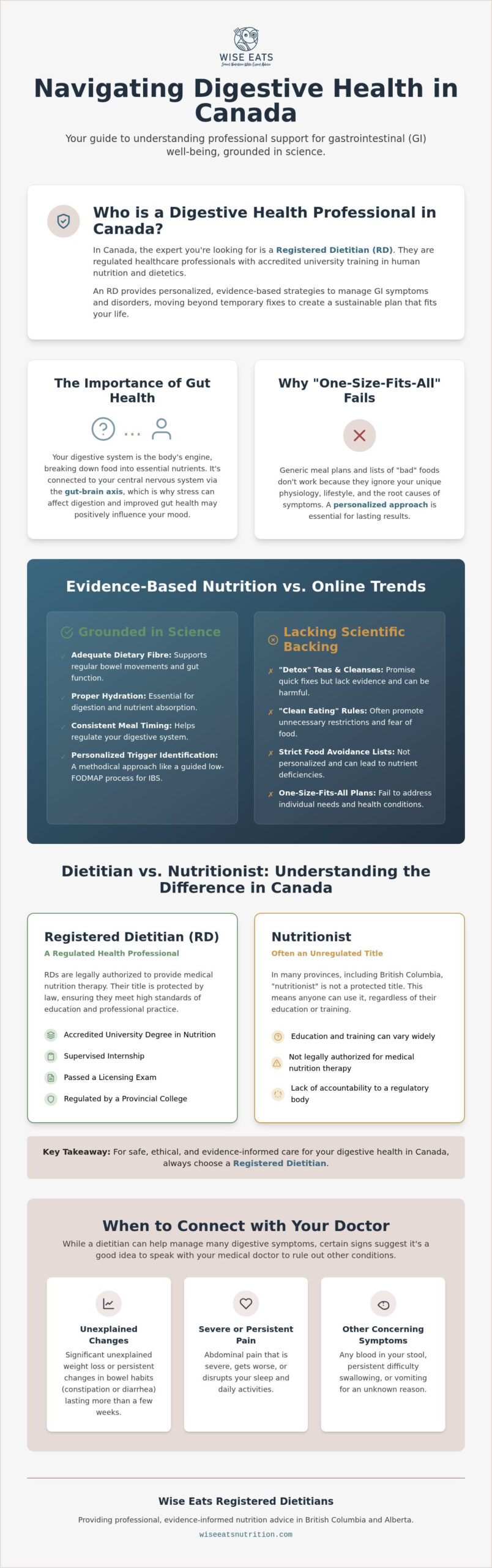
Navigating the world of digestive health can feel overwhelming, especially with a constant stream of conflicting advice online. If you’re looking for reliable support in Canada, you might be searching for a digestive health nutritionist. In Canada, this role is best filled by a Registered Dietitian (RD), a professional who specializes in using evidence-based nutrition to help manage gastrointestinal (GI) symptoms and disorders.
Unlike fleeting “gut health” trends on social media, a Registered Dietitian provides strategies grounded in science. They understand that your digestive health is deeply connected to your energy levels, mood, and overall quality of life. Because every person’s gut microbiome and health history are unique, a personalized approach is not just a benefit—it’s a necessity for achieving lasting results. A dietitian works with you to build a sustainable plan that fits your life, without resorting to overly restrictive rules.
The Importance of Gut Health Regulation
A well-functioning digestive system does more than just process food; it’s a complex system that acts as the body’s engine room. It breaks down what you eat into essential nutrients that support everything from cell repair to hormone production. This intricate process is influenced by the gut-brain axis, a communication network that links your GI tract with your central nervous system. This connection helps explain why stress can trigger digestive upset and why improving your gut health can have a positive effect on your mood.
This is also why “one-size-fits-all” advice often fails. A generic meal plan or a list of “bad” foods doesn’t account for your unique physiology, lifestyle, or the root causes of your symptoms. A regulated professional helps you move beyond temporary fixes to understand and address the factors contributing to your digestive concerns.
Evidence-Based Nutrition vs. Online Trends
The internet is filled with claims about “detox” teas and “clean eating” plans that promise quick fixes for digestive issues. However, many of these trends lack scientific backing and can sometimes do more harm than good by promoting unnecessary restrictions or creating a fearful relationship with food. A Registered Dietitian helps you cut through the noise by focusing on foundational, evidence-based tools that support your digestive system.
This approach prioritizes fundamentals like incorporating adequate dietary fibre, ensuring proper hydration, and establishing consistent meal timing. These strategies are proven to support regular bowel movements, reduce bloating, and improve overall gut function. If you’re tired of seeing questionable advice, it may be helpful to learn about the common red flags to watch for in nutrition advice online.
In Canada, a digestive health professional is a Registered Dietitian, a regulated healthcare provider with accredited university training in human nutrition and dietetics who is legally authorized to provide medical nutrition therapy.
Common Digestive Concerns and When to Seek Professional Help
Many Canadians experience digestive discomfort at some point. Common issues like occasional bloating, gas, irregular bowel movements, or acid reflux can often be managed with simple lifestyle adjustments. However, when these symptoms become persistent and start to interfere with your daily life, it may be time to seek professional guidance.
A Registered Dietitian plays a key role in managing diagnosed conditions such as Irritable Bowel Syndrome (IBS) and Gastroesophageal Reflux Disease (GERD). They can help you identify dietary and lifestyle triggers, then develop a personalized plan to manage your symptoms without making you feel overly restricted. The goal is to expand your diet and improve your quality of life, not to shrink it. For a comprehensive overview, our digestive health master guide provides foundational knowledge for residents of BC and Alberta.
Managing IBS and Food Sensitivities
For individuals with IBS, certain types of carbohydrates (known as FODMAPs) can sometimes trigger symptoms like gas, bloating, and abdominal discomfort. While a low-FODMAP diet is a tool some dietitians use, it is a short-term diagnostic process, not a lifelong diet. The focus is always on a structured, methodical approach to identifying your personal triggers.
Working with a dietitian ensures this process is done safely and effectively. They guide you through an elimination and reintroduction phase to pinpoint exactly which foods and in what amounts cause you discomfort. This leads to a flexible, personalized meal plan that includes the widest variety of foods possible, rather than a rigid list of forbidden items. This approach empowers you to eat with confidence, even when dining out or travelling.
When to Seek Help: Red Flags
While a dietitian can help manage many digestive symptoms, certain signs warrant a visit to your medical doctor to rule out more serious conditions. It’s a good idea to speak with your doctor if you experience any of the following:
- Unexplained weight loss or persistent changes in your bowel habits (such as new or worsening constipation or diarrhea) that last more than a few weeks.
- Severe or persistent abdominal pain that disrupts your sleep or daily activities.
- The presence of blood in your stool, persistent difficulty swallowing, or vomiting for an unknown reason.
Dietitian vs. Nutritionist: Understanding the Canadian Landscape
When searching for a “digestive health nutritionist Canada,” it’s crucial to understand the difference between a “nutritionist” and a “Registered Dietitian.” In many Canadian provinces, including British Columbia, “nutritionist” is not a protected title. This means anyone, regardless of their education or training, can call themselves a nutritionist.
A Registered Dietitian (RD), on the other hand, is a regulated health professional. RDs have completed a comprehensive degree in nutrition and dietetics from an accredited university, followed by a supervised internship and a licensing exam. Choosing a regulated professional like an RD ensures you receive safe, ethical, and evidence-informed care that is recognized by the Canadian healthcare system.
Regulations in British Columbia and Alberta
In Canada, healthcare is regulated at the provincial level. This means the standards for dietitians are set by provincial regulatory bodies that exist to protect the public.
- In British Columbia, Registered Dietitians are regulated by the College of Health and Care Professionals of BC (CHPBC).
- In Alberta, the profession is overseen by the Alberta College of Registered Dietitians.
These colleges ensure that RDs adhere to high standards of practice and engage in continuous learning. This is also why most extended health benefit plans and insurance providers in Canada will only cover services provided by a Registered Dietitian.
The Value of Clinical Expertise
A Registered Dietitian’s training goes far beyond general food knowledge. They are equipped to provide medical nutrition therapy, which means they can help you manage complex health conditions with food. RDs are trained to work collaboratively with your medical team, including your family doctor and gastroenterologist, to ensure your nutrition plan complements your overall medical care.
Furthermore, their adherence to a strict ethical code and the requirement for ongoing professional development mean you can trust their advice is current and based on the latest scientific research. You can verify a professional’s credentials by checking the public registry on their provincial college’s website.
How a Digestive Health Dietitian Supports Your Journey
Working with a digestive health dietitian is a collaborative and supportive process. It’s designed to empower you with the knowledge and tools you need to manage your health long-term. The journey is tailored to you, but it generally follows a clear, structured path.
- Initial Assessment: Your first appointment involves a deep dive into your health. Your dietitian will review your medical history, current symptoms, lifestyle, and typical eating patterns. This comprehensive review helps them understand the full picture of your digestive health. You can learn more about what a nutrition assessment involves to feel more prepared.
- Collaborative Goal Setting: Together, you’ll set realistic and meaningful goals. Do you want to reduce bloating, enjoy meals without anxiety, or have more energy? Your priorities will guide the creation of your personalized plan.
- Developing a Custom Plan: Based on your goals and assessment, your dietitian will develop a custom plan. This is more than just a list of foods; it includes strategies for meal timing, hydration, and lifestyle factors that impact digestion, all while prioritizing variety and enjoyment.
- Ongoing Support and Adjustments: Your body and symptoms can change over time. Follow-up appointments provide an opportunity to celebrate successes, troubleshoot challenges, and make adjustments to your plan as needed. This ongoing support is key to building sustainable habits.
Personalized Meal Planning and Supplementation
A core part of the process is creating a dietitian-designed meal plan tailored to your specific GI needs, food preferences, and lifestyle. This plan serves as a flexible guide, not a rigid set of rules, helping you build balanced and satisfying meals that support your digestive system.
Your dietitian can also provide an evidence-based review of supplements. While a food-first approach is always preferred, certain supplements may be beneficial in some cases. A professional can help you navigate the options, ensuring any supplements you consider are safe, effective, and appropriate for you. This guidance helps you avoid the hidden risks of self-prescribing supplements. For a closer look at what might be useful, some find our guide to the best supplements for gut health and bloating helpful for general information.
Financial Disclosure: If VitaminLab custom supplements are discussed, please note that a purchase is not required to work with our dietitians.
The Mind-Gut Connection and Lifestyle Integration
Your digestive system doesn’t operate in a vacuum. Stress, sleep, and physical activity all play a significant role in how you feel. A dietitian helps you understand this mind-gut connection and provides practical strategies to support it. This might include techniques for managing stress around mealtimes or tips for staying active in a way that feels good for your body.
The goal is long-term sustainability. Your dietitian will provide you with practical strategies for navigating social events, eating out, and even managing digestive issues while travelling. This holistic approach ensures your nutrition plan works for your real life, not against it, and can be particularly helpful for those navigating the complex relationship between IBS and disordered eating.
Accessing Digestive Health Services in Canada
Finding the right support is the first step toward feeling better. Thanks to telehealth, expert digestive health care is more accessible than ever for Canadians, whether you live in a major city like Edmonton or a smaller community like Nanaimo, Qualicum Beach, or Parksville on Vancouver Island.
Many Canadians have coverage for Registered Dietitian services through their extended health benefits. It’s recommended to check with your insurance provider to understand the details of your plan. To prepare for your first visit, it can be helpful to keep a simple log of your symptoms and what you eat for a few days. This information can provide valuable insights for your dietitian. Most importantly, know that you will be entering a supportive, non-judgmental environment where you can openly discuss sensitive GI topics. Speaking with a Registered Dietitian can help you develop a balanced, flexible approach to eating.
Telehealth Nutrition in BC and Alberta
Virtual appointments offer a convenient and effective way to access care. For busy professionals and families, telehealth eliminates travel time and allows you to connect with a specialist from the comfort of your own home. Secure video platforms are used to protect your privacy and ensure your personal health information remains confidential. This technology makes it possible to receive expert care from anywhere in British Columbia or Alberta, from remote areas to urban centres.
About the Authors
This article was written by a team of dedicated dietitians who provide expert nutrition guidance across Western Canada.
Rachel McBryan, RD, is a Registered Dietitian with the College of Health and Care Professionals of BC.
Sheirry Poposka, RD, is a Registered Dietitian with the Alberta College of Registered Dietitians.
Together, they provide expert nutrition for digestion problems, helping clients find relief and build a positive relationship with food.
Frequently Asked Questions (FAQs)
Is a digestive health nutritionist covered by insurance in Canada?
In Canada, services provided by a Registered Dietitian (RD) are often covered by extended health insurance plans. The term “nutritionist” is typically not covered, as it is not a regulated title in many provinces. It is best to check with your specific insurance provider to confirm the details of your coverage for Registered Dietitian services.
How is a dietitian different from a nutritionist in British Columbia?
In British Columbia, “Registered Dietitian” is a protected title for professionals regulated by the College of Health and Care Professionals of BC. They have specific university education, practical training, and must pass a licensing exam. “Nutritionist” is not a protected title, meaning anyone can use it without any required qualifications. For reliable, evidence-based advice, always look for a Registered Dietitian.
Can a dietitian help with IBS symptoms without a restrictive diet?
Absolutely. A primary goal of a dietitian is to help you manage IBS symptoms while maintaining the most varied and enjoyable diet possible. While they may use temporary, structured approaches like a low-FODMAP elimination to identify triggers, the long-term goal is always to expand your diet and build a flexible, sustainable eating plan.
What should I expect during my first appointment with a digestive health dietitian?
Your first appointment is a comprehensive assessment. Your dietitian will ask about your medical history, digestive symptoms, current eating habits, lifestyle, and personal health goals. It is a collaborative, non-judgmental conversation designed to gather the information needed to create a personalized plan for you.
Do I need a doctor’s referral to see a Registered Dietitian in Alberta?
No, you do not need a doctor’s referral to see a Registered Dietitian in Alberta for private practice services. You can book an appointment directly. However, some insurance plans may require a referral for reimbursement, so it is always a good idea to check your policy.
How long does it take to see improvements in digestive health through nutrition?
The timeline for improvement varies for each individual. Some people may notice positive changes within a few weeks, while for others with more complex conditions, it may take a few months to see significant progress. Consistency and patience are key, and your dietitian will support you throughout the process.
Are virtual dietitian appointments as effective as in-person visits?
Yes, research and clinical experience have shown that virtual appointments (telehealth) are just as effective as in-person visits for nutrition counselling. Secure video platforms allow for the same level of personalized care, discussion, and support, with the added benefit of convenience and accessibility.
Can a dietitian help me choose the right probiotics for my gut?
A dietitian can help you navigate the world of probiotics. They can review the current scientific evidence for different probiotic strains related to specific digestive conditions and help you determine if a supplement is appropriate for your situation. They will provide brand-neutral, evidence-based guidance to ensure you make an informed choice.

Article by
Rachel McBryan, Dietitian
Rachel McBryan is a licenced Dietitian in British Columbia offering comprehensive nutrition counselling as virtual and/or in-person counselling sessions to suit your needs and preferences. With a Bachelor of Science in Nutrition and Food Science, Rachel has over 20 years experience helping people address their health through nutrition. She was awarded Human Nutrition and Food Science BSc.from University of Alberta followed by post-grad course work at UBC in guidance counselling.
An eating disorder is a serious mental health illness.
If you are in immediate distress or crisis, please contact emergency services by dialing 911 or calling Vancouver Island Crisis Line: 1-888-494-3888.
This article is educational information only, not professional diagnosis or treatment. This health education content is heavily AI augmented and parts or all of this article may not have been reviewed yet for accuracy. AI generated content is prone to error.
Please note that we partner with VitaminLab and financially gain if you purchase supplements. You are under no obligation to use VitaminLab products and whether you supplement your diet with VitaminLab or another product of your choice will not impact your nutrition care.