Questions about milk supply, your food choices and when to start solids are common, especially as your baby’s needs change. Breastfeeding and infant nutrition involve more than one feeding choice, and support should fit your family. Canadian guidance recommends exclusive breastfeeding for the first six months, then continued breastfeeding alongside complementary foods for up to two years or longer. Every family’s circumstances differ, and a different feeding experience isn’t a sign of failure.
Breastfeeding, combination feeding and formula feeding are all part of real infant-feeding experiences. This guide explains breastfeeding’s role in infant nutrition, how needs shift as your baby grows, and what to know about vitamin D, iron-rich first foods and allergen introduction. You’ll also find practical ways to support your own nutrition and signs a healthcare professional should assess. Use this information as a starting point, and discuss feeding or growth concerns with your care team.
What this guide covers
- Breastfeeding and infant nutrition include more than one feeding approach, and families deserve support without judgement.
- Learn how flexible meals, snacks and supplement questions fit into a breastfeeding parent’s changing needs.
- Follow your baby’s development to guide the move from milk feeds to complementary foods.
- Know which feeding or growth concerns call for advice from your healthcare team.
- A Registered Dietitian offers practical nutrition education and meal-planning support for families in Alberta and British Columbia.
Breastfeeding and infant nutrition: how the basics fit together
Infant nutrition is the food and fluids a baby receives to support growth and development as their needs change. It includes feeding in the early months and, later, adding complementary foods. Breastfeeding is one part of infant nutrition, not a measure of a family’s care or commitment.
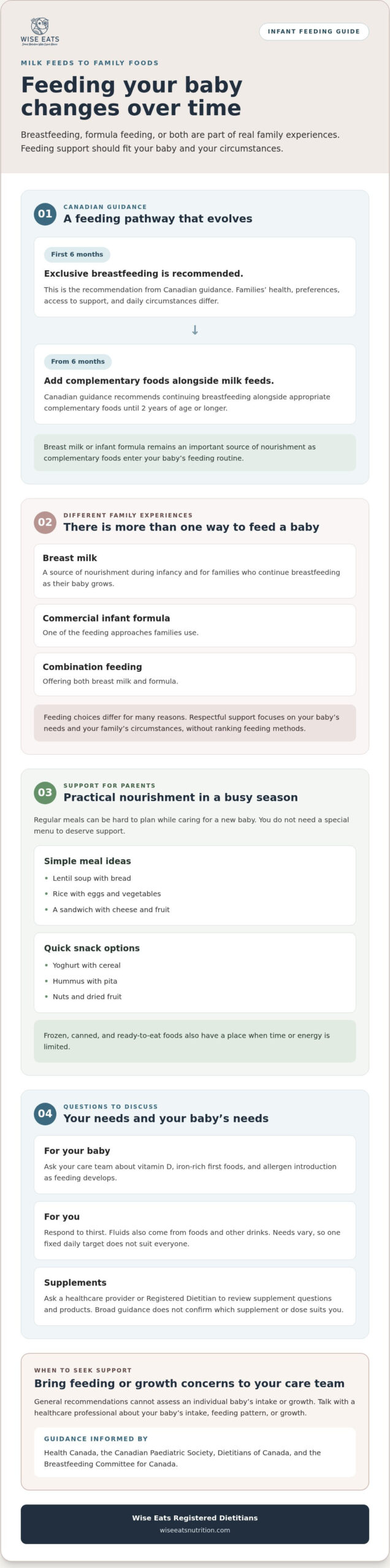
In Canada, Health Canada, the Canadian Paediatric Society, Dietitians of Canada and the Breastfeeding Committee for Canada recommend exclusive breastfeeding for the first six months. They recommend continuing breastfeeding alongside appropriate complementary foods until two years of age or longer. Families’ health, preferences, access to support and daily circumstances differ, so feeding experiences differ too.
This video offers an overview of breastfeeding and formula feeding:
What breastfeeding contributes to infant feeding
Breast milk provides nourishment during infancy and remains part of feeding for families who continue breastfeeding as their baby grows. Feeding also involves practical questions, such as how often your baby feeds and how feeding fits with sleep, work, health and support at home. There is no single arrangement suited to every family.
General guidance describes population-level recommendations. It can’t assess how much an individual baby takes in or whether their feeding and growth are on track. A healthcare professional who knows your baby is the right person to discuss those questions.
How infant feeding choices fit into nutrition
Some babies receive breast milk, some receive commercial infant formula, and some receive both. Combination feeding means offering breast milk and formula. Families make feeding decisions for different reasons, and respectful support should focus on the baby’s needs and the family’s circumstances, without ranking feeding methods.
As babies grow, feeding also includes complementary foods alongside milk feeds. For a broad overview of infant feeding basics, see this general reference. For questions about your baby’s intake, feeding pattern or growth, speak with your healthcare team. You can also read about asking a Registered Dietitian for nutrition education.
Breastfeeding nutrition for parents: food, fluids, and supplement questions
Looking after a new baby can make regular meals hard to plan. Your nutrition needs also depend on your health, food access, cultural preferences and feeding circumstances. You don’t need a special menu to deserve support, and a particular food or eating pattern doesn’t guarantee milk supply or a specific outcome for your baby.
Build practical meals during a demanding season
Start with foods you already enjoy and add something satisfying when it fits. A meal might be lentil soup with bread, rice with eggs and vegetables, or a sandwich with cheese and fruit. For a quick snack, try yoghurt with cereal, hummus with pita, or nuts and dried fruit. These are options, not rules. Frozen, canned and ready-to-eat foods also have a place when time or energy is limited.
Keep a drink nearby if it helps you remember, and respond to thirst. Fluids also come from foods and other drinks. Needs vary, so a fixed daily target isn’t right for everyone. If you have a health condition or questions about fluids, ask your healthcare provider for guidance.
Ask about vitamins and minerals
Online advice about supplements often sounds certain, but individual needs differ. Your health, food intake, medications and feeding situation all matter. A general recommendation doesn’t confirm which supplement or dose suits you. Ask your healthcare provider or a Registered Dietitian to review your questions and current products. Don’t start or change supplements based only on broad guidance.
A Registered Dietitian can discuss food preferences and routines as part of nutrition and meal-planning support. Wise Eats offers individualized vitamin and mineral supplement support. For an overview of infant-feeding recommendations, the WHO feeding guidelines describe breastfeeding and complementary feeding at a general level. Personal advice about your own nutrition still belongs with your care team.
For practical meal-planning or supplement support, visit the Wise Eats nutrition counselling booking page.
How infant nutrition changes as feeding develops
Feeding develops in stages, but babies don’t all follow the same pace. Canadian guidance recommends exclusive breastfeeding for the first six months. If your baby receives formula or both breast milk and formula, ask your care team about questions specific to your situation. Breast milk or infant formula remains an important source of nourishment as complementary foods enter the picture.
Readiness signs and current feeding guidance both matter when deciding when to offer complementary foods. Age offers a general guide, while your baby’s development helps you and your care team consider the next step.
Moving from milk feeding to complementary foods
Use this sequence as a general guide, not an individual feeding plan:
- From birth to about six months: Breast milk or infant formula provides your baby’s nourishment. Canadian guidance recommends a daily vitamin D supplement of 10 µg (400 IU) from birth for breastfed infants, including those who receive some formula. Infants fed only commercial formula don’t need a vitamin D supplement, as formula contains added vitamin D.
- At about six months: Offer complementary foods when your baby shows signs of readiness, such as sitting with support, having good head and neck control, showing interest in food, and moving food to the back of the mouth to swallow. Continue breast milk or infant formula alongside foods.
- As your baby learns to eat: Offer different textures, such as mashed, lumpy and minced foods. Canadian guidance recommends introducing lumpy textures by nine months. Progress varies, so discuss concerns with your care team.
Introducing iron-rich foods and other new foods
Start complementary feeding with iron-rich choices. Options include iron-fortified infant cereal, puréed meat, well-cooked whole egg, fish, beans or lentils. Offer age-appropriate textures and stay with your baby during meals.
Common allergenic foods, including egg, peanut, fish, wheat, soy and cow’s milk in food, can be introduced around six months alongside other foods. Introduce one at a time so you can watch for a reaction. Once your baby tolerates a food, offer it regularly. If your baby has eczema or a family history of allergies, talk with your healthcare provider about introducing allergens. Don’t give honey before one year of age.
These recommendations address changing needs in breastfeeding and infant nutrition, but they don’t assess your baby’s growth or intake. For more on infant-feeding stages, see the WHO feeding guidelines. For separate information on food choices during breastfeeding, read Diet for breastfeeding mothers.
Infant Nutrition: When to Monitor and Seek Help
Questions about latch, feeding comfort, milk transfer or how often your baby feeds are common. Asking for help doesn’t mean you’ve done anything wrong. General information offers a starting point, but it can’t assess your baby’s intake, hydration or growth. For personal concerns, contact your family doctor, midwife, public health nurse or another member of your healthcare team.
Common feeding questions worth discussing
Note what you’re seeing and ask your care provider what support may fit. For example, tell them if latching feels difficult, feeds are painful, your baby often falls asleep during feeds or you’re unsure how feeding is going. A lactation consultant may also offer feeding support. Your healthcare team can assess your baby and advise you on next steps.
Online advice about breastfeeding and infant nutrition offers general guidance, not an assessment of your family’s situation. Feeding patterns and wet diapers change as babies grow, so a single sign or checklist doesn’t tell the full story. Share your observations and questions with a professional who can consider your baby’s age, feeding history and health.
When to Seek Help: three signs for timely support
Contact a healthcare professional promptly if you notice any of these signs. If your baby seems seriously unwell, seek urgent medical care.
- Poor feeding or unusual difficulty waking: Your baby struggles to feed, takes much less than usual, or is unusually hard to wake for feeds. Seek prompt medical advice.
- Markedly fewer wet diapers or possible dehydration: You notice a clear drop in wet diapers compared with your baby’s usual pattern, or other signs of dehydration. Contact your care team promptly for assessment. Diaper patterns vary with age, so share your baby’s age and recent changes.
- Growth concerns or persistent feeding pain: You’re worried about your baby’s growth, or feeding pain continues. Arrange a professional review rather than trying to assess the cause on your own.
These signs don’t identify a diagnosis. A healthcare professional can assess your baby and help determine the right next step. You deserve support with feeding questions, even if you’re unsure whether a concern is serious.
Working with a Registered Dietitian on breastfeeding and infant nutrition
Feeding questions often come with conflicting advice and little time to sort through it. A Registered Dietitian offers nutrition education and practical support, not diagnosis or medical treatment. In a collaborative session, you can discuss your routines, food preferences, access to food and nutrition questions, then consider steps that suit your circumstances.
What nutrition counselling may cover
A dietitian can help you plan manageable meals and snacks around your schedule, cultural food preferences and household needs. For example, you might discuss easy meal options for days when cooking feels difficult or ways to keep nourishing snacks within reach. The goal is practical guidance, not rigid food rules or promises about milk supply or infant health.
If you have questions about vitamins or minerals, a dietitian can review your current supplements and discuss personalized recommendations within their professional scope. Your health history, diet and other products you take all matter. Discuss supplement decisions with your healthcare provider, especially if you have a medical condition or take medication. Learn more about dietitian meal planning.
Wise Eats Registered Dietitians Rachel McBryan, RD, College of Health and Care Professionals of BC, and Sheirry Poposka, RD, Alberta College of Registered Dietitians, offer nutrition education and personalized counselling. You can read more about working with a dietitian and what to expect from the process.
Finding support in Alberta and British Columbia
Wise Eats serves residents of Alberta and British Columbia, with online, in-person and home-visit sessions. Support is available to residents in Calgary and Edmonton, as well as Naniamo, Parksville, Vancouver Island and Qualicum Beach. A session can focus on your food preferences, meal planning and supplement concerns. A dietitian’s nutrition guidance works alongside your healthcare team, who assess medical and infant-feeding concerns.
To learn more about nutrition support, visit the Ask a Dietitian page.
Wise Eats nutrition counselling booking page
Make your next feeding decisions with confidence
Breastfeeding and infant nutrition change as your baby grows. General guidance helps explain how milk feeds, complementary foods and the breastfeeding parent’s nutrition fit together, but it doesn’t assess your baby’s intake or growth. For personal concerns, your healthcare team is the right place to ask.
Small, flexible steps can make feeding questions easier to manage. Choose practical foods that suit your routine, follow current guidance as your baby becomes ready for new foods, and ask a healthcare professional about supplement questions or feeding concerns. You don’t need to sort through conflicting advice on your own.
A Registered Dietitian offers nutrition education and meal-planning support based on your food preferences and needs. Wise Eats serves residents of Alberta and British Columbia. Rachel McBryan, RD, is registered with the College of Health and Care Professionals of BC, and Sheirry Poposka, RD, is registered with the Alberta College of Registered Dietitians.
With clear information and the right support, you can take feeding one question at a time.
Frequently Asked Questions
Is breastfeeding enough to support infant nutrition?
Canadian guidance recommends exclusive breastfeeding for the first six months for families who breastfeed. After complementary foods begin, continued breastfeeding alongside those foods is recommended for up to two years or longer. Breastfed infants also need a daily vitamin D supplement from birth. Every baby’s intake and growth are individual, so speak with your healthcare team if you’re unsure how feeding is going. Formula and combination feeding are also part of many families’ feeding experiences.
How much water should a breastfeeding parent drink?
There isn’t one fluid target that suits every breastfeeding parent. Drink to thirst, and keep water or another preferred drink within reach if it helps you remember. Fluids also come from foods such as soup, fruit and yoghurt. Your needs depend on your health and daily circumstances. If you have a health condition or a care provider has given you fluid guidance, follow up with them about what suits you.
What foods should a breastfeeding parent eat?
Choose a mix of foods you enjoy and can access, such as grains, vegetables, fruit, beans, eggs, fish, meat, dairy or fortified alternatives. A quick meal might be lentil soup with bread, or rice with eggs and vegetables. There’s no special menu required for every breastfeeding parent, and one food doesn’t guarantee milk supply or an infant outcome. A Registered Dietitian can help adapt meal ideas to your preferences, culture and routine.
When do infants start complementary foods?
Canadian guidance recommends offering complementary foods at about six months, when your baby shows signs of readiness. These include sitting with support, good head and neck control, interest in food, and the ability to move food back in the mouth to swallow. Start with iron-rich foods, such as iron-fortified infant cereal, puréed meat, egg or lentils. Continue breast milk or infant formula as you introduce foods, and ask your healthcare team about individual concerns.
Do breastfeeding parents need supplements?
Canadian guidance recommends a daily multivitamin for breastfeeding parents containing 400 mcg of folic acid and 400 IU of vitamin D. Your health, eating pattern and current supplements matter when considering personal needs, so ask a healthcare provider or Registered Dietitian before starting or changing a supplement. Separately, breastfed infants, including partially breastfed babies, need 10 µg (400 IU) of vitamin D daily from birth. Check with your baby’s healthcare provider about questions specific to your family.
What happens if breastfeeding is painful or feeding feels difficult?
Contact a healthcare professional if latch, feeding comfort or the way your baby feeds concerns you. A family doctor, midwife, public health nurse or lactation consultant can offer appropriate support. Seek prompt medical advice if your baby feeds poorly, is unusually difficult to wake, or has markedly fewer wet diapers than usual. Ongoing feeding pain also deserves professional review. These signs don’t identify a cause, but they help your care team decide what assessment or support is needed.

Article by
Rachel McBryan, Dietitian
Rachel McBryan is a licenced Dietitian in British Columbia offering comprehensive nutrition counselling as virtual and/or in-person counselling sessions to suit your needs and preferences. With a Bachelor of Science in Nutrition and Food Science, Rachel has over 20 years experience helping people address their health through nutrition. She was awarded Human Nutrition and Food Science BSc.from University of Alberta followed by post-grad course work at UBC in guidance counselling.
An eating disorder is a serious mental health illness.
If you are in immediate distress or crisis, please contact emergency services by dialing 911 or calling Vancouver Island Crisis Line: 1-888-494-3888.