
You sit down for dinner at a local Edmonton bistro, but instead of enjoying the meal, you feel a sense of dread about how your stomach will react later. It is exhausting to live with chronic bloating or pain as you try to guess which ingredient caused the problem. Finding a dietitian for food intolerances Edmonton provides a clear path toward clarity. Many people feel overwhelmed by conflicting nutrition advice or find themselves avoiding social outings because of food fears. You deserve to eat without anxiety. It feels frustrating when you feel forced to cut out foods you love because of a fear of the unknown.
Sheirry Poposka, a Registered Dietitian with the Alberta College of Registered Dietitians, helps you identify specific food triggers through evidence-informed methods. This article explains how professional support helps you build a personalized eating plan for lasting digestive comfort. You will see how to move past restrictive habits and return to eating a wide variety of foods without pain. We will look at the tools used to find relief and how a structured meal plan fits into your specific lifestyle.
Key Takeaways
- Home sensitivity kits often provide misleading data, so professional protocols offer reliable answers for your health.
- Working with a dietitian for food intolerances Edmonton helps identify specific triggers using structured methods like the low FODMAP approach.
- Choosing a professional registered with the Alberta College of Registered Dietitians ensures your care follows high clinical standards.
- Tools like the EatLove system simplify your weekly routine with meal plans tailored to your lifestyle and cultural needs.
- Recognizing red flags early ensures your digestive symptoms do not mask other health or eating concerns.
Identifying Food Intolerances in Edmonton
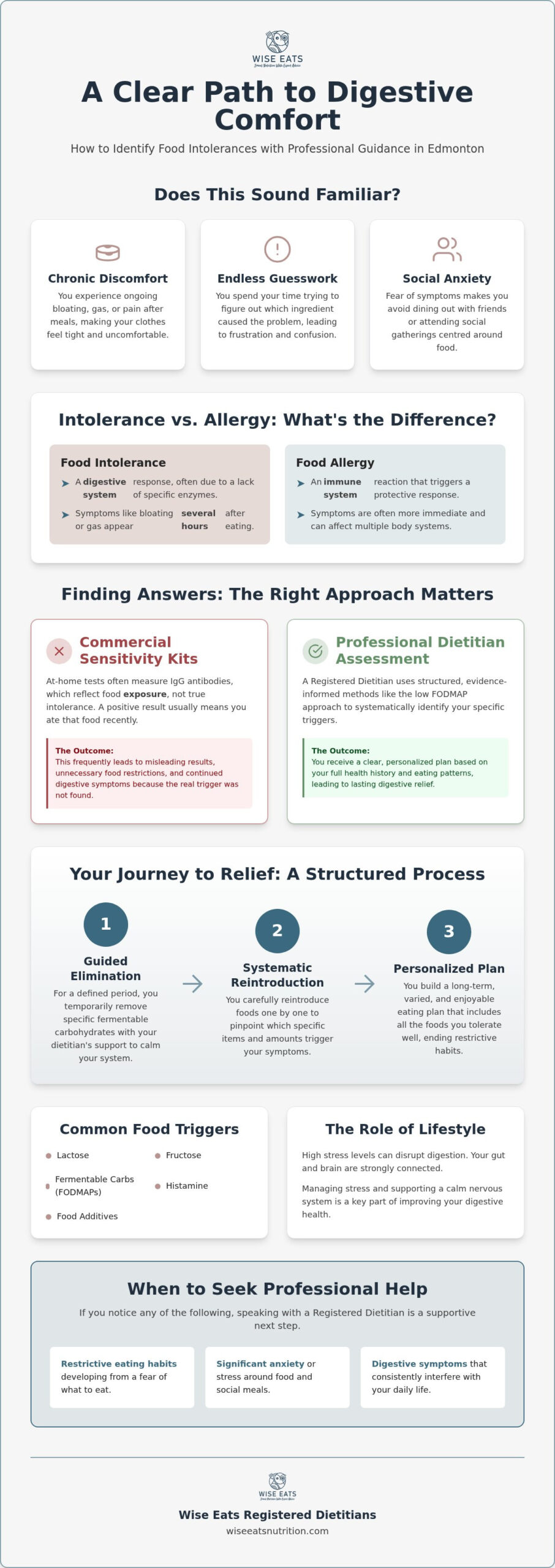
Living with digestive discomfort feels like a full-time job. You wake up feeling fine, but by lunchtime, your clothes feel tight. Understanding Food Intolerance helps clarify why your body reacts to specific meals. Unlike a food allergy, which triggers an immune response, an intolerance happens within your digestive system. It often involves your body lacking the enzymes needed to break down certain components. Common symptoms include bloating, gas, and changes in bowel habits. These physical reactions often occur several hours after eating. This delay makes it difficult to pin down the exact cause without expert help. Many people spend years guessing which ingredient caused their pain.
Edmonton residents often find these symptoms interfere with their daily routines. If you head to a meeting in the Ice District or meet friends on 124th Street, gas and bloating create significant stress. Fear of eating out becomes a barrier to enjoying our city’s vibrant food scene. Distinguishing between a true allergy and a sensitivity is a vital first step. Working with a dietitian for food intolerances Edmonton provides the professional guidance needed to tell these apart. This support helps you move from confusion toward a clear plan for your meals. You gain the tools to eat with confidence again.
To understand this concept better, watch this helpful video:
Common Food Triggers for Alberta Residents
Lactose intolerance remains a frequent concern for many adults in our province. It occurs when your small intestine does not produce enough lactase to process dairy. Fructose and other fermentable carbohydrates also contribute to discomfort. These compounds pull water into the gut and ferment. This fermentation leads to the painful pressure people describe. In complex cases, histamine sensitivities play a role, especially if you notice symptoms like headaches alongside digestive shifts. Some people also find sensitivity to specific food additives used in processed goods. Identifying these triggers requires a systematic approach rather than random elimination.
The Role of Stress and Environment
Lifestyle factors in a busy city like Edmonton impact how well you digest your meals. High stress levels from work or long commutes keep your nervous system in a state of high alert. This state diverts energy away from your gut. It makes it harder for your body to process food efficiently. There is a strong connection between your mental well-being and your gut health. Managing environmental factors is a key part of nutrition for digestion problems. Your body deserves a supportive environment to function at its best. A calm nervous system allows your digestive tract to do its job without interruption.
Comparing Commercial Sensitivity Kits and Professional Nutrition Assessments
A quick online search turns up dozens of home food sensitivity kits promising to identify your triggers from a single blood spot. The appeal is understandable. You want answers, and these kits feel like a fast solution. The problem is that the science behind most of them doesn’t hold up well under scrutiny, and acting on their results often creates more confusion than clarity.
Most commercial kits measure Immunoglobulin G (IgG) antibodies in your blood. IgG levels reflect food exposure, not intolerance. When you eat a food regularly, your immune system produces IgG antibodies in response. That’s a normal part of digestion. A positive result on one of these tests often means you ate that food recently, not that it’s harming you. The Symptoms and Treatment of Food Intolerance resource from the Cleveland Clinic reinforces that true food intolerance is a digestive issue, not an immune-driven one, which is why IgG testing doesn’t reliably identify it.
Why IgG Testing Often Misleads
IgG antibody levels fluctuate naturally based on your diet patterns. Someone who eats eggs every morning will show elevated IgG for eggs. A kit interprets this as a sensitivity. That person then cuts out eggs, loses a valuable protein source, and still experiences symptoms because the real trigger was never found. Working with a dietitian for food intolerances Edmonton protects you from this kind of unnecessary restriction. A registered dietitian reads your full health history and eating patterns rather than a single data point from a finger-prick sample.
The Evidence-Based Elimination Process
Professional assessment uses structured protocols with a strong clinical track record. The low FODMAP approach, for example, works in clear phases. First, specific fermentable carbohydrates are removed from your diet for a defined period. Then foods are reintroduced one category at a time in controlled amounts. This stepwise process identifies not just which foods cause symptoms, but how much of a food your body tolerates. That detail matters enormously for building a realistic, balanced eating plan.
This approach also protects your nutritional intake. Cutting out entire food groups without guidance raises the risk of missing key vitamins and minerals. A registered dietitian monitors your intake throughout the process and adjusts your plan to fill any gaps. You end up with a clear picture of your actual triggers rather than a long list of foods to fear.
If you’re ready to move from guesswork to a structured plan, book a session with Sheirry Poposka to start the process with professional support behind you.
Working with an Alberta Registered Dietitian for Digestive Relief
Do you wonder if your symptoms will ever improve? In Alberta, the titles “Registered Dietitian” and “Registered Nutritionist” carry legal protection. This regulation ensures you receive advice from a professional meeting high educational standards. Choosing a dietitian for food intolerances Edmonton means you work with someone understanding both the science of nutrition and the local lifestyle. Sheirry Poposka, RD, provides this expertise through the Alberta College of Registered Dietitians. She offers a compassionate space to discuss your struggles with bloating or pain. You no longer need to face these issues alone.
Consultations focus on practical changes fitting your unique routine. You won’t find generic advice here. Instead, you receive a plan built for your specific needs. This partnership helps you move forward with confidence. Your dietitian acts as a knowledgeable partner, translating complex science into steps you take daily. This approach replaces overwhelm with a sense of clarity and hope. Working with a dietitian gives you a steady hand to filter out misinformation.
What to Expect in Your First Session
Your first meeting involves a thorough review of your symptoms and current eating patterns. You discuss your history with digestive discomfort and identify your health goals. Preparing for your first Edmonton dietitian appointment helps you get the most value from your time. Consider these steps before your session:
- Bring a list of your current medications and supplements.
- Keep a food and symptom journal for three days prior to the session.
- Identify your top three questions about your digestive health.
- Note any cultural or family preferences affecting your meals.
Sheirry listens to your concerns without judgment. Together, you set realistic goals for your digestive health. This initial step creates a foundation for your personalized nutrition plan. You leave the session with a clear understanding of the next steps. This structure creates momentum, leading you from uncertainty toward decisive action.
Regulatory Standards and Your Protection
The Alberta College of Registered Dietitians ensures high quality care across the province. Dietitians follow strict ethical guidelines for your safety. This regulation protects your health and privacy during every interaction. Unlike unregulated titles, an RD remains accountable to a provincial body. This accountability means you receive reliable information you trust.
Choosing a regulated professional means your care remains evidence-informed. You receive advice based on current scientific standards. This protection matters when you deal with complex digestive issues. You deserve a partner who prioritizes your well-being and follows professional standards. Sheirry Poposka, RD, acts as an advocate for your health. Professional support from a dietitian for food intolerances Edmonton ensures your plan remains safe and sustainable for your long-term health.
When to Seek Help for Food and Digestive Concerns
Digestive discomfort doesn’t always follow a simple pattern. Sometimes what feels like a food intolerance overlaps with other health concerns that deserve closer attention. Recognising the difference between a manageable sensitivity and a sign that something more is happening takes an honest look at your physical and emotional experience around food. Reaching out for support early leads to better outcomes, and doing so is a sign of self-awareness, not weakness.
Physical and Emotional Red Flags
Some signs go beyond typical bloating or gas and deserve prompt attention from your care team. Watch for these changes:
- Persistent avoidance of social events involving food. Turning down dinners, celebrations, or work lunches on a regular basis because of food fear affects your relationships and quality of life in ways that go beyond digestion.
- Noticeable physical changes like extreme fatigue, dizziness, or fainting. These symptoms suggest your body isn’t getting the fuel it needs, which goes beyond a typical sensitivity response and warrants medical review.
- Strong guilt, shame, or anxiety tied to eating specific foods. Feeling distressed after a meal, or spending significant mental energy planning how to avoid foods, signals an emotional relationship with eating that a dietitian and broader care team can help address together.
These red flags don’t mean something is permanently wrong. They mean you deserve more support than a food journal and an elimination list alone can provide.
Seeking Comprehensive Care
A dietitian for food intolerances Edmonton works alongside your doctor rather than replacing them. If your symptoms are persistent or accompanied by unexplained weight changes, blood in your stool, or significant fatigue, your physician needs to rule out underlying medical conditions first. A registered dietitian then builds on that medical picture to develop a flexible, balanced approach to eating that fits your real life.
Sheirry Poposka, RD, collaborates with your existing healthcare team to ensure your nutrition plan supports your recovery without conflicting with any medical guidance you’ve received. This kind of coordinated care protects you from falling through the gaps between appointments. If you’re living with disordered eating patterns alongside digestive concerns, the eating disorder recovery support offered through Wise Eats provides a compassionate, structured path forward.
Asking for help is the clearest step you can take toward feeling better. A dietitian for food intolerances Edmonton gives you a knowledgeable partner who understands how physical symptoms and emotional wellbeing connect, and who works with your full health picture in mind.
Personalized Meal Planning Solutions for Edmonton Residents
Knowing your triggers is only half the work. The other half is figuring out what to actually eat on a Tuesday night when you’re tired and your fridge looks uninspiring. This is where a structured, technology-supported meal planning approach makes a real difference in your daily life.
EatLove and Personalized Nutrition Prescriptions
Sheirry Poposka uses the EatLove system to build dietitian-designed meal plans tailored to your specific health picture. Rather than handing you a generic template, the system generates weekly plans that reflect your food sensitivities, household size, cultural preferences, and cooking habits. If a recipe doesn’t appeal to you on a given day, you swap it out with a few clicks. The flexibility is built in from the start.
Practical features that support your weekly routine include:
- Auto-generated grocery lists organized by category, so your next trip to the store takes minutes instead of an hour of guessing.
- A broad recipe library with options like Ginger Lemon Chicken that fit within your identified tolerance thresholds.
- Easy meal swaps that keep your plan feeling fresh without requiring you to start from scratch each week.
For a dietitian for food intolerances Edmonton residents trust, this kind of structured tool means your plan doesn’t fall apart the moment life gets busy. It stays realistic because it was built around your actual schedule.
Precision Supplements with VitaminLab
Digestive concerns often affect how well your body absorbs certain nutrients. Rather than guessing which supplements to buy off a shelf, Sheirry works with VitaminLab to offer custom formulas based on your specific health requirements. One formula replaces the confusion of managing several different bottles with varying dosages.
Dosages are adjusted to match your body’s needs, and professional oversight throughout the process ensures your supplement plan supports your nutrition goals safely. This kind of precision matters when your diet has already been modified through an elimination protocol.
A straightforward financial note: purchasing supplements through VitaminLab is not required to receive care through Wise Eats. Your nutrition plan stands on its own. Supplements are an optional, supportive layer for those who choose to explore them. You can learn more about this approach through the supplement support information available on the Wise Eats website.
Taken together, a well-structured meal plan and thoughtfully chosen supplements give you a complete, manageable system. A dietitian for food intolerances Edmonton builds that system around your life, not around a one-size approach. Book a session with Sheirry Poposka to put these tools to work for you.
Moving Toward Digestive Comfort
Finding relief from bloating and pain starts with moving past the confusion of home test kits. Choosing a regulated professional like Sheirry Poposka, RD, with the Alberta College of Registered Dietitians ensures your care follows high clinical standards. You replace guesswork with a structured plan built around your lifestyle. Working with a dietitian for food intolerances Edmonton provides the tools to eat with confidence.
Professional guidance helps you identify specific triggers. You also maintain a balanced intake during the process. You no longer need to restrict your diet based on unreliable data or fear. Instead, you gain a clear path toward eating a wide variety of foods with ease. If you struggle with a nutrition-related medical condition or an eating problem, a registered dietitian provides professional support.
You deserve to enjoy meals without fear. Taking this step toward evidence-based care brings you closer to lasting comfort and a flexible relationship with food. Your well-being is the priority in every session.
Frequently Asked Questions
How is a food intolerance different from a food allergy?
A food allergy involves your immune system and is sometimes life-threatening, while a food intolerance is a digestive system issue. When you have an allergy, your body reacts to proteins in food. An intolerance usually means your gut has trouble breaking down certain components, like lactose or fructose. This leads to symptoms like bloating and gas. Understanding this difference helps you and your care team choose the right path for relief.
Will insurance cover the cost of a dietitian in Edmonton?
Alberta Health Care Insurance Plan (AHCIP) does not cover private dietitian services, but many extended health insurance plans do offer coverage. You should check with your specific provider to see if “Registered Dietitian” services are included in your benefits. Many Edmonton residents find their workplace insurance covers a significant portion of the session costs. We provide receipts you submit directly to your insurance company for reimbursement.
Are online food sensitivity tests accurate for diagnosing intolerances?
Most online kits measure IgG antibodies, which show what foods you have eaten rather than what foods cause you pain. Major medical organizations, including the Canadian Society of Allergy and Clinical Immunology, advise against using these tests for diagnosis. They often lead to unnecessary restriction of safe ingredients. Working with a dietitian for food intolerances Edmonton ensures you use evidence-informed methods like a structured elimination diet to find real answers.
How long does a typical elimination diet last under professional supervision?
The initial elimination phase usually lasts between two and six weeks, depending on your symptoms and history. Once your gut feels more settled, we begin the reintroduction phase to test specific foods in controlled amounts. This process is not meant to be permanent. The goal is to identify your triggers quickly so you return to eating a wide variety of foods with confidence and comfort.
Do I need a referral from my doctor to see a dietitian in Alberta?
You do not need a referral from your doctor to book an appointment with a private registered dietitian in Alberta. You reach out directly to start your nutrition journey whenever you feel ready. While we often collaborate with your family physician to ensure your care is well-rounded, the choice to seek support is entirely yours. This direct access makes it easier to get the help you need without waiting for extra paperwork.
What is the difference between a dietitian and a nutritionist in Canada?
In Alberta, the titles “Registered Dietitian,” “Registered Nutritionist,” and “Nutritionist” are all legally protected and regulated by the College of Dietitians of Alberta. This means anyone using these titles must meet specific educational and ethical standards. In other provinces, the term “nutritionist” is sometimes not regulated, which causes confusion. Choosing a dietitian for food intolerances Edmonton registered with the provincial college ensures you receive safe, evidence-informed advice from a qualified expert.
Can a dietitian help with symptoms of Irritable Bowel Syndrome (IBS)?
A dietitian provides essential support for managing IBS symptoms through strategies like the low FODMAP approach. We help you navigate the complex phases of removing and reintroducing specific carbohydrates to see what your body handles best. Beyond food, we look at lifestyle factors like stress and eating habits impacting your gut health. This comprehensive view helps you find lasting relief from the bloating and unpredictable bowel habits common with IBS.
How does personalized meal planning help with food sensitivities?
Personalized meal planning through the EatLove system takes the stress out of your daily routine by showing you exactly what to eat. These plans account for your specific triggers while ensuring your meals remain culturally relevant and family friendly. You receive auto-generated grocery lists and the ability to swap recipes easily. This structure helps you follow your nutrition plan consistently without feeling restricted or overwhelmed by the need to constantly research ingredients.

Article by
Rachel McBryan, Dietitian
Rachel McBryan is a licenced Dietitian in British Columbia offering comprehensive nutrition counselling as virtual and/or in-person counselling sessions to suit your needs and preferences. With a Bachelor of Science in Nutrition and Food Science, Rachel has over 20 years experience helping people address their health through nutrition. She was awarded Human Nutrition and Food Science BSc.from University of Alberta followed by post-grad course work at UBC in guidance counselling.
An eating disorder is a serious mental health illness.
If you are in immediate distress or crisis, please contact emergency services by dialing 911 or calling Vancouver Island Crisis Line: 1-888-494-3888.
This article is educational information only, not professional diagnosis or treatment. This health education content is heavily AI augmented and parts or all of this article may not have been reviewed yet for accuracy. AI generated content is prone to error.
Please note that we partner with VitaminLab and financially gain if you purchase supplements. You are under no obligation to use VitaminLab products and whether you supplement your diet with VitaminLab or another product of your choice will not impact your nutrition care.