Did you know nearly one in five Canadian seniors lives with low levels of a single essential nutrient? Even in active communities across Calgary and Edmonton, many people struggle with the subtle but bothersome signs of vitamin b12 deficiency without knowing the cause. It is exhausting to wake up tired after a full night of sleep. You might feel frustrated by strange tingling in your hands or feet. These symptoms feel confusing and overwhelming when online advice is full of conflicting supplement trends. You are not alone if you feel unsure about which steps to take next.
You deserve a clear path to feeling better. This guide helps you recognize common physical and neurological symptoms while offering a roadmap for recovery. We will explain how a personalized nutrition prescription helps fill nutrient gaps. Working with a Registered Dietitian provides the professional guidance you need to regain your energy. You will learn actionable steps to improve your intake and find peace of mind through evidence-based strategies. This approach focuses on your specific needs to ensure you feel supported.
Key Takeaways
- Identify the physical and neurological signs of vitamin b12 deficiency such as persistent fatigue and tingling in your hands or feet.
- Understand why factors beyond your diet, like how your small intestine absorbs nutrients, influence your overall B12 levels.
- Explore how to add B12-rich foods to your routine. Use inclusive eating habits focusing on nourishment instead of restrictive rules.
- Find out how a Registered Dietitian creates a personalized nutrition prescription by reviewing your unique health needs and the Cytochrome P450 system.
- Gain peace of mind. Learn how to select supplements carrying a Natural Product Number for verified safety and quality.
What is vitamin B12 and why is it essential for your health?
Vitamin B12 is an essential nutrient. It acts as a vital building block for your body. Your body does not make this vitamin on its own. You must get it through foods or supplements. It plays a critical role in keeping your brain and blood healthy. Every person is unique. Bio-individuality means your body might absorb or use nutrients differently than someone else. Understanding these differences is a key part of identifying the symptoms of vitamin B12 deficiency before they impact your daily life.
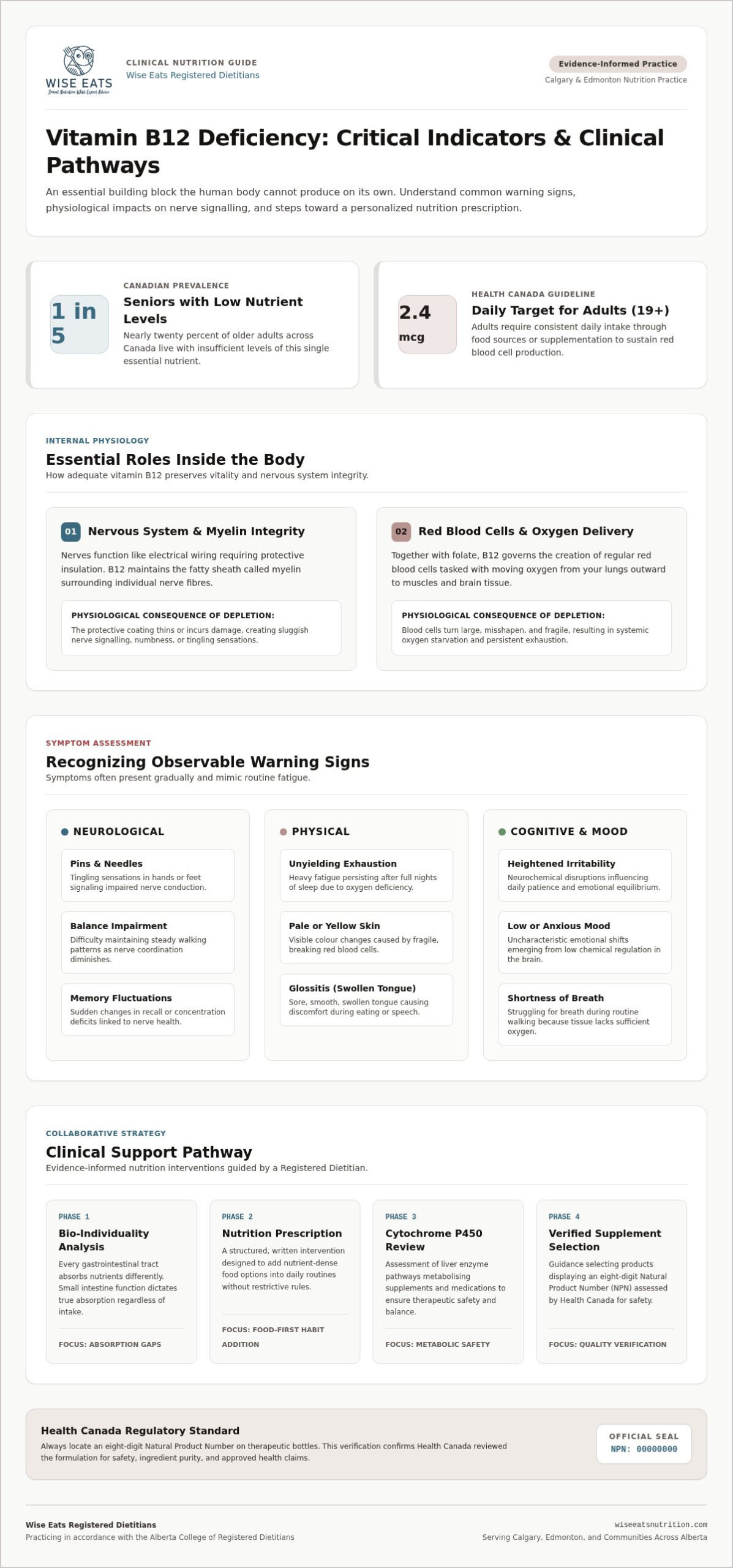
Health Canada recommends adults aged 19 and older aim for 2.4 micrograms of B12 daily. Even a slight gap leads to significant changes in how you feel. A Registered Dietitian helps you look at your lifestyle to see if you meet these targets through your current eating habits. We focus on adding nourishing foods and habits rather than restricting your choices. This collaborative approach ensures your plan fits your health goals and preferences.
To help you visualize these concepts, watch this helpful video:
The role of B12 in your nervous system
Think of your nerves like electrical wires in your home. These wires need a protective coating to work safely and quickly. B12 helps maintain this fatty sheath, called myelin, which surrounds your nerves. When your B12 levels are low, this coating thins or becomes damaged. This leads to slower nerve signaling throughout your body. You might experience a sensation of pins and needles or general numbness.
Healthy levels of B12 are also essential for your mental well-being. This nutrient supports cognitive function and helps keep your mood stable. If you notice a sudden change in your memory or feel more irritable than usual, it might be one of the early signs of vitamin b12 deficiency. Keeping your nervous system supported allows you to stay sharp and focused as you go about your day in Edmonton or Calgary. Professional guidance helps you separate facts from confusing online supplement advice.
Energy production and red blood cells
Your body relies on B12 and folate to build healthy red blood cells. These cells have an important job. They carry oxygen from your lungs to every other part of your body. Without enough B12, your red blood cells become large and misshapen. This makes it difficult for them to move through your bloodstream and deliver the oxygen your muscles and brain need to function. Oxygen is the fuel for your muscles. Without it, simple tasks feel much harder.
This struggle often leads to persistent physical exhaustion. You might feel like you are dragging through your afternoon or finding it hard to catch your breath during a simple walk. A personalized nutrition prescription focuses on adding the right nutrients to your routine to support cell production. By improving your B12 intake, you help your body build the strong red blood cells needed for lasting energy. We focus on practical, actionable insights to help you feel your best.
Common physical and mental signs of vitamin B12 deficiency
Recognizing the early signs of vitamin b12 deficiency feels difficult because many symptoms mimic everyday stress. Do you find yourself struggling to stay awake during the afternoon? Fatigue often serves as the first indicator people notice. This exhaustion feels heavy and persistent. It does not go away with extra sleep because your body lacks the tools to move oxygen efficiently. Your red blood cells need this nutrient to function. Without it, your energy levels drop significantly.
Visible changes to your skin colour also provide clues. Pale or yellowish skin occurs when red blood cell production fails or cells break down too easily. This happens because the cells become fragile without proper support. The NIH vitamin B12 guidelines highlight how these blood changes affect your overall health. You might also notice a sore or red tongue. This condition, known as glossitis, makes the tongue look smooth and swollen. It often makes eating or speaking feel uncomfortable.
Your mental health is closely tied to your nutrient status. Mood changes and irritability often link to low vitamin levels. Do you feel more anxious or low than usual? These shifts happen because B12 helps regulate chemicals in your brain. When levels are low, your nervous system struggles to stay balanced. Working with a Registered Dietitian from the Alberta College of Registered Dietitians helps you understand these connections without the overwhelm of online misinformation.
Neurological symptoms you should not ignore
Neurological symptoms also point to potential signs of vitamin b12 deficiency. Pins and needles sensations in your hands or feet are common. These feelings suggest your nerves are not signaling correctly. Over time, balance issues or difficulty walking might develop. This happens because the nerves responsible for coordination need B12 to stay healthy. In some cases, blurred vision occurs. This happens if the optic nerve experiences damage due to a long-term lack of nutrients. These symptoms require attention to prevent further discomfort.
When to seek help
Listen to your body when it sends these signals. Reach out to your healthcare provider if you notice any of these red flags:
- Persistent numbness or tingling in your hands or feet
- Severe confusion or sudden memory lapses
- Physical weakness limiting your daily activities
These sensations indicate your nervous system needs help. These cognitive changes feel scary, but professional guidance provides clarity. If you feel ready to explore your options, booking an appointment online helps you start your recovery journey.
Why vitamin B12 levels drop and who is at risk
Eating enough B12 is only one part of the story. Your body must also absorb it effectively. This process happens mostly in your small intestine. It starts in the stomach. Acid helps release the vitamin from your food. If your stomach acid is low, you might miss out on this essential nutrient even if you eat it daily. Age plays a major role. As you grow older, your stomach naturally produces less acid. This is why Health Canada suggests adults over 50 use fortified foods or supplements. Certain medications also interfere with how you process B12. For example, metformin is a common medication used to manage blood sugar. Research shows 6% to 30% of people taking metformin long term develop a deficiency. Recognizing the signs of vitamin b12 deficiency is especially important if you take these medications regularly.
In Calgary clinics, research shows cobalamin deficiency reaches 42.8% among high-risk groups with limited animal protein intake. This statistic highlights how common these gaps are in our local communities. Your unique biology determines how well you use the nutrients you consume. A Registered Dietitian from the Alberta College of Registered Dietitians helps you understand these risks. We look at your health history and lifestyle to ensure you get the support you need. This professional review replaces the frustration of guessing with clear, actionable steps.
The link between digestive health and B12
Your digestive system acts like a gateway for nutrients. If the gateway is damaged, nutrients do not get through. Celiac disease is an autoimmune disorder. It damages the small intestine and impairs absorption. Other issues like IBS also influence your nutrient status. A digestive health nutritionist helps you identify these absorption gaps through a personalized review. We look at your symptoms and history to find the right path forward. This approach ensures your nutrition plan supports your long-term health goals.
Dietary patterns and B12 intake
Most vitamin B12 exists naturally in animal products like fish, eggs, and dairy. If you follow a plant based eating pattern, you might not get enough from food alone. People living in Edmonton and Calgary are increasingly choosing plant forward diets. This shift makes it necessary to find other sources like nutritional yeast or fortified plant milks. The Harvard T.H. Chan School of Public Health explains supplements are a reliable way for plant based eaters to meet their needs. A Mediterranean eating pattern is another great option. It includes various sources like fish and yogurt. It focuses on overall health. This pattern supports your body and provides the essential nutrients you need to feel your best every day.
Practical ways to improve your vitamin B12 intake
Addressing the signs of vitamin b12 deficiency involves adding nourishing choices to your plate. We focus on inclusive eating habits. These habits satisfy your hunger while supporting your health goals. You don’t need restrictive rules to improve your levels. Instead, look for ways to include B12-rich foods in your favourite meals. This approach fits your lifestyle and preferences. Bio-individuality means your nutritional needs are unique. A personalized plan considers your lifestyle and preferences. This approach ensures you get the right amount of nutrients for your body.
Food sources for a balanced lifestyle
Many residents in Nanaimo and Vancouver Island enjoy fresh seafood. Salmon and trout are excellent options. They offer high amounts of B12. Eggs and dairy provide easy additions to your breakfast or snacks. If you prefer plant-based meals, fortified nutritional yeast offers a savoury flavour and essential nutrients. These inclusive habits satisfy your hunger while supporting your health goals. Identifying the signs of vitamin b12 deficiency is easier with professional support.
Choosing high-quality supplements is important for your recovery. Health Canada regulates these products to ensure safety. Look for an eight-digit Natural Product Number on labels. This code shows the product meets safety standards. It also confirms Health Canada assessed the supplement for quality. Professional review helps you identify nutrition gaps safely.
Choosing personalized vitamin packs in Canada
Generic vitamins often use doses your body struggles to absorb. Personalized strategies account for your specific health needs. This tailored approach fits your unique biology. Read more about personalized vitamin packs in Canada to see if they fit your goals. Working with a professional provides the steady hand you need during times of change.
How a registered dietitian supports your nutritional needs
Navigating the confusing world of nutrition advice feels like walking through a thick fog without a map. When you are recognizing the signs of vitamin b12 deficiency, you need a partner who understands the science of your body. A professional review with a Registered Dietitian helps you identify nutrition gaps safely. We look at your health history to see how your body processes nutrients. This includes a review of the Cytochrome P450 system. This system is a group of liver enzymes that metabolise many drugs and supplements. It influences how safe and effective a supplement is for you. By checking these pathways, we ensure your nutrition plan supports your long-term health without causing harm.
Personalized meal planning focuses on your unique lifestyle and preferences. We believe in bio-individuality, which means your needs are not the same as anyone else. Rachel McBryan, RD, from the College of Health and Care Professionals of BC, offers virtual care for those across the province. If you live in Alberta, Sheirry Poposka, RD, from the Alberta College of Registered Dietitians, serves residents in Edmonton and Calgary. These experts translate complex data into actionable steps that feel manageable and supportive. You are not alone in this process. We act as a steady hand to help you find clarity and relief.
What to expect during a nutrition consultation
Your first session is a gentle and collaborative experience. We avoid clinical lectures and focus on your personal story instead. Your dietitian uses Medical Nutrition Therapy to manage nutritional deficiencies through evidence-based care. After our talk, you receive a nutrition prescription tailored to you. This is a written plan that includes a therapeutic diet and specific supplement recommendations. We focus on adding nourishing foods and habits rather than using restrictive rules. This approach helps you address the signs of vitamin b12 deficiency while keeping your relationship with food positive and inclusive.
Booking your appointment in Alberta or BC
Accessibility is a priority for our team. Virtual appointments are available for residents of Calgary and Edmonton, allowing you to connect from the comfort of your home. We also provide in-person support in Nanaimo and across Vancouver Island. If you are struggling with a nutrition-related medical condition or an eating problem, a Registered Dietitian can provide professional support. Our goal is to lower your anxiety and replace it with a sense of hope. You can book a consultation today to start building a plan that fits your life and supports your recovery journey.
Taking the next step toward lasting energy
Recognizing the signs of vitamin b12 deficiency is the first move toward feeling like yourself again. Your body relies on this essential nutrient for nerve health and steady energy. Whether you live in Calgary or Qualicum Beach, you don’t have to navigate these health changes alone. Rachel McBryan, RD, from the College of Health and Care Professionals of BC, uses evidence-based Medical Nutrition Therapy to help you find clarity. This professional guidance acts as a filter against misinformation. Our team focuses on your unique bio-individuality. We create a plan for your life. Personalized vitamin and mineral supplements help to fill nutritional gaps food alone might miss in your daily routine. You deserve to move forward with confidence and peace of mind.
We support you in building a flexible and nourishing lifestyle tailored to your needs. Your journey to recovery starts with a single collaborative conversation focused on your well-being. We look forward to being your knowledgeable partner in health.
Frequently Asked Questions
What are the first signs of a vitamin B12 deficiency?
Fatigue and physical weakness often appear first when your levels are low. Many people in Calgary and Edmonton notice they feel sluggish or experience a persistent mental fog throughout the day. You might also feel a strange tingling or numbness in your hands or feet. These early signs of vitamin b12 deficiency are subtle and easy to ignore. Working with a Registered Dietitian helps you identify these patterns early to support your long-term energy.
How long does it take to recover from low B12 levels?
Recovery is a unique journey that depends on your specific health needs and the cause of the gap. Some individuals notice improvements in their energy within a few weeks of starting a nutrition prescription. For others, neurological symptoms like tingling might take several months to resolve. We focus on bio-individuality to ensure your plan supports your body’s pace. Consistent habits and professional guidance help you stay on track during this important process.
Can I get enough B12 from a vegan diet?
While B12 is naturally found in animal products, you can meet your needs on a plant-based diet with careful planning. You should focus on adding fortified foods like plant milks, breakfast cereals, and nutritional yeast to your routine. Many vegans also rely on oral supplements to ensure they reach the Health Canada target of 2.4 micrograms daily. A Registered Dietitian can help you identify nutrient gaps without using restrictive or judgmental rules.
Is it possible to have a B12 deficiency if my blood tests are normal?
Yes, it is possible to experience symptoms even if your serum levels fall within the standard reference range. Alberta Precision Laboratories defines a borderline zone between 148 and 220 pmol/L where some people feel quite unwell. Your care team looks at your clinical symptoms alongside your blood work to get a full picture. This approach ensures we don’t miss the signs of vitamin b12 deficiency just because a single number looks normal.
What foods are highest in vitamin B12 for Canadians?
Canadians have many excellent food options to support their B12 intake. Salmon and trout are high in this nutrient and widely available in Vancouver Island communities like Nanaimo. Eggs, yogurt, and milk are also simple ways to add B12 to your daily meals. For those following a Mediterranean eating pattern, these foods provide a natural and nourishing way to maintain your levels. We focus on inclusive eating habits that satisfy your hunger.
Do I need a prescription for B12 supplements in Canada?
You do not need a prescription for oral B12 supplements in Canada. These are available over-the-counter at most pharmacies in Edmonton and Calgary. Always look for an eight-digit Natural Product Number on the label to ensure Health Canada has verified the product for safety and quality. While oral doses are accessible, very high-dose injections must be managed by your doctor or healthcare team to ensure they are appropriate for your specific situation.
How does aging affect B12 absorption?
Aging naturally changes how your body processes nutrients. As you grow older, your stomach produces less acid, which is necessary to release B12 from the proteins in your food. This change makes it harder for your small intestine to absorb what you need. Health Canada recommends that adults over the age of 50 consume fortified foods or take a daily supplement. This proactive step helps maintain your cognitive function and physical strength.
Can digestive problems like IBS cause a B12 deficiency?
Digestive conditions like IBS or celiac disease can certainly impact your nutrient status. These issues often cause inflammation or change how quickly food moves through your gut, which interferes with absorption in the small intestine. A digestive health nutritionist helps you identify these gaps through a professional review of your symptoms. We focus on adding supportive habits and nutrients to help manage your condition while ensuring your body gets what it needs to function.

Article by
Rachel McBryan, Dietitian
Rachel McBryan is a licenced Dietitian in British Columbia offering comprehensive nutrition counselling as virtual and/or in-person counselling sessions to suit your needs and preferences. With a Bachelor of Science in Nutrition and Food Science, Rachel has over 20 years experience helping people address their health through nutrition. She was awarded Human Nutrition and Food Science BSc.from University of Alberta followed by post-grad course work at UBC in guidance counselling.
An eating disorder is a serious mental health illness.
If you are in immediate distress or crisis, please contact emergency services by dialing 911 or calling Vancouver Island Crisis Line: 1-888-494-3888.