Direct billing doesn’t guarantee full payment. How insurance covers dietitian services in BC and Alberta depends on your benefits plan and the clinic’s billing arrangements. Some Canadian plans cover 80% of a session, leaving you responsible for the remaining share.
It’s understandable to want a clear answer before booking. Coverage terms can be confusing, especially because provincial health services and workplace benefits follow different rules.
This guide explains the difference between public nutrition services and private-plan reimbursement, what to look for in your benefits booklet, and how partial reimbursement works. You’ll also find questions to ask your insurer so you can understand what your plan pays and what you need to submit.
Key Takeaways
- Provincial health services and private insurance work differently. Learn what nutrition support is available through public services in BC and Alberta.
- Look for Registered Dietitian services under paramedical benefits, then review your plan’s annual limit and eligibility rules.
- Ask your insurer whether you need a referral, which practitioner credentials qualify, and what details your receipt must include.
- Some plans reimburse only part of a session, so confirm the covered percentage and remaining balance before booking.
- Wise Eats Registered Dietitians offers Custom Meal Planning and other nutrition support for people seeking help with eating habits or health goals.
Provincial health-plan coverage in British Columbia and Alberta
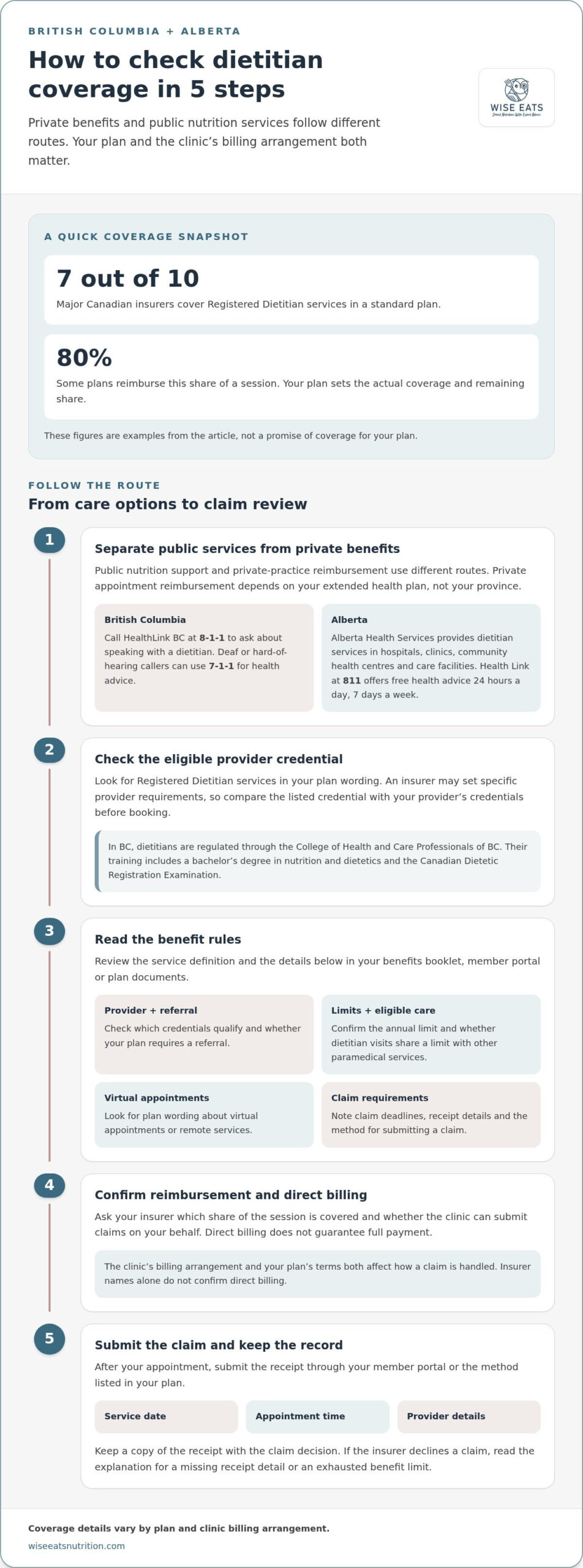
Public nutrition support and private-practice reimbursement follow different routes in British Columbia and Alberta. Alberta Health Services provides dietitian services in hospitals, clinics, community health centres and care facilities. In BC, HealthLink BC can help you ask about speaking with a dietitian. Access depends on the service and setting, so consider public care and extended health benefits separately when planning.
The Public Service Health Care Plan introduced coverage for nutritionist-dietitian services for all participants effective July 1, 2023. This is a federal employee health plan, not a provincial plan for every BC or Alberta resident. If you participate, review your plan details for the eligible provider, covered service and reimbursement process. The date matters because this benefit took effect on July 1, 2023.
For a brief overview of dietitian coverage, watch this video from APFED:
In BC, dietitians are regulated through the College of Health and Care Professionals of BC. Their training includes a bachelor’s degree in nutrition and dietetics and the Canadian Dietetic Registration Examination. This matters because an insurer may specify a Registered Dietitian rather than a nutritionist. Before booking private nutrition care, compare the title listed in your plan with the provider’s credentials.
Alberta Health Services dietitians provide nutrition counselling related to health, chronic disease prevention and management, and recovery after illness or surgery. Public health nutrition services are available in the North and Central zones. Services are also offered through acute care and rehabilitation hospitals, home care, supportive living, continuing care facilities, outpatient clinics, community health centres and communities. Check which public service setting fits your needs.
In BC, call HealthLink BC at 8-1-1 to ask to speak with a dietitian. People who are deaf or hard of hearing can call 7-1-1 for health advice. Alberta residents can call Health Link at 811 for free health advice, 24 hours a day, 7 days a week. These services provide a public starting point, while private-practice reimbursement falls under extended health benefits.
For private care related to digestive concerns, nutrition programs and services offer another route for nutrition support. Insurance coverage for private appointments depends on plan terms, not provincial health-zone access. Check whether your benefits include dietetic services and whether the provider’s credentials meet the plan’s rules before scheduling.
Insurance providers listed for dietitians
Insurance plans differ in provider rules, claim steps and reimbursement. Seven out of 10 major Canadian insurers cover Registered Dietitian services in their standard plan.
Provincial Reimbursement Differences
Reimbursement can vary between benefit plans in BC and Alberta. The province itself does not set one reimbursement rate for private dietitian appointments, so your plan’s terms matter more than your postal code.
Canadian dietitian coverage information names insurers such as Co-operators, Cowan, Empire Life, Manion and Pacific Blue Cross. These are insurer names, not a shared direct-billing policy. Direct billing depends on the arrangement between the clinic and insurer, so an insurer’s name alone does not tell you whether a clinic can submit claims on your behalf.
Do insurance plans require a referral to see a dietitian in BC or Alberta? Referral rules vary by plan. Review your benefits wording before booking.
Are virtual dietitian consultations covered by insurance in BC and Alberta? Some consultations are virtual, but coverage depends on each plan’s rules for eligible services and providers. Look for wording about virtual appointments or remote services.
Insurer Contacts and Resources
Insurer contacts and resources can help clarify coverage and claims. Your benefits card, member portal or plan booklet usually shows how to reach the right contact.
Ask member services whether a Registered Dietitian qualifies, whether you need a referral, and whether virtual appointments are eligible. Confirm the annual limit, claim deadline and receipt requirements. Clinics can contact an insurer’s provider relations channel with questions about registration, direct billing and claim processing.
How do I submit a dietitian claim to my insurer in British Columbia or Alberta? After your appointment, submit the receipt through your member portal or the method specified in your plan. Keep a copy and make sure it includes the service date, appointment time and provider details.
Insurer guides may explain claim forms, receipt requirements and electronic submission. Follow the instructions for your own plan, since processes differ. If a claim is declined, read the explanation first. It may identify a missing receipt detail or an exhausted benefit limit, for example, so you can address the specific issue before resubmitting.
- Ask whether your plan requires a referral or accepts virtual appointments.
- Confirm eligible provider credentials, yearly limits and claim deadlines.
- Keep the receipt and claim decision together for your records.
For digestive nutrition support, you can review appointment options and keep your insurer’s claim requirements close by.
Private insurance coverage for dietitians and nutritionists
Private health plans set their own eligibility rules, limits and claim processes. To understand how insurance covers dietitian services in BC and Alberta, check how your plan defines eligible nutrition care.
Coverage for Nutrition Counselling
Coverage for nutrition counselling means a plan reimburses eligible appointments with a provider who meets its requirements. Annual extended-benefit limits for Registered Dietitian services frequently range from C$500 to C$1,500. Check whether counselling visits share one limit with other paramedical services or use a separate benefit amount. This detail affects how much coverage remains for later appointments.
Some policies distinguish nutrition care related to a health concern from support for weight management or athletic performance. Read the service definition instead of relying on a benefit heading alone. For example, a plan may list dietitian services under paramedical benefits but still limit eligible providers or appointment types. If you’re considering performance-focused support, compare the plan wording with the service description before making a claim.
Medical Nutrition Therapy and Recommendations
Medical Nutrition Therapy (MNT) for diabetes is a dietitian-led approach that may use carbohydrate counting and meal timing to support blood glucose management. A plan might describe eligible appointments as nutrition counselling rather than MNT. Compare the service wording with your benefit terms, then check whether personalized recommendations and follow-up sessions share the same annual maximum.
A Registered Dietitian develops personalized recommendations based on health conditions, eating habits, nutritional needs and health goals. A plan covering diabetes-related nutrition care, for example, may still limit provider credentials or eligible services. Keep the appointment description consistent on your receipt and claim form. To understand how insurance covers dietitian services in BC and Alberta, focus on your plan’s wording for eligible care.
Dietitian Services as Medical Expenses
Whether dietitian fees qualify as medical expenses on a Canadian tax return depends on current Canada Revenue Agency guidance and your filing situation. Insurance reimbursement and tax eligibility are separate processes. Consult CRA guidance for the relevant tax year before treating an appointment expense as a medical expense.
Keep appointment records and benefit statements with your tax documents. They help you track what you paid and what your plan reimbursed. Use current CRA information when preparing your return, since eligibility rules and your personal tax situation determine how an expense is treated.
Before booking, review these plan details:
- Whether the provider must be a Registered Dietitian.
- Which appointment types qualify, including virtual services.
- The annual maximum and remaining benefit balance.
- Which receipt details and claim documents the insurer requires.
Checking benefits plans and asking employers about coverage
Employer benefits vary, so review your plan booklet and ask specific questions before booking. Check both the provider requirements and the available benefit amount.
Coverage Through Employer Benefits
Employer benefits coverage means a workplace plan pays toward eligible dietitian appointments. Employers choose different benefit designs, and some plans exclude dietitian services, so check your specific coverage.
Look for “dietitian,” “nutritionist” or “paramedical services” in your booklet. Ask your benefits administrator whether nutrition counselling qualifies, and whether a health spending account covers eligible nutrition appointments. Some Canadian health plans reset on January 1st and end their calendar-year coverage on December 31st, so check the dates and remaining balance before booking.
Registered Dietitian Eligibility
Registered Dietitian eligibility means your plan accepts services from a professional with that credential. Confirm the exact title recognized by your insurer before arranging care.
Ask whether your plan requires a referral, whether the appointment must address a health concern, and whether follow-up visits qualify. If your booklet says “nutritionist,” ask your insurer whether a Registered Dietitian meets that definition. Record the response, the member name and the date you asked.
Estimated Employer Coverage
Estimated employer coverage describes the share of employees with benefits for dietitian services. Estimates place coverage among Canadians with employer benefits at 60 to 70%.
That estimate does not confirm your own eligibility. Nationally, 87% of people have extended health benefits, including 64% through an employer and 14% through another group plan. Ask your workplace which plan applies to you, since employer choice determines the covered services and limits.
Employee benefits advocacy has developed over several years. Dietitians of Canada, its Consulting Dietitians Network and members formed an Employee Health Benefits Advocacy advisory committee in Fall 2018. Dietitians of Canada and the committee launched a digital communication campaign in October 2019 to raise awareness of dietitian coverage in workplace plans.
When you contact human resources or your plan administrator, ask these questions:
- Does my plan cover appointments with a Registered Dietitian?
- What annual limit applies, and how much remains?
- Does the plan require a referral or specific appointment documentation?
- Does my health spending account reimburse dietitian services?
Record the answers before your appointment. If your benefits renew on January 1st, ask whether unused coverage carries forward or ends on December 31st.
In Good Nutrition advises checking coverage directly with your insurer.
Partial insurance payments and outstanding balances
A private insurance plan might reimburse only part of a dietitian appointment. Understanding the payment split, annual limit and claim timing helps you plan for any remaining balance.
Some Canadian health insurance plans cover only 80% of a nutritionist or dietitian session. If your plan uses this arrangement, you pay the uncovered portion. The plan’s annual maximum also matters. Once you reach it, additional eligible appointments fall outside that benefit until the plan renews. Check whether the percentage applies to the full eligible service or a maximum amount set by your plan.
For example, a plan might cover 80% of eligible appointments until its annual limit runs out. Your share then depends on the plan’s calculation and remaining balance. A percentage alone does not show the final payment. Ask the insurer how it applies the rate, whether the benefit has a per-visit limit, and what happens after you use the annual maximum. Clear answers encourage informed decisions before you book.
Direct billing and reimbursement are separate steps. A clinic may submit a claim to your insurer, or provide a receipt for you to submit. Claims are processed after the consultation, and insurers do not cover missed appointments or late-cancellation charges. Keep claims for completed appointments separate from cancellation policies, since plan payments apply to eligible services.
The Public Service Health Care Plan introduced nutritionist-dietitian coverage for all participants effective July 1, 2023. For a PSHCP participant, the plan’s specific benefit terms still determine the reimbursed share and claim process. Confirm the eligible service, provider requirements, annual limit and submission steps in your plan information. If care relates to a condition such as diabetes or another disease, describe the appointment accurately on claim documents.
Before an appointment, write down the answers to these payment questions:
- What percentage of an eligible dietitian service does the plan reimburse?
- Does a per-appointment maximum apply before the annual limit?
- How much of the annual benefit remains for the current period?
- Does the clinic direct bill, or do you submit the receipt?
- When does the plan process claims after a completed consultation?
Keep the insurer’s response, receipt and reimbursement statement together. If the payment differs from the estimate, compare the explanation with the benefit limit and service details you recorded.
Wise Eats Registered Dietitians: Custom Meal Planning
Wise Eats Registered Dietitians provides custom meal planning for people seeking practical nutrition support suited to their preferences and routines. If your benefits cover dietitian appointments, review your plan’s eligible services and provider requirements as you consider support.
Support also includes personalised vitamin and mineral supplements, weight management and eating disorder recovery. Bring questions about meal planning, eating patterns or your current supplement routine to a Registered Dietitian. The focus is on your needs and health goals, without rigid food rules.
For digestive concerns, discuss nutrition support alongside guidance from your care team. Contact Wise Eats Registered Dietitians to learn more about working together.
Contact Wise Eats Registered Dietitians
Choose a Next Step That Fits Your Needs
Understanding how insurance covers dietitian services in BC and Alberta gives you a starting point for planning nutrition support. Decide what you want help with, then match that goal to an appointment and the benefits information you’ve gathered.
You might want help fitting everyday meals into your schedule, discussing nutrition alongside a health concern, or building more supportive eating habits. Bring your questions and plan details to a Registered Dietitian. A clear conversation about your goals can shape a practical starting point without pressure to change everything at once.
If benefit paperwork feels confusing, take it one decision at a time. You deserve support that respects your circumstances, preferences and pace. When you’re ready, book an appointment and discuss the nutrition support you’re looking for.
Your next step can be simple: choose the kind of support you want and begin there.
Frequently Asked Questions
Do you offer direct billing?
Direct billing is available for Veterans Affairs, ICBC and WorkSafeBC claims. For other plans, you may need to pay the provider and submit a receipt yourself. Before booking, have your insurer’s claim instructions ready and note any required claim number or authorization details. Direct billing describes how a claim is submitted, not whether the insurer will approve the service or reimburse the full amount.
Are dietitian services covered by provincial health insurance in British Columbia and Alberta?
Provincial health services provide dietitian support through specific programs and care settings, but private appointments are generally not reimbursed as provincial health insurance claims. Accessing public services is separate from submitting a private appointment receipt to an extended health plan. If you need nutrition support as part of hospital or community care, ask your care team which public services suit your situation.
What private health insurance plans in BC and Alberta cover registered dietitian visits?
Coverage appears in a range of Canadian plans, and seven out of 10 major insurers include Registered Dietitian services in a standard plan. The insurer’s name alone does not identify your policy’s terms. Check your certificate or member portal for the exact benefit wording, including whether the plan covers assessments, follow-up visits or both. A workplace health spending account is another benefit to review.
How much coverage do extended health plans provide for dietitian services in BC and Alberta?
Your plan’s explanation of benefits shows how it processed a submitted appointment claim. Review the eligible amount, the portion deducted from your benefit balance and any remaining amount you owe. If the statement is unclear, contact the insurer using its claim reference. Keep the receipt and response together, especially if you need to correct a claim or track your remaining benefits.
What is the typical cost of a dietitian appointment in British Columbia and Alberta?
There is no single typical appointment cost for both provinces, and this guide does not provide a fee estimate. The amount depends on the practice and appointment details, including session type and length. Before scheduling, review the practice’s current appointment information and confirm what the session includes. Keep the provider’s charge separate from any amount your insurer later reimburses.
What credentials must a dietitian have for insurance reimbursement in BC and Alberta?
Insurers often require providers to hold the Registered Dietitian credential. In BC, dietitians are regulated by the College of Health and Care Professionals of BC. In Alberta, they register with the Alberta College of Dietitians. Check that the name and credential on your receipt match the provider details accepted by your insurer. This helps distinguish a regulated dietitian from someone using another nutrition-related title.
Does employer health insurance cover dietitian services differently from individual plans in BC and Alberta?
Yes, the policy structure differs. An employer chooses the terms of its group benefits, while an individual policy follows the contract purchased by the policyholder. If you have coverage through work and a partner’s plan, compare both booklets and note which one lists you as the member or dependent. Review any health spending account rules as well, since eligible expenses may differ from those in the main plan.
Article by
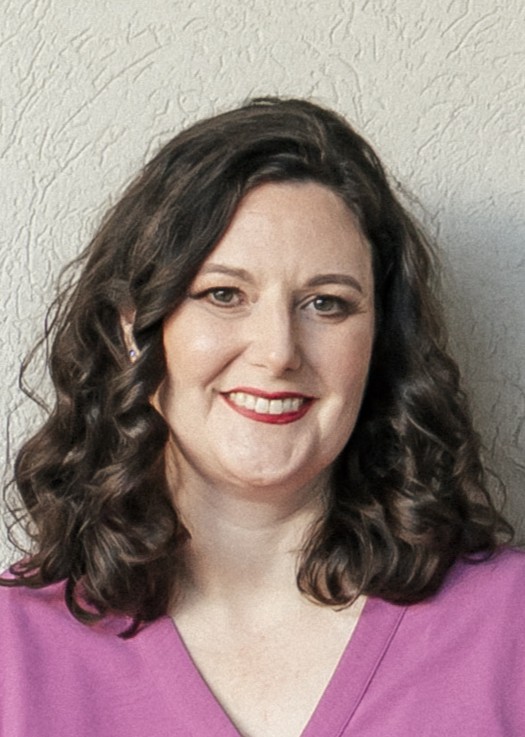
Rachel McBryan, Dietitian
Rachel McBryan is a licenced Dietitian in British Columbia offering comprehensive nutrition counselling as virtual and/or in-person counselling sessions to suit your needs and preferences. With a Bachelor of Science in Nutrition and Food Science, Rachel has over 20 years experience helping people address their health through nutrition. She was awarded Human Nutrition and Food Science BSc.from University of Alberta followed by post-grad course work at UBC in guidance counselling.
An eating disorder is a serious mental health illness.
If you are in immediate distress or crisis, please contact emergency services by dialing 911 or calling Vancouver Island Crisis Line: 1-888-494-3888.