What is the FODMAP Reintroduction Phase and Why is it Necessary?
After weeks of careful eating during the elimination phase of a low FODMAP diet, you are likely feeling much better. But what comes next? This guide explains how to do a FODMAP reintroduction phase, a critical step for understanding your personal food triggers and expanding your diet.
The reintroduction phase is a structured process of re-testing high-FODMAP foods to see which ones you tolerate and in what amounts. The goal is not to stay on a restrictive diet forever. It is to identify which specific FODMAP groups trigger your Irritable Bowel Syndrome (IBS) symptoms and which ones you can enjoy without issue.
Long-term, unnecessary food restriction can create social stress and may impact your nutrient intake. Think of this phase as a data-gathering mission. "Failing" a food challenge is not a failure at all, it is a success in learning valuable information about your body.
The Purpose of the Challenge Phase
The FODMAP challenge phase helps you pinpoint your specific triggers. By testing individual FODMAP groups one by one, you can realize which foods are safe for you. This process is the key to moving away from a strict list of low FODMAP foods and toward a more varied diet.
A diverse diet is crucial for supporting your gut health. The bacteria in your gut, your microbiome, thrive on a variety of plant fibres, including some FODMAPs. Reintroducing well-tolerated foods helps feed these beneficial microbes. This phase is temporary and leads to a more sustainable, enjoyable, and nutritionally complete way of eating.
Addressing the Fear of Symptom Return
It is completely normal to feel nervous about reintroducing foods that may have caused discomfort in the past. You have worked hard to get your symptoms under control, and the thought of an IBS flare up can be daunting.
However, the reintroduction process is a controlled experiment. You are in charge of the food, the portion size, and the timing. This is much safer than accidental exposure to a high-FODMAP ingredient at a restaurant or a family dinner. Each test, successful or not, gives you the power of knowledge and helps you build confidence in managing your digestive health.
How to Do the FODMAP Reintroduction Phase: A Step-by-Step Guide
Before you begin reintroducing FODMAP foods, it is important that your IBS symptoms are stable and well-managed. If you are still experiencing regular flare-ups, it is best to wait until things have settled.
The entire process typically takes about 6 to 8 weeks, but this can vary for each individual. The key is to be methodical and patient.
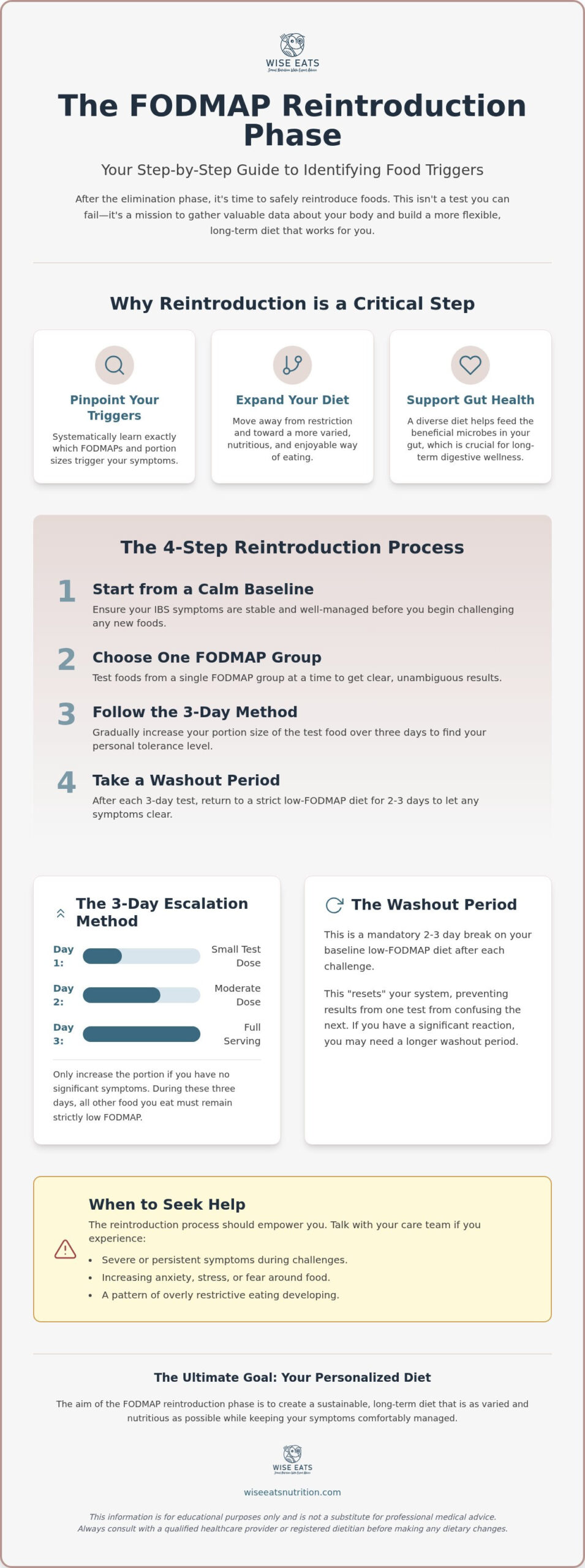
- Step 1: Ensure you are symptom-stable. Your baseline should be calm before starting a new food challenge.
- Step 2: Choose one FODMAP group to test. Start with a food you miss or one you think you might tolerate well.
- Step 3: Test a single food using the "Three-Day Escalation Method." Keep the rest of your diet strictly low FODMAP during these three days.
- Step 4: Take a "Washout Period." After each three-day test, return to your baseline low FODMAP diet for at least 2 to 3 days.
The Three-Day Escalation Method
This structured approach, developed by Monash University, helps you find your personal tolerance threshold for each FODMAP group.
- Day 1: Start with a small "test dose" of your chosen food. For example, if you are testing fructans in garlic, you might try 1/4 of a clove in your meal.
- Day 2: If you had no significant symptoms on Day 1, increase the portion to a moderate dose. For garlic, this might be 1/2 a clove.
- Day 3: If you still feel well, try a full, normal serving size, such as one whole clove of garlic.
This gradual increase helps you see if you can handle small amounts of a food, even if a large portion causes symptoms. Remember to perform symptom tracking throughout this process.
The Importance of the Washout Period
The washout period is essential for getting clear results. After completing a three-day food challenge, you must return to a strict low FODMAP diet for 2 to 3 days.
This break allows any symptoms from the test food to resolve completely before you start the next challenge. If symptoms from one test overlap with the next, your results will be confusing. If you experience a significant IBS flare up during a challenge, you may need a longer washout period until you return to your baseline.
Choosing Your Test Foods for Each FODMAP Group
As you begin reintroducing FODMAP foods, it is important to choose test foods that contain only one FODMAP group. This ensures you can isolate which group is causing a reaction. For example, an apple contains both fructose and sorbitol, so it would not be a good test food.
While you are testing a specific food, keep the rest of your meals and snacks low FODMAP. This prevents other foods from interfering with your results. A great strategy for staying motivated is to start with the FODMAP group you miss the most.
Fructans and GOS: The Onion and Bean Challenges
Fructans and Galacto-oligosaccharides (GOS) are two of the most common IBS food triggers.
- Fructans: To test fructans from vegetables, you could use a small amount of onion or garlic. For fructans from grains, a slice of whole wheat bread is a common choice.
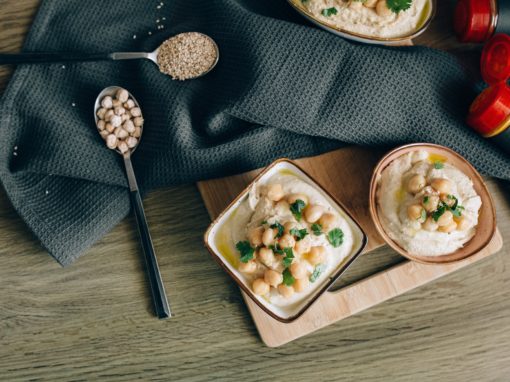
- GOS: Canned lentils or chickpeas are excellent for testing GOS. The canning process leaches some of the GOS into the water, so be sure to rinse them well for a more controlled test.
Lactose, Fructose, and Polyols
These groups can be tested with common foods found in most Canadian grocery stores.
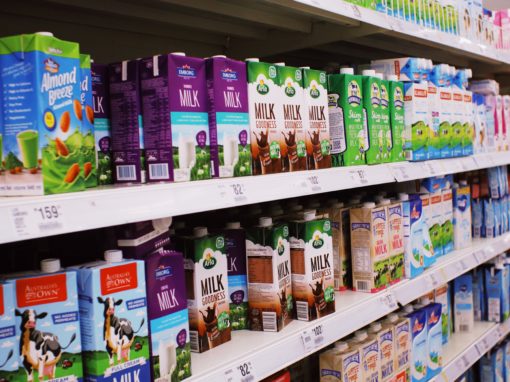
- Lactose: If dairy is part of your typical diet, cow’s milk or plain yogurt are good options for a lactose challenge.
- Fructose: Honey or mango are effective test foods because they contain excess fructose compared to glucose.
- Polyols: This group should be tested separately. For sorbitol, you could use apricots or blackberries. For mannitol, mushrooms or cauliflower are good choices.
How to Interpret Your Results and Manage Flare-ups
Learning to interpret your body’s signals is a key skill. It is important to differentiate between mild, normal digestive sensations (like a little gas) and a significant IBS flare-up characterized by pain, bloating, and changes in bowel habits.
Approach symptom tracking with curiosity, not judgment. The data you collect is neutral information that will help you build your personalized low-FODMAP diet. Remember that your tolerance levels can change over time as your gut health improves.
Tracking Your Symptoms Effectively
A simple journal is one of the best tools for this phase. You can use a notebook or a digital app to track your experience.
- What to Record: Note the food you tested, the portion size, and the date and time.
- Symptom Details: Log any symptoms you experience, such as bloating, gas, abdominal pain, or changes in stool consistency.
- Use a Symptom Scale: Rate the severity of your symptoms on a scale of 1 to 10. This helps you quantify your experience and see patterns more clearly.
- Normal vs. Flare: A small amount of gas after eating beans can be a normal part of digestion. Debilitating pain or urgent diarrhea is not. Learning this distinction is part of the process.
When to Seek Professional Help
This guide is for educational purposes. A Registered Dietitian can provide invaluable support during the reintroduction phase, especially if your results are confusing. You should speak with a doctor if you experience any "red flag" symptoms, including:
- Unexplained weight loss
- Blood in your stool
- Severe or worsening pain
If you’re struggling with a nutrition-related medical condition or an eating problem, a registered dietitian can provide professional support — book a consultation.
Designing Your Flexible Long-Term Diet
The final step of the low FODMAP diet is the "Personalization Phase." This is where you use all the data you have gathered to design a diet that works for you.
The goal is to create a diet that is as diverse and enjoyable as possible while keeping your IBS symptoms managed. You may even find that you can re-test "failed" foods in smaller portions later on and tolerate them. Most people discover they are only sensitive to one or two FODMAP groups, not all of them. Meal planning can be a helpful tool for maintaining variety without feeling overwhelmed.
The Personalization Phase
This is your long-term, modified low FODMAP diet. It is completely unique to you. For example, you might learn that you can eat a full serving of lentils (GOS) and a small amount of yogurt (lactose) but need to continue avoiding onions and garlic (fructans). This is your personalized low-FODMAP diet, and it is the key to lasting relief and food freedom.
How a Registered Dietitian Supports Your Journey
Navigating the reintroduction process can be tricky. A dietitian can help you interpret mixed results, design a safe and structured testing schedule, and ensure your long-term diet is nutritionally balanced.
Working with a professional can reduce the time you spend in the more restrictive phases and help you build a positive relationship with food. The dietitians at Wise Eats Nutrition, including Rachel McBryan, RD (College of Dietitians of British Columbia), and Sheirry Poposka, RD (College of Dietitians of Alberta), are experienced in guiding clients through this process.
Ready to find your food freedom? Book a consultation with a Wise Eats Registered Dietitian today.
Proof Points:
- Evidence-based guidance from BC and Alberta Registered Dietitians
- Supportive, weight-neutral care for digestive health
- Personalized meal planning tailored to your unique triggers
Frequently Asked Questions
How long should the FODMAP reintroduction phase take?
Typically, the reintroduction phase takes 6 to 8 weeks. However, the timeline is personal. The most important thing about how to do a FODMAP reintroduction phase correctly is to go at your own pace and not rush the process, ensuring you have a proper washout period between each food challenge.
What should I do if I have a reaction during a food challenge?
If you have a significant reaction, stop the challenge for that food. Do not increase the portion size on the following day. Return to a strict low FODMAP diet until your symptoms have completely resolved, and then you can begin the next food challenge.
Do I have to test every single FODMAP group?
It is highly recommended that you test all the main FODMAP groups. You may be surprised to find you tolerate groups you expected to react to. This process gives you the most dietary variety and freedom in the long run.
Can I re-test a food that I reacted to in the past?
Yes. Gut tolerance can change over time. It is a good idea to re-challenge "failed" foods every 6 to 12 months. You may find that you can tolerate small amounts, especially as your overall gut health improves.
Is it possible to be sensitive to all FODMAP groups?
While it is possible, it is quite rare for someone to react to all FODMAP groups. Most people with IBS find they are sensitive to only one or two groups. If you seem to be reacting to everything, it is a good idea to work with a Registered Dietitian to ensure your testing method is sound.
Can a Registered Dietitian help me if my reintroduction results are confusing?
Absolutely. A dietitian specializing in digestive health can help you analyze your symptom journal, identify patterns, and create a clear plan. They can help troubleshoot issues and guide you toward a successful personalization phase.
What are the best foods to use for reintroducing fructans?
Fructans are found in both vegetables and grains, so it is a good idea to test them separately. For vegetable fructans, a small amount of onion or garlic works well. For grain-based fructans, one slice of whole wheat bread is a standard test food.
Should I stop my supplements during the reintroduction phase?
It is best to keep your supplement routine consistent during the reintroduction phase to avoid confusing your results. However, check your supplements for high-FODMAP ingredients like inulin, chicory root, fructose, or sugar alcohols. Discuss any changes with your healthcare provider or a Registered Dietitian.
This article is for educational purposes and is not a substitute for professional medical advice, diagnosis, or treatment.

Article by
Rachel McBryan, Dietitian
Rachel McBryan is a licenced Dietitian in British Columbia offering comprehensive nutrition counselling as virtual and/or in-person counselling sessions to suit your needs and preferences. With a Bachelor of Science in Nutrition and Food Science, Rachel has over 20 years experience helping people address their health through nutrition. She was awarded Human Nutrition and Food Science BSc.from University of Alberta followed by post-grad course work at UBC in guidance counselling.
An eating disorder is a serious mental health illness.
If you are in immediate distress or crisis, please contact emergency services by dialing 911 or calling Vancouver Island Crisis Line: 1-888-494-3888.
This article is educational information only, not professional diagnosis or treatment. This health education content is heavily AI augmented and parts or all of this article may not have been reviewed yet for accuracy. AI generated content is prone to error.
Please note that we partner with VitaminLab and financially gain if you purchase supplements. You are under no obligation to use VitaminLab products and whether you supplement your diet with VitaminLab or another product of your choice will not impact your nutrition care.