
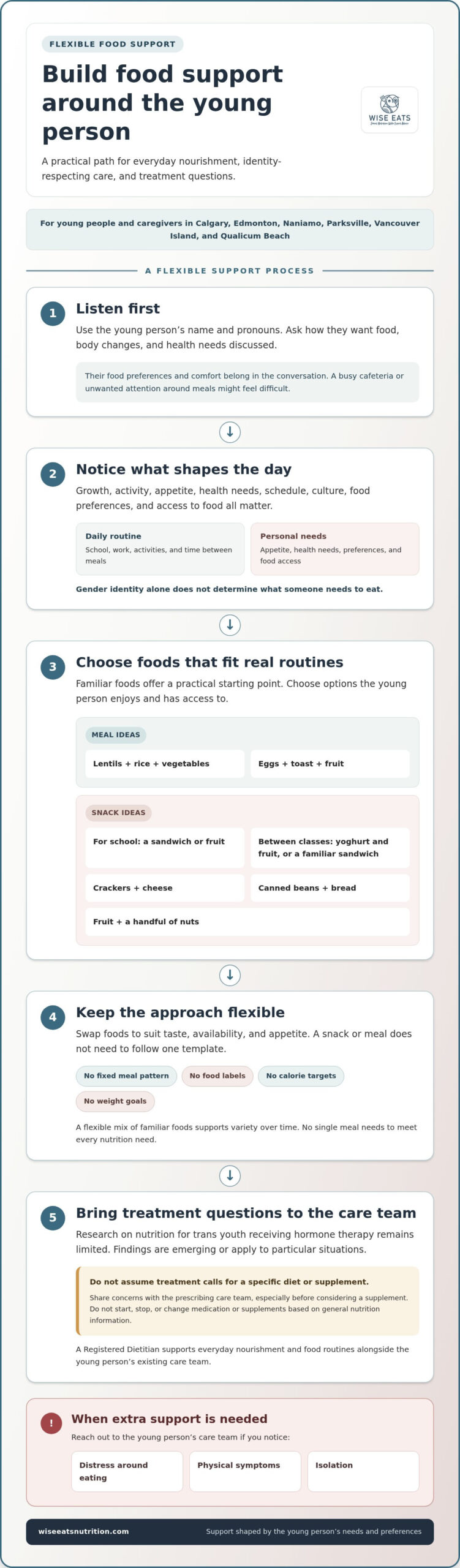
Nutrition for trans youth should reflect each young person’s growth, health needs, food preferences, access to food, and comfort with eating and body changes. Support starts with listening, not assumptions about gender.
For young people and caregivers in Calgary, Edmonton, Naniamo, Parksville, Vancouver Island, and Qualicum Beach, affirming food guidance can be hard to find. Advice focused on weight, appearance, or gender stereotypes can add pressure. A trans young person deserves practical support without rigid rules or pressure to change their body.
This article covers flexible meal and snack ideas, questions about puberty and hormone therapy, and signs a young person needs more support. A Registered Dietitian can discuss everyday food routines alongside the young person’s existing care team.
Key Takeaways
- Nutrition for trans youth should reflect individual growth, health needs, food preferences, and identity, without relying on gender stereotypes.
- A flexible mix of familiar foods supports nourishment without rigid rules or prescribed meal plans.
- Research on hormone therapy and nutrition for trans youth is limited. Treatment-related questions belong with the prescribing care team.
- Simple routines can make meals and snacks fit your household’s schedule, culture, food access, and preferences.
- Distress around eating, physical symptoms, or isolation are reasons to seek support from the young person’s care team.
Nutrition for trans youth: start with individual needs, not assumptions
Food support for a trans young person should focus on nourishment, daily routines, food access, and the needs that come with age and growth. Advice based on gender stereotypes or weight and appearance often misses what the young person needs in everyday life.
Growth, activity, appetite, health needs, food preferences, and access to food all shape nutrition conversations. Gender identity alone does not determine what a person needs to eat. For families in Calgary, Edmonton, Naniamo, Parksville, Vancouver Island, and Qualicum Beach, support should fit real routines rather than impose a one-size-fits-all plan.
This video discusses nutrition considerations for transgender people.
What nutrition support can include during adolescence
School, activities, appetite, health needs, and food access all shape a young person’s routine. A backpack snack, such as a sandwich or fruit, is one option for a busy school day. Choose foods the young person enjoys and can access, rather than following assumptions about gender.
Nutrition support might include finding simple meal ideas or talking through barriers to eating during the school day. General nutrition education offers broad information about nourishment and routines. It is not individualized medical advice. A Registered Dietitian can discuss food routines alongside the young person’s existing care team.
How affirming nutrition care respects identity
Use the young person’s name and pronouns. Ask how they want food, body changes, and health needs discussed. Their preferences and comfort belong in care conversations. A young person might prefer certain foods, feel uneasy eating in a busy cafeteria, or want less attention on meals. Listening helps shape support around their needs.
Weight-inclusive support focuses on nourishment and daily well-being, not body judgement. It avoids assigning foods or nutrition needs based on gender. For an overview of the varied experiences of transgender youth, see this background resource. In nutrition care, the young person’s needs and preferences guide the discussion.
Growth, energy, and essential nutrients: the basics for trans youth
Growth, activity, appetite, and daily schedules all influence food routines during adolescence. Needs differ from person to person, so fixed targets or a single meal pattern won’t suit everyone. Culture, food preferences, health needs, and access to food also shape what feels practical.
Essential nutrients are nutrients the body cannot synthesize in sufficient quantities and must obtain from the diet. Health Canada’s Canada’s Food Guide encourages variety across foods. A flexible mix of familiar options is one way to include a range of nutrients over time. No single meal needs to meet every nutrition need.
How growth and daily routines shape food needs
Appetite and meal patterns often shift during adolescence. A young person might feel hungrier during a period of growth or have little time to eat on a day filled with school, work, or activities. A snack between classes, such as yoghurt and fruit or a familiar sandwich, is one option for a long gap between meals. It isn’t a rule or a measure of whether someone eats well.
Some nutrition recommendations rely on sex-based data, which can be difficult to apply to an individual. The Academy of Nutrition and Dietetics discusses nutrition recommendations for trans people and the limits of sex-specific guidance. A Registered Dietitian can discuss personal nutrition needs with young people and families in Calgary, Edmonton, Naniamo, Parksville, Vancouver Island, and Qualicum Beach without treating gender identity as a formula.
Building flexible meals and snacks
Meals don’t need to follow one template. Familiar combinations from a household or cultural food tradition offer a practical starting point. A meal might pair lentils and rice with vegetables, or eggs with toast and fruit. The young person’s preferences matter. Swap foods to suit taste, availability, and appetite.
For days with little time or energy, keep convenient options on hand when they fit the household’s budget and food access. Examples include crackers with cheese, canned beans with bread, or fruit with a handful of nuts. These are ideas, not standards. Flexible routines support nourishment without food labels, calorie targets, or weight goals.
Puberty and hormone therapy: what nutrition guidance can and cannot say
Puberty brings physical and emotional changes, and food questions often come up alongside questions about care. Clear evidence boundaries help keep nutrition advice useful without promising how a young person’s body will change.
Hormone therapy is medical treatment using estrogen or testosterone to align physical characteristics with gender identity. Nutrition needs during puberty and treatment depend on the individual. Research on nutrition specifically for trans youth receiving hormone therapy remains limited, with findings still emerging or applying to particular situations. Don’t assume treatment calls for a specific diet or supplement.
Hormone therapy and nutrition questions
Questions about appetite, energy, food routines, or supplements during treatment deserve individual attention. The prescribing care team understands the young person’s health history and treatment. Share concerns or changes with the team, especially before considering a supplement. Don’t start, stop, or change medication or supplements based on general nutrition information.
Nutrition questions about treatment belong with the prescribing care team. A Registered Dietitian can support everyday nourishment and food routines as part of the wider care team, but does not replace medical care or provide treatment advice outside their role.
Talking about nutrition without body assumptions
General nutrition education can cover regular access to food, flexible meals and snacks, and ways to fit eating into a young person’s schedule and preferences. These ideas remain useful without predicting changes in appetite, energy, or body shape. If a young person notices a change in how they feel or eat, they can bring it up with their care team rather than guessing at the cause.
Care conversations should not treat gender identity as a shortcut for nutrition needs. A clinician can consider relevant health information, including treatment, and decide what applies to the individual. Evidence about specific nutrition effects of hormone therapy is not settled enough to support one set of food rules for all trans youth.
Keep nutrition practical and collaborative: focus on nourishment, comfort, and routines, and leave medical questions with the professionals responsible for the young person’s care. A Wise Eats Registered Dietitians appointment page offers a place to discuss everyday food support alongside the existing care team.
Practical food routines that respect preferences, culture, and access
Food routines work best when they fit the young person’s real day. School timetables, activities, family meals, budget, food access, and kitchen space all affect what feels manageable. A plan should make eating easier, not add pressure or turn meals into another task to get perfect.
Start with foods the young person enjoys
Set aside a few minutes to list familiar foods the young person likes and feels comfortable eating. Include dishes from family or cultural traditions, along with simple options for rushed days. The list might include leftover rice and vegetables, a sandwich, or fruit with yoghurt. Involve the young person in choosing. Their preferences matter more than an adult’s idea of what they should eat.
Plan options around the day
Look at the weekly schedule together. A long gap between school and an evening activity might call for a portable snack. If kitchen access is limited, consider options needing little preparation, such as bread with nut or seed butter, or ready-to-eat yoghurt. Choose foods based on what’s accessible and acceptable to the household, not calorie counting or rigid rules.
For shared family meals, offer a familiar base with choices alongside it. Rice, potatoes, or bread might accompany a main dish, with vegetables or another preferred food available too. This lets the young person take part without requiring a separate meal or a conversation about their body.
Adjust routines without adding pressure
On days when cooking feels difficult, a simple meal assembled from available foods still counts as a meal. Keep convenient options within reach, such as cereal and milk, toast with eggs, or leftovers. If plans change, adapt. A flexible routine is more useful than a detailed schedule no one can follow.
Caregivers can help by listening, offering options, and easing pressure at the table. Ask privately what kind of support the young person wants. They might prefer help packing snacks, choosing groceries, or having less attention drawn to what or how much they eat. If concerns about eating behaviours arise, discuss them with the young person’s care team.
For extra planning ideas, use the free meal-planning and diet-analysis resource from Wise Eats Registered Dietitians. Keep nutrition flexible enough to fit the young person, household, and circumstances.
When to Seek Help: finding affirming nutrition support for trans youth
Eating concerns can be hard to raise, especially if a young person worries about being judged or having their body scrutinized. Start with a calm, respectful conversation with a trusted adult or member of their care team. Support can address eating patterns and daily routines without assumptions about gender or body size.
When to Seek Help
Consider reaching out to the young person’s care team if any of these concerns affect their well-being:
- Regularly skipping meals or avoiding food because of distress about body changes.
- Binge eating or compensatory behaviours, such as trying to make up for eating, are affecting eating routines or well-being.
- Physical symptoms or social isolation are making eating or daily routines difficult.
These signs deserve a caring response, not blame. A family doctor or another member of the existing care team can help determine next steps. A Registered Dietitian can support nutrition needs as part of broader care, without replacing medical or mental health support.
What a Registered Dietitian can contribute
A Registered Dietitian offers collaborative nutrition education shaped around the young person’s needs, food preferences, and routines. Support might focus on making meals more manageable, finding options for a busy day, or reducing stress around food. The young person should have a voice in what gets discussed and how caregivers take part.
Rachel McBryan is a Registered Dietitian with the College of Health and Care Professionals of BC. Sheirry Poposka is a Registered Dietitian with the Alberta College of Registered Dietitians. Both provide nutrition support alongside a young person’s existing care team.
If concerns about eating behaviours are part of the picture, Wise Eats Registered Dietitians’ eating disorder recovery nutrition support offers information about recovery care.
Taking a next step in Alberta or British Columbia
Wise Eats Registered Dietitians offers online, in-person, and home-visit nutrition sessions for residents of Alberta and British Columbia. Nutrition support for trans youth should respect identity and personal preferences, with care shaped around the young person rather than a set of assumptions. A caregiver can help by discussing what support the young person wants and sharing relevant concerns with their care team.
Keep nutrition support personal and practical
Nutrition for trans youth works best when guidance reflects the young person’s growth, preferences, routines, and access to food. Flexible meals and snacks support everyday nourishment without gendered rules or pressure about body size.
Adolescent needs differ, and evidence about nutrition and hormone therapy remains limited. Keep treatment questions with the prescribing care team. A Registered Dietitian can support food routines and nutrition needs alongside that care, with the young person’s comfort and preferences at the centre.
Wise Eats Registered Dietitians offers online, in-person, and home-visit nutrition sessions for residents of Alberta and British Columbia. Rachel McBryan is a Registered Dietitian with the College of Health and Care Professionals of BC. Sheirry Poposka is a Registered Dietitian with the Alberta College of Registered Dietitians.
Supportive care starts with listening and making practical changes at the young person’s pace. Their identity and individual needs belong in every nutrition conversation.
Frequently Asked Questions
What nutrition does a trans teenager need?
Nutrition for trans youth should support growth, energy, health needs, and everyday routines. A teenager’s needs depend on factors such as appetite, activity, food preferences, and access to food, not gender identity alone. A flexible mix of familiar foods helps include a range of nutrients over time. If eating feels stressful or health needs affect food choices, talk with the young person’s care team about individual support.
Does hormone therapy change nutrition needs for trans youth?
Hormone therapy is medical treatment using estrogen or testosterone to align physical characteristics with gender identity. Research on specific nutrition effects for trans youth remains limited, and evidence is still emerging. Don’t assume treatment calls for a particular diet or supplement. Discuss treatment-related nutrition questions with the prescribing care team, and don’t start, stop, or change medication or supplements based on general nutrition information.
How can parents support a trans youth with food?
Parents can offer steady, low-pressure support by listening and asking what would make eating easier. Keep familiar snacks available for school or activities, include foods the young person enjoys at family meals, and respect their name and pronouns. Ask privately how they want caregivers involved. Avoid comments about body size or food choices. Practical help should reflect the young person’s preferences, family culture, schedule, and access to food.
Can a Registered Dietitian help trans youth with nutrition?
Yes. A Registered Dietitian offers nutrition education and support with everyday food routines, alongside the young person’s existing care team. Wise Eats offers online, in-person, and home-visit nutrition sessions for residents of Alberta and British Columbia.
What should a trans youth eat during puberty?
There isn’t one required menu for puberty. A young person might choose familiar meals and snacks from household or cultural food traditions, with a mix of foods over time. For example, a meal might include rice, beans, and vegetables, or eggs, toast, and fruit. Appetite and schedules differ. Avoid calorie targets or gender-based food rules. A Registered Dietitian can discuss individual nutrition questions with the care team.
When should a trans youth get nutrition support?
Consider seeking support if distress about body changes leads to regularly skipping meals or avoiding food, or if binge eating or compensatory behaviours affect daily life. Physical symptoms or social isolation making eating difficult also deserve attention. Start with a trusted adult or the young person’s care team. A Registered Dietitian can support eating routines and nourishment as part of the wider care plan.
Is nutrition advice different for trans and cisgender youth?
Many general nutrition principles apply to all young people, including support for growth, energy, and varied food choices. Individual assessment still matters. Relevant factors include health needs, growth, treatment, and menstruation, rather than gender identity alone. Some nutrition tools use sex-based categories, so applying them to an individual requires care. A Registered Dietitian and the wider care team can discuss which guidance fits the young person.

Article by
Rachel McBryan, Dietitian
Rachel McBryan is a licenced Dietitian in British Columbia offering comprehensive nutrition counselling as virtual and/or in-person counselling sessions to suit your needs and preferences. With a Bachelor of Science in Nutrition and Food Science, Rachel has over 20 years experience helping people address their health through nutrition. She was awarded Human Nutrition and Food Science BSc.from University of Alberta followed by post-grad course work at UBC in guidance counselling.
An eating disorder is a serious mental health illness.
If you are in immediate distress or crisis, please contact emergency services by dialing 911 or calling Vancouver Island Crisis Line: 1-888-494-3888.