Online digestive advice can conflict, leaving you unsure which changes fit your symptoms or whether you need to avoid certain foods. If you’re searching for a “Digestive Health Nutritionist Canada,” start by looking for a qualified professional who listens, explains the evidence and respects your preferences. Nutrition support should offer practical guidance, not a longer list of rigid rules.
It makes sense to want useful answers, especially when digestive symptoms affect meals or daily plans. A Registered Dietitian who works with digestive concerns can provide nutrition education and personalized counselling, and coordinate with your healthcare team when medical assessment is needed. Nutrition support does not diagnose a condition or replace care from a physician or nurse practitioner.
This guide explains what digestive nutrition counselling involves, what to ask when comparing providers and which symptoms need medical attention. It also covers Wise Eats’ online, in-person and home-visit sessions for residents of Alberta and British Columbia, including Calgary, Edmonton and Vancouver Island communities. You’ll learn how to look for qualified support without assuming that every digestive concern calls for food exclusions.
- Learn how a Registered Dietitian supports digestive health through nutrition education and counselling, without diagnosing medical conditions.
- Review digestive concerns that may benefit from nutrition support, including IBS, celiac disease, inflammatory bowel disease, reflux and food intolerances.
- Find practical meal, fibre and hydration strategies that can be adapted to your symptoms, preferences and nutrition needs.
- Understand what to consider before trying supplements such as probiotics.
- Use the Digestive Health Nutritionist Canada checklist to compare credentials, digestive health experience, appointment formats and communication style.
What does a digestive health nutritionist in Canada do?
Digestive symptoms and conflicting food advice can make it hard to know what to try. Digestive health nutrition support offers education and counselling for concerns that affect eating, digestion and meeting your nutrition needs. A Registered Dietitian can ask about your experience and preferences, then discuss practical food strategies suited to your circumstances. The approach should respect your choices rather than rely on rigid rules or moral judgments about food.
Nutrition counselling supports eating and nutrition needs. Medical diagnosis identifies a health condition and belongs to an authorized healthcare provider. A dietitian does not diagnose digestive conditions or replace medical care. If you already work with a physician or another member of a care team, nutrition counselling can form part of coordinated support.
What concerns might bring someone to digestive nutrition counselling?
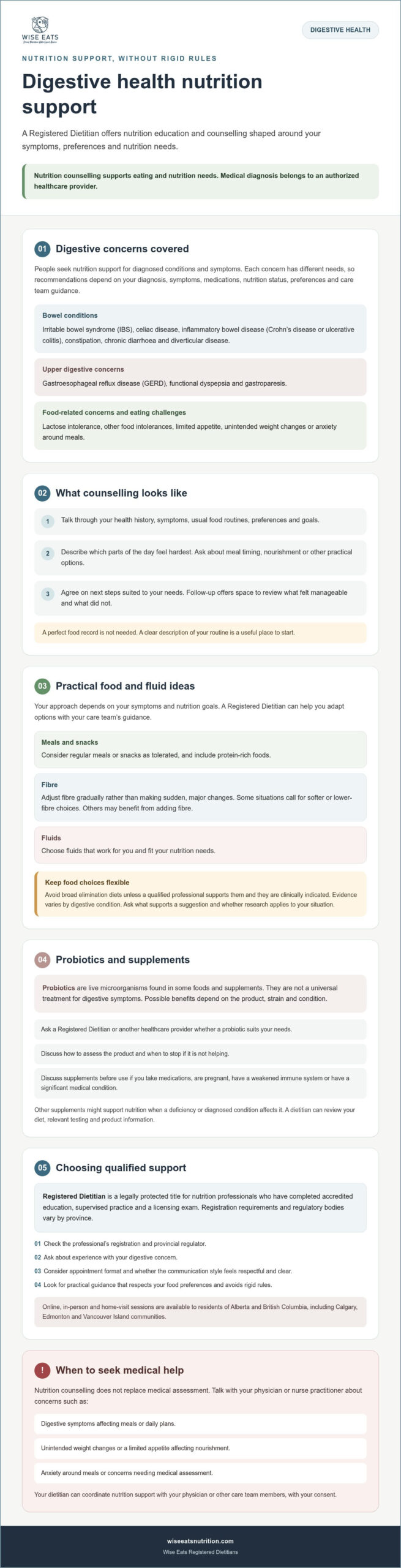
People seek digestive nutrition support for a range of diagnosed conditions and symptoms, including irritable bowel syndrome (IBS), celiac disease, inflammatory bowel disease such as Crohn’s disease or ulcerative colitis, gastroesophageal reflux disease (GERD), functional dyspepsia, constipation, chronic diarrhoea, diverticular disease, gastroparesis, lactose intolerance and other food intolerances. A limited appetite, unintended weight changes or anxiety around meals may also affect nutrition. These concerns do not share one nutrition plan: recommendations depend on your diagnosis, symptoms, medications, nutrition status, food preferences and care team’s guidance.
IBS, nutrition and everyday digestive health strategies
Irritable bowel syndrome (IBS) is a common disorder of gut–brain interaction that can cause ongoing abdominal pain related to bowel movements, along with changes in stool frequency or appearance. Common symptoms include bloating, constipation, diarrhoea, urgency and the feeling that a bowel movement is incomplete. Symptoms can vary over time and may be affected by food, stress, sleep and other factors. A healthcare provider should assess new, severe or changing symptoms rather than assuming they are IBS.
IBS is different from celiac disease. Celiac disease is an autoimmune condition in which consuming gluten damages the lining of the small intestine and may affect nutrient absorption. IBS does not cause this gluten-triggered intestinal damage. The conditions can have overlapping symptoms, including bloating, abdominal discomfort and altered bowel habits, so testing and medical assessment matter. If celiac disease is suspected, speak with a healthcare provider before removing gluten, as doing so may affect test results.
How nutrition supports digestion
Nutrition provides energy and nutrients for the body while food, fluids and fibre help support normal digestive function and bowel movements. Regular meals, adequate hydration and a gradual approach to fibre may help some people, but the best choices depend on symptoms, diagnosis, medications, culture, food access and preferences. Large or highly restrictive elimination diets are not appropriate for everyone. A Registered Dietitian can help identify patterns without unnecessarily limiting nutritious foods.
Practical breakfast and snack ideas
Breakfast can be simple and flexible. Options to discuss with your dietitian include oatmeal topped with banana or berries, a lactose-free or regular yogurt with oats, eggs with toast, or a smoothie made with milk or a fortified alternative, banana and oats. If constipation is a concern, gradually adding fibre and fluids may help; if diarrhoea or bloating is prominent, portions and ingredients may need to be adjusted.
Easy-to-digest snacks may include a banana, applesauce, crackers with cheese or a smooth nut butter, yogurt, a hard-boiled egg, toast, rice cakes or a small bowl of oatmeal. Choose options that you tolerate and consider pairing carbohydrates with protein when practical. A dietitian can help adapt these ideas for allergies, celiac disease, lactose intolerance or other nutrition needs.
Alcohol, the gut–brain axis and movement
Alcohol can irritate the digestive tract and may worsen IBS symptoms such as diarrhoea, urgency, bloating or abdominal discomfort. It can also aggravate reflux and affect sleep. Some people notice symptoms after small amounts, while others tolerate occasional alcohol; keeping a flexible symptom record can help identify your own pattern. Avoid alcohol if it is a known trigger, and discuss drinking with your healthcare provider if you take medications or have a medical condition.
The gut–brain axis is the two-way communication network between the digestive system and the brain. Stress, anxiety and low mood can influence gut movement and sensitivity, which may increase pain, urgency, constipation or diarrhoea. This does not mean symptoms are imagined. Sleep, relaxation practices, counselling and other mental-health supports can complement nutrition and medical care.
Regular movement can support overall wellbeing and may help bowel motility, particularly when constipation is present. Walking, gentle cycling, stretching or another activity you enjoy may be a practical starting point. A short walk after meals can suit some people, while intense exercise may worsen symptoms for others. Increase activity gradually and seek medical advice if exercise causes severe pain, dizziness or other concerning symptoms.
Vitamins and supplements
Supplements are not a universal treatment for IBS. A healthcare provider may recommend testing or supplementation when a deficiency or medical condition is present; examples can include vitamin B12, vitamin D or iron, depending on the person’s needs. Soluble fibre such as psyllium may help some people with bowel regularity when introduced gradually with adequate fluids. Probiotics have mixed, product-specific evidence. Discuss any supplement with a Registered Dietitian or healthcare provider, especially if you take medications, are pregnant, have a weakened immune system or have a significant medical condition.
Preventing and managing acid reflux (GERD)
Gastroesophageal reflux disease (GERD) occurs when stomach contents repeatedly flow back into the oesophagus. Strategies that may reduce symptoms include eating smaller meals, avoiding lying down for two to three hours after eating, identifying personal triggers and raising the head of the bed if nighttime reflux occurs. Alcohol, large or high-fat meals and certain foods may trigger symptoms for some people, but broad food exclusions are not necessary for everyone. Follow medication directions from your healthcare provider and seek assessment for persistent reflux, trouble swallowing, vomiting blood, black stools, chest pain or unexplained weight loss.
What a Registered Dietitian contributes to digestive care
Registered Dietitian is a regulated professional title in Canada. Registration requirements and regulatory bodies vary by province. Learn more about what a Registered Dietitian is, and see Dietitians of Canada’s information about provincial regulatory bodies.
At Wise Eats, Rachel McBryan, RD, is regulated by the College of Health and Care Professionals of BC. Sheirry Poposka, RD, is regulated by the Alberta College of Registered Dietitians. A dietitian can help you consider nutrition information in light of your meal patterns, food access, preferences and ways to include nourishing foods. The role focuses on nutrition education and counselling, not medical diagnosis. Learn more about nutrition counselling for medical conditions.
How digestive health nutrition support works with your care team
Digestive concerns can affect meals, routines and comfort around food. Nutrition counselling starts with listening and focuses on options that fit your health needs and daily life. It works alongside medical assessment, not in place of it. Medical assessment helps identify health concerns, while nutrition counselling supports eating and nutrition needs as part of your care.
At a first meeting, you and the dietitian may discuss your health history, symptoms, usual food routines, preferences and goals. You could describe which parts of the day feel hardest or ask about meal timing and getting enough nourishment. You do not need to arrive with a perfect food record. A clear description of your routine is a useful place to start.
What to expect during nutrition counselling
You and the dietitian can agree on practical next steps based on your needs. Depending on your symptoms and nutrition goals, this may include eating regular meals or snacks as tolerated, including protein-rich foods, choosing fluids that work for you, and adjusting fibre gradually rather than making sudden major changes. Softer or lower-fibre choices may be discussed for some situations, while others may benefit from adding fibre. Keep a flexible approach and avoid broad elimination diets unless they are clinically indicated and supported by a qualified professional. Evidence varies by digestive condition, so ask what supports a suggestion and whether the research applies to your situation.
Probiotics and other digestive health supplements
Probiotics are live microorganisms found in some foods and supplements. They are not a universal treatment for digestive symptoms, and benefits can depend on the specific product, strain and condition. Ask a Registered Dietitian or other healthcare provider whether a probiotic is appropriate for you, how to assess a product and when to stop if it is not helping. Discuss supplements before using them if you take medications, are pregnant, have a weakened immune system or have a significant medical condition.
Other supplements may be useful when a deficiency or diagnosed condition affects nutrition, but supplements can also be unnecessary or unsuitable. A dietitian can help review your diet, relevant testing and product information. Read more about Wise Eats’ approach to supplements.
Follow-up gives you a chance to discuss what felt manageable and what did not. Your dietitian can review possible adjustments with you and, with your consent, coordinate nutrition support with your physician or other care team members. For information about how dietitians are regulated by province, see Dietitians of Canada’s page on provincial regulatory bodies.
When to Seek Help for digestive symptoms
Contact a healthcare provider promptly if you notice any of the following. A dietitian can support nutrition, but a healthcare provider should assess these symptoms.
- Blood in your stool
- Ongoing vomiting or signs of dehydration
- Unintentional weight loss
For nutrition support related to digestive concerns, read about nutrition for digestion problems. You can also review the appointment options available to residents of Alberta and British Columbia in the sections below.
How to choose a Digestive Health Nutritionist Canada
Search results for digestive nutrition support may include providers with different training, services and approaches. Use the questions below to check whether a provider’s credentials, experience and communication style fit your needs. A useful conversation should leave space for questions, personal preferences and guidance you have already received from your healthcare team.
| What to check | Questions to ask |
|---|---|
| Credentials | What professional title and provincial registration do you hold? |
| Digestive health experience | What experience do you have with the concern I’m seeking support for? |
| Service format | Which appointment formats are available in my community? |
| Communication style | How do you adapt nutrition suggestions to food preferences and daily routines? |
Questions to ask before booking digestive nutrition care
Ask how the provider discusses evidence when research is mixed or applies only to certain conditions. They should be able to explain what supports a recommendation and how it relates to your situation, without presenting one way of eating as right for everyone. You might also ask how sessions account for your schedule, food access, cultural preferences or accessibility needs.
Share any advice you’ve received from your physician or care team. A dietitian should respect that guidance and, with your consent, can coordinate nutrition support as part of your care. For one example of condition-specific information, MyHealth Alberta explains nutrition support for IBD. The resource illustrates why individual needs belong in conversations about nutrition.
Check location and appointment format
Canada-wide search results do not mean every provider serves every province. Wise Eats serves residents of Alberta and British Columbia through online, in-person and home-visit sessions. Check current availability for your community and preferred format before booking. This is relevant if you live in Calgary or Edmonton, or in Nanaimo, Parksville, Qualicum Beach or another community on Vancouver Island.
Review the team biographies to learn about the dietitians’ professional backgrounds. Rachel McBryan, RD, is regulated by the College of Health and Care Professionals of BC. Sheirry Poposka, RD, is regulated by the Alberta College of Registered Dietitians. Visit the Wise Eats dietitian team page for more information.
What digestive nutrition counselling looks like in Alberta and British Columbia
Finding support in Calgary, Edmonton and Vancouver Island communities
Use these steps to get started:
- Check the service area. Confirm that the provider serves your province and community.
- Choose a format. Ask which online, in-person and home-visit options are available where you live.
- Prepare questions. Note what you want help with, your usual food routines and relevant guidance from your care team.
- Agree on next steps. Discuss an approach that fits your needs and how you will review it together.
Preparing for a first digestive health appointment
You do not need a detailed food or symptom record to begin. If it feels comfortable, jot down a few questions or notes about your meals, routines and concerns. Bring relevant guidance from your physician or other care team members. If tracking symptoms feels stressful, skip it and describe your experience in your own words instead.
During the first conversation, ask how the dietitian will tailor suggestions to your food preferences, schedule and daily needs. You can also ask how you will agree on practical next steps and review whether they fit. For general information before an appointment, Wise Eats offers an ask-a-dietitian resource. You can also read about nutrition counselling for medical conditions to understand how nutrition support can fit into care.
Wise Eats digestive health nutrition support and next steps
Who Wise Eats serves and how support is provided
Wise Eats Registered Dietitians provide personalized nutrition education and counselling for digestive health needs. The service supports nutrition needs, not medical diagnosis or treatment. If you are already receiving care from a physician or another health professional, dietitian counselling can form part of your broader care team.
Rachel McBryan, RD, is regulated by the College of Health and Care Professionals of BC. You can review the team’s professional backgrounds and consider which provider’s experience and location fit your needs.
Custom meal planning is available when it suits your nutrition needs. It is one possible service, not a requirement for digestive counselling. You can ask what a session involves, share food preferences or practical concerns, and discuss options without committing to a particular food plan.
A clear next step for finding support
Consider which appointment format fits your routine and feels accessible. Online sessions may suit you if travel is difficult, while an in-person or home-visit option may better match your preferences. Confirm availability for your community, then bring questions about the service, the dietitian’s experience or how nutrition counselling fits with your existing care.
You do not need to have every detail organized before reaching out. A few questions about your needs and appointment options are enough to start a conversation. Nutrition counselling focuses on eating and nutrition, while medical concerns should be discussed with your healthcare provider.
Choose a next step that fits your needs
A search for “Digestive Health Nutritionist Canada” is a starting point. Look for a qualified provider who explains how nutrition counselling fits alongside medical care, answers questions about evidence and respects your food preferences and daily routines. Digestive nutrition support offers education and practical guidance, not a medical diagnosis.
Check current availability for your community and preferred format. When comparing providers, ask about their experience, how recommendations reflect your needs and what to expect from a first conversation.
Frequently Asked Questions
Is a Registered Dietitian helpful for IBS?
A Registered Dietitian can offer nutrition education and counselling tailored to your needs and preferences for IBS-related concerns. This support does not diagnose IBS or replace medical care. Nutrition strategies depend on your situation. Ask a potential provider about their experience with digestive concerns, how recommendations reflect current evidence and how they coordinate with your physician or other care providers as part of your care.
What happens during a digestive health nutrition appointment?
Your first appointment may cover your health history, eating routines, food preferences, concerns and goals. You and the dietitian can discuss practical nutrition steps and decide whether follow-up would be useful. Bring questions and relevant guidance from your care team if you have it. The appointment does not provide a medical diagnosis. You remain in control of decisions about your care and which suggestions feel right for you.
Is virtual digestive nutrition counselling available across Canada?
Wise Eats offers online sessions to residents of Alberta and British Columbia, alongside in-person and home-visit options. This does not mean the practice serves every province or territory. Check current appointment availability for your community before booking. Virtual counselling focuses on nutrition education and support. It does not replace medical assessment or urgent care, so contact a healthcare provider about symptoms that need medical attention.
How do I choose a digestive health nutritionist in Canada?
Check a provider’s credentials, digestive health experience, appointment formats and communication style. Ask how recommendations reflect evidence, your food preferences and routines, and guidance from your care team. A search for “Digestive Health Nutritionist Canada” may show providers beyond your area, so confirm service in your province. Wise Eats serves residents of Alberta and British Columbia and offers online, in-person and home-visit sessions.
Does a dietitian diagnose digestive conditions?
No. Wise Eats provides nutrition education and counselling, not medical diagnosis or treatment. A physician or another qualified healthcare provider assesses medical conditions. A dietitian focuses on nutrition needs and practical eating strategies, and may coordinate with your care team. Continue to follow existing medical advice. Contact your healthcare provider about new or concerning symptoms rather than relying on nutrition counselling to assess them.
When should I seek medical help for digestive symptoms?
Contact a healthcare provider promptly about blood in your stool, ongoing vomiting or signs of dehydration, or unintentional weight loss. These symptoms do not identify a specific condition, but they need medical attention. Seek emergency care for severe or rapidly worsening symptoms. A dietitian can support nutrition needs but does not replace assessment by a physician or another appropriate healthcare professional.
Is there one eating plan for better digestive health?
No single eating plan suits every person or digestive concern. Nutrition needs differ, and evidence varies by condition. A dietitian can discuss practical options based on your health, food preferences and routine, without moral judgments about food. Avoid starting a highly limiting plan based on online advice. For concerns specific to a condition, discuss nutrition choices with your care team before making major changes to how you eat.

Article by
Rachel McBryan, Dietitian
Rachel McBryan is a licenced Dietitian in British Columbia offering comprehensive nutrition counselling as virtual and/or in-person counselling sessions to suit your needs and preferences. With a Bachelor of Science in Nutrition and Food Science, Rachel has over 20 years experience helping people address their health through nutrition. She was awarded Human Nutrition and Food Science BSc.from University of Alberta followed by post-grad course work at UBC in guidance counselling.
An eating disorder is a serious mental health illness.
If you are in immediate distress or crisis, please contact emergency services by dialing 911 or calling Vancouver Island Crisis Line: 1-888-494-3888.