Mandatory Disclaimer: This article is for general educational purposes and is not a substitute for individualized medical or nutrition advice. Please speak with a physician, nurse practitioner, pharmacist, or registered dietitian for guidance tailored to your specific needs.
Common Digestive Concerns: Recognizing What Your Body is Telling You
Living with digestive discomfort is a common yet deeply personal challenge. Symptoms like bloating, gas, and reflux are more than just physical sensations. They can affect your confidence, your social life, and your overall sense of well-being. It is important to distinguish between occasional discomfort, which everyone experiences from time to time, and persistent issues that interfere with your daily life. If your symptoms are frequent and frustrating, your body is sending a message that deserves attention.
One of the most challenging aspects of digestive issues is that the symptoms are often invisible to others. You might look fine on the outside while feeling significant discomfort on the inside. This experience can be isolating, but it is a valid and real struggle. Your digestive system is also closely connected to your brain through the gut-brain axis. This means stress, anxiety, and other emotional states can directly influence your digestive function, and vice-versa. Understanding this connection is a key step toward finding relief.
Bloating vs. Distention: What is the Difference?
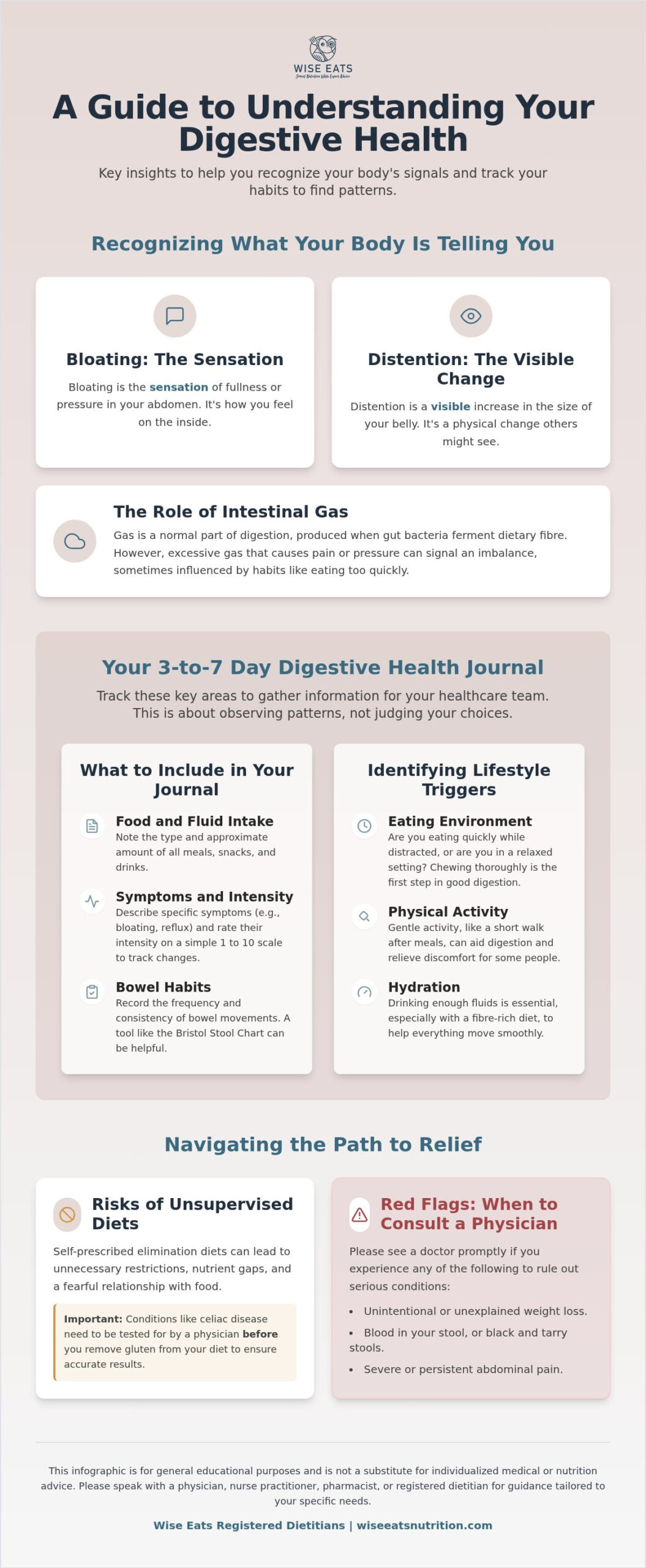
The terms bloating and distention are often used interchangeably, but they describe two different experiences. Bloating is the sensation of fullness or pressure in your abdomen. Distention is a visible increase in the size of your belly. You can experience bloating without any noticeable distention, or you can have both at the same time. Some expansion of your abdomen after a meal is a normal part of the digestive process as food and fluid move through your system. What feels and looks “normal” is unique to every individual body, and a healthcare professional can help you understand what is typical for you.
The Role of Intestinal Gas
Intestinal gas is a natural and healthy part of digestion. It is produced when beneficial bacteria in your large intestine ferment dietary fibre that your body could not digest on its own. This process creates beneficial compounds for your gut. While gas is normal, producing an amount that causes pain, pressure, or social anxiety is a sign that something is out of balance. Excessive gas is sometimes related to the types or amounts of food you eat. It can also be influenced by habits like eating too quickly or chewing gum, which cause you to swallow more air (a condition known as aerophagia).
The Digestive Health Checklist: Tracking Symptoms and Daily Habits
To understand your digestive symptoms, you first need to become an expert on your own body. Keeping a simple food and symptom journal for a short period, such as three to seven days, provides valuable information. This is not about judging your food choices. It is about gathering data to identify patterns. A detailed journal is one of the most useful tools you can bring to an appointment with a physician or dietitian.
Your journal should go beyond just what you eat. Your lifestyle habits are also important pieces of the puzzle. Tracking factors like your stress levels, sleep quality, and physical activity gives a more complete picture of what influences your digestive comfort. Pay close attention to the timing of your symptoms. Do they appear immediately after eating, or several hours later? This detail helps connect specific foods or situations to your body’s response.
What to Include in Your Symptom Journal
- Food and Fluid Intake: Note the type and approximate amount of all foods and beverages consumed. Include meals, snacks, and drinks.
- Symptoms: Describe your specific symptoms (e.g., bloating, sharp gas pain, reflux). Rate their intensity on a simple scale, such as 1 to 10, to track changes over time.
- Bowel Habits: Record the frequency and consistency of your bowel movements. Using a tool like the Bristol Stool Chart can help you describe consistency in a standardized way that is helpful for healthcare providers.
Identifying Potential Lifestyle Triggers
- Eating Environment: Are you eating quickly while distracted, or are you sitting down in a relaxed setting? Chewing your food thoroughly is the first step in good digestion.
- Physical Activity: How does movement affect your symptoms? For some, gentle activity like a short walk after meals can aid digestion and relieve discomfort.
- Hydration: Are you drinking enough fluids throughout the day? Adequate hydration is essential, especially when you consume a good amount of fibre, as it helps the fibre move smoothly through your digestive tract.
Navigating the Path to Relief: When to Seek Professional Help
While tracking your symptoms is an empowering first step, it is not a replacement for professional medical care. A Registered Dietitian works as part of your healthcare team, often alongside your family physician or a gastroenterologist, to provide comprehensive support. Attempting to solve digestive issues on your own with “do-it-yourself” elimination diets can be problematic. Without professional supervision, these diets can lead to unnecessary restrictions and potential nutrient gaps.
This article provides general information and is not a substitute for a personalized assessment. Your health and safety are the priority, and certain symptoms require prompt medical evaluation to rule out underlying conditions.
Red Flags: When to Consult a Physician
Some symptoms warrant an immediate consultation with a physician to ensure there is not a more serious medical issue that needs to be addressed. Please see a doctor if you experience any of the following:
- Unintentional or unexplained weight loss.
- Blood in your stool, or stools that are black and tarry.
- Severe or persistent abdominal pain that disrupts your sleep or daily activities.
The Risk of Unsupervised Elimination Diets
It is tempting to start cutting out foods you suspect are causing problems, but this approach has risks. Overly restrictive diets can make it difficult to get all the vitamins, minerals, and fibre your body needs to function well. This can also create a fearful or anxious relationship with food, where you feel like you have a shrinking list of “safe” things to eat. It is also important that certain conditions, such as celiac disease, are properly tested for and ruled out by a physician before you remove gluten from your diet. Removing it beforehand can interfere with the accuracy of diagnostic tests.
Preparing for Your Consultation: A Checklist for Working with a Dietitian
Once you have decided to seek professional support, a little preparation can help you get the most out of your first appointment. Working with a dietitian is a collaborative process, and coming prepared allows you to focus the session on your most important concerns. Your dietitian’s goal is to understand your unique situation and work with you to create a realistic and sustainable plan.
Gathering your information and thinking about your goals ahead of time helps your dietitian provide the most effective guidance. Here is a simple checklist to help you prepare:
- Compile a list of all current medications and supplements you are taking, including doses.
- Gather any recent blood work or other diagnostic test results from your physician.
- Write down your primary goals. Be specific. For example, instead of “I want to stop bloating,” a more functional goal is “I want to feel comfortable in my clothes by the end of the day.”
- Prepare a list of questions about how a dietitian for bloating and gas can support you.
Defining Your Digestive Goals
Think beyond just stopping a symptom. What would digestive comfort allow you to do? Your goals could be functional, social, or emotional. Perhaps you want to attend a dinner party without worrying about your digestion, or maybe you miss eating a specific food that you currently avoid. Consider how your digestive health impacts other areas of your life, such as your energy levels, mood, and ability to concentrate. Sharing these bigger-picture goals gives your dietitian a clear understanding of what matters most to you.
Questions to Ask Your Registered Dietitian
Your appointment is a two-way conversation. Asking questions ensures you feel confident and informed about the process. Consider asking:
- “What is your experience helping people with symptoms like mine, or with conditions like Irritable Bowel Syndrome (IBS)?”
- “How do we determine if an approach like the low FODMAP diet is appropriate for me?”
- “How will we monitor my progress and make adjustments to the plan over time?”
Personalized Support: How a Registered Dietitian Approaches Digestive Wellness
A Registered Dietitian uses an evidence-informed, systematic process to help you identify your unique triggers without resorting to lifelong restrictions. The goal is to expand your diet and your confidence, not to shrink them. This process is handled with a non-judgmental and weight-neutral perspective, meaning the focus is on health behaviours and symptom relief, not on your body weight.
Every person’s digestive system is different, and there is no one-size-fits-all solution. A dietitian provides a tailored strategy that considers your food preferences, lifestyle, and health history. With professional guidance, you can move from a place of confusion and frustration toward clarity and comfort.
The Wise Eats Approach to Digestion
Our approach centres on compassion and collaboration. We often focus on what you can add to your diet to support gut health, such as different types of fibre or fermented foods, rather than only focusing on what to remove. We use tools like custom meal planning to make dietary changes feel simple and manageable. Most importantly, we provide a supportive and confidential space where you can feel comfortable discussing sensitive topics like bowel habits and the emotional impact of your symptoms.
Your Journey Toward Digestive Comfort
You do not have to figure this out on your own. A collaborative relationship with your healthcare team, including a dietitian, can provide the structure and support you need to improve your digestive health. The team at Wise Eats, including Rachel McBryan, RD (College of Health and Care Professionals of BC), and Sheirry Poposka, RD (Alberta College of Registered Dietitians), is committed to providing this kind of supportive care.
If you’re struggling with a nutrition-related medical condition or an eating problem, a registered dietitian can provide professional support — book a consultation.

Article by
Rachel McBryan, Dietitian
Rachel McBryan is a licenced Dietitian in British Columbia offering comprehensive nutrition counselling as virtual and/or in-person counselling sessions to suit your needs and preferences. With a Bachelor of Science in Nutrition and Food Science, Rachel has over 20 years experience helping people address their health through nutrition. She was awarded Human Nutrition and Food Science BSc.from University of Alberta followed by post-grad course work at UBC in guidance counselling.
An eating disorder is a serious mental health illness.
If you are in immediate distress or crisis, please contact emergency services by dialing 911 or calling Vancouver Island Crisis Line: 1-888-494-3888.
This article is educational information only, not professional diagnosis or treatment. This health education content is heavily AI augmented and parts or all of this article may not have been reviewed yet for accuracy. AI generated content is prone to error.
Please note that we partner with VitaminLab and financially gain if you purchase supplements. You are under no obligation to use VitaminLab products and whether you supplement your diet with VitaminLab or another product of your choice will not impact your nutrition care.