Metabolic health, not calorie counting, is the better focus for weight that has crept up without a plan. Calorie restriction is not an effective long-term solution for unintentional weight gain. Steady meals, fibre-rich foods, protein, movement, sleep, and stress care give you routines you keep for years.
If you have tried to eat less and felt tired, hungry, or stuck, the plan was the problem, not you. This article explains how to build habits around metabolic health, why a daily calorie total tells an incomplete story, and what to do once you reach a weight that suits you.
Key Takeaways
- Calorie restriction is not an effective long-term answer to unintentional weight gain. Metabolic health habits are.
- Build meals from several food groups, with fibre and a protein food at most meals.
- Serve your plate before you eat. It keeps portions easy to judge without a scale.
- Move often, sleep regularly, and look after stress. According to the NHS, adults should do strengthening activities that work all major muscle groups on at least 2 days weekly.
- A Registered Dietitian at Wise Eats Registered Dietitians offers Custom Meal Planning and Weight Management support.
Why metabolic health deserves your attention
Metabolic health describes how well your body uses the food you eat for daily energy. A scale number is one data point. Your energy, hunger, sleep, and mood tell you more.
Many people gain weight without changing much. A new job, a move, a baby, menopause, or a stressful year shifts routines. Weight follows. Cutting food in response rarely solves the cause. Look at the routines that shifted and rebuild them one at a time.
Wise Eats follows a weight-inclusive approach. You deserve care that respects your body at any size. Our page on metabolic health and weight gain explores the connection further.
Why calorie restriction falls short for long-term weight gain
Eating far less is a short-term plan. It asks you to ignore hunger and track every bite, and few people keep that up for months. When it ends, old routines return and so does the frustration.
Calorie totals are also estimates. Food labels and apps give approximations. A serving entered as one portion is sometimes smaller than what you ate. Restaurant meals rarely list exact amounts. Homemade pasta changes with the oil, cheese, and sauce you add. The logged number stays a guess.
Bodies differ too. Two adults eating the same number have different routines, appetites, activity levels, and health needs. As body weight changes, energy needs change with it.
A 2017 paper, "Reducing Calorie Intake May Not Help You Lose Body Weight," appeared in Perspectives on Psychological Science, volume 12, issue 5, pages 703 to 714. Its title points to a gap between a recorded number and what the scale shows over time.
Evidence on weight and eating patterns is mixed and still growing. Studies often involve small groups. Harvard Health described one food study with 20 participants. A study that size offers insight but does not predict your results.
Calories still describe energy
Calories measure energy in food. They do not measure diet quality or micronutrient intake. An 8-ounce serving of whole milk is listed at 149 calories, and skim milk at 91. Those figures say nothing about taste, nutrients, or how satisfying each one feels.
Some meal plans match your energy needs at a steady level. They suit people who want structure without daily tracking. A dietitian builds the plan so you do not have to.
Food choices that support metabolic health
Add nourishing foods before you think about taking anything away. Small swaps feel satisfying and fit your routine. No food is off-limits.
Choosing foods with more volume
Energy density means the calories in a given amount of food. Foods with more water give more volume for fewer calories. A 1 1/2-cup serving of strawberries has 69 calories. A 1-cup serving of chocolate ice cream has 292. You do not need to give up ice cream. Fruit simply offers another snack choice with a different portion size and taste.
Popcorn offers a similar comparison. A 3-ounce bag of ranch-flavoured tortilla chips is listed at 426 calories. 3 1/2 cups of air-popped popcorn are listed at 109. A 16-ounce flavoured latte is listed at 268 calories, compared with 5 for black coffee. Choose by taste and by what keeps you satisfied.
Fibre, protein, and fullness
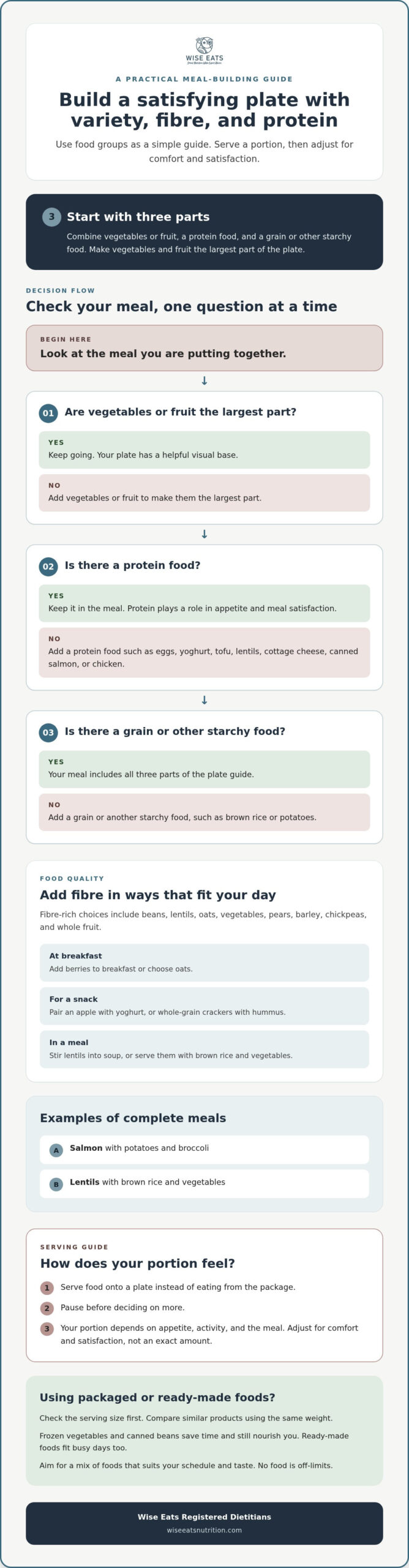
Fibre-rich foods include beans, lentils, oats, vegetables, pears, barley, chickpeas, and whole fruit. Add berries to breakfast or stir lentils into soup. Pair an apple with yoghurt, or whole-grain crackers with hummus.
Protein plays a role in appetite and meal satisfaction. In one study, participants who increased protein to 30% of calories ate 441 fewer calories per day. This finding does not set a personal target. Add eggs, yoghurt, tofu, lentils, cottage cheese, canned salmon, or chicken to meals. Then notice how hunger and fullness feel between meals.
Processed and unprocessed foods
Food processing ranges from freezing vegetables to making packaged meals with many ingredients. Frozen vegetables and canned beans save time and still nourish you. Compare an apple, plain oats, or a baked potato with a packaged snack. Look at fibre, portion size, convenience, and taste. Ready-made foods fit busy days too. Aim for a mix that suits your schedule.
Plates, portions, and food labels
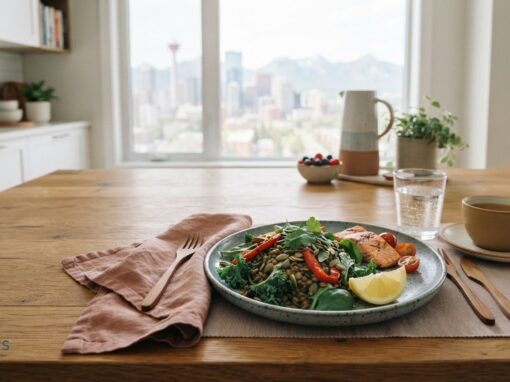
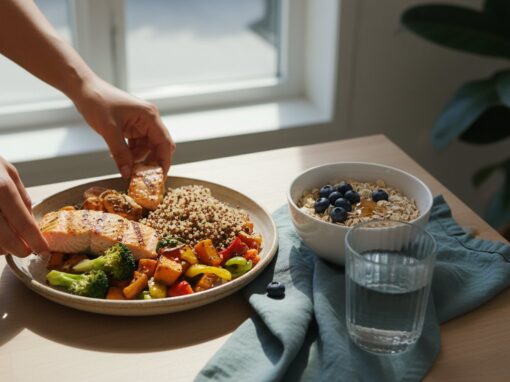
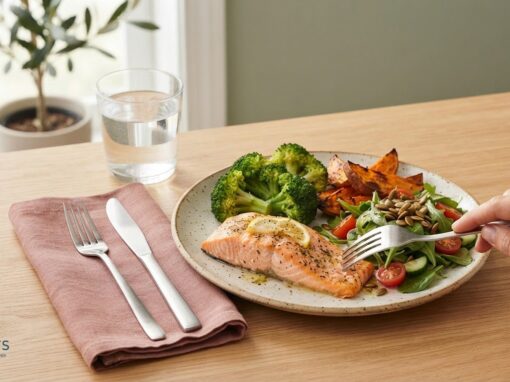
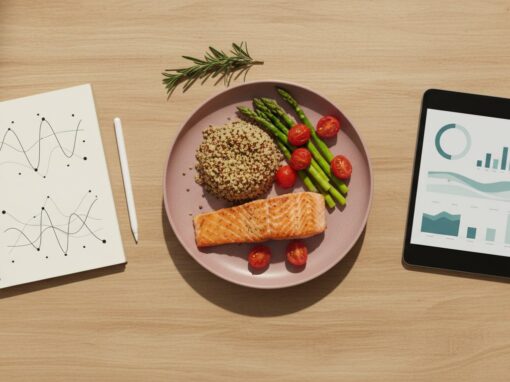
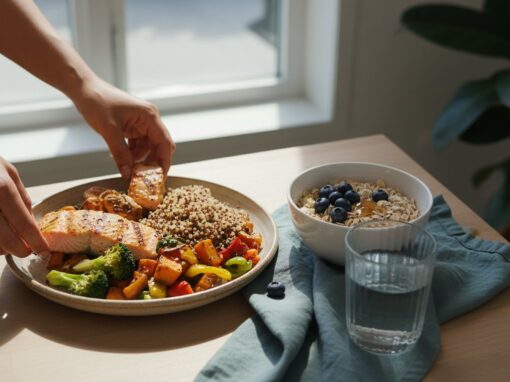
Food groups give meals a simple structure. Combine vegetables or fruit, a protein food, and a grain or other starchy food. Serve salmon with potatoes and broccoli. Serve lentils with brown rice and vegetables. Making vegetables and fruit the largest part of the plate is a handy visual guide.
Serve food onto a plate instead of eating from the package. Pause before deciding on more. Your portion depends on appetite, activity, and the meal itself. Adjust for comfort and satisfaction, not an exact amount.
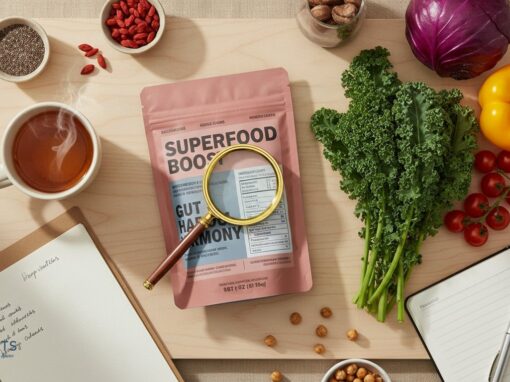
Labels help you compare similar products. According to the NHS, labels commonly show calories per 100 g or per portion, and per 100 ml or per portion. Check the serving size first. Compare two noodle packages using the same weight. A listed portion might differ from your usual amount, so treat the label as information, not a target.
How do you track progress without counting calories?
Pick a few markers: eating breakfast regularly, adding a protein food at meals, or your energy by mid-afternoon. A brief note about meal timing, hunger, drinks, or activity shows patterns. Skip detailed records if they feel stressful, and change one habit at a time.
Movement, sleep, and stress
Sleep, stress, and activity shape appetite, energy, and routines. They matter as much as food choices. Try a steady bedtime, a short walk, and planned meals during demanding weeks.
How do sleep, stress, and activity affect weight?
Stress is the body’s response to pressure. It changes how you eat and move. A late shift leaves less time to cook dinner or walk. Poor sleep affects energy and appetite the next day, making regular meals harder. Notice these patterns before you change what you eat.
Movement uses energy and does not need to feel like a workout. A brisk walk to the bus stop, gardening, or dancing at home all count. The NHS notes that faster walking uses more energy than walking at a moderate pace. Choose a pace that suits your body.
Strength matters too. According to the NHS, adults should do strengthening activities that work all major muscle groups on at least 2 days weekly. Body-weight moves, resistance bands, and carrying groceries are examples. Start with what suits your current ability.
Building habits that last
A lasting habit is a small action tied to a routine you already have. Prepare overnight oats before bed. Walk after lunch. Keep a water bottle beside your desk. Anchor each to a cue, such as placing walking shoes by the door after breakfast.
Plan for hard weeks. Keep canned lentil soup and whole-grain toast for evenings when cooking feels like too much. If a workout falls through, stretch during a break. One missed session is not a reason to stop.
A weekly check-in helps. Review meal timing, sleep, stress, and activities you enjoy. If your schedule changes, change the routine. A shift worker might walk before work one day and after work the next.
When to seek help
Support is available, and asking for it is a sign of strength. Talk with your care team or a Registered Dietitian if you notice any of these:
- Eating patterns that feel restrictive, such as skipping meals to make up for earlier eating or fear of certain foods.
- Episodes of binge eating, or feeling out of control around food.
- Physical symptoms such as dizziness or weakness.
Also check in first if you have a medical condition, follow a special diet for health reasons, or have a current or past eating disorder. The NHS advises professional guidance in these situations. Do not change medications without talking to your care team.
Wise Eats Registered Dietitians: Custom Meal Planning
Wise Eats Registered Dietitians offers Custom Meal Planning and Weight Management support for people who want practical guidance without tracking every calorie. Your dietitian builds meals around your preferences, schedule, health needs, and cultural foods. Plans consider workday lunches, grocery habits, and different weekend routines. You can read more about weight-loss meal planning or what a dietitian does for weight loss.
Meet Rachel and the team. Wise Eats also offers an Eating Disorder Recovery Program for people whose needs include that service.
Speaking with a registered dietitian can help you develop a balanced, flexible approach to eating and meet your nutritional needs. Contact Wise Eats Registered Dietitians or visit wiseeatsnutrition.com when you are ready.
After you reach a weight that suits you
Keep the routines that got you there. Regular meals, fibre, protein, movement, and sleep carry over to maintenance. Progress does not follow a strict timeline, and you can adjust as life changes. One reading on the scale does not tell the whole story, so avoid sudden changes in response.
Frequently Asked Questions
What do I do when I reach my healthy weight?
Shift from weight-loss efforts to maintenance. Keep routines that suit your life and review them as circumstances change. Notice meal patterns, energy, mood, and how you feel during daily activities. If keeping your weight brings anxiety or pressure to return to rigid eating, talk with your care team.
What habits support weight management without counting calories?
Plan a few meals before you shop. Keep canned beans and frozen vegetables on hand. Add a protein food and fibre to meals, walk daily, and keep a regular sleep schedule. A short note on meal timing, hunger, and sleep shows patterns without recording every ingredient.
How do portion sizes and the plate method help?
The plate method gives a visual guide. Make vegetables and fruit the largest part, then add protein and a grain or starchy food. Pair roasted vegetables with chicken and potatoes, and adjust to your appetite. At a restaurant, use the same idea to choose a mix of foods.
Which high-fibre and high-protein foods help with fullness?
Try pears, barley, chickpeas, and split peas with protein foods such as edamame, cottage cheese, canned salmon, or chicken. Add chickpeas to a barley salad, or serve cottage cheese with fruit. Choose options you enjoy and fit them into your usual meals.
Article by
Rachel McBryan, Dietitian
Rachel McBryan is a licenced Dietitian in British Columbia offering comprehensive nutrition counselling as virtual and/or in-person counselling sessions to suit your needs and preferences. With a Bachelor of Science in Nutrition and Food Science, Rachel has over 20 years experience helping people address their health through nutrition. She was awarded Human Nutrition and Food Science BSc.from University of Alberta followed by post-grad course work at UBC in guidance counselling.
An eating disorder is a serious mental health illness.
If you are in immediate distress or crisis, please contact emergency services by dialing 911 or calling Vancouver Island Crisis Line: 1-888-494-3888.