What if the foods you once feared are the ones your baby needs most? For many Edmonton parents, the shift from “avoid everything” to “introduce early” feels confusing. You want to protect your little one. Conflicting advice from family or old articles creates unnecessary stress. Following the latest standards for Introducing Allergens to Babies: When and How in Canada (2026 Guidelines) helps replace anxiety with a clear plan. We are in this together as you learn to support your infant’s health.
We understand the pressure of getting the first bites right. This guide explains how to offer priority allergens using current Canadian paediatric health standards. You will find a straightforward schedule for food introduction and learn to spot signs of a reaction. By the end, you will feel prepared to feed your infant with confidence. We also highlight specific warning signs so you know exactly when professional support is necessary. This approach ensures your family moves forward with clarity and relief.
Key Takeaways
- Most infants start priority allergenic foods around six months to help their immune systems recognize common items.
- Use the latest evidence-informed strategies for Introducing Allergens to Babies: When and How in Canada (2026 Guidelines) to replace anxiety with confidence.
- High-risk infants often benefit from starting as early as four months.
- Choose a time when you and your baby are alert and start with a tiny amount on the tip of a spoon for safety.
- Connect with a Registered Dietitian in Alberta or British Columbia for personalized meal planning tailored to your family.
Understanding the 2026 Canadian Allergy Prevention Guidelines
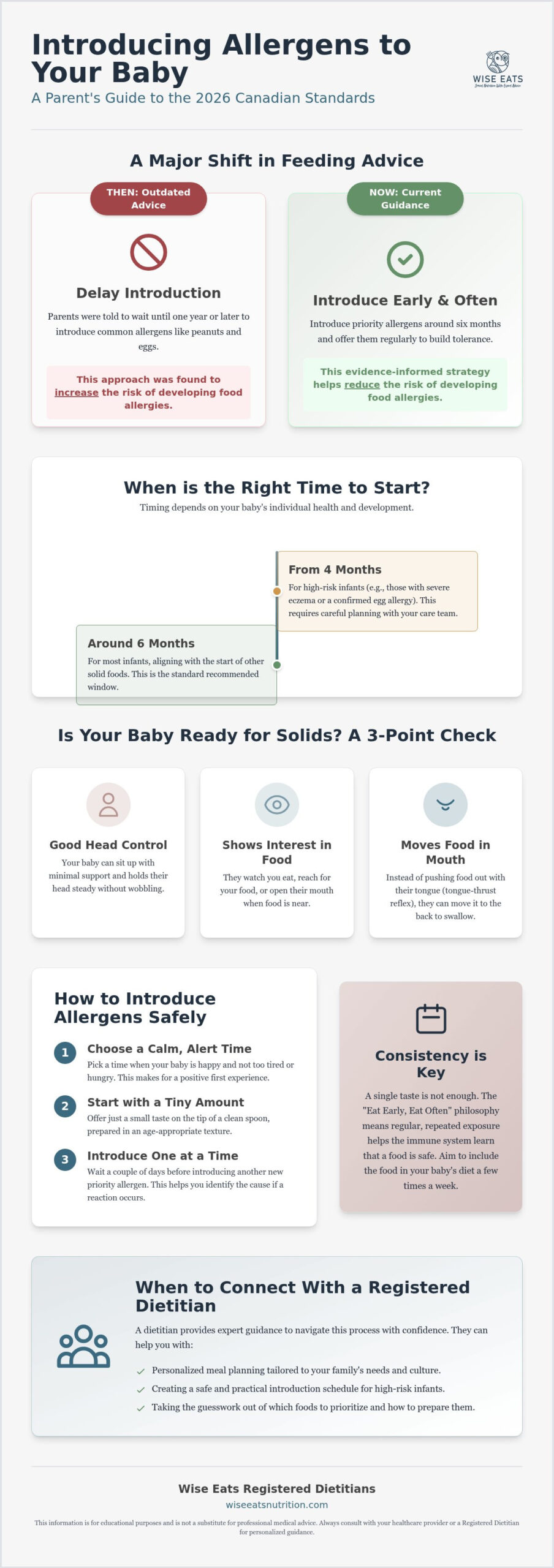
Canadian feeding guidance has changed significantly over the past decade. For a long time, parents were told to hold off on common allergens like peanuts, eggs, and tree nuts until their baby’s first birthday or later. That advice, though well-intentioned, turned out to be counterproductive. Research now shows that waiting too long increases the chance of a child developing a food sensitivity, not the other way around.
The current standard follows what’s known as the Eat Early, Eat Often philosophy. This approach, grounded in work from the Canadian Paediatric Society’s 2021 and 2023 position statements, encourages parents to introduce priority allergenic foods around six months of age and to keep offering them regularly. For Understanding Food Allergies in a broader context, including how the immune system responds to common triggers, that background helps explain why early, repeated exposure matters so much during infancy.
The video below from PedsDocTalk breaks down eight key facts that every parent should know before starting this process:
The Evolution of Feeding Advice in Canada
Older guidelines treated avoidance as protection. Current evidence shows the opposite is true. The Canadian Paediatric Society’s updated positions in 2021 and 2023 shifted the standard toward proactive introduction, and emerging research published in 2025 supports this direction, suggesting that infants introduced to common allergens early show lower rates of food-related sensitivities compared to those on delayed schedules. This is a meaningful shift, and it’s one that Introducing Allergens to Babies: When and How in Canada (2026 Guidelines) reflects clearly.
Rachel McBryan, RD, College of Health and Care Professionals of BC, emphasizes that evidence-informed prevention is the foundation of safe infant feeding. Her approach focuses on translating these updated standards into practical, family-friendly steps rather than leaving parents to sort through conflicting sources on their own.
Why Consistency Matters for Your Baby
A single taste of peanut butter won’t build lasting tolerance. The immune system needs repeated, regular contact with a food to learn that it’s safe. Think of it less like a test and more like a conversation your baby’s body is having with that food over weeks and months.
This is exactly where a Registered Dietitian adds real value. A dietitian helps you build a feeding schedule that fits your family’s routine, accounts for your baby’s readiness, and takes the guesswork out of which foods to prioritize. Personalized meal planning turns a complex process into a manageable weekly rhythm, which is what most Edmonton and BC families actually need to follow through consistently.
Identifying the Right Time to Introduce Allergenic Foods
Timing matters, but it doesn’t have to be complicated. For most Canadian babies, priority allergenic foods fit naturally into the same window as other first foods, around six months of age. This aligns with what the Canadian Paediatric Society Guidelines recommend for starting solids generally, making it easier to build allergen introduction into a routine your family already has.
That said, six months isn’t a universal number. Your baby’s readiness, health history, and risk level all shape the right timing for your household. Knowing what to look for takes the guesswork out of the decision.
Signs of Developmental Readiness
Before any solid food goes on a spoon, your baby needs to show a few physical signs that their body is ready. These aren’t rigid checkboxes; they’re practical signals worth watching for:
- Sits up with minimal support and holds their head steady without wobbling
- Shows clear interest in food, such as reaching toward your plate or tracking your fork with their eyes
- Moves food toward the back of the mouth rather than pushing it straight out with the tongue (the tongue-thrust reflex fades around four to six months)
If your baby ticks these boxes, their body is likely ready to handle soft, pureed foods, including small amounts of common allergens. If you’re unsure, your paediatrician or a Registered Dietitian can help you assess readiness without pressure.
Guidelines for High-Risk Infants
Some babies need a different timeline. Infants with severe eczema or a confirmed egg allergy are considered high-risk for developing additional food allergies. For these children, Introducing Allergens to Babies: When and How in Canada (2026 Guidelines) supports earlier introduction, as young as four months in certain cases, rather than waiting until the standard six-month mark.
This earlier window requires more careful planning. A four-month-old is developmentally younger, and the process looks different than it does at six months. Working with a Registered Dietitian helps parents in this situation move forward with a clear, stepwise plan rather than making high-stakes decisions alone.
Sheirry Poposka, RD, supports Alberta families navigating exactly this kind of complexity, offering personalized guidance for high-risk infants and the parents who want to do right by them. If your baby has eczema or a known food sensitivity, booking a nutrition consultation before you start can make the whole process feel a lot more manageable.
Top Common Food Allergens for Canadian Infants
Knowing which foods to prioritize takes the guesswork out of early feeding. Canada recognizes a specific list of priority allergens, and working through them methodically is exactly what Introducing Allergens to Babies: When and How in Canada (2026 Guidelines) recommends. You don’t need to introduce everything at once. One new food at a time lets you watch for any reaction clearly, without wondering which item caused it.
Peanuts and eggs are the two most frequent causes of food allergy in Canadian infants. Tree nuts, milk, soy, wheat, fish, shellfish, and sesame round out the full priority list. Each of these deserves a place in your baby’s early diet, introduced separately and then offered again regularly once your baby has tolerated it well.
The Priority List for Early Exposure
Start here. These three foods are worth introducing early and are easy to prepare in infant-appropriate forms:
- Peanuts: Offer as smooth peanut butter thinned with a small amount of warm water or breast milk. Never offer whole peanuts or chunky peanut butter to an infant. A small smear on the tip of a spoon is enough for a first try.
- Cooked egg: Scrambled egg or hard-boiled egg mashed to a soft texture works well. Raw egg is not appropriate at this stage. The white and yolk both matter, so offer the whole egg rather than just one part.
- Dairy: Plain full-fat yogurt or soft cheese are good starting points. Cow’s milk is not recommended as a primary drink before 9 to 12 months, but dairy products in food form are appropriate from around six months.
Preparing Foods for Safety and Texture
Texture is not a minor detail. It’s a safety issue. Your baby’s swallowing skills are still developing, and what works at eight months is very different from what’s appropriate at six months. Soft purees and smooth mashes are the right starting point for most allergens. As your baby’s skills grow, you adjust accordingly.
One firm rule applies to every infant under 12 months: no honey, in any form. Honey carries a risk of infant botulism, a serious illness caused by bacterial spores that a young baby’s digestive system cannot handle yet. This applies to honey baked into foods as well, not only raw honey.
If you’re unsure how to adapt textures as your baby grows, a personalized meal plan from a Registered Dietitian can map out exactly what to offer each week, removing the uncertainty that makes early feeding feel harder than it needs to be.
Practical Steps for Safe Allergen Introduction at Home
Starting the process at home feels like a big step. You want to ensure your baby is healthy and alert before you begin. Avoid starting on a day when your little one has a cold or is teething. You also want to be alert yourself. Pick a morning or early afternoon when you have time to watch your child for several hours. This timing ensures you are not rushed.
Introducing Allergens to Babies: When and How in Canada (2026 Guidelines) suggests starting with a tiny amount. A portion the size of a spoon tip is plenty for the first bite. After your baby swallows, wait 10 to 15 minutes. This brief pause allows you to watch for immediate changes. If your baby seems comfortable, offer the rest of the small serving. You will increase the quantity slowly over several days if no reaction occurs. This gradual build-up helps the immune system adjust without being overwhelmed.
Managing the First Taste
Some parents wonder if rubbing food on the skin is a safe shortcut. It is not. Skin contact is not an accurate test for food allergy. It often causes skin irritation looking like a reaction even when the food is safe to eat. The immune system needs to process the food through the digestive tract to build tolerance.
Timing is everything. Offer new foods during the day, avoiding bedtime shortly after the meal. This window provides peace of mind as you go about your afternoon. Keep the high chair area calm. Your baby picks up on your energy. Staying relaxed helps your infant feel safe during this new experience. If you feel nervous, having a partner or friend nearby provides extra support.
The Maintenance Phase: Eating Often
The first bite is only the beginning. Building lasting tolerance requires regular exposure. Aim for two to three servings of the allergen every week once your baby tolerates it. Consistency is the secret to success. If you stop offering the food for a long period, the immune system might lose its familiarity.
Fitting these foods into your routine gets easier when you view them as family meal ideas rather than separate tasks. Stir thinned peanut butter into infant cereal or mix mashed egg into sweet potato. A dietitian meal plan helps you track these rotations, ensuring you never miss a week. This structured approach ensures your baby stays familiar with priority allergens as they grow. It takes the mental load off your shoulders.
Book an infant nutrition session
Personalized Support for Your Baby’s Nutrition Journey
Feeding your baby is one of the most meaningful things you do every day. It’s also one of the most anxiety-producing, especially when priority allergens are part of the picture. Having a Registered Dietitian in your corner changes that experience. It shifts the process from guesswork to a clear, manageable plan built around your specific family.
Rachel McBryan, RD, College of Health and Care Professionals of BC, works with families across British Columbia who are working through Introducing Allergens to Babies: When and How in Canada (2026 Guidelines) and need practical, compassionate support. Sheirry Poposka, RD, Alberta College of Registered Dietitians, brings that same depth of support to Edmonton and Alberta families. Both dietitians translate current evidence into feeding steps that fit real life, not a textbook.
How Wise Eats Supports New Parents
Wise Eats uses the EatLove system to build custom meal plans that account for your baby’s age, readiness, and your household routine. Your grocery list becomes simpler. The weekly rotation of allergens gets mapped out for you, so you’re not holding a spreadsheet in one hand and a spoon in the other.
The approach at Wise Eats is grounded in evidence, not diet culture. There’s no pressure to follow a rigid protocol or eliminate foods without reason. Working with a dietitian means you get guidance that bends to your family’s needs rather than a one-size approach that ignores your reality. That flexibility matters most during the early months, when every week looks different.
When to Seek Help
Some situations call for professional support sooner rather than later. Watch for these signs:
- Physical symptoms after a feeding, including hives, vomiting, swelling around the mouth, or difficulty breathing, require immediate medical attention. Call 911 or go to the nearest emergency department.
- Intense fear around mealtimes that leads you to avoid introducing new foods altogether, or causes significant distress in your household, is worth discussing with your care team.
- Avoiding family meals or social situations because of food anxiety is a signal that the emotional weight of feeding has grown beyond what information alone resolves.
A dietitian doesn’t replace your paediatrician or allergist. They work alongside your healthcare team to support the nutritional side of things, filling in the practical gaps that a medical appointment doesn’t always have time to cover. If any of these situations feel familiar, connecting with a Registered Dietitian is a reasonable and supported next step.
You don’t need to have everything figured out before you reach out. Asking for help at the start of this process is a strength, not a setback.
Moving Forward with Feeding Confidence
Starting solids is a significant milestone for your family. By following the standards for Introducing Allergens to Babies: When and How in Canada (2026 Guidelines), you provide your infant with a safe foundation for life. Remember to start small. Watch for readiness signs around six months. Keep priority foods in your weekly rotation. Consistency helps the immune system recognize these items as safe over time.
Rachel McBryan, RD, College of Health and Care Professionals of BC, and Sheirry Poposka, RD, Alberta College of Registered Dietitians, provide the expert guidance you need to replace worry with a clear plan. Customized meal plans take the stress out of your grocery shop. These plans ensure your baby gets the right exposure at the right time. If conflicting advice feels overwhelming, or if you struggle with a nutrition-related medical condition, professional support offers a steady hand. You are doing a great job for your little one.
Your journey toward confident feeding starts today. We are here to support your family as you build a positive relationship with food together.
Frequently Asked Questions
Is it possible to prevent food allergies by starting solids early?
Introducing priority allergens early is a key strategy for allergy prevention. Current research suggests that offering common triggers around six months helps the immune system build tolerance. For high-risk infants, this window often begins between four and six months. Following the standards for Introducing Allergens to Babies: When and How in Canada (2026 Guidelines) is a helpful way to support your child’s health. Early exposure replaces the old advice of avoidance.
What is the best time of day to introduce a new allergen to my baby?
The best time to offer a new food is during the morning or early afternoon. You want to choose a time when your baby is healthy and you are alert enough to monitor them for several hours. Avoid introducing allergens right before a nap or bedtime. This window allows you to spot any immediate or delayed physical symptoms clearly. Keeping the environment calm helps both you and your baby feel safe.
How much peanut butter should I give my infant for the first time?
Start with a very small amount, such as the tip of a teaspoon. For peanut butter, always thin the texture with warm water, breast milk, or formula to prevent choking. A smooth, liquid consistency is safest for infants just starting solids. If your baby tolerates the first tiny taste without a reaction, you can gradually increase the quantity over the next few days. This slow build-up helps you feel confident.
What are the most common signs of an allergic reaction in babies?
Signs of a reaction can include hives, vomiting, or swelling of the face and tongue. Some infants might experience a sudden cough or difficulty breathing. These symptoms usually appear within minutes to two hours after eating. If you notice severe physical symptoms, seek medical care immediately. Call 911 or visit an emergency department in Edmonton or your local area. Knowing these red flags helps you act quickly if your baby needs help.
Should I wait to introduce allergens if my baby has eczema?
No, you should not wait. Infants with severe eczema are in the high-risk category and benefit from earlier introduction between four and six months. Delaying these foods can actually increase the risk of a child developing a food allergy. It is helpful to talk with your care team to ensure your baby’s skin is managed well before you start. A Registered Dietitian can help you navigate this timeline with a personalized plan.
How often does my baby need to eat an allergen to stay protected?
Your baby needs to eat the allergen two to three times per week to stay protected. One-time exposure is not enough to build lasting tolerance in the immune system. Regular ingestion keeps the body familiar with the food. You can easily stir these items into familiar purees or family meal ideas. If you find it hard to track these rotations, custom meal planning provides a structured schedule to ensure nothing is missed.
What happens if I miss the 4 to 6 month window for allergen introduction?
It is never too late to start. While the four to six month window is ideal for high-risk infants, the most important step is to begin as soon as you can. Introduce one new priority allergen at a time and monitor for reactions over several days. Once a food is tolerated, keep it in your baby’s diet regularly. Every family moves at their own pace, and starting now is better than waiting until later.
Are dietitians in BC and Alberta able to help with infant feeding plans?
Yes, Registered Dietitians in both provinces provide specialized support for families. Rachel McBryan, RD, College of Health and Care Professionals of BC, and Sheirry Poposka, RD, Alberta College of Registered Dietitians, offer personalized meal planning. They help parents in Edmonton and across BC navigate infant feeding without fear. Working with a professional ensures your plan follows Introducing Allergens to Babies: When and How in Canada (2026 Guidelines) while meeting your family’s unique needs.

Article by
Rachel McBryan, Dietitian
Rachel McBryan is a licenced Dietitian in British Columbia offering comprehensive nutrition counselling as virtual and/or in-person counselling sessions to suit your needs and preferences. With a Bachelor of Science in Nutrition and Food Science, Rachel has over 20 years experience helping people address their health through nutrition. She was awarded Human Nutrition and Food Science BSc.from University of Alberta followed by post-grad course work at UBC in guidance counselling.
An eating disorder is a serious mental health illness.
If you are in immediate distress or crisis, please contact emergency services by dialing 911 or calling Vancouver Island Crisis Line: 1-888-494-3888.