Body-related distress often affects everyday choices. You might avoid certain clothes, second-guess meals, or pull back from social plans because of how you feel about your body. Conflicting online messages about appearance and food often add shame instead of clarity. This guide to body image counseling Canada explains what support involves and how to find an approach grounded in respect, not blame.
It makes sense to wonder whether nutrition counselling is the right fit or whether you need mental health therapy. These supports have different roles. Body image concerns don’t call for stricter food rules or pressure to change your body. A Registered Dietitian offers weight-inclusive nutrition support focused on your relationship with food and practical needs.
You’ll learn what body image counselling involves, how a dietitian works alongside your wider care team, and signs it’s time to reach out. We’ll also cover practical ways to respond when body worries affect eating, clothing choices, relationships, or daily routines. The aim is to help you understand your experience and consider support aligned with your needs.
Key Takeaways
- Understand body image as thoughts, feelings, and experiences related to your body, without blaming yourself for distress.
- Recognize how social media, weight stigma, cultural messages, and life changes shape the way you feel about your body.
- Learn how nutrition counselling, psychotherapy, and medical care have distinct roles, and how professionals coordinate support.
- Use a simple sequence to notice distress, name the support you need, and share concerns with a trusted professional.
- Explore what weight-inclusive body image counseling Canada looks like with Wise Eats Registered Dietitians, including support for food relationships and practical nutrition needs.
What body image counselling in Canada means, and what it can address
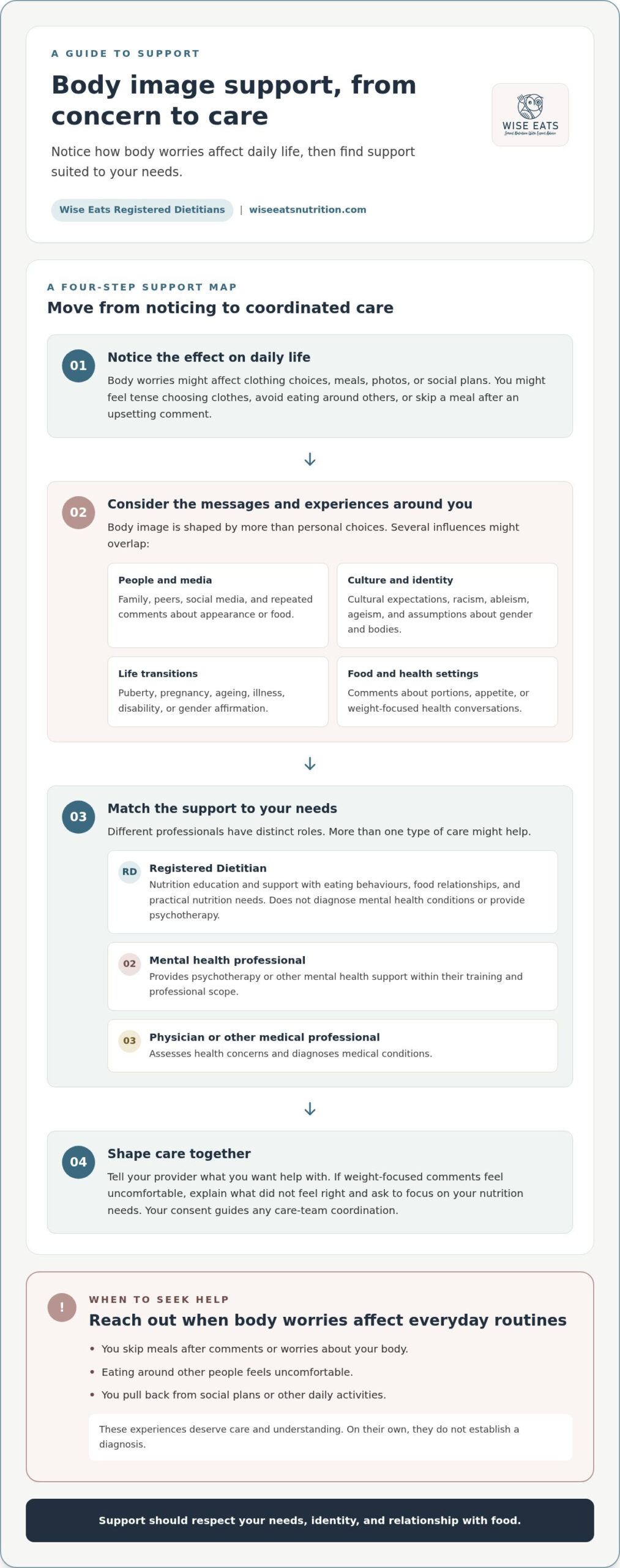
Body image is the way you think and feel about your body, along with the experiences you have in it. It includes thoughts about appearance, comfort, movement, or how others treat your body. If these concerns affect your eating or daily routines, your distress deserves care, not blame. The Body image overview describes the topic in more detail, including how body image develops and what can shape it.
Body image concerns look different from person to person. You might avoid photos, feel tense while choosing clothes, skip a meal after an upsetting comment, or turn down a social event. These experiences alone don’t establish a diagnosis. Body size, age, gender, or appearance also don’t reveal what someone thinks or feels about their body.
This video introduces listening to body cues and building a more supportive relationship with food:
What body image concerns can look like in everyday life
Body-related distress might take up time and attention. You might check your reflection often, feel uncomfortable eating around others, or choose clothes to hide parts of your body. Someone else with similar routines might feel differently. These examples describe possible experiences, not a checklist for diagnosing a condition.
Body image counseling Canada includes support for understanding these concerns without assuming they stem from a personal failing. A compassionate approach makes room for your experiences, identity, relationships, and daily needs.
What a Registered Dietitian contributes
A Registered Dietitian focuses on food and nutrition. In counselling, you might discuss eating patterns, distress around meals, or practical needs such as making food choices feel more manageable. Support should be collaborative and weight-inclusive, without pressure to change your body or follow rigid food rules.
Dietitians don’t diagnose body image or mental health conditions, and nutrition counselling isn’t psychotherapy. A mental health professional provides psychotherapy, while a physician or other medical professional assesses health concerns and diagnoses medical conditions. These roles can complement each other. With your consent, a dietitian can coordinate with your wider care team so nutrition support fits alongside mental health or medical care.
Factors that shape body image and the messages people receive
Body image develops through more than personal choices. Messages from family, peers, media, culture, and health settings all influence how people feel about their bodies. Understanding these influences doesn’t require blaming yourself or the people around you.
How social and cultural messages affect body image
Repeated comments about appearance, food, or body size shape expectations over time. Social media adds a steady stream of images and opinions, often edited or selected to present a narrow view of appearance. It’s one influence among many, not a single explanation for body dissatisfaction.
Appearance ideals vary across communities and change over time. Messages might favour thinness, muscularity, youth, or particular features. Some people face pressure to alter their appearance to meet cultural expectations. Others encounter racism, ableism, ageism, or assumptions about gender and bodies. No body type represents wellbeing. A person’s response reflects their identity, age, relationships, and personal history.
Life transitions also affect how a person relates to their body. Puberty, pregnancy, ageing, illness, disability, and gender affirmation might bring new feelings or questions. These experiences deserve respect, not comparison. The U.S. Office on Women’s Health discusses factors linked with healthy body image. Its guidance offers useful context, though it reflects a U.S. source rather than Canadian-specific policy.
How food experiences and health settings can influence body image
Food talk leaves an impression. Repeated remarks about someone’s portion, appetite, or appearance might make meals tense and affect trust. In health settings, a conversation focused only on weight might leave a person feeling unheard, especially if other concerns go unexplored.
Respectful nutrition conversations focus on a person’s needs, preferences, and relationship with food. A Registered Dietitian discusses practical eating support without treating body size or weight change as proof of wellbeing or recovery. If weight-focused comments make it harder to seek care, explain what felt uncomfortable and ask to focus on your nutrition needs.
Body image counseling Canada should account for social and personal influences, rather than placing responsibility on one person to change their feelings alone. If food-related concerns are part of your experience, view Wise Eats nutrition counselling appointments as one way to discuss practical support.
Body image counselling and therapy: understanding each professional’s role
A visit with a Registered Dietitian doesn’t automatically mean weight-focused care. Nutrition counselling may centre on your relationship with food, eating routines, or practical nutrition needs. You can share what you want help with, including concerns about appearance-related pressure during meals. Support should respect your goals and avoid treating weight change as the measure of wellbeing.
Body image counseling Canada includes different types of support. Each professional has a distinct role, and more than one type of care might be helpful.
| Professional | Main role |
|---|---|
| Registered Dietitian | Provides nutrition education and support with eating behaviours, food relationships, and practical nutrition needs. Does not diagnose mental health conditions or provide psychotherapy. |
| Mental health professional | Provides psychotherapy or other mental health support within their training and professional scope. |
| Physician or other medical professional | Assesses medical concerns, diagnoses health conditions, and discusses medical treatment, including medication decisions. |
When nutrition counselling fits alongside mental health care
A dietitian might work with you on meal routines, food-related stress, or ways to make eating feel more manageable. Priorities depend on your needs and care context. If you’re receiving mental health support, nutrition counselling can complement that work without taking its place. Read more about eating disorder recovery dietitian support.
How collaborative care respects professional scope
With your permission, a dietitian might share relevant nutrition observations with members of your care team. For example, if meal-related distress affects your eating, your dietitian might discuss nutrition concerns with your therapist or physician so each professional understands their role. The team can coordinate without promising a particular outcome or using one person’s role as a substitute for another’s.
Mental health treatment remains with the appropriate mental health professional. Medical assessments and medication decisions belong with the relevant medical professional. Keep following guidance from your care team, and bring questions or concerns to the professional responsible for that part of your care.
Practical body image support and when to seek help
Small, optional steps can help you notice what affects your day and what support feels useful. They aren’t treatment, and you don’t need to try every suggestion. Start with one observation, then decide whether you want to share it with someone you trust.
Small steps that support a more respectful food and body relationship
Notice how body-focused conversations affect your mood and choices. After a discussion about appearance or food, do you feel tense, withdraw from the group, or find it harder to eat comfortably? You might jot down what happened and what support would have helped. This isn’t about judging your response. It can give you clearer words for a future conversation.
If it feels safe and comfortable, set a simple boundary around comments. You might say, “I’d rather not discuss my body,” or “Can we talk about something else besides food?” You can also leave a conversation or ask someone you trust to help redirect it. Choose an option that fits your circumstances. You don’t owe anyone a detailed explanation.
A useful sequence is to notice the distress, name what support you want, then share your concern with a trusted professional. You might ask a Registered Dietitian about food-related stress or speak with a mental health professional about emotional distress. For information on support related to binge eating, see this Canadian eating disorder resource.
When to Seek Help
Consider talking with a healthcare professional if any of these concerns arise. You don’t need to identify a diagnosis before asking for support.
- Distress disrupts daily life: Body-related worries make it hard to eat, get dressed, attend work or school, or take part in relationships and activities.
- Compensatory behaviours occur: You use vomiting, laxatives, or excessive exercise to respond to eating or body distress.
- Physical symptoms appear: You experience symptoms such as fainting, dizziness, or unusual weakness alongside concerns about eating or body image.
Share what you’ve noticed with your family physician or another trusted healthcare professional. They can help you consider appropriate next steps and coordinate with other members of your care team. For immediate safety concerns, call 911 or contact a local crisis service.
Body image counseling Canada can include nutrition support that respects your needs and works alongside other care. Wise Eats Registered Dietitians provide collaborative nutrition counselling focused on food relationships and practical needs.
Body image counselling with Wise Eats Registered Dietitians
Nutrition support for body image concerns should start with your needs, not assumptions about your body or what you eat. Wise Eats Registered Dietitians provide collaborative, weight-inclusive counselling focused on food relationships and practical nutrition needs. The conversation can help identify what feels difficult and discuss nutrition support that fits your preferences and circumstances.
Wise Eats serves residents of Alberta and British Columbia through online, in-person, and home-visit sessions. Its service area includes Calgary and Edmonton in Alberta, and Nanaimo (sometimes searched as Naniamo), Parksville, Qualicum Beach, and communities across Vancouver Island in British Columbia. Nutrition counselling can complement mental health or medical care. It doesn’t replace psychotherapy, medical assessment, or treatment from other members of your care team.
What to expect from a nutrition counselling conversation
An initial conversation focuses on your concerns, preferences, and goals. You might want to talk about stress around meals, eating routines, or ways to make food feel more manageable. Your dietitian listens and works with you to identify practical areas for nutrition support. The approach is gentle and collaborative, rather than a lecture or a weight-focused assessment.
You can learn more about the Wise Eats Registered Dietitian team. Rachel McBryan, Registered Dietitian (RD), is with the College of Health and Care Professionals of BC. Sheirry Poposka, Registered Dietitian (RD), is with the Alberta College of Registered Dietitians. Each brings nutrition expertise to conversations shaped around a person’s needs.
Finding a next step that feels manageable
You don’t need to arrive with a detailed plan. You might start by naming one situation that feels hard, such as eating with others or sorting through conflicting food advice. Your dietitian can discuss practical nutrition support and, when appropriate, coordinate with your wider healthcare team. Mental health treatment and medical decisions remain with the professionals responsible for those areas.
If eating concerns are part of your experience, Wise Eats also provides eating disorder recovery nutrition support. This nutrition care can sit alongside mental health and medical support. It doesn’t involve diagnosis or replace care from other professionals.
Choosing body image counseling Canada is a personal step. You can begin by sharing what you hope will feel different in your day-to-day relationship with food, then discuss which nutrition goals feel useful to you.
Choose support that respects your needs
Body image concerns can reflect personal history, social messages, and life changes. They don’t point to personal failure. Noticing how distress affects eating, relationships, clothing choices, or daily routines is a useful first step. Sharing those concerns with a qualified professional helps you discuss what kind of support suits your needs.
A Registered Dietitian offers practical, weight-inclusive nutrition support focused on your food relationship and nutrition needs. Psychotherapy and medical care have different roles, and professionals can coordinate as part of your wider care team. Body image counseling Canada should respect those boundaries and avoid treating body size or weight change as proof of wellbeing.
At Wise Eats, Rachel McBryan, Registered Dietitian (RD), is with the College of Health and Care Professionals of BC, and Sheirry Poposka, Registered Dietitian (RD), is with the Alberta College of Registered Dietitians. Their nutrition counselling focuses on your concerns and practical needs.
Frequently Asked Questions
What is body image counselling?
Body image counselling helps you explore your thoughts, feelings, and experiences related to your body. It might include talking about distress around clothing, eating, appearance comments, or social activities. The focus depends on your concerns and the professional’s role. A Registered Dietitian offers nutrition support, while a mental health professional provides psychotherapy. Neither your appearance nor your body size alone determines whether you need support or have a diagnosis.
Does a Registered Dietitian help with body image concerns?
Yes. A Registered Dietitian supports food relationships, eating behaviours, and practical nutrition needs without assuming your goals involve weight change. This body image counseling Canada FAQ distinguishes nutrition care from psychotherapy. At Wise Eats, Rachel McBryan, Registered Dietitian (RD), College of Health and Care Professionals of BC, and Sheirry Poposka, Registered Dietitian (RD), Alberta College of Registered Dietitians, provide nutrition counselling. Dietitians don’t diagnose body image or mental health conditions.
Is body image counselling the same as therapy?
No. Nutrition counselling and psychotherapy have different scopes. A Registered Dietitian discusses food, eating patterns, and nutrition needs. A mental health professional provides psychotherapy and addresses emotional or mental health concerns within their training. Medical professionals assess health concerns and make diagnoses. You might work with more than one professional, with each person supporting a different part of your care.
How do I know when body image concerns need professional support?
Consider speaking with a healthcare professional if body-related distress disrupts eating, getting dressed, relationships, work, school, or social activities. Reach out if you use vomiting, laxatives, or excessive exercise in response to eating or body worries, or if physical symptoms such as fainting or dizziness arise. You don’t need to know the cause or name a diagnosis before discussing what you’ve noticed.
Does body image counselling focus on weight?
It doesn’t have to. Weight-inclusive nutrition counselling focuses on your food relationship, eating behaviours, preferences, and practical nutrition needs. A dietitian should discuss your concerns without treating weight change as a measure of wellbeing or recovery. You can share if weight-focused conversations feel uncomfortable and talk about what you want from nutrition support. The focus should reflect your needs, not assumptions based on appearance.
Can I see a dietitian while working with a therapist?
Yes. Nutrition counselling and therapy often address different concerns, so both forms of support might fit your care. A dietitian focuses on nutrition and food-related needs. Your therapist provides mental health support. With your consent, they can share relevant information or coordinate care. Medication decisions and mental health treatment remain with the appropriate professionals. Keep your care team informed about support you’re receiving.
What happens during a first body image nutrition counselling appointment?
Your first appointment focuses on your concerns, preferences, and goals. You might discuss food routines, eating-related stress, or practical needs at a pace that feels manageable. The conversation should feel collaborative, not like a lecture or weight-focused assessment. Wise Eats offers online, in-person, and home-visit nutrition sessions for residents of Alberta and British Columbia. You can begin by sharing one concern you want support with.
Article by
Rachel McBryan, Dietitian
Rachel McBryan is a licenced Dietitian in British Columbia offering comprehensive nutrition counselling as virtual and/or in-person counselling sessions to suit your needs and preferences. With a Bachelor of Science in Nutrition and Food Science, Rachel has over 20 years experience helping people address their health through nutrition. She was awarded Human Nutrition and Food Science BSc.from University of Alberta followed by post-grad course work at UBC in guidance counselling.
An eating disorder is a serious mental health illness.
If you are in immediate distress or crisis, please contact emergency services by dialing 911 or calling Vancouver Island Crisis Line: 1-888-494-3888.