A teen rushes out for the school bus, grabs a snack between classes, then arrives home hungry with homework ahead. A balanced nutrition plan for teens needs to fit days like this, not depend on a perfect schedule. Meals and snacks often look different from one day to the next, and that’s normal.
If online advice has made teen nutrition feel confusing, you’re not alone in wanting a clearer, calmer approach. Supporting a teen’s growth doesn’t require strict food rules or pressure around eating. A flexible routine makes room for familiar favourites, practical options and foods your family enjoys.
This article shares simple building blocks for satisfying meals and snacks, with ideas for school, home and busy days. You’ll also learn how Canada’s Food Guide offers a flexible starting point and when support from a Registered Dietitian or another healthcare professional might help. The goal is practical guidance that respects your teen’s needs, preferences and changing schedule.
- A balanced nutrition plan for teens should suit a teen’s growth, preferences, culture and daily routine.
- Build satisfying meals and snacks with flexible food choices, even when schedules shift.
- A quick weekly check helps identify meal times and practical options for school and home.
- If eating feels stressful or daily routines become difficult, talk with your teen’s healthcare team.
- A Registered Dietitian offers collaborative nutrition guidance and meal-planning ideas without rigid rules.
What a balanced nutrition plan for teens includes
A balanced nutrition plan for teens is a flexible pattern of meals and snacks suited to nourishment, growth, preferences and daily routines. It offers direction without requiring every meal to follow the same formula. A teen’s needs vary with age, development, activity, appetite, culture and access to food, so one plan won’t suit everyone.
Adolescence brings physical changes and new demands on a teen’s time and energy. Regular nourishment supports everyday activities such as learning, spending time with friends and moving through the day. Canada’s Food Guide, which applies to people aged two and older, offers a general starting point: a plate model featuring vegetables and fruits, whole grain foods and protein foods. Treat it as a guide, not a test of whether a meal is right or wrong. For a foundation on human nutrition, see this overview of nutrients and their role in the body.
This video offers another overview of food and nutrition for teens:
How nutrition supports growth and everyday life
During the teen years, growth and development continue, and nutrition needs change along the way. Appetite and meal timing also shift as school, activities and social plans fill the day. A nourishing pattern makes room for enough food across the day, with options a teen enjoys and has access to. For some families, a meal plan tailored to household routines offers useful structure. Learn more about personalized dietitian meal planning.
What balance looks like without rigid food rules
Balance comes from variety over time, not from making every plate identical. One meal might be rice, tofu and vegetables. Another might be a sandwich with fruit, or pasta with beans and a side of vegetables. Cultural foods, convenience foods and favourite snacks all have a place. If it feels manageable, add an option such as fruit with breakfast or yogurt alongside a snack. Small additions bring variety without making food choices a source of pressure.
Caregivers support this flexible approach by keeping familiar foods available and including teens in meal decisions. A teen’s appetite, preferences and schedule deserve consideration. If the household routine changes, the meal pattern can change with it. Flexibility keeps nourishment practical, rather than tied to one menu or a strict set of rules.
Build balanced teen meals and snacks with flexible building blocks
For everyday meals, start with a few food groups: vegetables or fruit, grain foods, and protein foods. The mix can change with what’s available, what your teen enjoys and how much time you have. A flexible meal-building approach pairs familiar foods from different groups in ways that suit the moment.
For example, add fruit to a bowl of cereal, serve frozen vegetables with rice and beans, or pair a baked potato with tuna and salad. These are starting points, not rules about portions or how a plate should look. Leftovers, packaged foods and convenience options all fit into real routines.
Meal ideas for school days
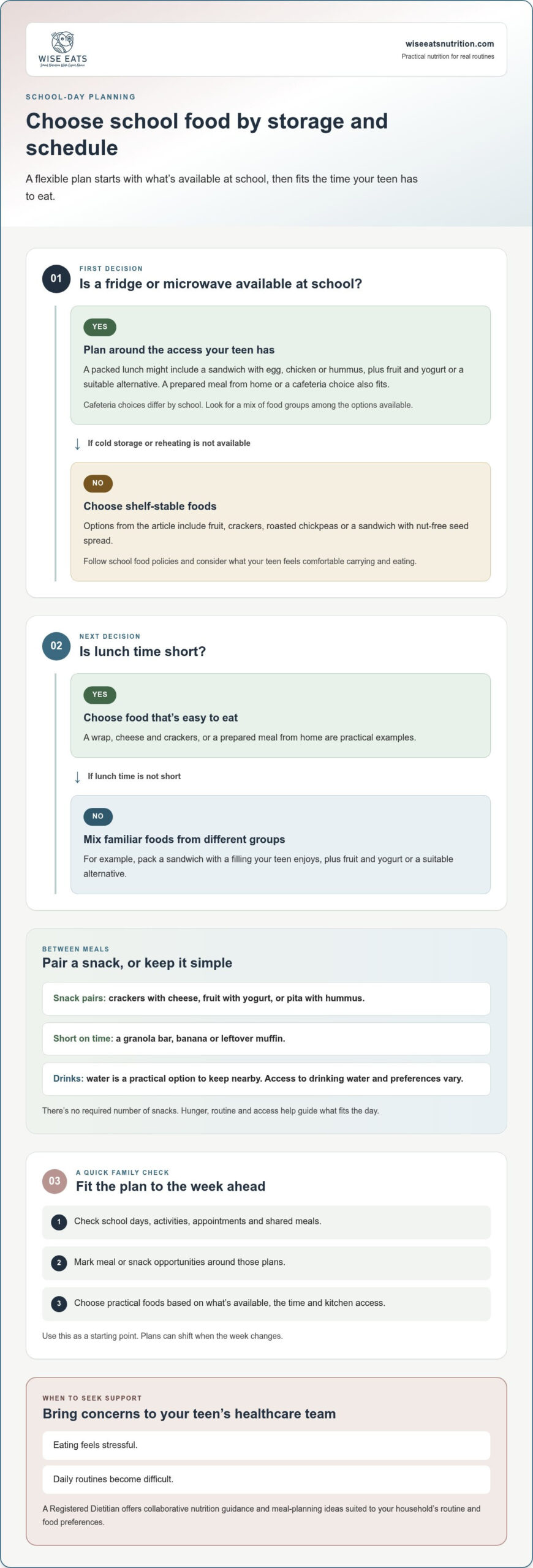
A packed lunch might include a sandwich with egg, chicken, hummus or another filling, plus fruit and yogurt or a suitable alternative. If lunch time is short, choose foods a teen finds easy to eat, such as a wrap, cheese and crackers, or a prepared meal from home. Cafeteria choices differ by school, so look for a mix of food groups among the options on offer. Budget, food access, allergies and preferences all shape what’s practical.
Some teens have access to a fridge or microwave at school, and others don’t. Shelf-stable foods, such as fruit, crackers, roasted chickpeas or a nut-free seed spread sandwich, suit days without cold storage. Follow your school’s food policies and consider what your teen feels comfortable carrying and eating.
Snacks and hydration between meals
Snacks help fill gaps when classes, activities or travel keep meals far apart. Pairing foods often makes a more satisfying option: crackers with cheese, fruit with yogurt, or pita with hummus. A granola bar, banana or leftover muffin works when there’s little time. There’s no required number of snacks. Let hunger, routine and access guide what fits into the day.
Hydration is the process of maintaining adequate fluid balance in the body for optimal physiological function. In everyday terms, it means drinking enough fluids to replace what the body uses. Water is a practical drink to keep nearby at school or during activities. A reusable bottle helps if refilling is easy, but teens’ access to drinking water and their preferences vary.
If planning meals feels hard to manage, you and your teen can explore dietitian support for meal planning and discuss options suited to your household’s schedule and food preferences.
Adapt a teen nutrition plan to school, home, and changing routines
A balanced nutrition plan for teens should account for the week they’re actually facing. Start with a quick family check-in, then:
- Look at school days, activities, appointments and shared meals.
- Mark meal or snack opportunities around those commitments.
- Choose practical options using available foods, time and kitchen access.
This short plan gives everyone a starting point. It doesn’t need to map out every meal or stay fixed when plans change.
Plan around school, activities, and family schedules
On a school day, a teen might eat breakfast at home, bring lunch, and have a snack after class before an evening activity. If a commute or practice delays dinner, pack something portable for the trip, such as a banana and a cheese stick or a small container of roasted chickpeas. Keeping a few familiar options ready at home also helps when the family gets back late.
Preparation doesn’t need to take much time. Set aside a snack the night before, or place easy-to-pack foods together in the fridge. On a day with limited time, leftovers in a thermos or a ready-to-eat cafeteria option fit the routine. The useful choice is one the teen will eat and the household can manage.
Make meal planning work for different households
Invite your teen to name a few meals they enjoy and choose one small task, such as washing fruit or packing a snack. Shared planning gives them a voice without putting sole responsibility for food or health on their shoulders. Caregivers can help with shopping, food preparation and keeping convenient options available.
Family meals don’t need to follow one template. Familiar dishes such as lentil dal with rice, bean tacos, vegetable curry or tofu noodles can be part of a nourishing routine. For a vegetarian teen, include foods such as beans, lentils, tofu, eggs or dairy if those suit their preferences. Household schedules differ, too. If everyone can’t sit down together, setting aside a portion for someone arriving later still supports a shared meal routine.
For help tailoring meal ideas to your household’s schedule and preferences, explore personalized meal-planning support. A Registered Dietitian works with teens and caregivers on practical options. You can also find dietitian appointment information to discuss meal-planning guidance.
When a teen nutrition plan needs extra support
It’s reasonable to ask for support when eating starts to feel stressful or daily meals become hard to manage. A change in eating habits doesn’t explain its cause on its own, and weight doesn’t determine whether a teen needs help. A calm, curious conversation is a good place to start. Focus on what your teen is experiencing and how you can support them without blame or pressure.
When to Seek Help
Talk with a trusted healthcare professional if you notice any of these changes. They don’t point to a diagnosis, but they are reasons to check in and ask for guidance.
- Eating becomes increasingly limited, meals are skipped often, or food causes marked distress.
- Your teen describes feeling out of control during eating episodes, or you notice behaviours such as vomiting or excessive exercise to compensate for eating.
- Physical symptoms or growing isolation around meals begin to affect everyday life.
Approach the conversation with care. You might say, “I’ve noticed meals seem stressful lately. How are you feeling, and what kind of support would help?” Listen without arguing about food choices or appearance. If you’re unsure what to do next, bring your concerns to your teen’s healthcare team.
Who can support a teen and their family
A family doctor, nurse practitioner or other trusted healthcare professional can assess concerns and guide next steps. A Registered Dietitian offers nutrition education and collaborative support with meal routines and food-related concerns. Dietitians don’t diagnose, and their guidance works alongside the teen’s healthcare team, not in place of medical care.
In British Columbia, Rachel McBryan, RD, College of Health and Care Professionals of BC, provides nutrition counselling. In Alberta, Sheirry Poposka, RD, Alberta College of Registered Dietitians, provides nutrition counselling. A conversation with a dietitian can include the teen and caregiver, with practical guidance shaped around the teen’s needs and family routines.
If you’re looking for more information about eating-related concerns, read this guide to eating disorder recovery nutrition. It offers a starting point for learning, without labelling your teen or replacing care from their health professionals.
How a Registered Dietitian supports a balanced nutrition plan for teens
Online advice can leave families unsure which suggestions fit their teen’s needs. A Registered Dietitian offers a chance to talk through those questions together. Counselling starts with the teen’s preferences, school and home routines, nutrition goals, and practical barriers such as limited time or food access. The discussion is collaborative, not a lecture or a set of rigid rules.
A balanced nutrition plan for teens should reflect the young person’s life. A dietitian helps a teen and caregiver consider meal ideas, snacks, family routines and ways to adapt when plans change. The aim is useful guidance that respects the teen’s voice and growing independence. Nutrition counselling supports food-related planning and education, and works alongside the teen’s healthcare team when medical care is needed.
What personalized teen nutrition support may cover
A session might explore what the teen eats during a busy school day, how family meals fit into the week, and which foods feel familiar and satisfying. The teen can share what they want to change or understand. Caregivers can describe household routines and barriers, then work with the dietitian on realistic options. This shared approach supports teen participation without making them solely responsible for meals or health.
Wise Eats Registered Dietitians serve residents of Alberta and British Columbia through online, in-person and home-visit sessions. The team includes Rachel McBryan, RD, College of Health and Care Professionals of BC, and Sheirry Poposka, RD, Alberta College of Registered Dietitians. Services are available to people in Calgary, Edmonton, Nanaimo, Parksville, Vancouver Island and Qualicum Beach. You can meet the Registered Dietitians and learn about their credentials.
Take a practical next step
If meal planning feels difficult to fit around school and family life, custom dietitian meal planning offers a way to discuss options suited to your teen and household. A session might focus on choosing portable foods, planning around shared meals or finding flexible ideas for changing schedules. Teens and caregivers can bring questions and take part in shaping the discussion.
For a general nutrition question, the Ask a Dietitian service offers another way to seek guidance. A dietitian provides nutrition education, and the teen’s healthcare professionals remain the right people to address diagnosis and medical care.
Keep teen nutrition flexible and supportive
A balanced nutrition plan for teens offers helpful structure without expecting every meal or day to look the same. Build meals with a mix of vegetables or fruit, grain foods and protein foods, then adjust for appetite, preferences, culture and what’s available. Snacks also fit when school, activities or travel put time between meals.
A quick weekly check helps your family plan around school and shared meals. Invite your teen to suggest foods they enjoy and choose practical options together. If eating feels stressful or daily routines become difficult, talk with a trusted healthcare professional. A Registered Dietitian offers nutrition guidance and works alongside your teen’s healthcare team.
Wise Eats Registered Dietitians include Rachel McBryan, RD, College of Health and Care Professionals of BC, and Sheirry Poposka, RD, Alberta College of Registered Dietitians. They support residents of Alberta and British Columbia.
Frequently Asked Questions
What does a balanced nutrition plan for teens include?
A balanced nutrition plan for teens includes a variety of foods and flexible meals and snacks across the day. Canada’s Food Guide offers a general starting point, with vegetables and fruit, grain foods, and protein foods. Needs differ with age, development, appetite, activity, culture, preferences and food access. There’s no single ideal plan or required plate for every teen. Adapt food choices to your teen and household.
How often should a teen eat during the day?
There’s no universal meal schedule for teens. Appetite, school hours, activities and individual needs all affect when food fits. One teen might eat before school, bring lunch and have a snack after class. Another might prefer breakfast later in the morning or need food between classes. If meal timing is difficult or you’re concerned about your teen’s eating pattern, discuss it with a healthcare professional.
Is skipping breakfast harmful for teens?
Skipping breakfast isn’t automatically harmful for every teen. Appetite and morning routines vary, and some teens prefer to eat later. If your teen wants food before school, try portable choices such as a banana and yogurt, or toast with an egg. A snack for later in the morning is another option. Seek professional guidance if eating patterns cause distress or interfere with daily life.
What are easy balanced lunch ideas for teens?
Try a sandwich with fruit and yogurt, or pack leftovers with vegetables in a thermos. A wrap with beans or chicken, crackers and cheese, or a cafeteria meal with a mix of familiar foods are other possibilities. Adapt choices to your teen’s preferences, school food options, storage access and household resources. Lunch doesn’t need to look the same each day to offer variety and nourishment.
How can parents support healthy eating habits for teens?
Keep food conversations calm and non-judgmental. Plan meals together, ask what your teen enjoys and respect changes in appetite. Avoid comments about body size and labels that judge foods. Caregivers can help with shopping and meal preparation, while teens share preferences and take part in age-appropriate choices. If eating becomes stressful, talk with your teen and seek guidance from a trusted healthcare professional.
When should a teen speak with a Registered Dietitian?
A teen or caregiver can speak with a Registered Dietitian about ongoing nutrition questions, meals that are hard to fit into daily routines, or stress around eating. A dietitian provides nutrition education and works collaboratively on practical options, but doesn’t diagnose or replace medical care. Wise Eats Registered Dietitians serve residents of Alberta and British Columbia, including Calgary, Edmonton, Nanaimo, Parksville, Vancouver Island and Qualicum Beach. Rachel McBryan, RD, College of Health and Care Professionals of BC, and Sheirry Poposka, RD, Alberta College of Registered Dietitians, provide nutrition support.

Article by
Rachel McBryan, Dietitian
Rachel McBryan is a licenced Dietitian in British Columbia offering comprehensive nutrition counselling as virtual and/or in-person counselling sessions to suit your needs and preferences. With a Bachelor of Science in Nutrition and Food Science, Rachel has over 20 years experience helping people address their health through nutrition. She was awarded Human Nutrition and Food Science BSc.from University of Alberta followed by post-grad course work at UBC in guidance counselling.
An eating disorder is a serious mental health illness.
If you are in immediate distress or crisis, please contact emergency services by dialing 911 or calling Vancouver Island Crisis Line: 1-888-494-3888.