There isn’t one supplement list for every woman. Conflicting online advice can leave you unsure which nutrients deserve attention. The essential nutrients for women’s health depend on life stage, health needs and eating patterns. Menstruation, pregnancy, breastfeeding and menopause each raise different nutrition questions.
This guide explains what essential nutrients are and why needs shift over time. You’ll learn about iron, calcium, vitamin D and folate, plus practical food sources and how supplements fit into the picture. A daily multivitamin isn’t automatically necessary for everyone.
You’ll also find guidance on when a Registered Dietitian can help with supplement questions or nutrition concerns. The goal is practical information to help you make choices suited to your life, without pressure to follow a one-size-fits-all plan.
Key Takeaways
- Learn what essential nutrients are and why needs shift with life stage, health context and eating pattern.
- Review food sources of iron, folate, calcium, vitamin D and B12, plus practical ways to include them in meals.
- Use the life-stage comparison to identify nutrition questions for adolescence, reproductive years, pregnancy, lactation and menopause.
- See why supplements aren’t a daily requirement for everyone, and how to consider them in relation to an assessed need.
- Understand how essential nutrients for women’s health fit into a personalized plan, and when a Registered Dietitian can help with supplement questions.
What Are Essential Nutrients for Women’s Health?
Online nutrient lists can make it seem as if you need to track every vitamin and mineral. It’s understandable to feel unsure about which advice applies to you. Start by learning what nutrients do, then consider how age, health needs, life stage and eating pattern shape your questions. This overview of essential nutrients for women’s health offers useful context, not a universal checklist.
Essential nutrients are nutrients the body does not synthesize in sufficient quantities and must obtain from the diet. Everyone needs nutrients for normal body functions, but individual needs and food sources differ. For a broad overview of health topics, see Women’s health.
How nutrients support everyday body functions
Vitamins and minerals help the body carry out many processes. Iron supports the movement of oxygen in the blood, and calcium contributes to bones and teeth. Protein provides building blocks for body tissues. Fats provide energy and help the body absorb some vitamins. Carbohydrates supply energy, and higher-fibre choices such as oats, beans and whole-grain bread also contribute fibre.
You don’t need to judge a meal by a single nutrient. A bowl of lentil soup with bread, for example, offers carbohydrates, protein and fibre, along with vitamins and minerals. Other meals bring different combinations. Across the day, foods work together to provide a range of nutrients. No single food or nutrient determines your overall health.
Why one nutrient checklist does not fit every woman
Bio-individuality is the concept of unique nutritional needs and responses, requiring personalized dietary strategies. Age and life stage can change which nutrient questions deserve attention. Menstruation, pregnancy, breastfeeding and menopause each bring different considerations. Health needs, eating patterns, food preferences and access to food also shape what feels practical for you.
For example, someone who avoids animal products might have questions about vitamin B12 sources, while pregnancy brings specific folic acid guidance. These examples don’t mean everyone in a life stage needs the same supplement. They point to topics worth discussing in context. Your usual meals, health history and care plan all matter.
General information helps you prepare questions, but it doesn’t establish whether you have a nutrient deficiency. Symptoms can have different causes, and online checklists don’t assess your individual situation. If nutrition concerns persist, a Registered Dietitian can review your eating pattern and discuss practical next steps with you and your care team.
Which Essential Nutrients Deserve Attention in a Woman’s Eating Pattern?
Nutrition advice often names the same nutrients, but useful food sources and questions to ask depend on your life and eating pattern. Health Canada’s Dietary Reference Intakes and pregnancy guidance identify iron, folate, calcium, vitamin D and vitamin B12 as nutrients to consider in context. This list doesn’t mean everyone needs a supplement.
Iron, folate, and vitamin B12 in food
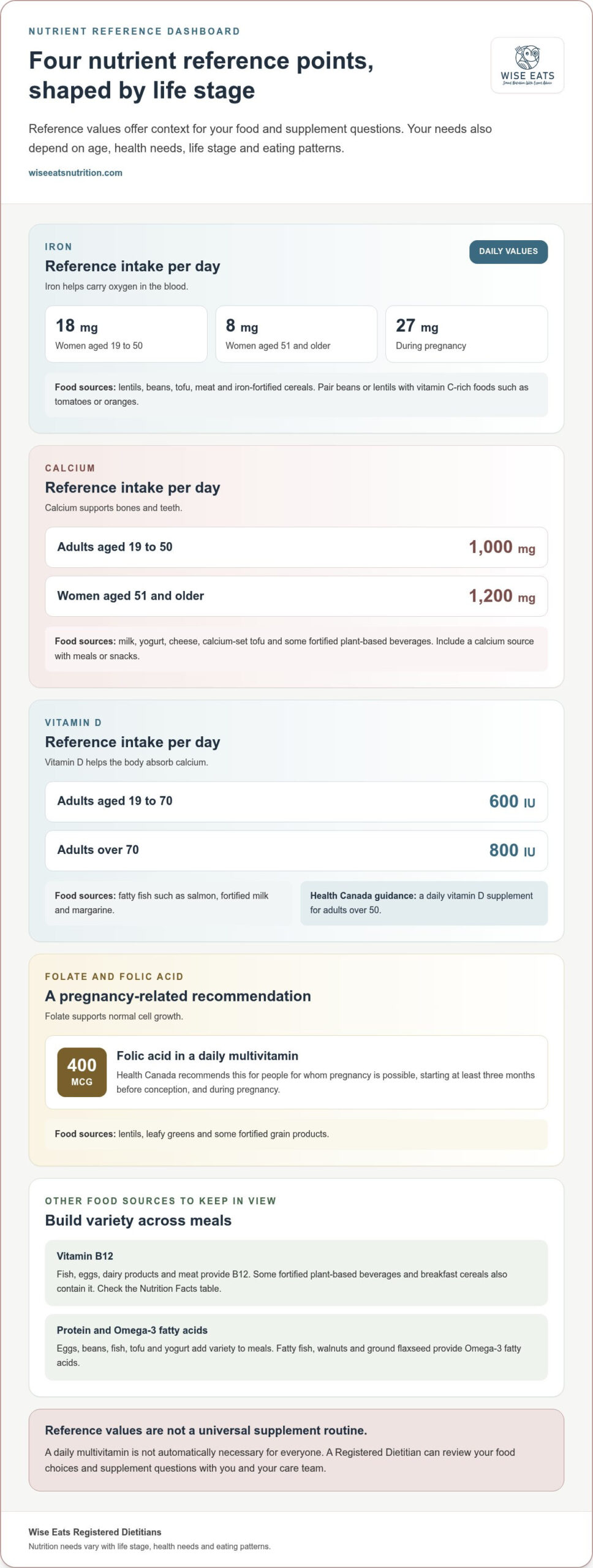
Iron helps carry oxygen in the blood. Health Canada’s reference values are 18 mg daily for women aged 19 to 50, 8 mg for women 51 and older, and 27 mg during pregnancy. Lentils, beans, tofu, meat and iron-fortified cereals are practical sources. Plant sources provide non-haem iron, which the body absorbs less readily than haem iron in meat. Pairing beans or lentils with vitamin C-rich foods, such as tomatoes or oranges, supports iron absorption.
Folate supports normal cell growth. Lentils, leafy greens and some fortified grain products contribute folate. For people who could become pregnant, Health Canada recommends a daily multivitamin containing 400 mcg of folic acid, started at least three months before conception. During pregnancy, Health Canada recommends a daily multivitamin with 400 mcg of folic acid. Discuss advice suited to your circumstances with your care team.
Vitamin B12 supports normal nerve function and red blood cell formation. Fish, eggs, dairy products and meat provide B12. Some fortified plant-based beverages and breakfast cereals also contain it, so check the Nutrition Facts table. People who eat few or no animal products have specific B12 questions to discuss with their care team.
Calcium, vitamin D, and other nutrients
Calcium supports bones and teeth. Milk, yogurt, cheese, calcium-set tofu and some fortified plant-based beverages offer food sources. Canadian reference values are 1,000 mg daily for adults aged 19 to 50 and 1,200 mg for women 51 and older. Including a calcium source at meals or snacks is a practical way to contribute to daily intake.
Vitamin D helps the body absorb calcium. Health Canada’s reference intake is 600 IU daily for adults aged 19 to 70 and 800 IU for adults over 70. Fatty fish, such as salmon, and fortified milk or margarine provide vitamin D. Health Canada recommends a daily vitamin D supplement for adults over 50. For regional context, see winter vitamin D guidance for Alberta and Vancouver Island. Your care team can help you decide whether a supplement fits your needs.
Protein foods such as eggs, beans, fish, tofu and yogurt add variety to meals. Fatty fish, walnuts and ground flaxseed provide Omega-3 fatty acids. Evidence about specific benefits depends on the health concern, so don’t treat these foods or nutrients as a cure or universal prescription.
If you’re unsure how your food choices and current supplements fit together, a Registered Dietitian supplement discussion offers a chance to review your questions in context.
How Do Nutrient Considerations Change Across Women’s Life Stages?
The same nutrient questions don’t apply in the same way at every age. Growth, menstruation, pregnancy, breastfeeding and menopause each bring different considerations. This comparison offers general education, not a universal supplement routine. Personal recommendations depend on your health, eating pattern and circumstances.
| Life stage | Nutrition questions to consider |
|---|---|
| Adolescence | Are meals and snacks contributing iron, calcium and enough energy for growth? |
| Reproductive years | How do menstruation, food choices and pregnancy potential shape iron and folate questions? |
| Pregnancy or lactation | What guidance from your care team applies to iron, folic acid, vitamin D and overall intake? |
| Menopause | How do age-related reference values and food sources of calcium and vitamin D fit your routine? |
Adolescence and reproductive years
During adolescence, the body is still growing, so meals need to contribute energy and a range of nutrients. Health Canada’s reference intake for calcium is 1,300 mg daily for ages 9 to 18. Iron questions can also come up during growth and for people who menstruate. These are reasons to consider food patterns and context, not signs of a deficiency.
In the reproductive years, menstruation and the possibility of pregnancy shape some nutrition discussions. Folate is found in foods such as beans and leafy greens, and iron comes from sources including lentils, tofu, meat and fortified cereals. Health Canada provides specific folic acid guidance for people who could become pregnant. Your needs depend on your circumstances, so a general checklist won’t tell you whether you need a supplement.
Pregnancy, lactation, and menopause
Pregnancy brings specific guidance. Health Canada recommends a daily supplement containing 16 to 20 mg of iron during pregnancy, alongside a varied diet. Discuss your prenatal supplement plan with your care team, who can account for your health and current advice. For pregnancy planning, follow guidance tailored to pregnancy instead of applying general life-stage examples as personal instructions.
During lactation, energy and nutrient needs differ from pregnancy. For women aged 19 to 50, the iron reference intake is 9 mg daily. Menopause is a time to review age-related nutrition questions, including calcium and vitamin D intake. Health Canada’s calcium reference intake rises to 1,200 mg daily for women aged 51 and older. These values guide population-level planning. They don’t establish an individual need for supplements or promise symptom relief.
Essential nutrients for women’s health depend on life stage, but age alone doesn’t determine a personal plan. Food access, eating pattern, health conditions and care-team advice all matter. Treat these examples as prompts for discussion, not a way to diagnose a nutrient deficiency or decide on supplements by yourself.
How Can Food Choices and Supplements Support Nutrient Needs?
Food and supplements have different roles. General food guidance offers ideas for including a range of nutrients in everyday meals. Individualized supplement recommendations take your health needs, eating pattern, life stage and current supplements into account. A multivitamin isn’t automatically needed by every woman.
Build nutrient variety into everyday meals
Start with what you already enjoy and add a nutrient source when it fits. Add canned beans to soup, serve eggs with toast and fruit, or include tofu, chicken or lentils in a rice bowl. Frozen vegetables, canned fish, fortified plant-based beverages and whole-grain bread are practical options too. Food traditions differ, and familiar dishes often offer ways to include different nutrients without changing the whole meal.
Small additions are often easier to maintain than strict food rules. Stir lentils into a stew, add yogurt alongside breakfast, or keep nuts and fruit available for a snack. These examples support variety, but no single food needs to carry the responsibility for your health. If planning meals feels difficult, personalized meal planning takes your preferences, routine and nutrition goals into account.
Review supplements and medication considerations
Supplements might be useful when a specific need has been identified, but taking more than one product can lead to overlapping nutrients. Check the label for ingredients and amounts, and bring the bottles or a clear list to your care-team discussion. In Canada, a Natural Product Number is an eight-digit code indicating Health Canada has assessed a supplement for safety, quality and health claims. It does not show whether a product suits your personal needs.
Supplements can also interact with some medications. The Cytochrome P450 system is a group of liver enzymes that metabolise many drugs and supplements, influencing their effectiveness and safety. Tell your care team about all supplements you take, including vitamins, minerals and herbal products. Don’t stop or change prescribed medication based on supplement information. Discuss concerns with the health professional who oversees your care.
A professional supplement review can help you organize questions about your current routine and consider whether a product fits your nutrition goals. The discussion should account for your food choices and medication list, alongside guidance from your care team. This keeps decisions about essential nutrients for women’s health grounded in your circumstances instead of a general checklist.
For supplement questions, you can also visit the dietitian appointment page.
When to Seek Help With Essential Nutrients for Women’s Health
Nutrition questions deserve support when they begin to affect your well-being, daily routine or relationship with food. You don’t need a confirmed nutrient deficiency to talk with a care professional. A Registered Dietitian offers general nutrition education and helps you consider food choices and supplement questions in the context of your needs. Your care team can also help decide whether further assessment is appropriate.
When to Seek Help
Consider reaching out to a trusted health professional if any of these concerns feel familiar. You deserve support without judgement, and you don’t need to manage the concern on your own.
- Physical symptoms persist or affect daily life. For example, ongoing symptoms interfere with eating, preparing meals or taking part in your usual activities. A care professional can help assess what might be contributing.
- Eating feels distressing or hard to manage. Restrictive eating, episodes of binge eating, or behaviours such as vomiting or over-exercising to compensate are reasons to seek compassionate support. You can start by telling your family doctor or another trusted member of your care team.
- You’re becoming more isolated around food. Avoiding shared meals or pulling away from people because of eating concerns is worth discussing with someone you trust. A professional can help you consider next steps at a pace that feels manageable.
What dietitian support can look like in Alberta and British Columbia
A Registered Dietitian can talk through your usual meals, food preferences, life stage and nutrition questions. Together, you can consider practical ways to include nutrients in meals and review whether a supplement fits your situation. Supplement discussions can include the products you already take and questions about possible medication interactions. Share your medication and supplement list with your care team, and follow their guidance about medicines.
This support is collaborative. A dietitian provides nutrition education and helps you make a plan suited to your routine, but does not diagnose a medical condition or replace other members of your care team. You remain part of the conversation, including decisions about which changes feel realistic and useful. If your concern involves symptoms or a possible deficiency, your doctor or other health professional can advise on assessment and care.
Wise Eats Registered Dietitians provides nutrition counselling in Alberta and British Columbia, including online, in-person and home-visit sessions. Support is available to residents of Calgary, Edmonton, Nanaimo, Parksville, Vancouver Island and Qualicum Beach. Rachel McBryan, RD, is regulated by the College of Health and Care Professionals of BC. Sheirry Poposka, RD, is regulated by the Alberta College of Registered Dietitians. Their guidance can help you sort through online advice and discuss essential nutrients for women’s health in relation to your food choices and supplement questions.
To arrange a session, visit the dietitian booking page.
For another way to book, use the Wise Eats appointment page.
Choose a Next Step That Fits Your Life
Use what you’ve learned to choose one useful next step. You might write down a nutrition question, note a change in your routine, or gather the supplement labels you want to discuss with your care team. A focused question often makes it easier to talk about essential nutrients for women’s health in a way that reflects your needs and preferences.
You don’t need to make every decision today. If you’re unsure how food choices or supplements fit your situation, a Registered Dietitian can help you consider practical options alongside your care team. Your next step can be a conversation, not a complete overhaul.
Speaking with a registered dietitian can help you develop a balanced, flexible approach to eating and meet your nutritional needs. Book a consultation.
Frequently Asked Questions
Can symptoms alone tell me whether I have a nutrient deficiency?
No. Symptoms alone don’t confirm a nutrient deficiency, since different health concerns can cause similar changes in how you feel. Keep a brief note of what you’ve noticed, when it started and how it affects daily activities. Share this with your doctor or care team. They can decide whether further assessment is appropriate, instead of relying on an online symptom list or starting supplements based on symptoms alone.
Is a multivitamin necessary for every woman?
No. A multivitamin isn’t automatically needed by every woman. Your food pattern, life stage, health needs and care-team guidance all matter. For example, recommendations differ for someone who could become pregnant compared with someone choosing a multivitamin for general wellness. Before buying one, check the label for nutrients and amounts, and consider whether you already get the same nutrients from other supplements or fortified foods.
Can vitamins or minerals interact with prescription medications?
Yes. Some vitamins, minerals and other supplements interact with prescription medications, and the details depend on the products involved. Bring a complete list of supplements, including dose and how often you take each one, to a pharmacist or prescriber. Include occasional products, such as antacids or pain relievers. Don’t stop or change a medication on your own. Ask your care team to review possible interactions.
What does a Natural Product Number tell me about a supplement?
A Natural Product Number (NPN) helps you identify a supplement assessed by Health Canada for safety, quality and health claims. Use it alongside the label: check the ingredients, amount per serving, directions and cautions. An NPN doesn’t confirm a product suits your health needs or fits with your medications. If the label is unclear, bring it to a pharmacist, prescriber or Registered Dietitian for discussion.
Should I take iron without first discussing it with a healthcare professional?
It’s best to discuss iron supplements with a healthcare professional before starting one. Iron needs vary, and an iron-containing multivitamin might overlap with a separate iron product. Tell your care team about supplements you already take and any pregnancy-related guidance you’ve received. They can help you consider whether a supplement is appropriate and what follow-up fits your situation. Food sources of iron remain part of everyday meals.
What should I prepare before a dietitian appointment about nutrient needs?
Bring your supplement labels or photos, a medication list, and a few notes about your usual meals and snacks. Write down your main questions, recent changes in your eating pattern, and any food preferences or access concerns you want included. You don’t need a perfect food record. This context helps a Registered Dietitian tailor nutrition education and discuss essential nutrients for women’s health in relation to your routine.

Article by
Rachel McBryan, Dietitian
Rachel McBryan is a licenced Dietitian in British Columbia offering comprehensive nutrition counselling as virtual and/or in-person counselling sessions to suit your needs and preferences. With a Bachelor of Science in Nutrition and Food Science, Rachel has over 20 years experience helping people address their health through nutrition. She was awarded Human Nutrition and Food Science BSc.from University of Alberta followed by post-grad course work at UBC in guidance counselling.
An eating disorder is a serious mental health illness.
If you are in immediate distress or crisis, please contact emergency services by dialing 911 or calling Vancouver Island Crisis Line: 1-888-494-3888.