What if nourishing yourself in early parenthood meant keeping a few flexible options within reach instead of following a strict meal schedule? These nutrition tips for new parents start with a familiar challenge: feeds, naps and appointments shift, and your own meals can get pushed aside. Planning food may feel like one more task when you’re tired.
If you’ve wondered how to eat well while caring for a new baby takes most of your time and attention, you’re not alone. You deserve advice that fits real family routines, without pressure to follow a perfect plan or sort through conflicting rules.
This article shares simple meal and snack ideas, ways to make food easier to reach, and suggestions for accepting help with preparation. It also explains how Canada’s Food Guide can offer a flexible starting point and when support from a Registered Dietitian might be useful. The goal is practical nourishment that works with changing days.
Key Takeaways
- Use these nutrition tips for new parents to make eating fit around changing sleep and caregiving routines.
- Combine familiar staples with ready-to-eat foods, leftovers or frozen produce for low-prep meals and snacks.
- Keep drinks and easy-to-reach snacks near your usual feeding spots to make them accessible during the day.
- Share food tasks with a partner, family member or friend, such as shopping or preparing a meal.
- A Registered Dietitian offers nutrition education and personalized counselling shaped around your needs and routine.
Nutrition Tips for New Parents Start with Realistic Expectations
A meal plan that worked before your baby arrived might not fit now. Newborn care often brings interrupted sleep, changing feeding patterns and days with little open time. Your own meals may happen later than planned or get missed while you respond to your baby’s needs. That’s not a personal failure. It’s a sign that your routine has changed.
The postpartum period involves adjustment after birth, though each family’s experience is different. Practical nutrition during this time means having flexible options for meals, snacks and fluids, without expecting a fixed schedule or a perfect plate.
This video offers another perspective on planning food during early parenthood:
Why meals may feel harder after a new baby arrives
Fatigue can make decisions and food preparation feel harder. A baby’s feeding schedule might interrupt your meal, and shopping may take more planning than before. Some parents have help nearby, while others manage most daily tasks themselves. There isn’t one routine every family should follow. If lunch happens at an unusual time or you rely on a quick snack, that doesn’t mean you’ve failed.
What flexible nourishment looks like day to day
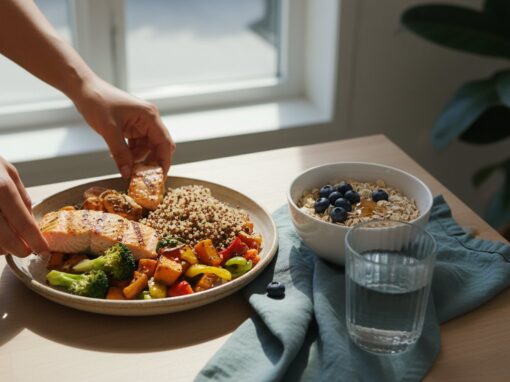
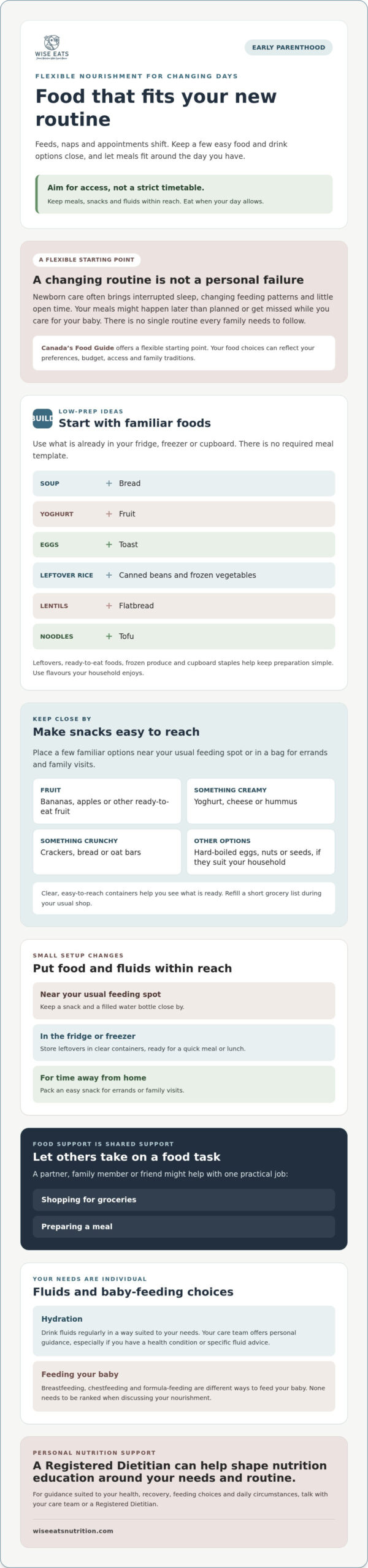
Keep a few familiar foods available, then combine simple components as time allows. Toast with peanut butter or an egg is one quick option. Leftovers, fruit, yoghurt, canned beans and frozen vegetables can also help make a meal or snack with little preparation. Choose foods that suit your preferences, budget and access. Small, workable options count.
A flexible nutrition routine means keeping meals, snacks and fluids within reach, then eating when your day allows. Try placing a snack near your usual feeding spot or keeping a filled water bottle somewhere convenient. These small changes make food and drinks easier to access without adding a strict timetable.
These nutrition tips for new parents offer general education, not individual medical advice. Your nutrition needs differ based on your health, recovery, feeding choices and daily circumstances. For advice tailored to you, talk with your care team or a Registered Dietitian.
Build Quick Meals and Snacks Around What You Already Have
On a busy day, a meal doesn’t need a new recipe or a long prep session. Start with what’s already in your fridge, freezer or cupboard. Pair a convenient staple with another filling food, then add produce if it’s handy. These nutrition tips for new parents are options, not another set of rules.
Low-prep meal combinations for busy days
Keep familiar foods in the mix. Soup with bread, yoghurt with fruit, or eggs with toast take little planning. Leftover rice with canned beans and frozen vegetables makes another easy combination. You might prefer lentils with flatbread, noodles with tofu, or another dish rooted in your food traditions. Use ingredients and flavours your household enjoys.
Frozen vegetables and fruit are ready to add to meals or snacks. Canned beans, lentils and fish offer cupboard options, while ready-to-eat foods can help on days with little time to cook. Leftovers can become a quick lunch. Store portions in clear, easy-to-reach containers so you can see what’s available and avoid starting from scratch each time.
There’s no required meal template. Toast and peanut butter can be an option; so can soup and crackers. A mix of foods across the day matters more than making every meal look the same. For ideas that can also support family conversations about food, explore a balanced nutrition plan for teens.
Simple snack planning for unpredictable routines
Keep a few snacks near the places you spend time, such as beside your usual feeding spot or in a bag for errands and family visits. Pairing foods from different groups, like fruit with cheese or crackers with hummus, adds variety if that appeals to you. No formula is required.
Try stocking a short list of easy-to-find groceries:
- Bananas, apples or other ready-to-eat fruit
- Yoghurt, cheese or hummus
- Crackers, bread or oat bars
- Hard-boiled eggs, if you have time to prepare them
- Nuts or seeds, if they suit your household
Choose a few items you enjoy and replenish them during your usual shop. If planning meals around your preferences and routine feels helpful, explore custom meal planning from Wise Eats Registered Dietitians. To ask about nutrition support, connect with Wise Eats Registered Dietitians.
Hydration and Feeding Choices Need Flexible, Individual Support
Feeding your baby and caring for yourself happen at the same time, but your needs depend on your health, feeding choices and daily routine. Breastfeeding, chestfeeding and formula-feeding are different ways to feed your baby. None needs to be ranked when discussing your own nourishment.
Hydration means maintaining fluid balance in the body. In everyday terms, it means drinking fluids regularly in a way that suits your needs. Your care team can offer personal guidance, especially if you have a health condition or have received specific fluid advice.
Make fluids easier to remember
Keep a drink near a place you often sit to feed or settle your baby. You might also have a glass of water with a meal, or take a drink when you return from an errand. Linking a reminder to an existing part of your day can help without adding a strict schedule.
For people who breastfeed or chestfeed, the Public Health Agency of Canada advises drinking to thirst. Its guidance does not support drinking extra fluids as a way to increase milk supply. You don’t need to force yourself to drink beyond your thirst. If your healthcare team has given you personal fluid instructions, follow up with them before changing your routine.
Nutrition considerations during lactation
Breastfeeding and chestfeeding can bring questions about food, fluids and supplements. Advice depends on personal health and circumstances, so one supplement plan doesn’t fit everyone. If you’re unsure about a supplement, take its label or details to your care team and ask whether it suits your needs. Don’t start, stop or change a supplement based on general online advice.
People who formula-feed also need regular access to meals, snacks and drinks while caring for a baby. Feeding choices don’t determine whether you deserve nutrition support. General guidance offers a starting point, but a health condition, recovery need or specific dietary concern calls for advice suited to your situation.
These nutrition tips for new parents offer general education, not individual medical advice. For condition-specific nutrition care, talk with your healthcare team about whether referral to a Registered Dietitian is appropriate. A dietitian provides nutrition education and counselling within their professional scope, while your care team remains part of decisions about your health.
Create a Flexible Food Routine That Shares the Work
A food routine doesn’t need to assign every meal to a set time. A short plan with a few options gives you a starting point, and shared tasks can help keep food available when the day changes. These nutrition tips for new parents focus on a routine your household can adjust, not a schedule you need to follow perfectly.
A small weekly plan for changing schedules
Start by checking the fridge, freezer and pantry. Note what needs using, then write a short shopping list for a few flexible meals. Choose foods that work in more than one way, such as eggs, bread, frozen vegetables, canned beans or prepared soup.
For example, plan soup with bread for one meal and eggs with toast for another. If cooking time disappears, use ready-made soup or a convenient prepared meal. Swap fresh vegetables for frozen ones, or pair canned beans with toast or leftover rice. A plan with substitutions stays useful when naps, feeds or appointments shift.
Wise Eats Registered Dietitians also offer a free meal-planning and diet-analysis resource. Use it as a starting point, then adjust its ideas to fit your household’s foods, schedule and preferences.
Ask for practical food support
Specific requests make it easier for someone to help. You might ask a partner to add groceries to the next shop, invite a relative to bring a prepared dish, or ask a friend to pick up a few items on their way over. If cooking feels like the harder task, someone else might wash fruit or portion leftovers instead.
Share tasks in ways that suit each person’s time, skills and comfort. One person might shop, another might prepare a meal, and someone else might handle dishes. Takeout and convenience foods also have a place in a flexible routine. They’re another option when cooking doesn’t fit the day, without guilt or a need to compensate later.
If you’d like help building shared routines that respect each person’s needs and schedule, a family dietitian can offer support shaped around your whole household.
For families in British Columbia looking for local dietitian support, the Registered Dietitian services comparison guide offers information to help you review available services.
When to Seek Help with New-Parent Nutrition
It’s reasonable to ask for support if eating feels hard to manage or causes ongoing worry. You don’t need to wait until things feel overwhelming. Share what you’ve noticed with your healthcare professional, who can help you consider next steps.
When to seek help
Consider reaching out if any of these concerns affect your daily life:
- Eating feels persistently distressing, or regular meals feel difficult to manage.
- Binge eating or behaviours such as vomiting or excessive exercise to compensate for eating are causing concern.
- You have concerning physical symptoms, feel increasingly isolated, or struggle to eat or drink.
A healthcare professional can help assess physical symptoms and discuss appropriate support. If it feels hard to explain what’s happening, write down your concerns or ask someone you trust to join the conversation.
What a Registered Dietitian offers new parents
A Registered Dietitian provides nutrition education and personalized counselling within their professional scope. Sessions can focus on your food preferences, culture, household routine and practical needs. You might discuss easy meal options, feeding-related questions or ways to make food access more manageable. A dietitian works collaboratively with you and can communicate with your wider care team when appropriate, with your consent.
At Wise Eats Registered Dietitians, Rachel McBryan, RD, College of Health and Care Professionals of BC, and Sheirry Poposka, RD, Alberta College of Registered Dietitians, provide nutrition support. Read about the team’s dietitian backgrounds and services to learn more about their professional experience.
Nutrition tips for new parents offer a starting point, but personal support can help when your needs feel hard to sort through alone. A Registered Dietitian can help you discuss practical options without requiring a fixed meal routine or one approach for every family.
Keep Your Food Routine Flexible as Family Life Changes
Early parenthood rarely follows a steady timetable. Choose a few easy meal options, keep snacks and drinks accessible, and share shopping or food preparation when support is available. If plans change, convenience foods and takeout still have a place. A routine should help your family, not add pressure.
These nutrition tips for new parents offer practical starting points, not a set of rules. Notice what feels manageable, and reach out to your healthcare team if eating, drinking or feeding questions are weighing on you. A Registered Dietitian offers nutrition education and personalized counselling shaped around your preferences, culture and daily routine.
Wise Eats Registered Dietitians serves residents in Alberta and British Columbia, including families in Calgary, Edmonton, Nanaimo, Parksville, Qualicum Beach and other Vancouver Island communities. Sessions are offered online, in person and through home visits.
Small, practical changes count. Choose what fits your family today, and give yourself room to adjust as routines shift.
Frequently Asked Questions
What are easy meals for new parents?
Easy meals use familiar foods and need little preparation. Try canned soup with bread, eggs with toast, or yoghurt with fruit and oats. Frozen vegetables, canned beans and leftovers also help you put together a meal without starting from scratch. Choose foods your household enjoys and that suit your time, budget and access. A quick combination is enough when a longer meal doesn’t fit your day.
How do new parents find time to eat?
Keep food ready to reach rather than waiting for a quiet meal break. Put a snack near your usual sitting or feeding spot, and store leftovers in easy-to-see containers. If someone offers help, ask them to pick up groceries or prepare a meal. A flexible routine with food options throughout the day may fit better than planning meals around fixed times.
What snacks are useful for new parents?
Choose snacks you enjoy, can store easily and will remember to bring along. Fruit, yoghurt, cheese, crackers, hummus, nuts and oat bars are common grocery-store options. Pairing foods, such as an apple with cheese or crackers with hummus, adds variety if it suits you. Keep a few options at home and pack one for errands or visits with family.
How should new parents remember to drink fluids?
Keep a drink beside a spot you often sit, or have one with a meal or snack. A routine cue, such as taking a drink when you settle in to feed your baby, may help you remember. Health Canada advises people who breastfeed or chestfeed to drink to thirst. If your care team has given you specific fluid guidance, ask them before changing your routine.
Is nutrition different while breastfeeding or chestfeeding?
Breastfeeding or chestfeeding can bring nutrition questions, but individual needs differ. Health Canada advises drinking to thirst, and extra fluids are not supported as a way to increase milk supply. Supplement advice depends on your health and circumstances, so ask your care team before starting or changing a supplement. Formula-feeding parents also need practical access to meals, snacks and drinks during busy caregiving days.
When should a new parent seek nutrition support?
Reach out if eating feels persistently distressing or regular meals feel difficult to manage. Seek support if binge eating or behaviours such as vomiting to compensate for eating affect daily life. Talk with a healthcare professional if you have concerning physical symptoms, feel increasingly isolated, or struggle to eat or drink. These concerns deserve support, and a healthcare professional can help you consider next steps.
What does a Registered Dietitian do for new parents?
A Registered Dietitian offers nutrition education and personalized counselling within their professional scope. You can discuss food preferences, culture, feeding questions and daily routines, then consider practical options together. Wise Eats serves residents in Alberta and British Columbia, including Calgary, Edmonton and Vancouver Island communities such as Nanaimo, Parksville and Qualicum Beach. Rachel McBryan, RD, College of Health and Care Professionals of BC, and Sheirry Poposka, RD, Alberta College of Registered Dietitians, provide support.

Article by
Rachel McBryan, Dietitian
Rachel McBryan is a licenced Dietitian in British Columbia offering comprehensive nutrition counselling as virtual and/or in-person counselling sessions to suit your needs and preferences. With a Bachelor of Science in Nutrition and Food Science, Rachel has over 20 years experience helping people address their health through nutrition. She was awarded Human Nutrition and Food Science BSc.from University of Alberta followed by post-grad course work at UBC in guidance counselling.
An eating disorder is a serious mental health illness.
If you are in immediate distress or crisis, please contact emergency services by dialing 911 or calling Vancouver Island Crisis Line: 1-888-494-3888.