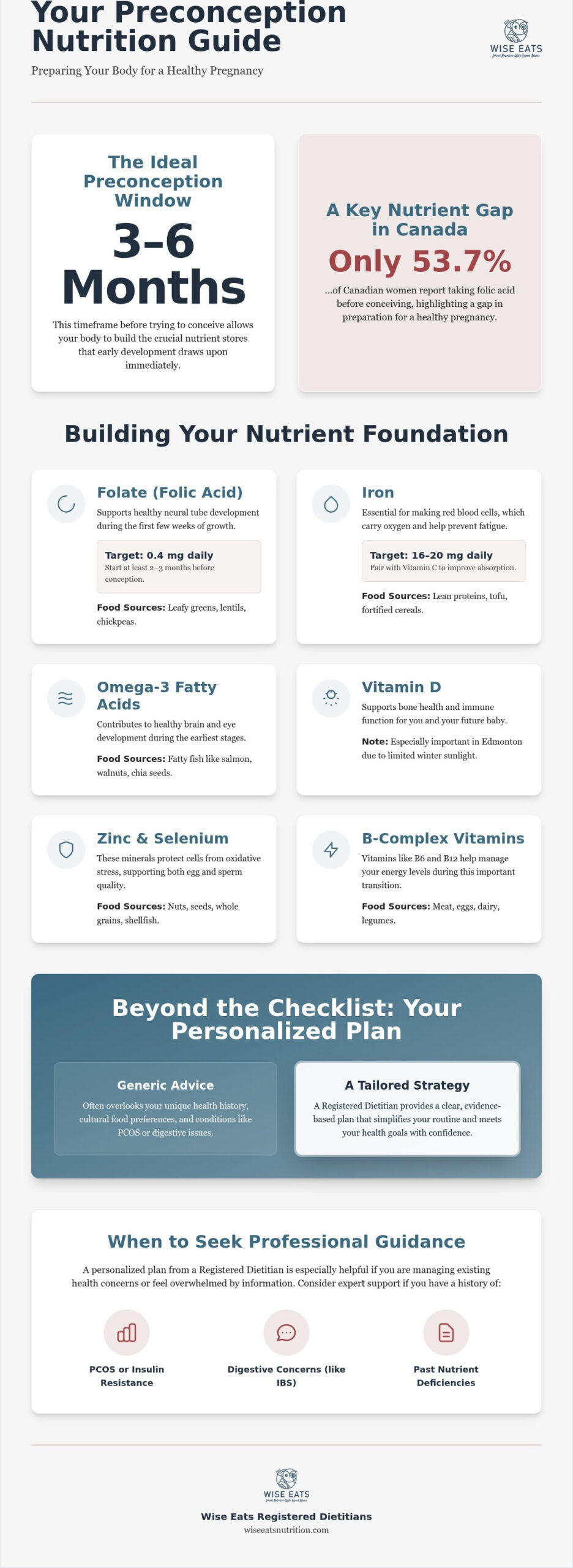
Only 53.7 percent of women in Canada report taking folic acid before they conceive. This statistic highlights a gap in pregnancy preparation. You might feel unsure about which supplements or foods are necessary for your unique body. It is common to feel frustrated when generic health advice ignores your history with PCOS or IBS. You want a plan designed for your specific needs rather than a one-size-fits-all checklist. Professional Preconception Nutrition Edmonton strategies help bridge this gap by focusing on your metabolic readiness.
This article explains how personalized nutrition plans prepare your body for a healthy journey ahead. You will learn about essential nutrients like iron and folic acid and gain a clear path to manage health concerns with confidence. We look at how local expert support from Sheirry Poposka, RD, provides the clarity you need to move forward with peace of mind. Our discussion covers specific nutrient targets and the benefits of working with a professional registered with the Alberta College of Registered Dietitians.
Key Takeaways
- Start planning your nutritional needs three to six months before trying to conceive to prepare your body for the earliest stages of pregnancy.
- Focus on essential nutrients like folate for healthy development and iron for oxygen transport to support your well-being.
- Learn how Preconception Nutrition Edmonton strategies provide specific support for managing health concerns like PCOS or insulin resistance through balanced eating.
- Use personalized meal planning and custom supplement formulas to simplify your daily routine and meet your unique health goals.
- Connect with a local Registered Dietitian in Edmonton for evidence-based guidance tailored to your health history and cultural preferences.
Defining Preconception Nutrition for Edmonton Residents
Preconception Nutrition refers to the foods, eating patterns, and nutrients you focus on before pregnancy begins. It is a distinct phase from prenatal care, and it deserves its own attention. The three to six months before you try to conceive give your body time to build the nutrient stores early fetal development draws on almost immediately after fertilization.
This window matters because some nutrients take weeks to reach optimal levels in your system. Waiting until you see a positive pregnancy test means your body is already playing catch-up during one of its most critical periods. A thoughtful approach to food and supplementation during this phase supports your own health and the conditions your future baby needs from the start.
Nutritional choices during this time also influence egg quality and, for couples conceiving together, sperm health. Research points to specific dietary patterns supporting reproductive function, including adequate intake of zinc, omega-3 fatty acids, and antioxidant-rich foods. No single food does all of this on its own, which is why a personalized plan tied to your health history is far more useful than a generic checklist.
Why the Preconception Phase Matters
Your body does not switch into pregnancy mode overnight. Nutrient stores accumulate gradually, and the habits you build now tend to carry forward. Starting early gives you a realistic runway to address deficiencies, stabilize blood sugar, or adjust your eating patterns in a sustainable way rather than feeling rushed.
Local Resources for Edmonton Families
Edmonton residents have access to several starting points for preconception support. Alberta Health Services offers general prenatal information through the Edmonton Zone, and community health centres provide programs for families at various stages of their journey. For more individualized guidance, a Registered Dietitian brings something these programs do not always offer: a plan built around your specific health history, food preferences, and local food access.
Preconception Nutrition Edmonton support through Wise Eats Registered Dietitians connects you with Sheirry Poposka, RD, who is registered with the Alberta College of Registered Dietitians. Working with a regulated professional means your plan is grounded in evidence, not trends. Whether you have a history of digestive concerns, hormonal conditions, or simply want to feel confident about your choices, personalized care gives you a clear and practical foundation to build on.
Essential Nutrients Supporting Your Health Before Pregnancy
Building your nutrient stores requires a proactive approach to your daily meals. Choosing Essential Nutrients Supporting Your Health prepares your body for the physical demands of pregnancy. For those seeking Preconception Nutrition Edmonton services, understanding the specific roles of vitamins and minerals provides a clear path forward.
Folate is a top priority for everyone planning a pregnancy. The Public Health Agency of Canada recommends 0.4 mg of folic acid daily starting at least two to three months before conception. This nutrient supports neural tube development during the first few weeks of growth. Some people choose bioactive forms like L-5-methyltetrahydrofolate for better absorption. Iron is another necessity for your blood health. Health Canada suggests 16 to 20 mg daily to maintain healthy blood levels and oxygen transport. Pairing iron-rich foods with vitamin C helps your body absorb this mineral more effectively. Meeting these targets helps prevent fatigue and supports your overall energy.
Omega-3 fatty acids contribute to brain and eye health during early development. You find these in fatty fish like salmon or through high-quality supplements. Vitamin D also plays a vital role in your system. It supports bone health and immune function for you and your future baby. Because Edmonton has limited sunlight in winter, many residents find their levels are lower than optimal.
Vitamins and Minerals for Fertility
Fertility involves both partners. Zinc and selenium support reproductive health by protecting cells from oxidative stress. These minerals are essential for sperm quality and egg health. B-complex vitamins, including B6 and B12, help manage your energy levels during this transition. Using antioxidants from whole foods, such as berries and nuts, provides a protective effect for your reproductive system.
Meeting Your Needs Through Food
Whole foods provide the foundation for your daily plan. Leafy greens, lentils, and chickpeas offer natural folate. Lean proteins like poultry or tofu and fortified cereals help maintain your iron stores. Colourful vegetables provide phytonutrients which protect your cells from damage. Balancing your plate with these items makes your nutritional goals feel achievable.
If you feel overwhelmed by supplement choices or generic advice, a personalized review helps. You are invited to book a consultation to discuss a plan tailored to your health history.
Managing Complex Health Needs During Your Preconception Period
Planning a pregnancy feels complicated if you live with conditions like PCOS or endometriosis. These health histories require specific nutritional strategies to support your body. Generic advice often fails to account for how these conditions affect your hormonal balance. Focusing on Preconception Nutrition Edmonton strategies helps you find foods fitting your needs without the stress of trial and error. Sheirry Poposka, RD, provides guidance for those with complex medical conditions to ensure your plan is safe and effective. You deserve a plan reflecting your specific history rather than a standard checklist.
PCOS and Metabolic Health
Managing insulin resistance through plate balancing supports your hormonal health. Stable blood sugar levels support regular ovulation and hormone balance. You achieve this by pairing carbohydrates with plenty of fibre and protein. This approach helps maintain metabolic health without the need for restriction. Personalized plans focus on adding nourishing foods rather than taking things away. This method helps you build a sustainable routine before your pregnancy journey begins. Many residents in Edmonton find this approach easier to follow during busy work weeks. Stable energy levels help you feel more prepared for the changes ahead. Your dietitian helps you identify which specific fibre sources work best for your lifestyle.
Digestive Comfort and Nutrient Absorption
Digestive health concerns like IBS often influence how your body absorbs nutrients. Managing these symptoms during the preconception phase prevents unnecessary discomfort and stress. Identifying food triggers helps you feel your best daily. A healthy gut microbiome supports overall immune function, which is a priority as you prepare for pregnancy. Professional support helps you find nutrition for digestion problems tailored to your history. This ensures you get the most out of the foods you eat while keeping your gut comfortable. Nutrient absorption is the bridge between the food you eat and the health of your future pregnancy. If your gut is inflamed, your body struggles to use the vitamins you provide. Addressing these issues now creates a smoother transition into the prenatal period.
When to Seek Help
Sometimes health concerns require more immediate or specialized attention. Reach out to your care team if you experience these symptoms:
- Severe abdominal pain or persistent digestive distress.
- Physical symptoms like extreme fatigue or fainting.
- Feelings of isolation or high anxiety regarding food choices.
These signs suggest you need additional support to manage your well-being safely.
For a gut-friendly option, try our Ginger and Turmeric Roasted Carrots.
Building Your Personalized Preconception Nutrition Plan
Success in preparing your body for pregnancy often comes down to how well your plan fits into your daily life. A generic list of rules often feels impossible to follow when you have a busy career and family commitments in Edmonton. Personalized meal planning respects your cultural background and the foods you already enjoy. This approach ensures your Preconception Nutrition Edmonton strategy feels like a natural part of your routine rather than an extra burden. Your health needs change over time. Your plan should be flexible enough to adjust as you move through different stages of your journey.
Using technology helps simplify the complex parts of changing your eating habits. These tools take the guesswork out of grocery shopping and meal preparation. Instead of spending hours searching for recipes, you receive a curated selection of dietitian meal plans designed for your specific goals. These resources help you build confidence in your choices while saving you time during the week. You spend less time worrying about what to eat and more time focusing on your well-being.
Custom Meal Planning in Edmonton
The EatLove system provides recipes tailored to your unique health profile. If you are managing insulin resistance or digestive concerns, the system filters for those needs automatically. It also generates organized grocery lists to help you find ingredients at local Edmonton markets. This level of detail makes it easier to stay on track even when life gets busy. You also have the flexibility to swap meals if you decide to eat out or celebrate a special occasion with your family. This flexibility prevents the feeling of restriction and keeps your journey positive. You choose meals fitting your schedule and your kitchen skills.
Precision Supplements Through VitaminLab
Many people find themselves overwhelmed by rows of individual bottles at the pharmacy. Generic prenatal vitamins often use forms of nutrients your body struggles to absorb. Through a partnership with VitaminLab, you have access to personalized vitamin and mineral supplements. These unique formulas combine your required nutrients into one dose. Precision dosing ensures you receive the exact amount of iron, folate, or vitamin D your body needs based on your history. This avoids the clutter of multiple bottles and ensures you aren’t taking unnecessary fillers.
These formulas use high-bioavailability ingredients for better absorption. This means your body uses the nutrients more effectively to build up your stores. It is important to know purchasing these specific supplements is not required for your care. Your dietitian provides a range of options to fit your budget and preferences. The goal is to find the most practical way to support your health before your pregnancy begins. You receive guidance on which nutrients are most important for your specific blood work results.
Book your initial nutrition assessment
Working with an Edmonton Registered Dietitian for Expert Guidance
Accessing expert support shouldn’t feel like a clinical chore. Working with a professional provides a steady hand as you prepare for pregnancy. Sheirry Poposka, RD, (Alberta College of Registered Dietitians) serves the local Edmonton community. Rachel McBryan, RD, (College of Health and Care Professionals of BC) brings additional expertise to the team. Together, they offer a supportive environment focused on your peace of mind.
Virtual appointments offer the flexibility busy individuals and families need. You don’t need to worry about traffic or parking in downtown Edmonton. Instead, you connect from the comfort of your home. This modern approach ensures your Preconception Nutrition Edmonton plan stays on track without adding stress to your schedule. Expert guidance helps you filter through confusing information and focus on the steps most important for your health.
What to Expect in Your First Session
Your first session is a conversation about your future. We begin with a detailed review of your health history and nutrition goals. We look at your current eating habits and lifestyle needs. This collaborative process ensures you feel confident and prepared. We set goals together, ensuring they fit your life and preferences. You leave with a clear understanding of your next steps and the support needed to achieve them.
When to Seek Help: Red Flags to Watch For
Sometimes, the pressure of planning a pregnancy leads to difficult relationships with food. It’s important to recognize when you need extra support. Reach out to your care team if you notice these red flags:
- Restrictive eating or feeling isolated from social meals.
- Compensatory behaviours or episodes of binge eating.
- Physical symptoms like extreme fatigue or dizziness.
These signs suggest you need a compassionate partner to help you regain balance. We are here to help you move forward with hope and practical tools. Professional support ensures your health remains the top priority during this transition.
Try our Edmonton Root Vegetable and Chickpea Medley for a nourishing meal.
Taking Your Next Steps with Confidence
Preparing your body for pregnancy involves more than following a generic list of rules. You deserve a strategy reflecting your unique health history and lifestyle. Focusing on Preconception Nutrition Edmonton helps you build the nutrient stores your body needs before your journey begins. Using systems like EatLove for meal planning and VitaminLab for custom formulas simplifies your daily routine. These tools ensure your nutrition fits your schedule and your taste buds.
Sheirry Poposka, RD, is a member of the Alberta College of Registered Dietitians. She provides the evidence-based support you need to feel ready. Rachel McBryan, RD, adds further expertise to ensure your plan is practical and effective. You don’t have to manage these changes by yourself. A personalized approach replaces confusion with a clear path forward.
Taking these proactive steps now supports your long-term well-being and helps you feel prepared for the transition ahead. You are building a foundation for your future family with every nourishing choice you make today.
Frequently Asked Questions
When should I start following a preconception nutrition plan?
Starting your plan three to six months before you try to conceive provides enough time to build essential nutrient stores. This window allows your body to reach optimal levels of folate and iron before the critical early weeks of development. Focusing on Preconception Nutrition Edmonton strategies early helps you establish sustainable habits. Your body needs this runway to adjust to new eating patterns without feeling rushed as your journey begins.
Is a prenatal vitamin enough for my nutritional needs?
A prenatal vitamin provides a safety net, but it does not replace the benefits of nutrient-dense whole foods. Your body absorbs vitamins and minerals differently depending on their source and form. Many store-bought options use synthetic ingredients with lower absorption rates. A personalized approach ensures you receive specific nutrients your body requires based on your health history. Balancing your plate with proteins and fibre remains the most effective way to support your well-being.
How does PCOS affect my preconception nutrition requirements?
PCOS often involves insulin resistance, which requires specific strategies to support regular ovulation. You focus on balancing carbohydrates with protein and fibre to maintain stable blood sugar levels. This method supports your hormonal health without the need for restrictive eating. Personalized plans help you identify which foods support your metabolic health while respecting your cultural preferences. Working with a professional ensures your plan addresses your specific symptoms and goals with practical steps.
Are dietitian services in Edmonton covered by private insurance?
Most private extended health insurance plans in Alberta provide coverage for Registered Dietitian services. While the Alberta Health Care Insurance Plan does not cover private practice visits, many employers include these services in their benefit packages. You should check your specific plan details to confirm your coverage limits and if you require a doctor’s referral for reimbursement. This coverage makes professional support accessible for many residents seeking Preconception Nutrition Edmonton guidance for their pregnancy journey.
How do I prepare for my first virtual dietitian appointment?
Preparing for your virtual session involves gathering your recent health history and any questions you have about food or supplements. You need a quiet space and a reliable internet connection for your video call. Having a list of your current medications and any recent blood work results helps your dietitian provide specific guidance. Your first session focuses on understanding your goals and current habits. This preparation ensures you get the most value from your time together.
What is the difference between a dietitian and a nutritionist in Alberta?
In Alberta, Registered Dietitian is a protected title regulated by the Alberta College of Registered Dietitians. This means RDs must meet specific education and clinical training standards to practice. The term nutritionist is not regulated in the same way, so anyone uses it regardless of their training. Choosing a regulated professional like Sheirry Poposka, RD, ensures you receive evidence-informed advice. This regulation protects your safety and guarantees a high standard of professional care.
How do custom supplement formulas differ from store-bought vitamins?
Custom formulas from VitaminLab provide precision dosing based on your unique health data. These bespoke products combine multiple nutrients into one dose, replacing several individual bottles. Store-bought vitamins often contain fillers or generic amounts of ingredients your body does not need. Hand-crafted formulas use high-bioavailability ingredients to ensure your body absorbs the nutrients effectively. Financial disclosure: purchasing these specific supplements is not required for your care, and your dietitian provides various options to fit your needs.
Is it possible to manage IBS while planning for a pregnancy?
Managing IBS while planning a pregnancy is possible with a plan focusing on digestive comfort and nutrient absorption. You identify food triggers to reduce discomfort and stress before your journey begins. A healthy gut microbiome supports your overall immune function and ensures your body uses the nutrients you consume. Personalized strategies help you find foods fitting your needs without causing flare-ups. This proactive approach creates a stable foundation for your health as you transition into the prenatal phase.

Article by
Rachel McBryan, Dietitian
Rachel McBryan is a licenced Dietitian in British Columbia offering comprehensive nutrition counselling as virtual and/or in-person counselling sessions to suit your needs and preferences. With a Bachelor of Science in Nutrition and Food Science, Rachel has over 20 years experience helping people address their health through nutrition. She was awarded Human Nutrition and Food Science BSc.from University of Alberta followed by post-grad course work at UBC in guidance counselling.
An eating disorder is a serious mental health illness.
If you are in immediate distress or crisis, please contact emergency services by dialing 911 or calling Vancouver Island Crisis Line: 1-888-494-3888.
This article is educational information only, not professional diagnosis or treatment. This health education content is heavily AI augmented and parts or all of this article may not have been reviewed yet for accuracy. AI generated content is prone to error.
Please note that we partner with VitaminLab and financially gain if you purchase supplements. You are under no obligation to use VitaminLab products and whether you supplement your diet with VitaminLab or another product of your choice will not impact your nutrition care.