Learning what to feed a picky eater aged 2–6 without shame from a dietitian starts with one clear boundary: you supply the food and the structure, and your child decides whether and how much to eat. Feeding a child aged 2–6 means balancing that direct responsibility while cutting mealtime stress and shame, so essential nutrients support normal pediatric development without forced eating or pressure tactics. A registered dietitian can offer medical nutrition therapy for picky eating, though individual outcomes vary based on your family’s routine.
Match Mealtime Refusal to Your Child’s Age
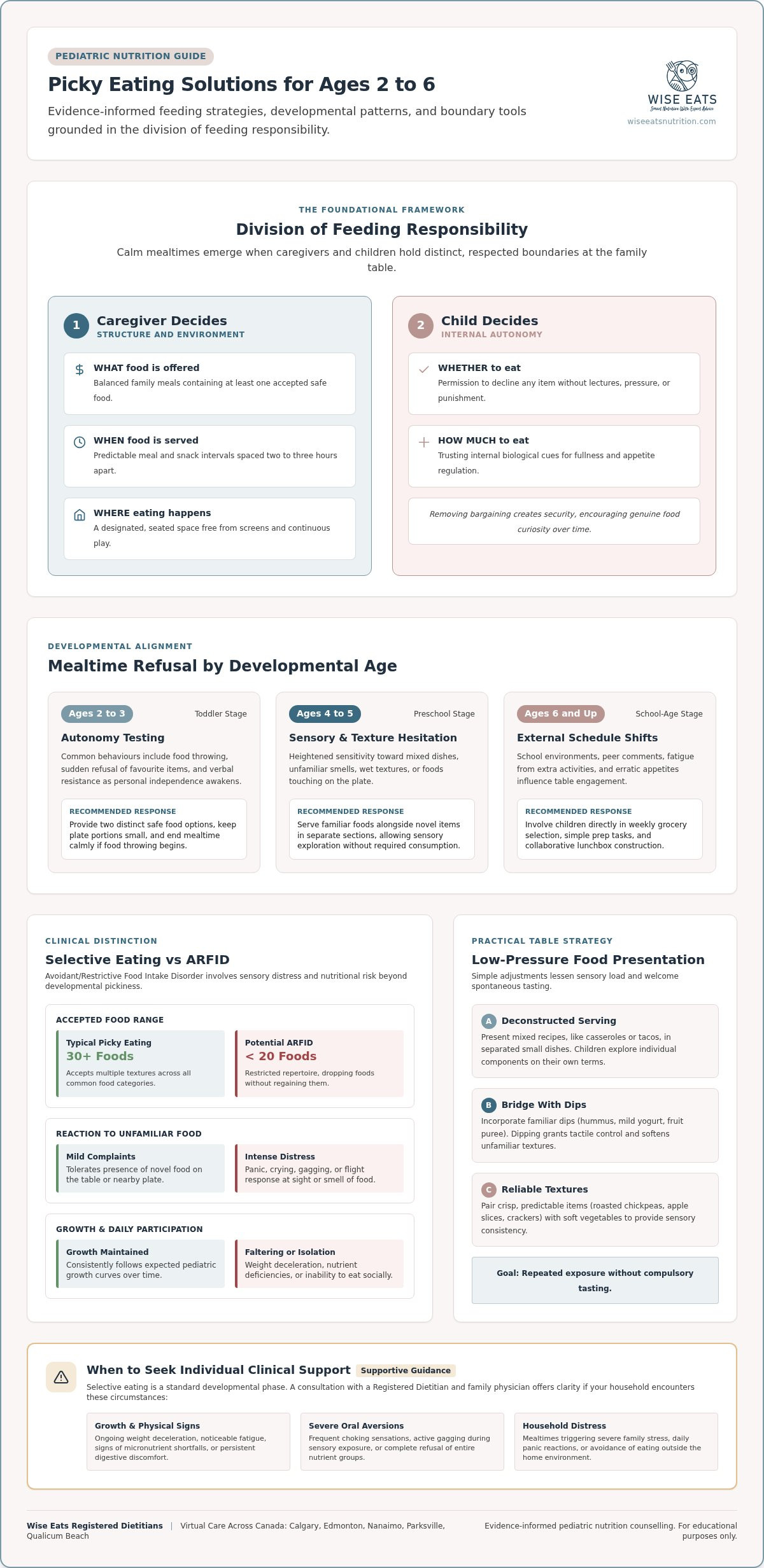
Food refusal looks different at two than it does at six, so your response has to match the stage in front of you. Enforcing strict meal rules often backfires with the families we support; trusting the division of feeding responsibility creates more peace than another round of bargaining.
Three situations come up often:
- A 2–3-year-old throws food while testing autonomy: offer two safe choices and keep portions tiny.
- A 4–5-year-old fears new textures: serve familiar foods alongside new items.
- A child 6 and up faces busy schedules and outside influences: involve them in custom meal planning.
| Age Group | Typical Mealtime Challenge | Recommended Approach |
|---|---|---|
| Ages 2–3 | Autonomy testing, throwing food | Offer two safe choices, keep portions tiny |
| Ages 4–5 | Fear of new textures | Serve familiar foods alongside new items |
| Ages 6+ | External influences, busy schedules | Involve them in custom meal planning |
Young toddlers need clear boundaries around serving times. For older kids, addressing picky eating through medical nutrition therapy means patient exposure rather than pressure. Low intake can lead to iron deficiency without anemia; a Canadian dietitian can help identify it. Science-backed nutrition information from Wise Eats Registered Dietitians clears up confusion, yet personalized recommendations still depend on a direct consultation. More on this: Iron Deficiency Without Anemia.
Spot When Picky Eating Crosses Into ARFID
Selective food intake is common in the preschool years, but severe distress points toward a clinical eating disorder rather than a phase. Everyday picky eating involves temporary selectivity where kids still consume enough to grow. Extreme sensory aversion or fear of choking may indicate Avoidant/Restrictive Food Intake Disorder. As noted in the Wikipedia entry on ARFID from 2024, this condition leads to severe nutritional deficiencies or social impairment.
| Feature | Picky Eating | ARFID |
|---|---|---|
| Food Flexibility | Eats 30+ foods | Eats under 20 foods |
| Emotional Response | Minor complaints | Severe anxiety or panic |
A registered dietitian can help assess your child’s growth and mealtime anxiety. Clear boundaries protect early development. The division of feeding responsibility lets you set food timing while your child chooses whether to eat, which supports long-term growth and helps prevent chronic diet cycles in the same spirit as learning how to stop yo-yo dieting. Families receive empathetic, non-judgmental support when they work with Wise Eats Registered Dietitians.
Let the Division of Feeding Responsibility End Power Struggles
When your toddler refuses dinner, tension fills the room fast, and it is easy to worry whether essential nutrients are landing on the plate at all. The division of feeding responsibility gives you a practical way to handle picky eating with medical nutrition therapy principles while keeping power struggles out of the meal.
You only decide what, when, and where to serve food. Whether to eat and the amount consumed remains entirely up to your child. That boundary removes pressure. A registered dietitian can help you set up this system; expert nutrition guidance cuts through diet myths, yet online forms cannot replace a full clinical consultation.
| Parent’s Role | Child’s Role |
|---|---|
| What food is served | Whether to eat |
| When food is served | How much to eat |
| Where food is served |
Understanding what a dietitian does shows how professional support can shift family mealtime dynamics toward calmer routines.
Build Predictable Meal and Snack Rhythms
Children settle around food when they can predict the next meal or snack. Based on practitioner observations, a steady schedule lowers the anxiety many kids feel at the table. Caregivers decide when, where, and what to serve; children choose whether and how much to eat.
| Caregiver Role | Child Role |
|---|---|
| When food is served | Whether to eat |
| Where food is served | How much to eat |
| What food is served |
A structured routine provides comfort without turning the kitchen into a battleground. Working with a HAES dietitian can help you set flexible schedules that honour your family dynamics and support nutrient intake without pressure. Structured routines alone cannot resolve underlying health issues linked to picky eating, which still call for personalized medical assessment.
Serve Low-Pressure Foods Picky Eaters Will Explore
Familiar, low-pressure foods give young children room to explore new textures at their own pace. According to Ellyn Satter’s division of feeding responsibility, parents decide what to serve, while kids choose whether to eat. Serving a safe favourite alongside new items removes mealtime pressure.
| Food Category | Examples for Picky Eaters |
|---|---|
| Deconstructed Meals | Tacos served in separate bowls |
| Dip Options | Hummus, mild salsa, or yogurt |
| Crunchy Textures | Roasted chickpeas, apple slices |
Dips can make an unfamiliar food feel safer to approach. From client work, custom meal planning reduces anxiety around mealtime choices. A registered dietitian can help you build gentle food bridges toward the nutrients your child needs. Picky eating improves when kids explore food neutrally. Online information cuts through marketing myths, but it does not replace individualized care. Wise Eats Registered Dietitians focus on practical nourishment you can use at your own table.
Meet Vegetable Targets With Micro-Portions, Not Pressure
A toddler needs about one cup of vegetables daily to support essential nutrient needs. Division of feeding responsibility still guides the process: you decide what to serve, while your child decides whether to eat it.
| Age | Daily Recommendation | Serving Size Example |
|---|---|---|
| 2–3 years | 1 cup | 2–3 tbsp per meal |
| 4–6 years | 1.5 cups | 1/4 cup per meal |
Serving micro-portions prevents overwhelm; a single pea on the plate counts as exposure. Wise Eats Registered Dietitians recommend offering vegetables alongside familiar foods so each bite can build food neutrality without a fight.
Walk Through Safe Food Exposure One Sense at a Time
Systematic food exposure helps children build comfort with new meals slowly, which matters when a single new texture has shut down a whole dinner. In our practice, a registered dietitian often guides parents to reduce mealtime pressure while parents still decide what, when, and where to serve, and kids decide whether and how much to eat.
- Look: Place a tiny portion on a plate nearby to encourage visual familiarity.
- Smell: Prompt your child to explore the aroma safely.
- Touch: Let them feel the texture using hands or a fork.
- Taste: Offer a tiny lick without forcing the child to swallow.
This gentle sequence respects their boundaries and, over repeated chances, helps your child take in the nutrients they need.
Recognize
Home-based routines sometimes leave gaps in a child’s nutrient intake. In clinical observations, severe growth stalls or extreme anxiety around food require professional support rather than more waiting. The division of feeding responsibility clarifies your role as a parent, but pediatric evaluation remains necessary if a child drops whole food groups. Seeking medical guidance ensures underlying physical causes receive attention quickly.
| Severe Red Flag | Recommended Action |
|---|---|
| Fewer than 20 accepted foods | Clinical assessment |
| Weight loss or delayed growth | Pediatric checkup |
| Choking or pain while swallowing | Medical evaluation |
A registered dietitian offers specialized care through medical nutrition therapy for picky eating when basic home strategies fall short. Professional nutrition counseling provides tailored guidance while keeping meals lower-stress for your family. Request a quote if you want support matched to your child’s intake pattern.
Choose Support That Fits Your Family’s Capacity
Choosing between digital tools and individual guidance depends on your family’s situation. Personalized programs offer structured daily guidance; working with a registered dietitian provides tailored strategies for selective eating.
| Option Type | Best For | Focus Area |
|---|---|---|
| Digital App | Daily Tracking | General Habits |
| Professional Support | Selective Eating | Personal Needs |
In practice, tailored nutritional care supports longer-term progress, while digital apps offer convenient tracking. A professional can evaluate intake through custom meal planning and help you hold the feeding roles steady: you set what, when, and where; your child decides whether and how much. Picky eating responds better to patience than to pressure, and each child learns at a different pace. Book a consultation when you want a plan built around your household.
Details and enquiries: Wise Eats Registered Dietitians.
Frequently asked questions
How many times should a child try a new food?
Children often need to see a food 10 to 15 times before accepting it. You can reduce mealtime stress by offering tiny portions alongside familiar favourite foods.
What are the recommended vegetable servings for a 2‑year‑old?
A two-year-old needs about one cup of vegetables daily according to Health Canada guidelines. You can split this amount into small, manageable snacks throughout the day.
How can I encourage my child to try new foods without pressure?
Follow the division of feeding responsibility: you handle the menu, the timing, and the place setting, and your child decides whether to eat and how much.
| Parent’s Role | Child’s Role |
|---|---|
| What food is served | Whether to eat |
| When food is served | How much to eat |
| Where food is served |
A registered dietitian can help you set up these supportive routines at home.
What strategies avoid using food as a reward?
Offer stickers, extra playtime, or praise instead of sweet treats to celebrate your child’s positive achievements. Using food as a reward makes those specific items seem more desirable than daily nourishing choices.
Are they getting what they need?
Most young children meet their growth goals over a week even if daily intake varies. A specialized consultation for picky eating through medical nutrition therapy provides a personalized dietary check, though access depends on practitioner availability. Wise Eats Registered Dietitians can help evaluate your child’s overall growth and nutrient pattern.
Bring Shame-Free Feeding Into Your 2026 Routine
Implementing the division of feeding responsibility turns chaotic family meals into calmer moments of connection in 2026, which is the same decision arc this guide opened with: you own the what, when, and where; your child owns whether and how much.
One pattern shows up often in client work. A parent feels stuck forcing extra bites because nutrient intake looks uneven day to day, then drops the pressure, keeps structured meals and snacks, and feels immediate relief as mealtimes quiet down. Young children still reach essential nutrients across the week without mealtime shame when that boundary holds.
Wise Eats Registered Dietitians offer compassionate pediatric nutrition counselling for these challenges. If you need personalized support for picky eating through medical nutrition therapy, book a consultation at wiseeatsnutrition.com.
Article by
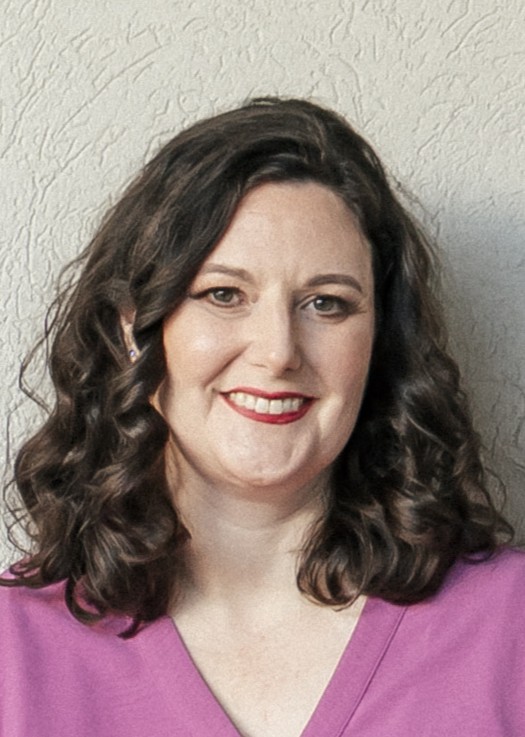
Rachel McBryan, Dietitian
Rachel McBryan is a licenced Dietitian in British Columbia offering comprehensive nutrition counselling as virtual and/or in-person counselling sessions to suit your needs and preferences. With a Bachelor of Science in Nutrition and Food Science, Rachel has over 20 years experience helping people address their health through nutrition. She was awarded Human Nutrition and Food Science BSc.from University of Alberta followed by post-grad course work at UBC in guidance counselling.
An eating disorder is a serious mental health illness.
If you are in immediate distress or crisis, please contact emergency services by dialing 911 or calling Vancouver Island Crisis Line: 1-888-494-3888.