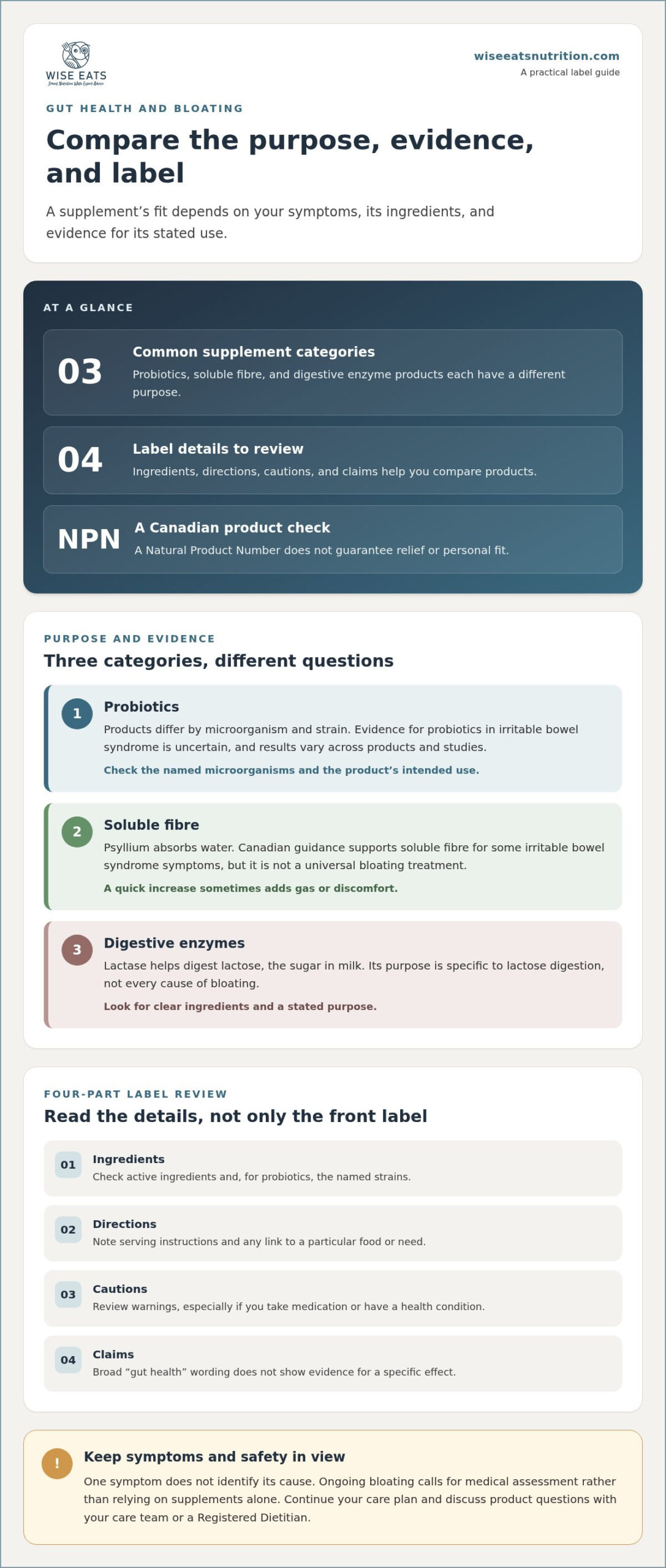
A gut-health label doesn’t tell you whether a supplement suits your bloating. The best supplements for gut health and bloating depend on your symptoms, the ingredients, and the evidence for the product’s intended use. Similar labels often look alike, and broad claims don’t show whether research applies to your symptoms.
Probiotics, fibre supplements, and digestive enzymes are common categories, but evidence differs by ingredient, probiotic strain, and symptom. In Canada, look for a Natural Product Number (NPN) and compare the product’s stated use with your needs. An NPN doesn’t guarantee relief for every person.
This article compares common supplement types, explains evidence limits, and shares practical label and safety checks. You’ll also learn how a Registered Dietitian reviews your symptoms, food patterns, supplements, and medications as part of digestive health nutrition support. Wise Eats Registered Dietitians support clients across Alberta and British Columbia, including Calgary, Edmonton, Nanaimo, Parksville, Qualicum Beach, and other Vancouver Island communities.
Key Takeaways
- The best supplements for gut health and bloating depend on the symptom and product, since evidence varies by ingredient and intended use.
- Compare probiotics, soluble fibre, lactase, and digestive enzyme products by their purpose, evidence, label details, and cautions.
- Look for a Natural Product Number and review the ingredient list, directions, and medication cautions before choosing a supplement.
- Ongoing bloating or certain warning signs call for medical assessment rather than relying on supplements alone.
- A supplement review with a Registered Dietitian connects your goals, food patterns, current products, and safety questions.
Best supplements for gut health and bloating: what a supplement can and cannot address
Bloating often feels like pressure, fullness, or tightness in your abdomen. Some people also notice visible swelling, such as a change in abdominal size. These experiences sometimes occur together, but they aren’t the same. A supplement aimed at one pattern might not suit another.
Food patterns, bowel habits, daily routines, medications, and personal health context all matter when considering a supplement. One symptom alone doesn’t identify its cause. Feeling full after meals, for example, doesn’t automatically point to a probiotic, fibre product, or digestive enzyme. Evidence also varies by ingredient, group studied, and digestive concern. Research on one concern might not apply to general bloating.
The best supplements for gut health and bloating aren’t a universal shortlist. Supplements address specific needs, and some cause side effects or interact with medications. They don’t replace assessment for ongoing symptoms or care already prescribed by your health professional. Continue following your care plan and discuss supplement questions with your care team.
Why one supplement does not suit every bloating pattern
Notice when discomfort occurs and whether meals or bowel habits seem related. These observations don’t diagnose a cause, but they give a health professional useful context. Avoid starting several new products at once. It becomes harder to tell which one affects your symptoms. Evidence is most useful when it matches the ingredient, intended use, and concern being addressed.
What a supplement label tells you in Canada
Health Canada regulates natural health products, including many supplements sold in Canada. Look for a Natural Product Number (NPN), then review the full ingredient list, serving directions, and cautions. Pay attention to the dose per serving and warnings about health conditions, age, pregnancy, or medication use. Bring the label to a Registered Dietitian or pharmacist if a direction or ingredient is unclear.
An NPN is a useful Canadian label check, but it doesn’t show whether a product suits your symptoms or personal health needs. Compare the product’s stated purpose with the concern you want to address. Broad “gut health” wording alone doesn’t show evidence for a specific effect.
For basic background on probiotic organisms, see What are probiotics? Health Canada requires probiotic labels to identify the microorganism’s genus, species, and strain. Calgary residents seeking support with supplement choices as part of digestive health nutrition can explore Calgary dietitian support.
Which gut-health supplement categories have evidence for bloating?
Different supplement categories address different digestive questions. A product designed to help digest lactose has a narrower purpose than a probiotic marketed for general gut health. Evidence varies by ingredient, the people studied, and the symptom measured. No single category suits everyone with bloating.
Probiotics: strain and intended use matter
Probiotic products contain live microorganisms, but formulas differ by genus, species, strain, and combination. Health Canada requires probiotic labels to identify the microorganism, and authorized claims apply to specific products and uses. The Canadian Association of Gastroenterology describes evidence for probiotics in irritable bowel syndrome as uncertain, with results varying across products and studies. A general probiotic claim doesn’t establish symptom relief.
Probiotic evidence depends on the specific strain and intended use, so findings for one formula don’t automatically apply to another. Check whether a product names its microorganisms and clearly states its intended use. A broad “gut support” promise might not tell you whether researchers studied the product for bloating.
Fibre and enzyme products: match the category to the question
Soluble fibre supplements, such as psyllium, add fibre that absorbs water. Canadian guidance for irritable bowel syndrome supports soluble fibre for some symptoms, though it isn’t a universal bloating treatment. Increasing fibre quickly sometimes adds gas or discomfort. Review the directions and discuss a gradual change with your care team if you’re unsure how it fits your needs.
Lactase is an enzyme used to help digest lactose, the sugar in milk. Its purpose relates to lactose digestion, not bloating from every cause. Other digestive enzyme products might target a particular food component or digestive need. Broad claims about “complete digestion” don’t show an enzyme blend addresses your symptoms. Look for clear ingredient details and a stated purpose.
How to compare product directions and claims
Read the label from front to back before choosing a product. A Natural Product Number (NPN) is one Canadian product check, but it doesn’t mean the product suits every person or symptom. Use this quick review:
- Ingredients: Check the active ingredients and, for probiotics, the named strains.
- Directions: Note the serving instructions and any link to a specific food or need.
- Cautions: Review warnings, especially if you take medication or have a health condition.
- Claims: Be cautious if a product promises broad results without naming ingredients or intended use.
If comparing labels feels confusing, a supplement review with a Registered Dietitian offers space to discuss the product alongside your symptoms, eating patterns, and current medications. Bring your questions to the appointment and continue following existing medical advice.
How to compare bloating supplements for evidence, fit, and safety
A product’s marketing claims don’t tell you whether its evidence matches your concern. Compare the intended use, active ingredients, and cautions. The best supplements for gut health and bloating are a personal fit, not a ranking based on broad wellness promises.
| Category | Intended use | Evidence status for bloating | Label checks | Cautions |
|---|---|---|---|---|
| Probiotics | Specific live microorganisms for a stated gut-health purpose | Mixed and strain-specific | Look for genus, species, strain, and stated use | Evidence for one strain doesn’t establish benefit from another |
| Soluble fibre | Adding soluble fibre to support bowel habits | Condition-specific | Check fibre type, serving directions, and ingredient list | Increasing intake can affect gas or comfort |
| Lactase | Helping digest lactose in foods | Specific to lactose digestion | Confirm lactase is the active ingredient and read directions | Its intended use doesn’t address every cause of bloating |
| Digestive enzyme blends | Breaking down particular food components | Depends on the enzyme and intended use, broad claims remain uncertain | Check each enzyme and the product’s stated purpose | Vague blends make it hard to assess fit and safety |
Use a simple evidence and fit checklist
Start with the specific purpose on the label. Then ask whether the evidence applies to the same ingredient, formulation, and digestive concern. Compare the active ingredients and serving directions, not words such as “complete,” “advanced,” or “total gut support.” A Natural Product Number is a useful Canadian product check, but it doesn’t show whether a supplement suits your symptoms or health needs.
Review safety, medications, and overlapping ingredients
Bring your medication and supplement list to your care team before adding a product. The Cytochrome P450 system is a group of liver enzymes that metabolise many drugs and supplements, influencing their effectiveness and safety. Some products affect these enzymes or interact with medicines in other ways. Compare labels for duplicate ingredients, such as a nutrient listed in both a multivitamin and a single-nutrient supplement. Don’t stop or change prescribed medication without guidance from the prescriber.
Before adding a supplement, ask your care team to review possible interactions with your medications and current products.
Keep a clear record of what you try
Write down the product name, ingredient list, start date, directions, and any changes you notice. Include changes in bloating, bowel habits, or side effects. A clear record helps your care team review the product and discuss next steps. Don’t set your own dose or assume one trial length suits everyone. Contact your care team if you notice a concerning change.
A Registered Dietitian reviews labels and your current routine as part of digestive health nutrition support. You can book a supplement review with a Registered Dietitian to discuss product fit alongside your eating patterns and health context.
When to seek help for bloating instead of relying on supplements
Ongoing or recurring bloating deserves attention, especially if it affects eating, daily activities, or your comfort. Supplements aren’t a substitute for an assessment. A healthcare professional reviews your symptoms, decides whether further assessment is needed, and coordinates care within their role. You don’t need to work out the cause on your own before asking for help.
When to Seek Help
Contact a healthcare professional if you notice any of these symptoms. They don’t point to one cause on their own, but they need medical attention:
- Blood in your stool
- Persistent vomiting
- Severe or worsening abdominal pain
If you’re unsure how soon to seek care, describe what’s happening to your healthcare professional and follow their guidance. Don’t use a supplement to delay assessment of these symptoms, and don’t stop or change prescribed medication without speaking with the prescriber.
What to bring to a nutrition appointment
A little preparation makes the discussion more useful. Bring a current list of medications and supplements, or take clear photos of the labels. Include the product name, ingredients, serving directions, and any cautions. This gives your care team a practical view of what you take, including ingredients listed in more than one product.
You might also note when bloating tends to occur, how long it lasts, and any changes in bowel habits. Add details about meal timing, foods, hydration, sleep, or daily routines if you’ve noticed a pattern. These notes aren’t a diagnosis. They help you describe your experience and give the healthcare professional more context.
A Registered Dietitian offers nutrition support, reviews eating patterns and supplement choices, and works within their scope. They don’t diagnose medical conditions. If your symptoms need medical assessment, a dietitian can encourage you to discuss them with your healthcare professional and coordinate nutrition care as appropriate. The best supplements for gut health and bloating depend on your needs, so reviewing your current products and health context is more useful than choosing by broad claims alone.
It’s reasonable to seek support even if you’re unsure whether a supplement is relevant. Bring your questions and the products you’re considering. Your care team can help you decide what fits alongside any assessment or care already in place.
How Wise Eats Registered Dietitians support supplement decisions
Similar labels and broad claims make it hard to decide whether a supplement fits your needs. A Wise Eats supplement review gives you space to discuss your goals, current products, eating patterns, and safety questions. The focus stays on your situation rather than a universal product list. The best supplements for gut health and bloating depend on why you’re considering a product and how it fits your nutrition and health needs.
What a personalized supplement review covers
A Registered Dietitian reviews why you’re considering a supplement, what its label says, and how it fits with your usual meals and snacks. Bring product details, your medication list, and questions about ingredients or directions. The dietitian considers relevant nutrition needs and safety information, and helps you prepare questions for your care team. This review supports nutrition planning, it doesn’t diagnose a medical condition.
Wise Eats offers individualized supplement reviews alongside digestive health nutrition support. Together, these discussions put product choices in context. For example, the dietitian considers whether a product’s ingredients match your stated goal, whether your current routine already includes similar nutrients, and what safety questions to raise with your care team.
Dietitian support in Alberta and British Columbia
Wise Eats supports residents across Alberta and British Columbia, including Calgary, Edmonton, Nanaimo, Parksville, Qualicum Beach, and other Vancouver Island communities. Sessions are available online, in person, and through home visits. Rachel McBryan, RD, College of Health and Care Professionals of BC, and Sheirry Poposka, RD, Alberta College of Registered Dietitians, provide nutrition support in their respective provinces.
For Calgary residents, Calgary dietitian support offers a local option for discussing digestive health and supplement questions. In Edmonton or on Vancouver Island, online sessions offer another way to discuss your nutrition goals and current products. A Registered Dietitian helps organize your questions and review how supplement choices fit your eating patterns and care plan. They don’t replace medical assessment or your prescriber’s advice.
Book a dietitian appointment
Speaking with a registered dietitian can help you develop a balanced, flexible approach to eating and meet your nutritional needs.
Choose your next step with care
You deserve supplement information that respects your symptoms, preferences, and health needs. The best supplements for gut health and bloating aren’t defined by the boldest label or the longest ingredient list. Take time to make a thoughtful choice, and seek support if ongoing symptoms or safety questions make the decision feel uncertain.
You don’t need to solve every nutrition question at once. Start with the concern you most want to address, then talk it through with a Registered Dietitian and your care team. A practical discussion helps you decide what belongs in your routine and what questions need another health professional’s input.
Wise Eats offers personalized vitamin and mineral supplement recommendations as part of nutrition support. A conversation gives you space to consider your options without pressure to follow a one-size-fits-all list.
Take the next step at a pace that feels right for you. For personal guidance, book a consultation with Wise Eats Registered Dietitians.
Frequently Asked Questions
Do probiotics help with bloating?
Probiotics don’t ease bloating for everyone. Research findings depend on the strain and digestive concern, so evidence for general bloating remains mixed. A probiotic studied for one specific condition doesn’t automatically suit a different symptom pattern. If you’re considering a product, note its stated purpose and track any changes alongside factors such as bowel habits or meal timing. Ongoing symptoms are a reason to speak with a healthcare professional rather than cycling through formulas.
Can fibre supplements make bloating worse?
Yes. Adding fibre, especially quickly, can increase gas or abdominal discomfort for some people. The type of fibre and your usual food pattern both matter. Check the product directions and discuss a change with your care team if you have ongoing symptoms or a health condition. A short record of fibre sources, bowel habits, and discomfort helps a Registered Dietitian or healthcare professional discuss an approach with you.
Is a Natural Product Number a guarantee that a supplement will work?
No. A Natural Product Number shows Health Canada has assessed a natural health product’s safety, quality, and health claims. It doesn’t promise a benefit for every person or symptom. Before buying, check whether the approved product purpose matches your concern, then review the label’s ingredients and cautions. If the claim sounds broader than the listed use, a pharmacist or Registered Dietitian can help interpret the information.
How do I compare probiotic supplements in Canada?
Compare the named microorganism, stated purpose, directions, and cautions. A useful label identifies the probiotic by genus, species, and strain, since findings for one strain don’t establish the same effect for another. Look for a Natural Product Number and follow the product’s storage instructions. For example, a formula labelled for general gut health isn’t automatically a match for bloating. Focus on clear details, not the number of strains or bold front-label claims.
Should I take a digestive enzyme supplement with every meal?
No single schedule suits every enzyme product. Lactase, for example, relates to digesting lactose in foods, so its directions differ from products intended for other purposes. Read the specific label and don’t assume a broad enzyme blend belongs with every meal. If you’re unsure whether an enzyme fits your needs, bring the product details to your care team.
Is it safe to combine gut-health supplements with medication?
Safety depends on the specific supplement, medication, and your health context. Before combining products, share a complete list with your pharmacist or prescriber, including vitamins, minerals, probiotics, and non-prescription products. Include the serving directions and how often you take each one. This review helps identify possible interactions or overlapping ingredients. Don’t stop or adjust prescribed medication on your own. Follow the prescriber’s guidance if you have concerns.
Do I need a Registered Dietitian to review supplements for bloating?
No, a review isn’t required, but a Registered Dietitian offers nutrition support if comparing labels or connecting products with eating patterns feels difficult. They discuss your goals and supplement questions without diagnosing a medical condition. Wise Eats supports clients in Calgary, Edmonton, Nanaimo, Parksville, Qualicum Beach, and other Vancouver Island communities. A review also helps you organize questions for your care team.

Article by
Rachel McBryan, Dietitian
Rachel McBryan is a licenced Dietitian in British Columbia offering comprehensive nutrition counselling as virtual and/or in-person counselling sessions to suit your needs and preferences. With a Bachelor of Science in Nutrition and Food Science, Rachel has over 20 years experience helping people address their health through nutrition. She was awarded Human Nutrition and Food Science BSc.from University of Alberta followed by post-grad course work at UBC in guidance counselling.
An eating disorder is a serious mental health illness.
If you are in immediate distress or crisis, please contact emergency services by dialing 911 or calling Vancouver Island Crisis Line: 1-888-494-3888.