
Psyllium is often a practical option to discuss for occasional constipation. Its ability to hold moisture and add bulk to stool makes it a useful starting point when comparing fibre supplements. For readers in Calgary and Edmonton, the same questions about symptoms, food habits and supplement labels help guide a conversation with a healthcare provider.
Sorting through supplement labels feels confusing, especially when different fibre types affect digestion in different ways. Looking beyond the front of the package helps you consider how each option fits your symptoms, eating habits and health needs.
This guide compares soluble and insoluble fibre, including psyllium, inulin, partially hydrolyzed guar gum (PHGG) and methylcellulose, to help you assess the best fiber supplement for constipation. It also covers practical label checks and what to discuss with a healthcare provider. No single product suits everyone, so use this information to prepare for a conversation about your symptoms and needs.
Key Takeaways
- Learn how soluble and insoluble fibre affect stool and bowel habits, so you can compare supplement types more clearly.
- See how psyllium, inulin, PHGG and methylcellulose differ, including which features matter when choosing an option.
- Review the evidence on fibre supplements for constipation and what it suggests about use over time.
- Find practical steps for adding a supplement gradually and reducing the chance of gas or bloating.
- Prepare to discuss your symptoms, medicines and health conditions with a healthcare provider, with personalized supplement guidance from Wise Eats Registered Dietitians as an option.
1. What’s the difference between soluble and insoluble fiber?
Soluble fibre dissolves in water, and some forms create a gel in the digestive tract. Insoluble fibre does not dissolve and adds bulk to stool. These terms describe how fibre behaves, not the value of a food or supplement. A meal with blackberries, cooked sweet potato and a grain-based side, for example, contains a mix of plant fibres.
Beans, fruit and some vegetables provide soluble fibre. A cup of cooked blackberries contains 7.6 grams of fibre, and a cup of cooked white lima beans contains 13.2 grams. The total fibre number doesn’t show how much is soluble. Still, these foods offer practical ways to add fibre through meals and snacks, alongside the rest of their nutrients.
Insoluble fibre occurs in foods such as whole grains and many vegetables. A cup of cooked sweet potato contains 6.3 grams of fibre. The amount listed is total fibre, rather than an insoluble-only figure. A food’s texture or appearance also doesn’t give a reliable measure of its fibre type, so use the ingredient list and nutrition facts table for packaged foods.
Canadian nutrition labels generally show total fibre per serving. To compare products, check the serving sizes first, then compare the fibre amounts. Ingredients such as oat bran, chicory root or psyllium identify fibre sources, but the label may not separate soluble from insoluble fibre. A higher amount per serving still needs to fit your preferences and usual intake.
For a food-based example, a quarter cup of dried prunes contains about 3 grams of fibre. Try adding them to cereal or a snack, then notice how the change fits your routine. Choose a portion that feels comfortable. If you add several fibre-rich foods at once, the sudden increase might bring gas or stomach discomfort.
Soluble and insoluble fibre both contribute to overall intake, but their effects differ. A food-first approach offers a mix of fibre sources, while a supplement provides the type named on its label. Keep this distinction in mind as you compare ingredients. Your food choices, bowel pattern and tolerance can help guide which source to discuss with your care team.
Soluble fibre can help manage both diarrhea and constipation, so it is not just an option for one bowel pattern. If you are considering a change, think about the fibre source, how much you already eat and how your body responds. The total fibre amount on a label does not show whether a product will suit your routine, and labels may not identify the soluble amount. Changing your intake gradually can make it easier to notice how a choice affects you, rather than changing several things at once. If bowel symptoms persist or you are unsure whether a supplement is appropriate, discuss it with your care team. The aim is to find sources and portions that fit your preferences and tolerance, not to treat one fibre type as best for everyone.
2. Comparing psyllium, inulin, PHGG, and methylcellulose
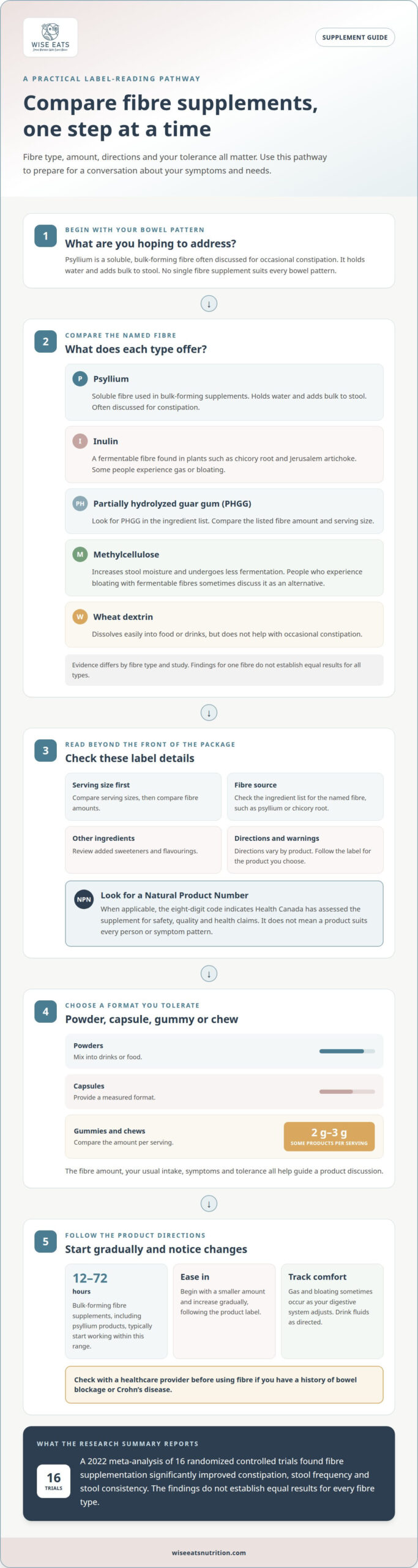
Psyllium is a soluble fibre commonly used in bulk-forming supplements. It holds water and adds bulk to stool, so it is often discussed for constipation. Inulin is a fermentable fibre found in plants such as chicory root and Jerusalem artichoke. Some people experience gas or bloating with inulin. The right option depends on your symptoms, tolerance and the product directions.
Partially hydrolyzed guar gum, or PHGG, is another fibre supplement ingredient. Its name appears on some labels, but compare the listed fibre amount and serving size before considering it. Evidence on fibre supplements differs by fibre type and study. A 2022 meta-analysis found an overall benefit from supplementation for constipation, but this doesn’t establish equal results for psyllium, inulin, PHGG and methylcellulose.
Methylcellulose increases stool moisture and undergoes less fermentation. People who experience bloating with fermentable fibres sometimes discuss it as an alternative. Product directions vary, so follow the label rather than applying instructions for psyllium. If you have a sensitive stomach, note any symptom changes after starting a new fibre product.
Wheat dextrin dissolves easily into food or drinks, but it does not help with occasional constipation. The fibre source and amount per serving both matter. Compare serving sizes, fibre amounts and added ingredients, such as sweeteners or flavourings. In Calgary and Edmonton, use the same label checks for products bought at a pharmacy or online.
Canadian supplement labels also display a Natural Product Number when applicable. This eight-digit code indicates that Health Canada has assessed the supplement for safety, quality and health claims. Check the ingredient list for the named fibre source, then read the directions and warnings. A Natural Product Number does not mean a product suits every person or symptom pattern.
Powders, capsules, gummies and chews offer different ways to take fibre. Some gummies and chews provide only 2 g to 3 g per serving, so compare the amount with your intake needs. Powders mix into drinks or food, while capsules provide a measured format. Choose a form you’ll take as directed and tolerate comfortably.
Bulk-forming fibre supplements, including psyllium products, typically start working within 12 to 72 hours. Gas and bloating sometimes occur as your digestive system adjusts. Start with a smaller amount and increase gradually, following the product label. Drink fluids as directed, and seek medical advice before using fibre if you have a history of bowel blockage or Crohn’s disease.
3. Fiber Supplements: Which Type Is Best?
No single fibre supplement suits every bowel pattern. Psyllium has useful evidence for constipation, but your current fibre intake, symptoms and tolerance also matter. A supplement adds to the fibre in your diet; it does not replace the variety of nutrients in fruits, vegetables, whole grains, beans and other legumes.
A 2022 meta-analysis of 16 randomized controlled trials found that fibre supplementation significantly improved constipation, according to The authors of the 2022 meta-analysis. They also found improved stool frequency and consistency, especially with fibre doses over 10 g/day taken for at least 4 weeks. This finding describes study results, not a required dose for every person.
Daily fibre recommendations depend on age and sex, so one adult target does not apply to everyone. Count fibre from foods and supplements together. For example, fruit at breakfast, beans in a meal and a labelled fibre supplement all contribute to daily intake. Check the amount of fibre per serving before adding a supplement to your routine.
Food-first choices offer variety along with fibre. Add berries to cereal, choose whole-grain bread or include beans in soup. These are practical ways to increase dietary fibre without relying on one product. A supplement may help fill an intake gap, but it does not provide all the vitamins, minerals and other nutrients found in fibre-rich foods.
Increase fibre gradually to give your digestive system time to adjust. Start with a smaller amount than the label’s full serving, then increase by about 2 g to 3 g every few days. If cramps or gas develop, pause the increase and drink more fluids. Follow the product label and do not exceed its stated amount.
Some gummies and chews contain only 2 g to 3 g per serving. Compare that amount with powders or capsules, then consider how easily each form fits your meals and routine. A larger serving does not automatically suit you better. Fibre supplements also differ in source and effect, so note any bloating or change in bowel frequency as you assess tolerance.
For a practical starting point, review your usual meals alongside the supplement label. If constipation persists, symptoms change or you have a medical condition affecting digestion, discuss next steps with your healthcare provider. A fibre plan should account for your food intake, symptoms and individual needs.
4. Psyllium for constipation and bowel regularity
Psyllium is a soluble, viscous fibre used in some bulk-forming supplements. When psyllium husk meets water, it forms a gel that holds moisture, softens stool and adds bulk. This can help move stool through the digestive tract, making psyllium a common option to discuss for occasional constipation and bowel regularity.
Powdered psyllium is typically mixed with water and consumed after mixing. Some people add it to food, following the product label. Psyllium absorbs water, so take it with adequate fluids. Follow the labelled serving directions and do not exceed the stated amount. If you take medicines, discuss timing with a healthcare provider, since fibre supplements can affect how some medicines are absorbed.
Bulk-forming fibre supplements, including psyllium products, typically start working within 12 to 72 hours. The timing varies with the product and your bowel pattern. Keep track of changes in stool texture, straining and bowel movements. Frequency alone does not describe the full picture. Regular bowel movement frequency ranges from three times per day to three times per week, so changes from your usual pattern also matter.
Starting with a smaller amount and increasing gradually can help limit gas or cramping. If you add psyllium to a meal, keep your fluid intake steady. A sudden increase in fibre can cause discomfort, especially if your usual meals contain little fibre. Give your body time to adjust before increasing the amount again, and use the label directions as your guide.
Psyllium is not suitable in every situation. If you have a history of bowel blockage, seek advice from a healthcare provider before using a fibre supplement. Ongoing or chronic constipation, or a new change in bowel habits, also warrants a conversation with your care team. They can consider your symptoms, medicines and health history when discussing options.
For bowel regularity, psyllium works best as part of a routine that includes fibre-containing foods and adequate fluids. For example, pair a supplement with oats, lentils or fruit rather than relying on the powder alone. These foods provide dietary fibre and other nutrients. Note when you take psyllium and how your bowel movements change. If constipation continues or symptoms change, bring the product label and your notes to a healthcare visit.
People with hard stool, straining, incomplete emptying, constipation linked with hemorrhoids or fissures, or IBS with constipation may find psyllium useful. For hard stool and difficult passage during pregnancy or postpartum, plain psyllium husk is suggested.
Insoluble fibre can help relieve constipation by making bowel movements softer, bulkier and more regular. Soluble viscous fibres can help occasional constipation by increasing stool water content and adding bulk that helps move stool through the digestive tract. Psyllium forms a hydrating gel and adds bulk to stool. People with constipation should mix psyllium husk with water and drink it, or add it to food.
5. Choosing a supplement with a healthcare provider
A healthcare provider can consider your symptoms alongside your medicines, health conditions and usual meals. Before your appointment, note when constipation began, how often you have bowel movements, and whether stool feels hard or difficult to pass. Bring the supplement label or write down its fibre source, serving size and added ingredients. These details make the conversation more specific.
Mix powdered fibre with the amount of fluid stated on its label, and drink it promptly. Capsules and gummies have different directions, so follow their product instructions rather than applying powder directions to every form. Maintain regular fluid intake during the day. If a provider has asked you to limit fluids, discuss the supplement before adding it.
Share a medication list, including prescription and over-the-counter products. Fibre supplements may affect how some medicines are absorbed, so ask about spacing doses. If you have diabetes, discuss fibre supplements with your care team, since changes in fibre use may affect blood sugar management or medicine needs. Do not change insulin or other medication doses without guidance.
If you have a history of bowel blockage or Crohn’s disease, talk with your healthcare team before using a fibre supplement. Medical advice also matters if you have a known digestive condition or take medicines that affect bowel habits. Your provider can consider your symptoms, current fibre intake and tolerance, then discuss whether psyllium, methylcellulose or another option fits.
Seek medical care for constipation that persists or worsens, or comes with a new change in bowel habits. A fibre supplement is not a substitute for assessment when symptoms point to another health concern. Tell your provider about the pattern, duration and any other symptoms. This information can help them decide whether adding fibre is suitable or whether assessment should come first.
Your usual meals also help shape a plan. Describe how often you eat vegetables, whole grains, fruits and legumes, along with your fluid intake. For example, a provider might consider fibre from breakfast oats and lunch beans before discussing a supplement. The aim is a manageable approach that fits your routine and symptoms, not a one-size-fits-all product.
Before starting, agree on the product, label directions and what changes to track, such as stool consistency or bowel movement frequency. If gas or cramping begins after increasing fibre, note when it started and discuss what to do next. A clear plan makes it easier to assess tolerance and decide whether the supplement remains appropriate.
Wise Eats Registered Dietitians: Personalized Vitamin and Mineral Supplements
Wise Eats Registered Dietitians provide Personalized Vitamin and Mineral Supplements and Digestive Health Nutrition. If you are unsure how a fibre product fits your symptoms, medicines or current supplement routine, a Registered Dietitian can help review the details and prepare questions for your healthcare provider.
Support may also include reviewing everyday fibre sources, such as whole grains, vegetables and legumes, alongside your preferences and digestive needs. This keeps the discussion focused on overall nutrition, rather than one product alone. Personalized vitamin and mineral supplement recommendations address nutrient needs, while fibre choices remain part of the broader digestive health conversation.
If you’d like support with your supplement questions or digestive health, contact Wise Eats Registered Dietitians.
Choose a next step that fits your needs
Finding the best fibre supplement for constipation starts with choosing an option that fits your routine and discussing it with your care team. If constipation affects your meals or daily activities, include your broader nutrition needs in the conversation. Food preferences, current supplements and digestive symptoms all help shape a practical plan.
Wise Eats Registered Dietitians offer Custom Meal Planning, Personalized Vitamin and Mineral Supplements, and Weight Management. A Registered Dietitian can help connect nutrition choices with your health priorities without relying on rigid food rules. Before your appointment, consider writing down the main concern you want to discuss. You do not need to have every answer ready.
Supportive nutrition care starts with what matters most to you. Take the next step at a pace that feels manageable.
A thoughtful conversation can help you choose an approach that fits your needs.
Frequently Asked Questions
Which fibre supplement type is best for constipation?
Psyllium is a common option to discuss for constipation, though the right choice depends on your symptoms and tolerance. Methylcellulose ferments less, while inulin may cause gas for some people. PHGG is another soluble fibre option. When comparing products, note the fibre source and serving instructions, then track changes in stool and comfort after starting.
What does fibre do for the body?
Fibre supports bowel function by adding bulk to stool and affecting its moisture. Some types also form a gel in the digestive tract. Foods such as oats, lentils, pears and vegetables provide fibre alongside other nutrients. When reviewing your usual intake, note which meals include these foods and whether your bowel pattern changes as you add them.
What’s the difference between soluble and insoluble fibre?
Soluble fibre dissolves in water, and some forms create a gel. Insoluble fibre does not dissolve and adds bulk. Oats and lentils provide soluble fibre, while wheat bran and many vegetables contain insoluble fibre. Nutrition labels usually list total fibre rather than separate amounts, so the ingredient list can offer clues about fibre sources in packaged foods.
What dose of psyllium or other fibre supplements is recommended for adults with constipation, and how should the dose be increased?
There isn’t one dose for every adult. Follow the product label and discuss a suitable amount with your healthcare provider, especially if you take medicine or have a digestive condition. Start with a smaller amount, then increase by about 2 g to 3 g every few days if tolerated. Mix powders as directed, drink enough fluid, and don’t exceed the label’s dose.

Article by
Rachel McBryan, Dietitian
Rachel McBryan is a licenced Dietitian in British Columbia offering comprehensive nutrition counselling as virtual and/or in-person counselling sessions to suit your needs and preferences. With a Bachelor of Science in Nutrition and Food Science, Rachel has over 20 years experience helping people address their health through nutrition. She was awarded Human Nutrition and Food Science BSc.from University of Alberta followed by post-grad course work at UBC in guidance counselling.
An eating disorder is a serious mental health illness.
If you are in immediate distress or crisis, please contact emergency services by dialing 911 or calling Vancouver Island Crisis Line: 1-888-494-3888.