At least 25% of adults in Canada are affected by metabolic dysfunction-associated steatotic liver disease (MASLD), formerly called non-alcoholic fatty liver disease. Fatty liver in your 50s means excess fat has built up in liver cells for reasons unrelated to alcohol. Some fat in the liver is normal, and the condition often has no symptoms.
A test result or diagnosis can raise questions about what comes next. You deserve clear information without blame or rigid food rules. Symptoms and test results can be part of a conversation about liver health with your care team.
If you live in Calgary, Edmonton, Nanaimo, Parksville, Qualicum Beach, or elsewhere on Vancouver Island, this guide offers a starting point for those conversations. It explains how fatty liver relates to conditions such as type 2 diabetes, high cholesterol, and heart disease.
You’ll also learn which symptoms and tests matter, and how everyday food and activity habits fit into care. A Registered Dietitian can help translate general nutrition guidance into meal choices that suit your preferences, health needs, and routine.
Key Takeaways
- MASLD, formerly called non-alcoholic fatty liver disease, involves extra fat in liver cells. Risk factors include type 2 diabetes, high blood pressure and high blood triglycerides.
- Fatty liver disease often has no symptoms. Learn which signs to discuss with your health care team and how blood tests and imaging help assess liver health.
- Build supportive eating and activity habits around your health needs and routine, rather than relying on rigid food rules.
- For people with fatty liver disease who already have inflammation and scarring, losing 10% of body weight has been shown to improve scarring, according to the Canadian Association for the Study of the Liver.
- A Registered Dietitian can help tailor meal planning and supplement recommendations to your preferences, health needs and daily life.
What is Non-Alcoholic Fatty Liver Disease?
Metabolic dysfunction-associated steatotic liver disease (MASLD), formerly called non-alcoholic fatty liver disease (NAFLD), involves extra fat in liver cells unrelated to alcohol. Some liver fat is normal. Fatty liver disease is generally diagnosed when fat makes up more than 5% of the liver’s weight.
At least 25% of adults in Canada live with MASLD. The amount of liver fat alone doesn’t show whether inflammation or scarring is present.
Metabolic Risk Factors
Metabolic risk factors are health conditions and body changes linked with how the body manages blood sugar and fats. They matter because several risks often occur together, including higher body weight, type 2 diabetes, high blood pressure, high cholesterol, and high blood triglycerides.
Metabolic syndrome includes high triglycerides, high blood sugar, prediabetes or type 2 diabetes, and high blood pressure. Excess fat around the abdomen is another associated factor. One measure alone doesn’t describe a person’s overall health picture.
Age Over 50 as a Risk Factor
Being over 50 is associated with a greater likelihood of MASH, the form of fatty liver disease involving liver inflammation. MASH was formerly called non-alcoholic steatohepatitis (NASH).
Age is one part of risk, not a diagnosis. Diabetes or high blood sugar, higher body weight, and signs of metabolic syndrome are also associated with MASH. Testing helps distinguish liver fat from inflammation or scarring.
MASLD describes excess liver fat. MASH involves inflammation and liver damage. Alcohol-related liver disease has a different cause. Alcoholic steatohepatitis describes alcohol-related liver inflammation, so these terms refer to distinct conditions.
Other conditions associated with MASLD risk include polycystic ovary syndrome (PCOS), obstructive sleep apnea, hypothyroidism, hypopituitarism, and growth hormone deficiency. Certain genetic risk factors are associated with a greater likelihood of MASH. These factors don’t establish a diagnosis, but they help explain why risk varies between people.
Reproductive hormones also relate to risk across adulthood. Before age 50, steatotic liver disease is more common in men than women. In women, it becomes more common after age 50. A decline in oestradiol during menopause is associated with increased risk of type 2 diabetes, abdominal fat accumulation, and steatotic liver disease.
Starting menstruation before age 12 is linked with risk factors for steatotic liver disease, including insulin resistance and PCOS. This association doesn’t confirm a diagnosis. If you have a history of early menstruation and PCOS or diabetes, mention these details during a health assessment.
Book an appointment with a member of your health care team if persistent symptoms concern you. Discuss a referral to a liver specialist if your assessment raises concern about MASH or liver damage. Share relevant conditions, such as diabetes, PCOS, or high blood pressure.
MASH symptoms and cirrhosis warning signs
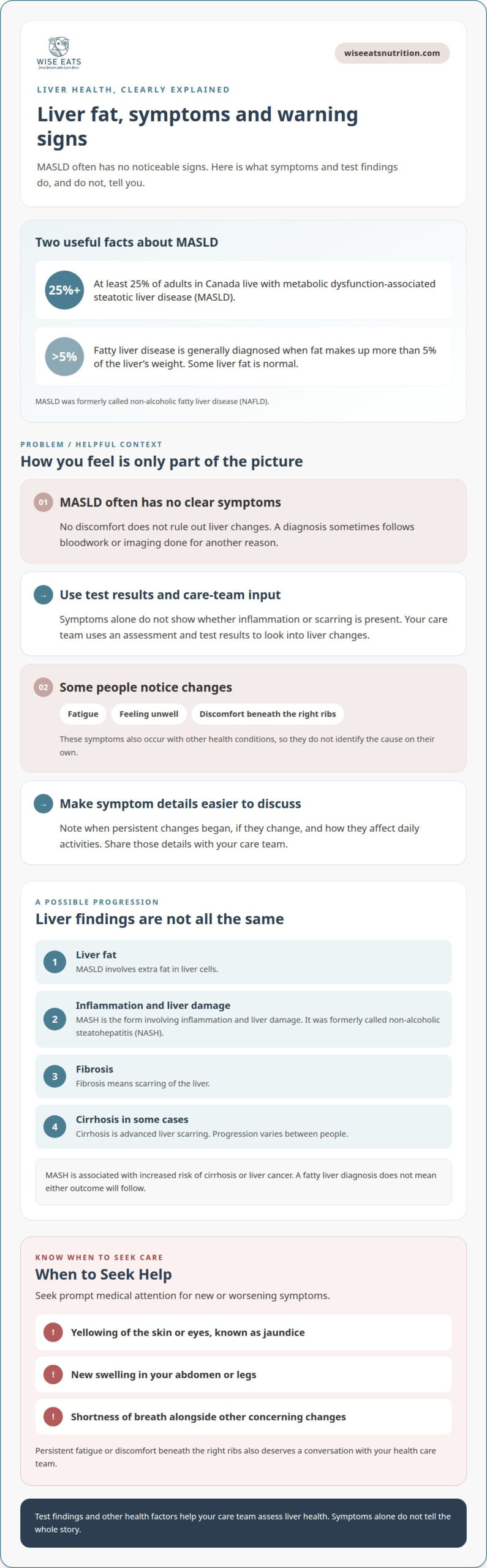
MASLD often has no noticeable signs, so how you feel can’t reveal liver changes by itself. MASH and cirrhosis involve different findings and risks.
Fatty Liver Symptoms
Fatty liver disease often causes no clear symptoms in its earlier stages. Some people report fatigue, feeling unwell, or discomfort beneath the right ribs. These symptoms can also occur with other health conditions, so they don’t identify the cause on their own.
A diagnosis sometimes follows bloodwork or imaging done for another reason. For example, routine tests might prompt a closer look at liver health, even when a person feels well. No discomfort doesn’t rule out changes, and symptoms alone can’t show whether inflammation or scarring is present.
Early Symptoms and Detection
Early detection means identifying liver fat or injury before advanced signs develop. MASLD often has no early warning symptoms, so ongoing health conditions and test results matter in an assessment.
Keep a brief record of persistent changes, including when fatigue or upper-right abdominal discomfort began. Share the details with your care team, especially if symptoms change or interfere with daily activities. An examination and test results help assess possible liver changes more clearly than symptoms alone.
Stages and Health Risks
Fatty liver disease ranges from fat buildup to MASH, liver scarring, and, in some cases, cirrhosis. MASH, formerly called non-alcoholic steatohepatitis, involves inflammation and liver damage. Fibrosis means scarring; advanced fibrosis is cirrhosis, a major complication associated with MASLD and MASH.
Progression varies between people. MASH is associated with increased risk of cirrhosis or liver cancer, but a fatty liver diagnosis doesn’t mean either outcome will follow. In your 50s, test findings and other health factors help your care team assess risk.
When to Seek Help
Seek prompt medical attention for new or worsening symptoms. Three warning signs deserve particular attention:
- Yellowing of the skin or eyes, known as jaundice
- New abdominal swelling or swelling in the legs
- Shortness of breath alongside other concerning changes
Persistent fatigue or upper-right abdominal discomfort also deserves discussion with your health care team. Note when symptoms began and how they affect daily activities. If changes worsen, contact your care team promptly rather than waiting for a routine follow-up. A written symptom record can help make the appointment more focused.
Lifestyle changes and weight loss
Lifestyle support for MASLD focuses on eating patterns, movement, alcohol, and related health conditions. The right approach depends on your health, preferences, daily routine, and whether tests show liver inflammation or scarring.
A Mediterranean eating pattern includes vegetables, fruit, whole grains, fish, and healthy fats. Practical additions might include oats at breakfast, frozen vegetables with dinner, or beans in soup. These choices support overall health without requiring strict food rules. Meal composition and its effects on blood sugar vary by person and meal.
Regular movement is another option to discuss with your care team. A commonly recommended target for managing fatty liver is at least 150 minutes of moderate-intensity activity each week. Walking, cycling, or water-based activity can count. If pain, mobility limits, or another health condition affects movement, ask your care team about options suited to your abilities.
Weight is only one part of liver health. Genetics, sleep, stress, age, and set point theory also help explain differences in body weight and how it changes over time. Age-related changes don’t follow one fixed rate. A weight plateau after supportive health habits isn’t a personal failure, and weight alone can’t show whether liver health has changed.
For some people, gradual weight loss is part of treatment, especially alongside type 2 diabetes or other metabolic risk factors. Losing 10% of body weight has been shown to improve scarring in people with fatty liver disease who already have inflammation and scarring, according to the Canadian Association for the Study of the Liver. This finding applies to that specific group, not everyone with liver fat.
After menopause, steatotic liver disease becomes more common among women, with the highest prevalence among women aged 60-69. A decline in oestradiol is associated with abdominal fat accumulation and increased type 2 diabetes risk. These changes make regular follow-up of metabolic health relevant, rather than relying on body size alone to judge liver risk.
Alcohol and added sugars are worth discussing as part of an overall plan. Advice about alcohol depends on your liver health and other factors, so ask your care team what suits your situation. If you have diabetes, coordinate food and activity changes with the care already supporting blood sugar management. Don’t stop or change medication without medical guidance.
Small, repeatable actions often fit better than a strict plan. Try adding a vegetable to lunch, choosing a walking route you enjoy, or planning meals around your work schedule. A weight-management plan should support your health and lifestyle, not push you toward a socially defined body size.
What tests are used to diagnose fatty liver?
Diagnosis combines your health history with blood tests and imaging. Each test answers a different question about liver fat, inflammation, fibrosis, or possible causes.
Blood Tests and Ultrasound
Blood tests and ultrasound help assess liver changes, but neither result alone tells the whole story. Elevated liver enzymes in bloodwork can be an early sign of inflammation or damage. Ultrasound, MRI, or CT scans can detect liver fat, while FibroScan helps assess liver stiffness, a sign used to evaluate scarring.
For example, an ultrasound showing liver fat alongside raised enzymes gives your care team more context than either finding alone. Blood tests also help review related health factors, such as diabetes. If you’re overweight or have another risk factor, share your health history and medication list during the assessment.
Monitoring and Follow-Up Tests
Monitoring means reviewing test results over time to assess liver health and watch for signs of fibrosis. There’s no single follow-up schedule for everyone. Your care team bases the timing on blood test results, imaging findings, other health conditions, and overall risk of liver damage.
Follow-up might include repeat blood tests or imaging. Ask what each test is checking and when your next review should happen. Keep a record of test dates and results, including changes in liver enzymes, so you and your care team can compare findings over time.
A blood test doesn’t diagnose MASLD on its own. Elevated liver enzymes can have different causes, and some people with fatty liver have no enzyme rise. Your care team considers bloodwork alongside medical history, alcohol use, diabetes, and other possible explanations for abnormal results.
Imaging tests also answer different questions. Ultrasound, MRI, and CT can help detect fat in the liver. FibroScan assesses liver stiffness, which helps evaluate possible scarring. Your care team interprets these tests alongside blood results and your health history.
A liver biopsy involves taking a small liver tissue sample for examination. It’s the most accurate way to diagnose advanced liver disease or MASH, and the gold standard for diagnosing MASH. Because it is invasive, clinicians consider the full picture before recommending it.
MASLD and MASH are difficult to distinguish without examination and testing. A scan showing fat doesn’t by itself establish inflammation or fibrosis. If results raise concern about liver damage, your care team may use additional imaging or consider a biopsy to clarify the diagnosis.
Bring previous test reports and a list of supplements and medications to appointments. These details help your care team assess possible causes and decide whether repeat bloodwork, ultrasound, MRI, CT, or FibroScan fits your follow-up needs.
Fatty liver disease and related conditions
MASLD is linked with several health conditions that share metabolic risk factors. Understanding those connections helps you discuss liver health alongside blood sugar, blood pressure, cholesterol, and heart health, rather than treating a scan result as an isolated finding.
Heart disease and MASLD have shared causes, including metabolic syndrome. This group of conditions includes high triglycerides, high blood sugar, prediabetes or type 2 diabetes, and high blood pressure. A care review that considers these conditions together gives a broader view of your health than liver fat alone.
For example, if you have type 2 diabetes and high blood pressure, ask how both fit into your liver assessment. High cholesterol and high triglycerides also matter. These associations do not mean one condition automatically causes another, but they show why a care team often considers metabolic health across several areas.
MASLD also occurs in people at a healthy body weight. Body size alone therefore doesn’t confirm or rule out the condition. Genetic risk, insulin resistance, and related medical conditions contribute to differences between people. A person without a higher body weight still deserves assessment when their health history or test results raise concern.
Some related conditions are less widely recognized. Polycystic ovary syndrome (PCOS), obstructive sleep apnea, hypothyroidism, hypopituitarism, and growth hormone deficiency are associated with increased MASLD risk. If you have one of these diagnoses, include it in discussions about liver tests and other metabolic health concerns.
MASLD and alcohol-related liver disease describe different causes of liver fat. Alcohol can contribute to liver disease, so it’s useful to discuss your alcohol use openly with your care team. “Alcoholic fatty liver” refers to alcohol-related fat buildup, not MASLD. Clear terms help prevent confusion when reviewing a diagnosis or test result.
MASLD doesn’t always progress to inflammation. About 25% of people living with MASLD develop MASH, formerly called non-alcoholic steatohepatitis. MASH involves inflammation and liver damage. It can progress to cirrhosis or liver cancer, so test findings and follow-up matter more than assuming every case follows the same course.
Muscle health is another part of the picture. People with continual muscle loss have a 1.5-2.5 times higher risk of liver steatosis. If you notice ongoing muscle loss, raise it with your care team, especially alongside diabetes or changes in liver tests.
Exercise and eating patterns support wider health goals, including metabolic health. A practical step is to bring your diagnoses, medications, and recent test results to an appointment. This helps connect liver findings with conditions such as diabetes or heart disease and clarify which concerns need follow-up.
Wise Eats Registered Dietitians: Custom Meal Planning
Wise Eats Registered Dietitians offer Custom Meal Planning for people seeking practical nutrition support alongside care for fatty liver disease. A Registered Dietitian can shape meal ideas around your preferences, schedule, and health needs, without relying on rigid food rules. Bring your test results and your care team’s recommendations to guide the discussion.
Support also includes Personalized Vitamin and Mineral Supplements and Weight Management. If food or weight conversations feel stressful, Eating Disorder Recovery support is another relevant area of care. Supplement choices deserve careful review, especially if you take medication or have other health conditions.
Contact Wise Eats Registered Dietitians to discuss nutrition support suited to your needs.
Choose a next step that fits your life
Fatty liver in your 50s doesn’t define your health or require you to change everything at once. Choose one useful next step, such as noting questions about test results, listing your current supplements, or identifying a meal routine you want to make easier. Bring those details to a dietitian appointment so the conversation starts with your priorities.
Nutrition support works best when it respects your preferences, health needs, and daily routine. You can talk through what feels realistic, what has been difficult, and how nutrition care might fit alongside recommendations from your health care team. You don’t need to arrive with a perfect plan or all the answers.
A small, practical step is a worthwhile place to begin. You deserve support that treats your health with care and your experience with respect.
Frequently Asked Questions
What are the symptoms of MASLD and MASH?
MASLD and MASH often cause no clear symptoms, so feeling well doesn’t rule them out. Fatigue, feeling unwell, or discomfort beneath the right ribs can occur, but these signs have other possible causes. Advanced liver problems bring different warning signs, such as yellowing skin or eyes, new abdominal swelling, or swollen legs. Note persistent changes and tell your health care team when they began.
What happens if MASLD gets worse?
In some people, liver fat progresses to inflammation, scarring called fibrosis, and advanced scarring called cirrhosis. MASH involves inflammation and liver damage, and it is associated with a risk of cirrhosis or liver cancer. Progression doesn’t follow the same course for everyone. New jaundice, abdominal swelling, or shortness of breath needs prompt medical attention rather than waiting for a routine appointment.
Am I at risk of NAFLD?
NAFLD is the former name for MASLD. Risk factors include type 2 diabetes, insulin resistance, high blood pressure, high cholesterol, and high blood triglycerides. PCOS and obstructive sleep apnea are also associated with increased risk. Fatty liver disease also occurs in people at a healthy body weight. Share your health history and relevant diagnoses with your care team to discuss whether assessment fits your situation.
Do certain foods cause fatty liver?
No single food alone explains fatty liver disease. Overall eating patterns, alcohol use, and metabolic health all matter. Frequent sugary drinks and foods high in simple sugars are worth discussing as part of your usual routine, without labelling foods as forbidden. Try noticing what you eat and drink across a typical week. A Registered Dietitian can help you consider practical changes that respect your culture, budget, and preferences.
How common is SLD in women?
Steatotic liver disease becomes more common among women after age 50, with the highest prevalence among women aged 60-69. Menstruation history and PCOS also relate to risk factors, including insulin resistance. These patterns describe population-level risk, not an individual diagnosis. If you’re postmenopausal and have diabetes or other metabolic concerns, include them in discussions about liver health and follow-up testing.
What is the MASLD and heart health connection?
MASLD and heart disease share several metabolic risk factors, including high blood pressure, high blood sugar, and high triglycerides. This connection makes it useful to discuss liver findings alongside cholesterol, blood pressure, and diabetes care. It doesn’t mean a liver diagnosis confirms heart disease. Ask your health care team which heart-health checks fit your medical history and how to coordinate follow-up across both concerns.
What should I do?
For fatty liver in your 50s, start by booking an appointment with your health care team if test results show liver fat or symptoms persist. Bring previous bloodwork, imaging reports, a medication list, and questions about follow-up. Don’t stop or change medication on your own. A Registered Dietitian can help you identify food-planning steps suited to your health needs, preferences, and routine.
What causes fatty liver disease in people in their 50s?
Fatty liver in your 50s is associated with metabolic factors such as diabetes, insulin resistance, high blood pressure, and high blood triglycerides. Menopause-related oestradiol changes are also associated with increased metabolic risk for some women. Genetics, PCOS, sleep apnea, thyroid conditions, and alcohol-related liver disease are other considerations. These factors help explain risk, but testing is needed to assess liver changes.

Article by
Rachel McBryan, Dietitian
Rachel McBryan is a licenced Dietitian in British Columbia offering comprehensive nutrition counselling as virtual and/or in-person counselling sessions to suit your needs and preferences. With a Bachelor of Science in Nutrition and Food Science, Rachel has over 20 years experience helping people address their health through nutrition. She was awarded Human Nutrition and Food Science BSc.from University of Alberta followed by post-grad course work at UBC in guidance counselling.
An eating disorder is a serious mental health illness.
If you are in immediate distress or crisis, please contact emergency services by dialing 911 or calling Vancouver Island Crisis Line: 1-888-494-3888.