An extra scoop or second supplement serving often leaves you wondering how much you’ve taken. The question “can you take too much vitamin C?” often comes up when serving sizes are unclear or several products contain the same nutrient. It’s understandable to feel concerned after taking more than planned.
Your body gets vitamin C from fruit and vegetables, supplements and some fortified products. All of these sources contribute to your intake, so add up the amounts rather than focusing on one bottle alone.
This guide explains how excess intake happens, which digestive symptoms deserve attention and when to seek prompt support. You’ll also learn how to review product labels, including the Natural Product Number on Canadian supplements, and discuss your routine with a Registered Dietitian. If you have a health condition or take medication, involve your healthcare team before making changes to your care.
Key Takeaways
- Asking “can you take too much vitamin C” is reasonable. For adults, the upper intake level is 2,000 mg per day from food and supplements combined. This is not a personal target.
- Ordinary foods are less likely to cause excess intake than supplements. Check the vitamin C amount in each product you use.
- Compare the amounts in your single-ingredient supplement, multivitamin and fortified drinks to see how they add up.
- Know which symptoms call for urgent medical assessment after taking a high amount.
- A Registered Dietitian can help you review labels and food habits alongside your healthcare team.
Too Much Vitamin C: What Counts as Excess Intake?
Excess vitamin C intake is most often linked to supplements rather than ordinary food sources. If you’re asking, “can you take too much vitamin C?”, look at the amount from every product you use, not one bottle in isolation. A multivitamin, a separate vitamin C tablet and a drink mix all add to your daily total.
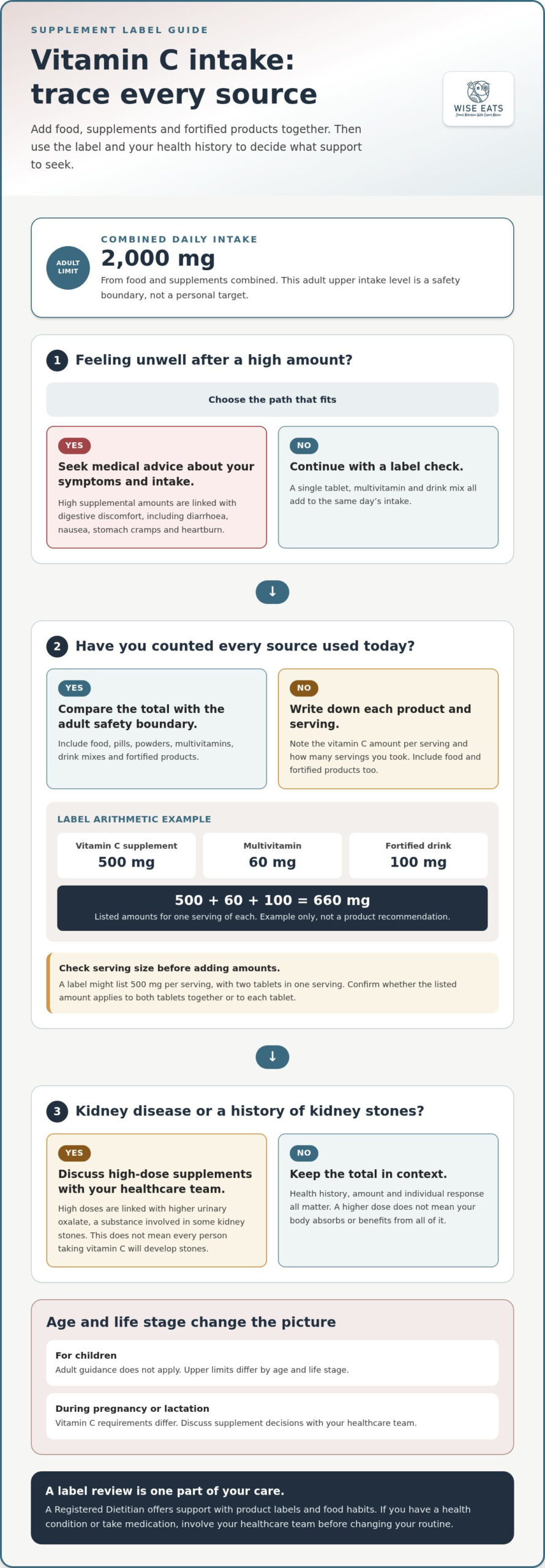
An upper intake level is the highest daily amount unlikely to cause harm for most people. For adults, this level is 2,000 milligrams per day from food and supplements combined. It’s a safety boundary, not a daily goal. Health history and individual response also matter.
For a general overview of high-dose use, see Vitamin C megadosage. The video below also discusses possible side effects of taking a high amount.
Food sources and supplements are not the same
Citrus fruit, peppers, tomatoes and berries provide vitamin C in meals and snacks. Pills, powders, multivitamins and drink mixes provide concentrated amounts, often in a single serving. Ordinary food intake rarely approaches the adult upper intake level, but servings from several supplements can add up. Consider both the source and the amount when reviewing your intake.
Vitamin C from food is spread across meals and snacks, while a supplement can provide a concentrated amount in one serving.
For example, you might eat fruit at breakfast, add tomatoes to lunch and take a vitamin C tablet later. Food still counts toward your total intake. Add the amount on the tablet label to the amounts in your other supplements. Check the serving size too, since the listed amount might apply to more than one tablet or scoop.
What an upper intake level means
The adult upper intake level of 2,000 milligrams applies to the combined daily amount from food and supplements. It doesn’t describe how much you need or suggest a personal target. Recommended amounts and upper limits differ by age and life stage, so adult guidance doesn’t apply to children. Pregnancy and lactation also affect vitamin C requirements.
A high dose affects people differently. Health history, the amount taken and whether it came from one serving or several products all matter. Some people notice digestive discomfort at lower amounts than others. If you’re unsure how to read labels or add up products, a supplement review with a Registered Dietitian can help you understand your routine alongside your food habits.
How the Body Handles Vitamin C, and Why High Intakes Matter
Vitamin C helps your body make collagen, a protein found in skin, blood vessels and other tissues. It also supports iron absorption from plant foods and helps protect cells from some types of damage. Your body needs a regular supply, but a larger dose doesn’t mean you absorb or benefit from all of it.
Vitamin C dissolves in water. As the amount in a dose rises, your body absorbs a smaller share, and your kidneys remove some absorbed excess in urine. The question “can you take too much vitamin C” matters because the body has limits on how much it absorbs. Water-soluble means your body releases some excess, not that unlimited vitamin C is advisable.
Why supplements can lead to higher amounts
Serving sizes can make labels confusing. A supplement might list 500 milligrams of vitamin C per serving, with two tablets as one serving. In that example, each tablet provides 250 milligrams. Check both the serving size and the listed amount before comparing products.
Products taken on the same day add to your total. A multivitamin, separate tablet and powdered drink mix each contribute vitamin C. To review your intake, write down the amount listed per serving and how many servings you took. This helps you understand your routine, not set a personal dose. Include products taken at different times of day.
Possible effects of high supplemental intake
High supplemental amounts are linked with digestive discomfort, including diarrhoea, nausea, stomach cramps and heartburn. These effects don’t happen to everyone, and symptoms alone don’t establish their cause. Unabsorbed vitamin C in the digestive tract draws in water, which can contribute to loose stools. Mayo Clinic’s guidance on vitamin C safety outlines possible digestive effects and kidney stone concerns.
Kidney-related concerns need careful context. High doses can raise urinary oxalate, a substance involved in some kidney stones. This doesn’t mean every person taking vitamin C will develop stones. People with kidney disease or a history of kidney stones should discuss high-dose supplements with their healthcare team.
If you’re asking “can you take too much vitamin C” because you feel unwell after taking a high amount, seek medical advice about your symptoms and intake. For questions about your usual supplement routine, a supplement review with a Registered Dietitian offers a chance to discuss labels and nutrition needs. Dietitian support complements your healthcare team, especially when a health condition affects supplement decisions.
Vitamin C Supplements: Dose, Labels, and Personal Risk Factors
Labels can make it hard to see how much vitamin C you get in a day. A single-ingredient tablet, multivitamin and fortified drink each list an amount, and serving size affects how to read it. Add the amounts from products you take on the same day to get a clearer picture. This total helps you review your intake, not set a personal dose.
A simple way to review supplement labels
Start with the serving size, then find the vitamin C amount per serving. The figures below are made-up examples to show how addition works, not product recommendations:
- A vitamin C supplement lists 500 mg per serving, with a serving size of one tablet.
- A multivitamin lists 60 mg per serving.
- A fortified drink lists 100 mg per bottle.
If you take one serving of each, the listed amounts add up to 660 mg for the day. If the supplement serving size is two tablets, check whether the 500 mg applies to both tablets together or to each one. Use the label’s serving information when doing the arithmetic.
Make a note of every product used that day, including drink powders and combination formulas. Check each label for vitamin C, then add the amounts for the servings you took. If a label lists more than one serving per container, don’t mistake the full-container amount for a single serving.
In Canada, an eight-digit Natural Product Number (NPN) means Health Canada has assessed a natural health product for safety, quality and health claims. It helps identify the product, but it doesn’t guarantee the supplement suits your health needs or how you use other products.
When personal context changes the conversation
Your age and life stage matter when interpreting nutrition guidance. A child’s needs differ from an adult’s, and pregnancy or lactation can affect vitamin C requirements. Health history matters too. High vitamin C intake can be a concern for people with kidney disease or a history of kidney stones. Vitamin C also increases iron absorption, so people with hemochromatosis, an iron-overload condition, should discuss high-dose use with their healthcare team. The Harvard T.H. Chan School of Public Health’s vitamin C guidance describes these considerations.
Medication and supplement interactions depend on the specific products and your health situation. Don’t change prescribed medication or an existing care plan on your own. Bring product labels or clear photos to a healthcare professional so they can review your routine in context.
A Registered Dietitian can help you understand supplement labels alongside your food habits and nutrition needs. Wise Eats Registered Dietitians offers a collaborative vitamin and mineral supplement review, with healthcare-team involvement when relevant.
When to Seek Help After Taking Too Much Vitamin C
If you’re worried and asking, “can you take too much vitamin C?”, focus first on how you feel and how much you took. A larger-than-planned amount doesn’t automatically mean you’ll become unwell, but online information can’t assess your situation. Contact your provincial poison centre or a healthcare professional for advice after an accidental or unexpectedly large intake.
Get urgent medical assessment for these symptoms
Seek urgent medical assessment if you experience any of these three warning signs:
- Repeated vomiting or diarrhoea
- Severe abdominal pain
- Blood in your urine
These symptoms need prompt attention, whatever the cause. If you think you’re facing an emergency, contact local emergency services. Don’t wait for an online reply or try to work out the cause on your own.
Urgent symptoms call for medical assessment. A routine supplement review helps you understand your ongoing use. If you took more than intended but feel well, a poison centre or healthcare professional can advise you based on the product, amount and timing. The adult upper intake level is a general reference, not a way to decide whether an accidental intake is safe for you.
What information to have ready
A few details help the person advising you understand the exposure. Gather them before you call if doing so won’t delay urgent care:
- The product name and vitamin C amount listed per serving
- The number of servings taken and the time you took them
- Any other supplements or products taken around the same time
Keep the container or packaging nearby. If you can’t find the amount quickly, bring the product with you or read the label to the poison centre or healthcare professional. Include powders, multivitamins and combination products in your notes, since their labels might list vitamin C alongside other ingredients.
Where to turn for support in Canada
For urgent advice after a possible excess intake, contact your provincial poison centre or a healthcare professional. If symptoms are severe or you believe the situation is an emergency, contact local emergency services. A poison centre or clinician can consider the amount, product and timing together. General information online can’t replace an assessment based on those details.
Once an immediate concern has been addressed, a Registered Dietitian can help you review your usual supplement routine and understand how products fit with your food habits and nutrition needs. This type of nutrition support complements your healthcare team. It doesn’t replace urgent medical assessment or direct advice about an accidental intake.
Reviewing Vitamin C Use With a Registered Dietitian
If you’re still wondering “can you take too much vitamin C?”, a supplement review helps make labels and your daily total easier to understand. A Registered Dietitian looks at your routine alongside your food habits, health history and nutrition goals. The aim is clear, practical information, not a one-size-fits-all dose.
Bring the products you use, or clear photos of their labels. Include multivitamins, powders and fortified drink mixes, along with any notes about when you take them. You don’t need to sort everything out before a review. Your labels and questions give the dietitian a useful place to start.
What a supplement review may cover
A Registered Dietitian can review serving sizes, vitamin C amounts and ingredients that overlap across products. You can also discuss why you started taking each supplement and whether food sources such as fruit and vegetables fit comfortably into your routine. This puts label information in context with your everyday eating and health goals.
A personalized supplement review offers an opportunity to discuss practical ways to meet nutrition needs and identify questions for your healthcare team. A dietitian provides nutrition education and recommendations within their scope of practice. They don’t replace your physician, pharmacist or other members of your care team, especially when a health condition or medication affects supplement decisions.
Support for residents of Alberta and British Columbia
Wise Eats offers online and in-person nutrition sessions for residents of Alberta and British Columbia, including people in Calgary, Edmonton, Nanaimo, Parksville, Qualicum Beach and communities across Vancouver Island. Rachel McBryan, Registered Dietitian, College of Health and Care Professionals of BC, supports clients in British Columbia. Sheirry Poposka, Registered Dietitian, Alberta College of Registered Dietitians, supports clients in Alberta. Bring your current products and discuss vitamin C questions in a collaborative setting.
For some people, a review also raises questions about personalized vitamin packs. A discussion with a Registered Dietitian helps you consider how supplements fit with your food habits, preferences and nutrition needs. Discuss concerns tied to symptoms, a medical condition or medication with your healthcare team as well. Keep following existing medical advice, and don’t change medication or care plans on your own.
A review gives you space to ask questions and understand your options. You decide what to discuss, and your healthcare team remains part of decisions about your care.
Choose a Supported Next Step
If you’re asking, “can you take too much vitamin C?”, you might want help sorting through what applies to your situation. A Registered Dietitian offers evidence-informed nutrition counselling and helps you think through your goals and questions. This support works alongside your healthcare team, not in place of it.
You don’t need to have every detail figured out before asking for support. Bring your questions and discuss what feels useful for your nutrition needs.
Speaking with a registered dietitian can help you develop a balanced, flexible approach to eating and meet your nutritional needs.
Frequently Asked Questions
Is too much vitamin C harmful?
Yes, excess vitamin C intake can cause harm, though the effect depends on the amount and your health context. The question “can you take too much vitamin C” doesn’t have the same answer for everyone. A one-time amount and a regular supplement routine raise different questions for a healthcare professional. If you’re uncertain about your personal risk, share the product and your health history with your care team.
How much vitamin C is too much?
There isn’t one upper limit for every age and life stage. Adult guidance doesn’t apply to children, and pregnancy or lactation can affect vitamin C needs. If you’re checking a product for a child or teen, don’t use an adult limit to judge whether its serving is suitable. A healthcare professional can help interpret age-specific guidance alongside the person’s diet and health needs.
What happens if I take too much vitamin C at once?
The response to a one-time high amount varies, and how you feel doesn’t reliably show how much your body absorbed. Keep the container or a photo of the label available if you seek advice. Include any other products taken around the same time. A provincial poison centre or healthcare professional can use those details to guide the next step for your situation.
Is vitamin C from food different from vitamin C supplements?
Both add to your vitamin C intake, but a supplement label gives a set amount per serving, while food portions vary. You don’t need to avoid citrus, peppers or other foods to manage supplement use. If you’re comparing intake, note the foods you commonly eat and the products you take. A Registered Dietitian can help put those details in the context of your usual eating pattern.
Can vitamin C supplements cause kidney stones?
Supplement use doesn’t mean kidney stones will develop, and the concern depends on personal health factors. Before using a high-dose product, discuss your history of kidney stones or kidney disease with your healthcare team. Bring the label and describe how often you take it. This gives them specific information to consider, rather than relying on a general warning to decide what suits your circumstances.
Should I stop taking vitamin C after a high dose?
Don’t make a lasting change to your supplement routine based on general online guidance. For a one-time accidental amount, follow advice from a provincial poison centre or healthcare professional. If you take vitamin C regularly, ask your care team how to handle your next serving and whether your ongoing routine needs review. Keep following instructions for prescribed medication unless the prescriber advises otherwise.

Article by
Rachel McBryan, Dietitian
Rachel McBryan is a licenced Dietitian in British Columbia offering comprehensive nutrition counselling as virtual and/or in-person counselling sessions to suit your needs and preferences. With a Bachelor of Science in Nutrition and Food Science, Rachel has over 20 years experience helping people address their health through nutrition. She was awarded Human Nutrition and Food Science BSc.from University of Alberta followed by post-grad course work at UBC in guidance counselling.
An eating disorder is a serious mental health illness.
If you are in immediate distress or crisis, please contact emergency services by dialing 911 or calling Vancouver Island Crisis Line: 1-888-494-3888.