Start with your nephrologist or kidney clinic and ask about a referral to a kidney disease dietitian in Calgary. A dietitian can tailor nutrition guidance to your kidney health, treatment, medications and usual meals.
It’s understandable to feel unsure about what to eat when advice about protein, sodium, potassium, phosphorus and fluids seems to vary. Kidney care nutrition is not a one-size-fits-all meal plan. Your needs and treatment shape the guidance, so broad food lists may not fit your situation.
This article explains how to find kidney nutrition support in Calgary, which nutrition concerns a dietitian can address, and how personalized meal planning can complement care from your kidney team. You’ll also learn why professional guidance matters when considering supplements or dietary changes.
Key Takeaways
- Ask your nephrologist or kidney clinic about a referral to a dietitian for kidney nutrition support.
- Bring your medication list and recent kidney care information to help guide a personalized nutrition plan.
- Protein, sodium, potassium, phosphorus and fluid needs depend on your kidney disease and treatment.
- Learn how to find nutrition support in Calgary and what to consider when choosing in-person or virtual appointments.
Personalized nutrition support for kidney disease
Kidney nutrition guidance considers your health information, treatment and usual meals. A renal dietitian connects these details with practical food choices and counselling for chronic kidney disease.
For public care, Alberta Health Services lists Alberta Kidney Care among dietitian-supported services in the Calgary Zone. Private nutrition counselling coverage depends on your extended benefits plan. Review your policy before booking, including any referral or receipt requirements.
Look for a Registered Dietitian with kidney care experience. Registered Dietitian is a legally protected title in Canada for nutrition professionals who complete accredited education, supervised practice and a licensing exam. Ask your nephrologist or clinic about the dietitian’s experience with your condition and treatment, such as dialysis or kidney stones.
Individualized Kidney Nutrition Recommendations
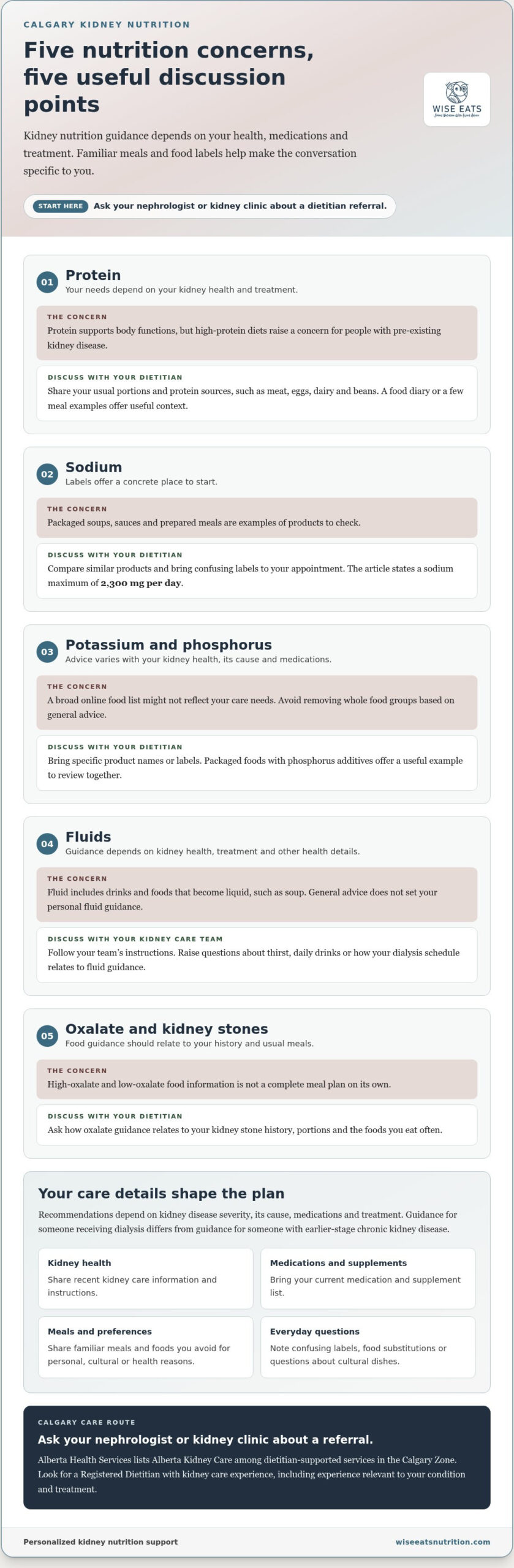
Recommendations depend on kidney disease severity, its cause and your medications. A dietitian reviews your eating routine and care information before discussing protein, sodium, potassium, phosphorus or fluid. Guidance for someone receiving dialysis differs from guidance for someone with earlier-stage chronic kidney disease. Share meals you eat often, along with foods you avoid for personal, cultural or health reasons.
Calgary dietitians provide nutrition support for chronic kidney disease, dialysis and kidney stones. For kidney stone care, a dietitian can explain how high-oxalate and low-oxalate foods relate to your needs. Food allergies and intolerances also affect meal planning. Bring clear examples, such as a milk allergy or symptoms after eating a particular food, and describe how they affect meals at home or work.
For local context, this Calgary dietitian profile offers a starting point for discussing nutrition support with your care team.
Chronic Kidney Disease Nutrition Counselling
Chronic kidney disease counselling turns nutrition guidance into choices that suit your daily routine. Bring your medication and supplement list, recent care instructions and questions about familiar meals. You might discuss label reading, food substitutions or ways to include cultural dishes. For kidney stones, ask how oxalate guidance relates to your history and the foods you usually eat.
A Registered Dietitian can provide personalized nutrition support as part of care for kidney disease. This support can be relevant both when someone has questions about kidney health and when they are navigating a diagnosis. A conversation can focus on the food questions that matter most and how guidance fits with the care they already receive. For kidney disease support, a dietitian can explain high-oxalate and low-oxalate foods. Rather than treating a food list as a complete plan, bring questions about portions, familiar meals and how recommendations apply to your circumstances.
Gurpreet volunteers with the Kidney Community Kitchen, answering kidney diet questions from patients and their families through its “ask a dietitian” tool. When preparing a question, describe the foods you usually eat and what you want to understand. You can ask how oxalate information relates to your meals or explain which parts of kidney nutrition are difficult to put into practice. Clear, specific questions can help make the discussion relevant to your concerns.
Dietary considerations for protein, sodium, potassium, phosphorus, and fluid
Kidney nutrition plans often address protein, sodium, potassium, phosphorus and fluid. The right approach depends on kidney disease severity, its cause, your medications and treatment. These factors determine which changes may be relevant to you, so avoid applying broad food rules without guidance from your care team.
Protein and Sodium Considerations
Protein supports body functions, but high-protein diets can negatively affect kidney function in people with pre-existing kidney disease. Discuss your usual portions and protein sources with your dietitian. Meat, eggs, dairy and beans all contribute protein. A food diary or a few meal examples can help the dietitian understand your usual pattern before discussing adjustments.
The sodium guidance covered here sets a maximum of 2,300 mg per day to support kidney health. Check labels on packaged soups, sauces and prepared meals, then compare similar products. Small choices, such as selecting a lower-sodium sauce, offer practical discussion points. Your dietitian helps relate those examples to your overall eating pattern and care guidance.
Potassium and Phosphorus Considerations
Potassium and phosphorus advice varies with kidney disease severity, its cause and medications. Avoid removing whole food groups based on a general online list. Instead, bring specific food labels or product names to your appointment. Packaged foods with phosphorus additives, for example, give you a concrete label to review with your dietitian.
Ask how your kidney care information relates to foods you eat often. If recommendations change, request meal examples using familiar ingredients. This can help you understand which choices need attention and how to keep meals varied. A general list may overlook differences between products, serving habits and your individual care needs.
Fluid Considerations
Fluid guidance depends on your kidney health, treatment and other health details. Include drinks and foods that become liquid, such as soup, when discussing your routine. Avoid starting a fluid limit or increasing your intake based on general advice. Follow your kidney care team’s instructions, and raise questions about thirst or daily drinks at your next visit.
If you receive dialysis, ask how your treatment schedule relates to fluid guidance. If your care team requests it, keep a simple note of drinks and liquid foods to discuss. This can give your dietitian useful context without requiring you to change your routine beforehand.
Protein, sodium, potassium, phosphorus and fluid recommendations are individual. Before your next appointment, note foods you eat often and labels you find confusing. Discuss those examples with your dietitian and kidney care team. For broader food-related support, review nutrition appointment options.
Finding a kidney dietitian through a nephrologist or clinic
Start with your nephrologist or kidney clinic and ask about a dietitian referral. Alberta Health Services lists Alberta Kidney Care among dietitian-supported services in the Calgary Zone.
Hospital and Private Dietitian Options
Hospital- or clinic-based nutrition support can connect with your kidney care team. A referral through your nephrologist can help align dietary guidance with your care plan. In Alberta, many people with chronic kidney disease receive care through their family doctor, so your family doctor is another practical starting point.
Private appointments offer another route to counselling. Choose based on your care needs, appointment access and the dietitian’s kidney nutrition experience. Ask your nephrologist which route may suit your situation. Your weight, medications and kidney health are relevant details for nutrition planning, not measures of whether you deserve support.
Locations and Virtual Appointments
In Calgary, renal dietitians work through kidney clinics and private practices. Alberta Kidney Care is a clinic-based starting point, and your nephrologist can direct you to the appropriate referral pathway. For private appointments, consider how the practice location fits your travel needs and schedule.
Virtual appointments depend on the practice and care setting. Ask about the format when arranging a visit, and consider whether you have a private space and reliable internet access. If you want help reviewing food labels or meal routines, have examples ready to discuss by video or in person.
Private appointments are arranged through the practice. Nutrition and diet counselling may be covered by an extended benefits plan, depending on your policy. Ask your insurer about dietitian coverage and direct billing, since coverage and billing arrangements vary.
To prepare for your first appointment, gather your medication and supplement list, recent kidney care information and questions about meals. Note any food allergies or intolerances, along with examples of foods you eat often. If you have a specific concern, such as meal planning during dialysis or kidney stone prevention, write it down before the visit.
Registered Dietitian is a regulated title in Canada. Look for a professional with accredited education, supervised practice and a licensing exam, then ask about their experience with kidney disease, dialysis or kidney stones. A Calgary kidney disease dietitian should be able to explain how counselling relates to your kidney care and daily eating habits.
Professional guidance from Wise Eats Registered Dietitians helps connect your kidney care plan and day-to-day choices. Use the first conversation to clarify what you want help with, whether that is understanding food advice, adapting familiar meals or planning around treatment. Ask the dietitian to explain recommendations in practical terms and how you might follow them in your routine. If advice is difficult to apply, describe what gets in the way so you can discuss options that suit your circumstances. Keep your questions focused on the concerns you brought, and ask what information would be useful to have at a follow-up.
The Canadian Association of Nephrology Dietitians was organised in 1975 as a subcommittee of the Canadian Society of Nephrology. When choosing a dietitian, you can also ask about their kidney nutrition experience and how they approach counselling. A clear explanation of the process can help you decide whether the service and appointment format feel suitable for your needs.
Chronic kidney disease management
Chronic kidney disease care changes with disease stage and treatment. Early-stage care generally includes medication and dietary support. End-stage renal disease requires dialysis alongside medication and nutrition interventions. Your care team coordinates these parts, so discuss eating changes before making major adjustments.
Diabetes and high blood pressure are common causes of kidney disease. Food choices that support blood glucose and blood pressure are also part of kidney health care. If you manage diabetes, bring your usual meal schedule and questions about carbohydrates to an appointment. Your dietitian can discuss nutrition alongside your diabetes care plan.
Heart and kidney health are also connected through blood pressure and cholesterol. A dietary pattern that supports healthy cholesterol and helps control blood pressure is recommended to reduce kidney disease risk. Share examples of meals you eat often, such as takeout lunches or family dinners. Your dietitian can help identify practical changes without asking you to give up familiar foods.
Use appointments to understand which goals matter most at your current stage. Bring recent instructions from your kidney clinic and ask how nutrition fits with medication or dialysis. If your treatment changes, ask whether your eating plan needs review. A written question list can keep each discussion focused and make next steps easier to remember.
Supplements need a separate review. People with chronic kidney disease should have supplements cleared with an experienced pharmacist. Bring the containers or clear photos of each label, including vitamins, minerals and products marketed for general wellness. The pharmacist can review ingredients alongside your medications. Don’t start or stop a supplement based only on social media or a general online list.
At home, choose one routine to discuss with your care team. For example, note what you drink with meals, how often you eat packaged foods or how you organize meals around dialysis. These details show how guidance fits daily life. If an instruction feels difficult to follow, explain the barrier at your next appointment, such as limited cooking time or difficulty finding familiar options.
Kidney disease management involves more than food. Keep taking medication as prescribed, attend clinic appointments and share health changes with your care team. Ask whom to contact if you have questions between visits. For nutrition discussions, bring a family member or support person if you want help remembering the plan or asking questions.
Where are Calgary renal dietitians located, and do they offer virtual appointments?
In Calgary, start with Alberta Kidney Care or your kidney clinic. Alberta Health Services lists Alberta Kidney Care among dietitian-supported services in the Calgary Zone. Private dietitians work through individual practices, so appointment locations and formats vary.
Finding a Calgary clinic
Your nephrologist or kidney clinic is a practical first contact for renal nutrition support. Ask about the referral route and whether appointments take place through your clinic or another Calgary service. If your family doctor manages your chronic kidney disease, raise dietitian support at an appointment. This gives your care team a chance to connect nutrition counselling with your existing care.
For an in-person visit, consider how the location fits your routine. Check the appointment address, travel time from home or work, and access to transit or parking. If you attend dialysis, ask how nutrition appointments fit with your treatment schedule. These details can help you choose a location you can reach and attend consistently.
Choosing in-person or virtual care
Virtual appointments are arranged by the clinic or private practice, rather than through one Calgary-wide booking system. The format depends on the service. When comparing options, consider whether you have a private space, reliable internet and a way to share food labels or meal notes. A phone or computer with a camera can also help if the visit uses video.
Some conversations work in either format. For example, you can discuss usual meals, food label questions or changes to your routine over video or in person. A clinic visit may suit you better if you prefer face-to-face discussion or want to review printed materials together. Your care setting and access needs matter when choosing.
Before booking, write down the service name, location or virtual format, referral requirements and appointment instructions. Keep your nephrologist’s clinic details nearby in case the dietitian needs information from your care team. For virtual visits, set aside your medication list and a few examples of meals you eat regularly. This preparation can keep the discussion focused on your questions.
If you need help choosing between a clinic referral and private nutrition support, discuss the options with your nephrologist or family doctor. They can explain how each route fits your kidney care and referral pathway. Choose the appointment format and location that best suit your access needs and care plan.
Wise Eats Registered Dietitians: Custom Meal Planning
Wise Eats Registered Dietitians offer custom meal planning for people seeking practical nutrition support alongside kidney care. A plan can account for your food preferences, routines and nutrition goals, while your nephrologist or kidney clinic guides condition-specific recommendations.
If you take supplements, bring product details to your care team and pharmacist for review. Personalized vitamin and mineral supplement recommendations are also available, with kidney disease and medications considered in the discussion. Your pharmacist should clear supplements before you use them.
Contact Wise Eats Registered Dietitians to discuss whether custom meal planning suits your nutrition needs.
Choose a next step that fits your care
Kidney nutrition advice can feel more manageable when your next action is clear. Choose one question to bring to your next appointment, such as how a nutrition goal fits your routine, food preferences or other health needs. A kidney disease dietitian in Calgary can help you explore nutrition support alongside your existing care team.
Wise Eats Registered Dietitians offers Custom Meal Planning, Personalized Vitamin and Mineral Supplements, and Weight Management. These services support broader nutrition goals and routines. For kidney-specific food or supplement decisions, keep your nephrologist, kidney clinic and pharmacist involved in your care.
You don’t need to sort through every food choice at once. Start with the question that matters most to you, then discuss a practical next step with your care team. If Wise Eats’ nutrition services fit your needs, you’re welcome to arrange an appointment.
Frequently Asked Questions
How can I see a kidney dietitian?
Ask your nephrologist or kidney clinic for a referral to a kidney disease dietitian in Calgary. Tell the clinic whether you need support for chronic kidney disease, dialysis or kidney stones, so they can direct your request. If you receive care through your family doctor, raise the referral at your next appointment. Before calling, note your main food-related concern and the best way to reach you.
What is a renal diet?
A renal diet is an eating plan shaped around a person’s kidney health and treatment, not one standard menu for everyone. For example, someone receiving dialysis might receive different guidance from someone with earlier-stage chronic kidney disease. A dietitian considers relevant health information, medications and daily eating habits. The aim is practical nutrition support that fits the person’s care plan and food preferences.
Which dietitians in Calgary specialize in kidney disease or renal nutrition?
Alberta Kidney Care is a Calgary Zone service supported by dietitians, and your nephrologist or family doctor can help you start the referral process. For private care, look for a Registered Dietitian, a legally protected and regulated professional title, and ask about experience with kidney disease, dialysis or kidney stones. Discuss how their nutrition counselling will fit with guidance from your kidney clinic and other members of your care team.

Article by
Rachel McBryan, Dietitian
Rachel McBryan is a licenced Dietitian in British Columbia offering comprehensive nutrition counselling as virtual and/or in-person counselling sessions to suit your needs and preferences. With a Bachelor of Science in Nutrition and Food Science, Rachel has over 20 years experience helping people address their health through nutrition. She was awarded Human Nutrition and Food Science BSc.from University of Alberta followed by post-grad course work at UBC in guidance counselling.
An eating disorder is a serious mental health illness.
If you are in immediate distress or crisis, please contact emergency services by dialing 911 or calling Vancouver Island Crisis Line: 1-888-494-3888.